Single-bottle gifting
A bottle presented in a lift-off-lid box for an occasion, client handoff, or winery release.

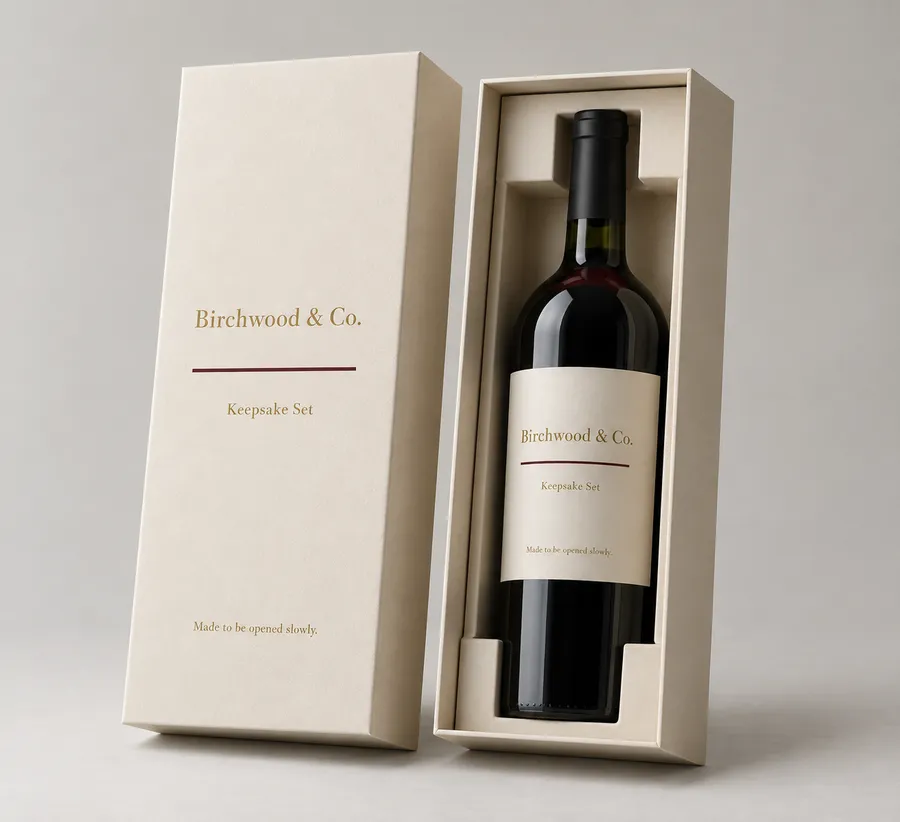
Open warm-ivory wine gift box with one dark green bottle in paperboard support
Gift Boxes
Custom wine gift boxes shaped around one bottle or a defined bottle set, with the outer structure, interior support, and printed panels planned together. A rigid two-piece box can create a lift-off-lid presentation, while a folding paperboard format can suit a different handoff. Share the packed bottle geometry and intended use so the specification starts from the real product.
Last updated
Working quote
Product brief
A custom wine gift box has to do two jobs at once: present the bottle as a considered gift and give the package a workable structure around the bottle's actual shape. The neck, shoulders, base, closure, weight, and label-facing orientation all affect the interior footprint and the way the box opens. A single bottle and a defined bottle set are different packaging briefs even when the outside is described with the same product name.
Easy Box Packaging makes these boxes to order. Standard orders start at 50 units, and the approved production estimate is from 7 business days after digital proof approval. Free US shipping applies on the standard fulfillment path. Unit pricing stays quote-only until the bottle arrangement, structure, materials, finish, quantity, and artwork direction are known well enough to price the actual specification.
A rigid two-piece box with a lift-off lid gives a bottle a more deliberate opening sequence because the package arrives formed and holds its shape during the reveal. Wrapped paperboard over a solid core creates the visual language associated with a keepsake-style wine gift box. A folding paperboard carton can make more sense when the box needs to ship flat, be assembled at packing, or support a different retail or fulfillment route. The right choice depends on how the wine is handed over, stored, and opened rather than on the word “gift” alone.
A shared structural style does not mean shared dimensions or one universal dieline. A box for a short bottle, a tall bottle, or a set of bottles is sized to its own contents, so each format receives its own dimensional review and dieline. If the product changes, the bottle count changes, or the opening route changes, the interior layout should be reviewed again instead of treating the first size as a universal template.
Start with the finished product that will actually be packed. Provide the bottle height, widest body diameter, shoulder shape, neck and closure profile, packed weight, orientation, and the number of bottles in the intended arrangement. If the set includes different bottle shapes, describe each one separately. A bottle photo or side view can clarify a shoulder, collar, raised base, or closure that a simple height-and-width note would miss.
The dependency runs from the product geometry to the required clearance, then to the internal dimensions, construction allowance, and external dimensions. Master-case planning comes later as a logistics question. It should not be used to decide the bottle cavity or box depth. Final allowance is confirmed during specification and dieline review, because a wine bottle's glass profile and the desired reveal both influence how much room the finished box needs.
Internal support depends on the bottle geometry, weight, fragility, orientation, outer structure, intended fulfillment route, and the presentation the opening should create. A single bottle may call for an integrated paperboard cradle, while a bottle set may need divided cavities or another fitted layout so neighboring bottles have defined positions. The choice is not made from weight alone, and a generic insert should not be assumed before the actual contents are reviewed.
Support also changes the visible experience. A raised bottle can create a cleaner reveal when the lid comes off, whereas a lower position may leave more room for an insert card or printed interior surface. If the package is moving through direct-to-customer fulfillment, the support plan and the outer structure should be considered together. The final approach is confirmed against the real bottle or set during the specification review.
SBS Paperboard and Kraft Paperboard are the category material directions for this gift-box format. SBS can suit a smooth printed presentation, while kraft can bring a more natural board appearance. The selected stock should be reviewed with the structure, bottle weight, artwork coverage, and intended reveal rather than treated as a stand-alone branding decision. An FSC-certified paper option is available as a material choice when that direction fits the order.
Foil Stamping can call attention to a winery name, vintage line, or selected border subject to artwork review. Embossing/Debossing can change how a wordmark or pattern is felt on the surface, and the board choice and embossing depth should be reviewed together. Spot UV can create a controlled contrast against a surrounding finish. Matte Lamination and Gloss Lamination create different surface appearances and handling characteristics, so the decision should follow the artwork and how the box will be seen in hand.
The quote brief should include the bottle or bottle-set details, quantity, intended handoff, preferred structure if known, material direction, finish direction, artwork status, and any internal support or insert requirement. Easy Box Packaging includes dieline and proof review on every order at no extra charge. After the structural details are confirmed, the digital proof is reviewed and approved before production begins. The standard estimate is from 7 business days after that approval.
A sample kit carries a $44.99 USD shipping charge credited toward the first order. It can help compare paperboard feel, surface treatment, and the visual difference between finish directions before committing to a larger run. The sample is most useful when the decision involves how the bottle presentation feels in hand, not just how a flat artwork file looks on screen.
A concise brief reduces back-and-forth: name the bottle format, send the relevant product views, state whether the package is for a single bottle or a defined set, and identify what the recipient should see first when the lid or carton opens. That gives the quote and proof review a clear starting point without pretending that one standard wine-box size fits every product.
Proof points
A useful proof shows how the bottle sits, how the package opens, and how the chosen board and finish carry the supplied wine artwork across the customer-facing panels.
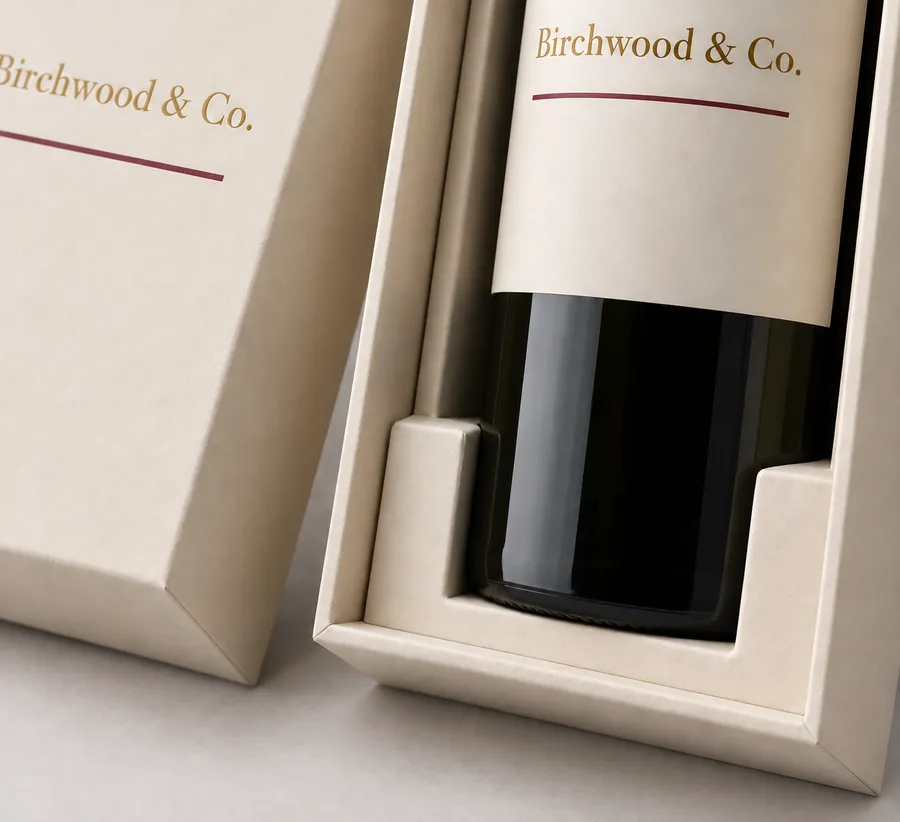
A custom wine gift box should be planned from the bottle or bottle set outward, with the interior footprint, opening route, and printed panels reviewed as one package. Bottle height, body diameter, shoulder, closure, weight, and orientation all affect the finished specification. A rigid two-piece box creates a lift-off-lid presentation for a single higher-value bottle, while a folding paperboard format can suit a different retail or fulfillment route. The correct structure depends on what is inside and how the recipient will open it, not on a generic bottle category size.
A bottle presented in a lift-off-lid box for an occasion, client handoff, or winery release.
A defined group of bottles arranged with separated positions and a deliberate opening sequence.
A printed wine presentation box where the brand treatment and recipient-facing reveal matter as much as the outer footprint.
A bottle package planned around the way it will sit on a shelf, be handed over, or move through the standard fulfillment route.
Foil Stamping, Embossing/Debossing, Spot UV, Matte Lamination, and Gloss Lamination are the listed finish directions for this category. Foil can highlight selected lettering or linework, embossing changes the surface feel, and spot UV can create a controlled contrast. Matte and gloss lamination change the surface appearance and handling characteristics. The chosen treatment should be reviewed with the bottle-facing artwork, folds, lid edges, and any small lettering before the proof is approved.
A wine gift box needs internal support when the bottle geometry, weight, orientation, fragility, outer structure, fulfillment route, and desired reveal make a defined position useful. One bottle may use an integrated paperboard cradle, while a bottle set may need divided cavities or another fitted layout. Support is reviewed with the outer box rather than added as an assumed standard insert after the package has already been sized.
Height, body diameter, shoulders, neck, closure, and base shape determine the interior footprint and the clearance around the glass.
Matching bottles can share a repeated layout, while mixed shapes or different sizes need their own cavity plan and review.
The support can be shaped around how the bottle first appears when the lid lifts or the carton opens, not only around its position during packing.
A quote brief is easiest to evaluate when it describes the bottle, the arrangement, the presentation route, and the artwork direction together. Share the information below so the box can be reviewed around the real product rather than an assumed category size.
Send height, widest body diameter, shoulder, neck and closure profile, packed weight, orientation, quantity, and any product views that clarify the shape.
State whether the box is intended for one-bottle gifting, a tasting or release set, corporate gifting, retail display, or direct fulfillment.
Share any preference for a rigid two-piece box or folding paperboard format, plus the material and finish options you want reviewed.
Confirm the bottle position, support layout, lid or closure route, printed panel orientation, and finish representation before approval.
Production begins from 7 business days after the digital proof is approved on the standard fulfillment path.
Need help with structure, materials, or production planning? See how we manufacture custom packaging.
A sample kit carries a $44.99 USD shipping charge credited toward your first order. Use it to compare paperboard feel, surface treatment, and printed finish direction before approving a production run.
Shipping charge: $44.99. Credited toward your first order.
Request a Sample KitFind clear answers about fit, materials, and ordering below.
A multi-bottle wine gift box can be reviewed when the bottle count, individual dimensions, packed weight, and intended presentation are defined. The interior should be planned around separated positions or another fitted layout rather than assuming that a single-bottle cavity can be repeated without a new specification review.
Share the finished bottle height, widest body diameter, shoulder shape, neck and closure profile, weight, orientation, and quantity. A side view or product photo helps clarify a raised base, collar, or shoulder that may change the paperboard support and the amount of clearance needed inside the box.
A rigid two-piece box suits a lift-off-lid presentation where the formed package and opening moment are central to the gift. A folding paperboard format can suit a different retail, storage, or fulfillment route. The decision should follow the bottle arrangement, handoff, and production requirements rather than treating either structure as universal.
The gift-box category lists SBS Paperboard and Kraft Paperboard, with Foil Stamping, Embossing/Debossing, Spot UV, Matte Lamination, and Gloss Lamination as finish directions. The chosen combination is reviewed with the bottle-facing artwork, structure, folds, edges, and any fine lettering before production.
Standard orders start at 50 units, and the approved estimate is from 7 business days after digital proof approval. Free US shipping and dieline/proof review at no extra charge are included on the standard path. Final timing and pricing are confirmed against the actual bottle arrangement, specification, and artwork.
Orders start at 50 units and scale up to 500,000 for bulk runs, with pricing from $0.26 per unit on larger quantities. Standard production is from 7 business days after digital proof approval.
Custom wine gift boxes shaped around one bottle or a defined bottle set, with the outer structure, interior support, and printed panels planned together. Each order is made to order around your packed product and artwork, and the specification is confirmed against a digital proof before production.
Compare nearby products and request the format that best fits your next run.
Available product
Available product
Available product
Available product
Prepare a wine packaging brief
Tell us whether you are packing one bottle or a defined set, how it will be handed over, and which board, print, or finish direction you want reviewed.
Add your product details to see a quote summary.