Retail holiday purchases
A printed carry bag for a boxed purchase leaving a store, counter, market, or collection point during the seasonal period.

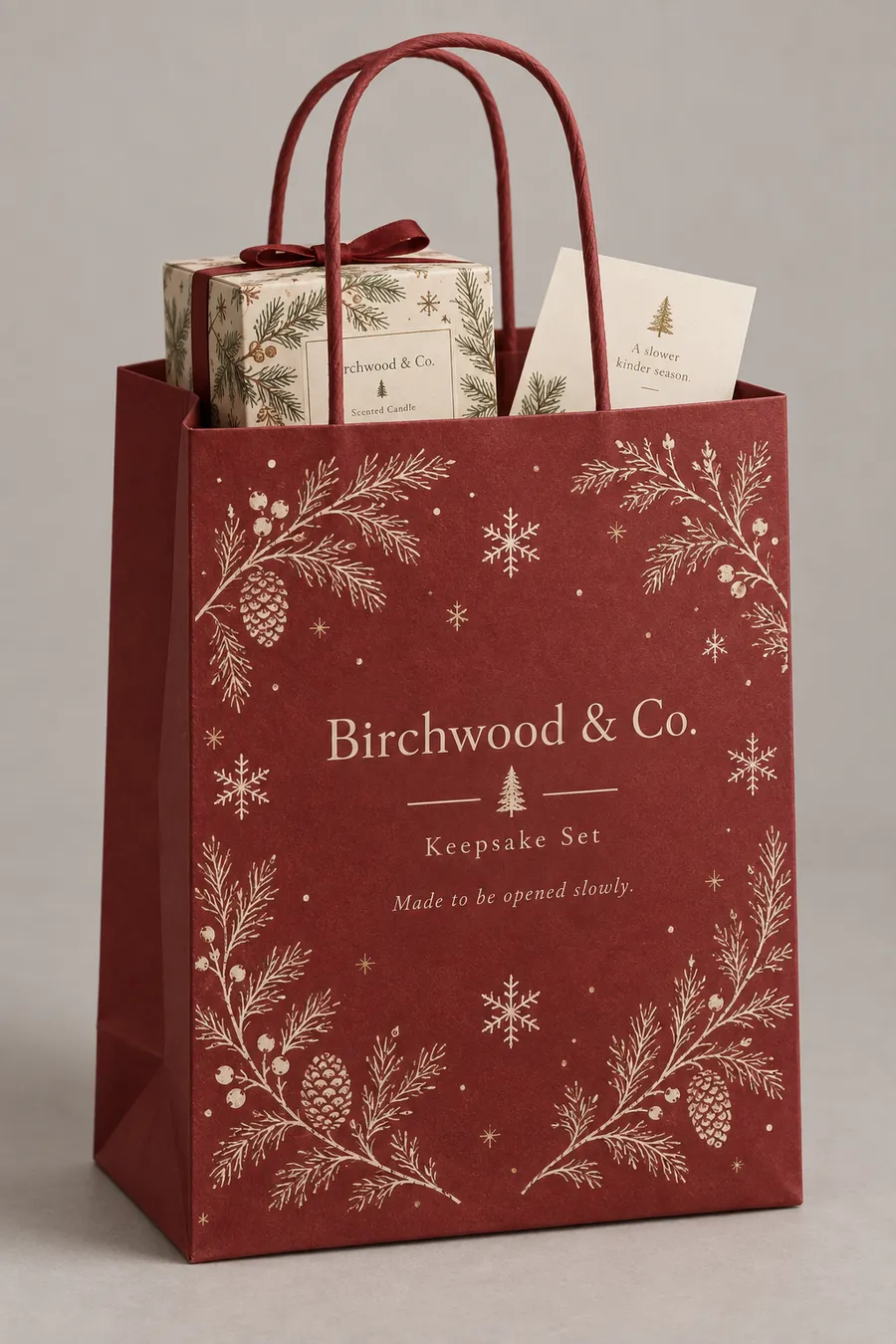
Cranberry holiday gift bag stands open with a candle carton and card inside
Gift Boxes
Holiday gift bags are made-to-order paper carry bags for seasonal handoffs, retail purchases, client gifts, and small product sets. The bag size, gusset, handle style, printed panels, and finish are planned around the packed gift rather than a generic bag label. Share the item arrangement, carry route, artwork direction, and preferred paperboard so the dieline can be reviewed around the occasion and the actual contents.
Last updated
Working quote
Product brief
A holiday gift bag has two jobs at the handoff: it needs to carry the packed gift in a practical way, and it needs to make the seasonal presentation feel intentional before the recipient opens it. That means the bag is planned as a physical carry structure and as a printed surface. A single boxed candle, a bottle with a card, or a small collection of wrapped items will each create a different sizing and arrangement question. The front panel, side gusset, top opening, and handle style should be considered together so the bag remains recognizably built around the gift.
Holiday gift bags can be scoped as upright gusseted paper carry bags with integrated or attached handle directions reviewed for the intended use. A simple handoff bag may need a different panel balance from a deeper bag holding a coordinated set. If the bag is being placed under a tree, passed across a retail counter, or handed to a client after an event, the visible artwork and the way the packed contents sit inside will influence the specification. Seasonal artwork is part of the structure discussion because the handle, folds, top edge, and gussets all change which areas remain visible.
Start with the gift as it will actually be placed inside the bag. Send the packed length, width, and height of the item or set, the number of components, the orientation of each component, and any tissue, card, sleeve, or secondary carton that will share the space. A flat boxed gift may suit a shallow gusset, while a bottle and card or a layered set may need more depth and a different way of keeping the front panel visible. The amount of the product that should appear above the bag opening is also useful to discuss before the dieline is prepared.
The bag should not be sized from the product name alone. A change in the packed arrangement can affect the front-to-back depth, base fold, opening width, handle position, and the printed area that faces the recipient. If several gift sizes are planned, each materially different size should be scoped as its own dieline decision even when the same seasonal artwork is reused. Final allowance is confirmed during specification and dieline review, so a quote request should describe the real packed arrangement rather than assume a stock clearance.
The carry feature is part of the bag's load and presentation conversation. An attached paper loop, a cut-in handle opening, or another reviewed handle direction changes the upper panel and the way the bag is held. The choice depends on the bag footprint, product weight, number of items, orientation, handoff route, and how much printed surface should remain uninterrupted. A deeper gusset can give a set more room, but the base fold and side panels then become more important to the way the filled bag stands and faces forward.
Internal wrapping or a simple paperboard support may be considered when the gift needs a defined position, but that choice depends on geometry, weight, fragility, orientation, presentation, and the way the order is packed. The bag should be discussed with those variables together rather than assigning a support from the product category alone. The handle attachment or cut, top edge, gusset folds, and base should appear together in the proof so the carry route can be checked before approval.
Kraft Paperboard is a natural material direction to review when the bag should retain a warm paper character across its folded panels. SBS Paperboard can be considered when a brighter printed surface is part of the seasonal direction. The board choice is reviewed with the bag structure, packed contents, printed coverage, handle treatment, and desired surface feel; the category material list does not turn either board into a universal answer for every gift. An FSC-certified paper option is available as a material direction when that stock fits the order, but it should not be read as a certification of every finished bag.
The useful specification names the board direction and then explains what the buyer wants the recipient to see and feel. A deep cranberry bag with a warm cream wordmark may call for a different print review from a natural kraft bag with a single dark ink panel. The construction, surface, and artwork are reviewed as one package so folds, gussets, handles, and product reveal do not compete with the seasonal message.
Holiday artwork works best when it is mapped to the assembled bag rather than placed on a flat rectangle without regard for folds. A brand mark, occasion message, product name, evergreen linework, or restrained metallic accent may occupy the front panel, while the side gussets and back panel carry supporting artwork or remain quieter. Foil Stamping can be considered for selected lettering or linework subject to artwork review. Embossing/Debossing can add a tactile treatment to a chosen mark or motif, with depth and placement checked against the bag surface. Spot UV and Matte Lamination provide other surface directions that need to be reviewed around handles, folds, and areas touched during the handoff.
There is no need to force every seasonal treatment into one bag. A focused wordmark and one motif may be clearer than several competing holiday graphics, especially when the bag also carries a visible product or card. Share the artwork status, brand colors, copy, and preferred finish so the proof can show the printed panels in their assembled relationship. The selected combination remains subject to artwork review near cut edges, folds, small type, and handle areas.
A useful review shows the bag as a carry structure, not just as artwork. Check the front and back panel orientation, gusset folds, top opening, handle placement, base fold, product position, and the areas where a finish is requested. Dieline and digital proof review are included on every order at no extra charge. That review creates a clear point to confirm that the holiday motif, brand mark, product name, and opening route still read correctly once the bag is assembled.
The standard fulfillment path starts at 50 units. Production begins from 7 business days after digital proof approval. A sample kit carries a $44.99 USD shipping charge credited toward the first order, which can help a buyer examine paper feel, print direction, handle treatment, or finish before approving a larger run. Pricing remains quote-only because the bag dimensions, gusset, handle construction, quantity, board, print coverage, and finish determine the scoped specification.
Send the packed dimensions and number of items first, followed by the intended carry route, approximate packed weight, tissue or secondary packaging, artwork status, preferred handle direction, paperboard preference, finish direction, target quantity, and delivery destination. If the bag is for a seasonal event or client handoff, explain when the recipient will first see the front panel and whether the bag needs to stand, hang, or move directly from counter to car. Those details let the dieline discussion cover the carry structure and the presentation together.
The quote can then be reviewed as one holiday gift bag specification: packed contents, structure, handles, gusset, board, artwork, finish, quantity, and timing. The 50-unit minimum and from 7 business days estimate apply to the standard path after digital proof approval; the actual quote remains dependent on the product and design details supplied. Keeping the request specific gives the packaging team a useful basis for discussing a seasonal carry bag without pretending that one stock size or one handle style fits every gift.
Proof points
The physical bag and the printed artwork should be reviewed in the same proof so the seasonal concept survives folding, carrying, and product placement.
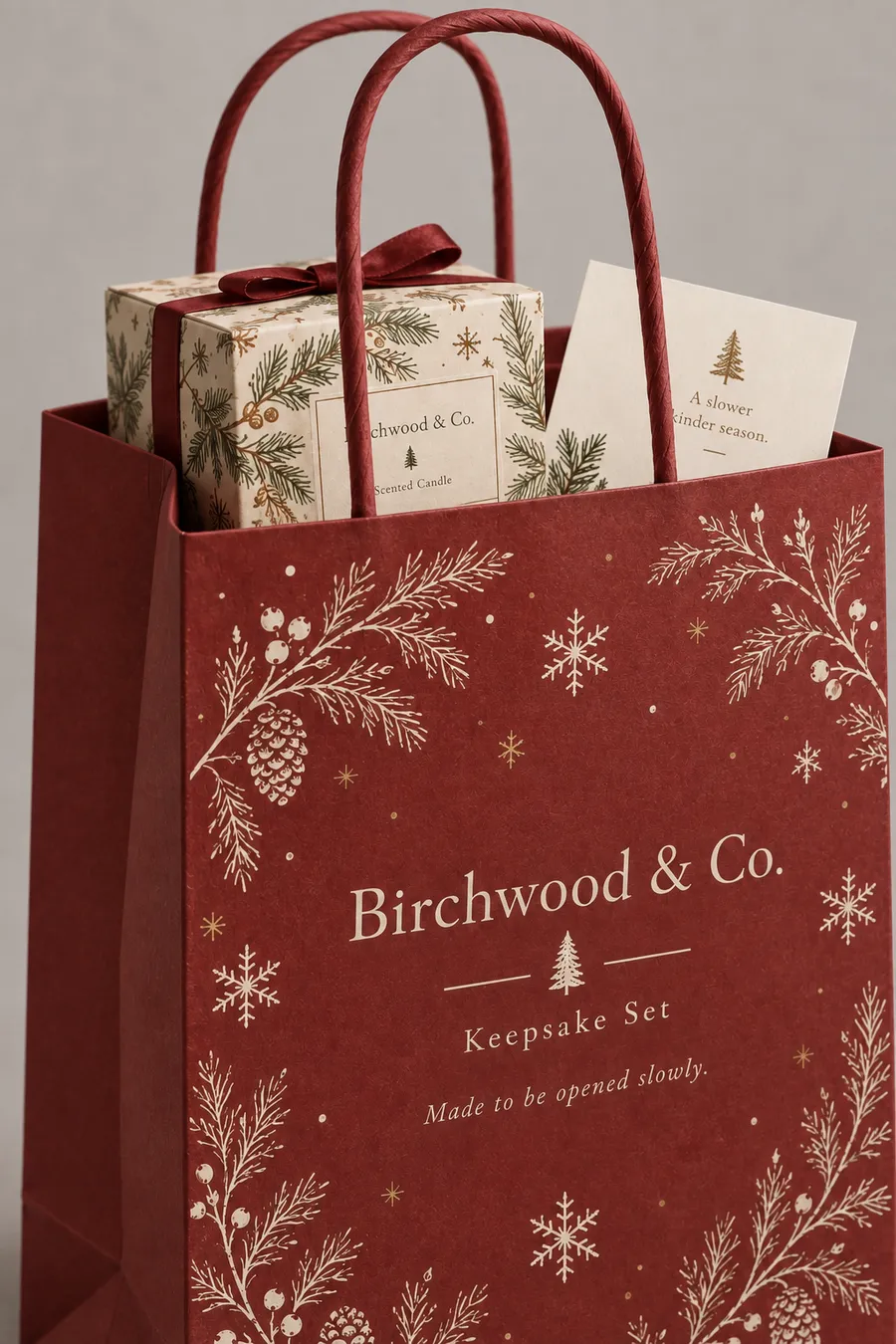
A useful proof shows the printed bag as the recipient will see it: front and back panels, gusset folds, top opening, handle treatment, base, and the product or set placed inside. The seasonal message should remain legible around the physical parts of the bag, with the opening route and front-facing panel clear before production approval.
A printed carry bag for a boxed purchase leaving a store, counter, market, or collection point during the seasonal period.
A bag can bring a branded card, bottle, candle, or keepsake into one handoff while leaving the artwork focused on the sender and occasion.
A small collection of wrapped items can share one bag when the component count, arrangement, tissue, and desired reveal are defined first.
A carry bag can support a branded exchange at an event when the expected item size, carry route, and front-facing seasonal message are known.
Seasonal artwork should be reviewed on the assembled bag, with the handle, top edge, folds, gussets, and front-facing reveal in view. Choose the finish direction around the mark or motif that needs emphasis rather than treating every panel as an accent surface.
Holiday gift bags can be scoped for a single boxed item, a small set, or an occasion handoff where the bag is part of the gift moment. The product arrangement, carry route, and desired reveal guide the structure discussion before artwork is locked.
A boxed candle, bottle, jar, or keepsake can be positioned so the handle and front panel remain clear around the gift.
Several wrapped components can be reviewed as one arrangement when their orientation, tissue, card, and presentation order are known.
A printed carry bag can connect a purchase or branded handoff to the occasion while keeping the seasonal artwork visible at the counter or exchange.
A useful quote begins with the packed gift and the moment it will be handed over, then works outward to the bag format, artwork, and finish. Send the details below so the carry structure and seasonal presentation can be reviewed as one specification.
Provide packed length, width, height, item count, orientation, approximate weight, tissue, cards, sleeves, and any unusual projections.
Share whether the bag will move from a retail counter to a car, be handed to a client, or be used at a seasonal event or pop-up.
Discuss gusset depth, base, handle style, opening route, and the amount of the packed gift that should remain visible.
Share the brand colors, seasonal palette, product name, occasion copy, motif, artwork status, and preferred paperboard or finish.
Check panel order, folds, handle placement, product orientation, artwork alignment, finish areas, and the way the bag reads when assembled.
Need help with structure, materials, or production planning? See how we manufacture custom packaging.
A sample kit carries a $44.99 USD shipping charge credited toward your first order, useful when you need to compare paper feel, printed surface, handle treatment, holiday color direction, or finish before approving a custom holiday gift bag.
Shipping charge: $44.99. Credited toward your first order.
Request a Sample KitFind clear answers about fit, materials, and ordering below.
Send the packed length, width, height, item count, orientation, approximate weight, tissue or secondary packaging, intended carry route, artwork status, handle preference, paperboard direction, finish preference, target quantity, and delivery destination. For a set, show the actual arrangement rather than listing isolated item dimensions.
Start with the product or set as it will be packed, including tissue, cards, sleeves, and other components that occupy space. The bag depth, base, opening, handle position, and visible front panel are reviewed together, and final allowance is confirmed during specification and dieline review.
An attached paper loop, a cut-in handle opening, or another reviewed handle direction can be considered around the bag footprint, packed weight, number of items, carry route, and desired printed surface. The selected handle construction is checked with the gusset, top edge, and base.
Kraft Paperboard and SBS Paperboard are the category material directions. Foil Stamping, Embossing/Debossing, Spot UV, Matte Lamination, and Gloss Lamination can be considered for selected artwork, with placement reviewed near handles, folds, cut edges, and small type.
Yes. Share the brand colors, seasonal palette, product name, motif, occasion copy, logo files, and current artwork status. The artwork is reviewed on the assembled bag so the front panel, gussets, handle, top edge, and finish accents work together.
The standard fulfillment path starts at 50 units. Production begins from 7 business days after digital proof approval, and dieline and proof review are included at no extra charge. A sample kit carries a $44.99 USD shipping charge credited toward your first order. Your final unit price is confirmed in a quote because the packed gift, bag format, board, handle, print coverage, finish, and quantity determine the specification.
Orders start at 50 units and scale up to 500,000 for bulk runs, with pricing from $0.27 per unit on larger quantities. Standard production is from 7 business days after digital proof approval.
Compare nearby products and request the format that best fits your next run.
Available product
Available product
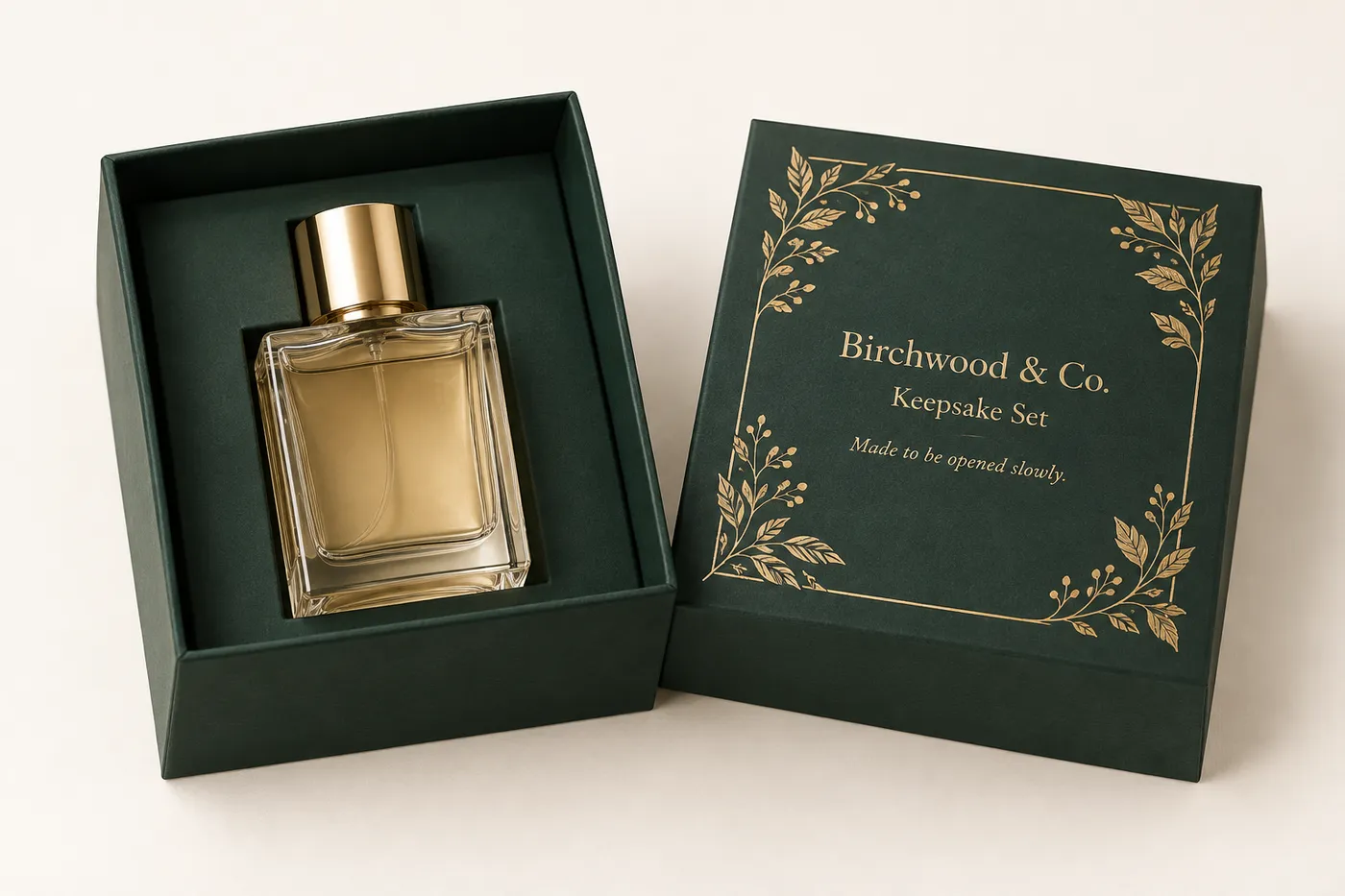
Available product
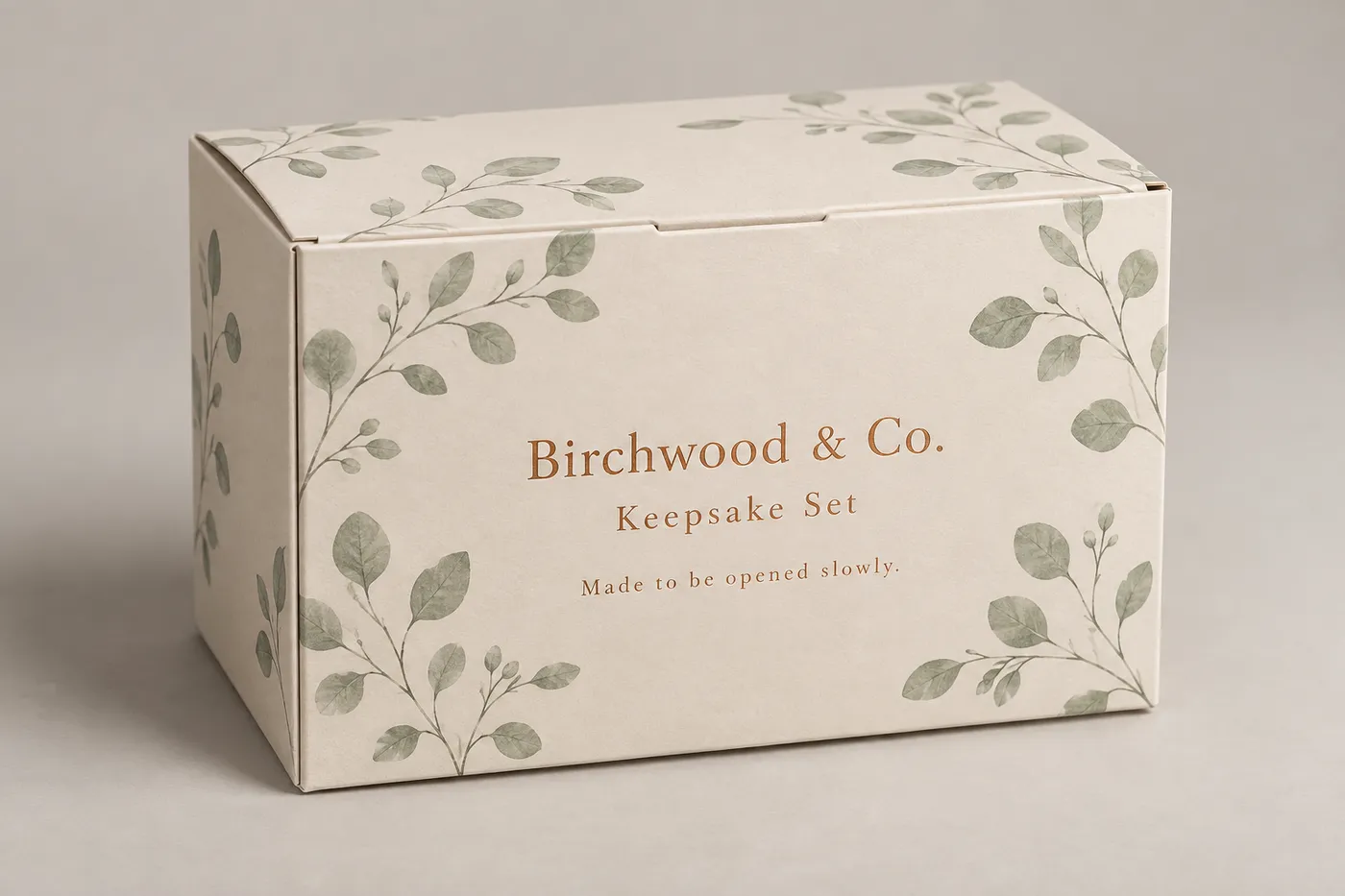
Available product
Plan the seasonal handoff
Send the packed dimensions, item or set arrangement, carry route, seasonal artwork direction, and desired material or finish. Easy Box Packaging can then review the bag structure, printed panels, and handle details as one quote-ready specification.
Add your product details to see a quote summary.