Hot sandwiches and wraps
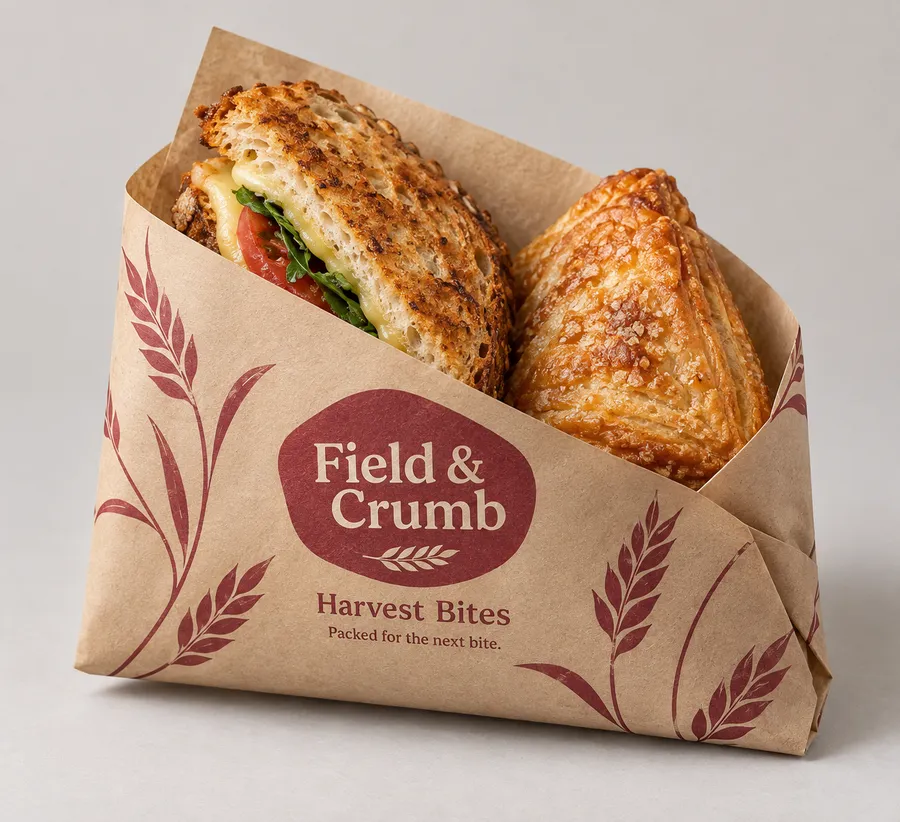
A printed tuck-top or hinged carton can contain a warm sandwich or wrap when the highest fill point, headspace, grease, and closure path are described during specification.

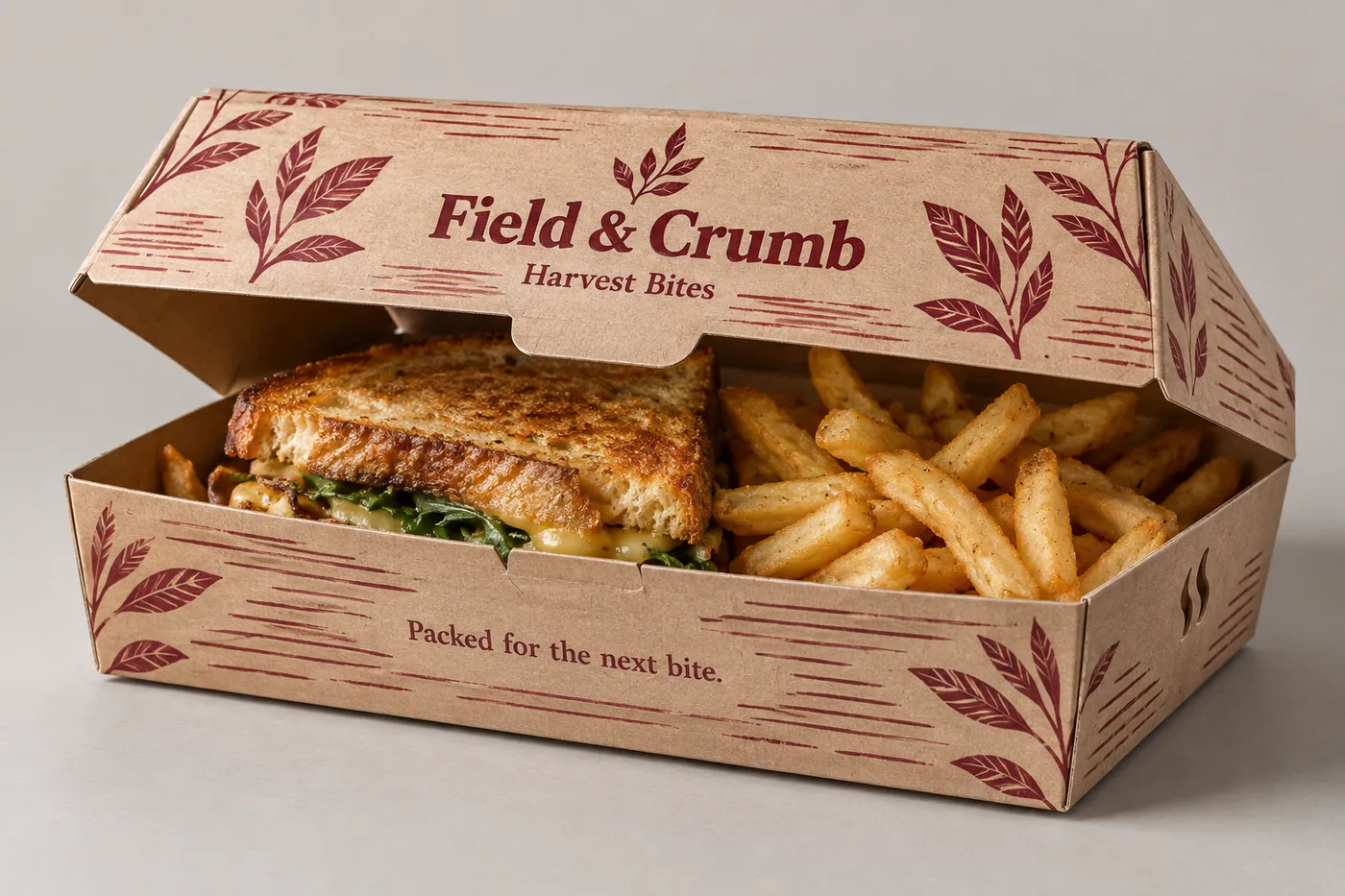
Printed kraft tuck-top hot food box holding a toasted sandwich and fries
Food Boxes
Hot food boxes give takeaway counters, cafés, bakeries, and prepared-food brands a printed carton sized around a warm portion. The structure is planned from the filled footprint, headspace, lid or tuck path, ventilation need, grease or moisture exposure, and delivery distance. Share the packed food and handling route so the board direction, print panels, and closure can be reviewed together.
Last updated
Working quote
Product brief
A custom hot food box is a printed carton planned around a warm meal, snack, pastry, or prepared portion rather than a generic menu size. The box may use a tuck top, hinged lid, folded sleeve, or another reviewed closure, but the useful choice starts with what is packed and how it leaves the counter. A box that looks right empty can collapse into the food, trap too much steam, or hide the front print once it is filled.
Record the packed length, width, height, fill weight, headspace, and any uneven toppings or inserts. Note whether the portion is fries, a sandwich, fried chicken, noodles, a pastry, a bowl component, or a mixed meal. Warmth, surface grease, sauce, condensation, holding time, and the moment the lid is closed all affect the proposed paper or board direction. The delivery distance and whether staff stack the boxes also change the closure and crush-resistance discussion. These details let the dieline follow the actual food instead of forcing the portion into a stock footprint.
Begin with the filled food at its highest practical point. Add the headspace needed for the lid, a paper liner, sauce cup, skewer, or other approved insert, then check the footprint at the base and rim. For a tuck-top carton, the front tuck length and side-wall folds need to close without pressing into the food. A hinged lid needs a clean crease and enough clearance for the tallest item. If the box is nested for counter storage, share the flat layout and the intended stack count so the fold path can be reviewed before print.
Hot food sometimes needs a controlled escape path rather than a completely sealed presentation. A vent, small gap, perforation, or open edge can be considered when steam would soften the packed item or cloud a window, but ventilation is a structural decision tied to the food, hold time, and route. Do not infer that any vent makes a box leakproof, microwave-safe, or suitable for every hot food. Describe the temperature at packing, the time before handoff, and whether the box travels by courier or is eaten at the counter.
Grease-Resistant Kraft Paper is a category direction to discuss when oil can reach the interior, while Kraft Paperboard or SBS Paperboard can suit a printed folding carton where surface detail and crease behavior matter. Corrugated Board may be relevant to a larger or longer-route outer pack, not an assumption for every takeaway box. Food-Grade Flexible Pouch Film belongs to a separate flexible component and should not be treated as the carton structure by default.
Material names do not by themselves confirm food-contact approval, a barrier level, recycled content, or performance at a particular temperature. Include the actual food, contact surface, grease or moisture exposure, holding time, and market requirements in the brief so the proposed construction can be checked. An FSC-certified paper option may be requested as a stock direction; that option does not mean every finished box uses certified stock.
Map the artwork on the flat dieline and on the assembled carton. A logo on the lid, a product name on the front panel, allergen or reheating information on a side panel, and a short handling message near the tuck can each have a different viewing moment. Keep critical text away from creases, vents, glue areas, and the inside contact surface unless the proposed construction is specifically reviewed for it. The print plan should also show which panel faces the customer when the box is handed over.
The images illustrate how print can sit on the package; your own brand artwork is placed on the dieline during proofing. Matte Lamination, Gloss Lamination, Spot UV, Foil Stamping, and Embossing/Debossing can be considered for selected artwork and surfaces subject to the carton and food-use review.
The standard fulfillment path starts at 50 units, and production is from 7 business days after digital proof approval. Free US shipping and dieline and proof review are included at no extra charge. A sample kit carries a $44.99 USD shipping charge credited toward the first order if you need to compare board feel, fold behavior, closure, print coverage, and the assembled warm-food presentation. Pricing remains quote-only because the packed portion, box style, material direction, print coverage, finish, and quantity change the specification.
Send the packed food dimensions, highest fill point, approximate portion weight, temperature at packing, grease or moisture exposure, desired headspace, lid or tuck preference, vent question, stacking method, delivery distance, artwork status, and destination. Quote requests are typically answered the same business day and always within 24 hours. Before approval, inspect the flat artwork, fold orientation, closure, visible logo field, interior contact surface, and assembled view in the digital proof.
A useful custom hot food box is a small thermal and handling decision as much as a printed carton. Accurate measurements and a clear service route let the board, folds, ventilation, print, and finish be reviewed together without inventing a universal barrier or a stock size.
Proof points
The proof should show the flat dieline and assembled carton. Compare the filled footprint, closure, fold direction, vents, print visibility, contact surface, and delivery presentation with the brief supplied for the quote.
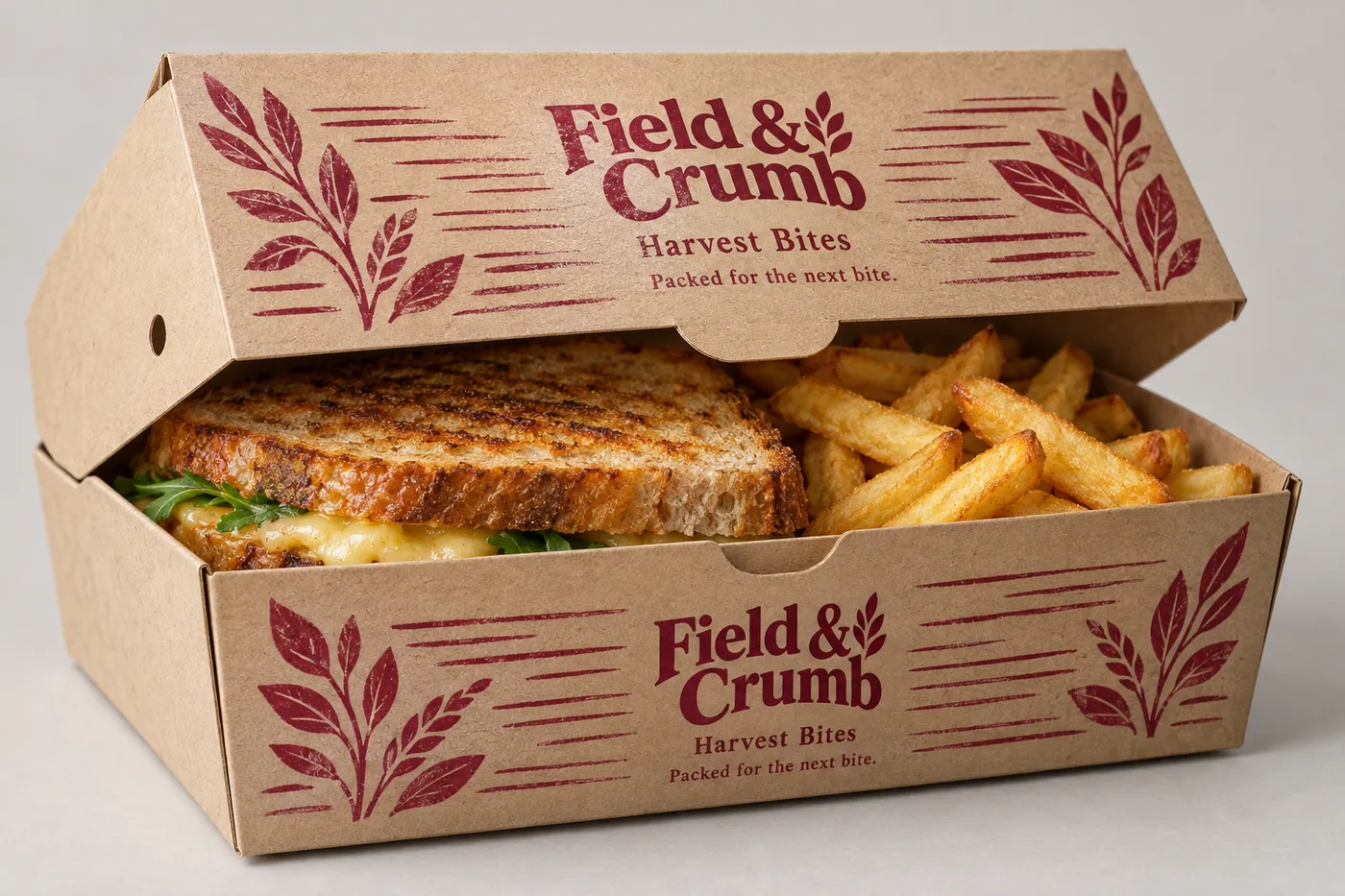
The box should contain the real portion, close along its intended tuck or lid path, and keep the chosen print panels visible during handoff or delivery. Start with packed dimensions, headspace, warmth, grease or moisture, ventilation, and route so the carton can be reviewed around the actual food.
A printed tuck-top or hinged carton can contain a warm sandwich or wrap when the highest fill point, headspace, grease, and closure path are described during specification.
A vented or selectively open structure can be considered for fries or fried snacks when steam, oil, stacking, and short delivery distance are part of the brief.
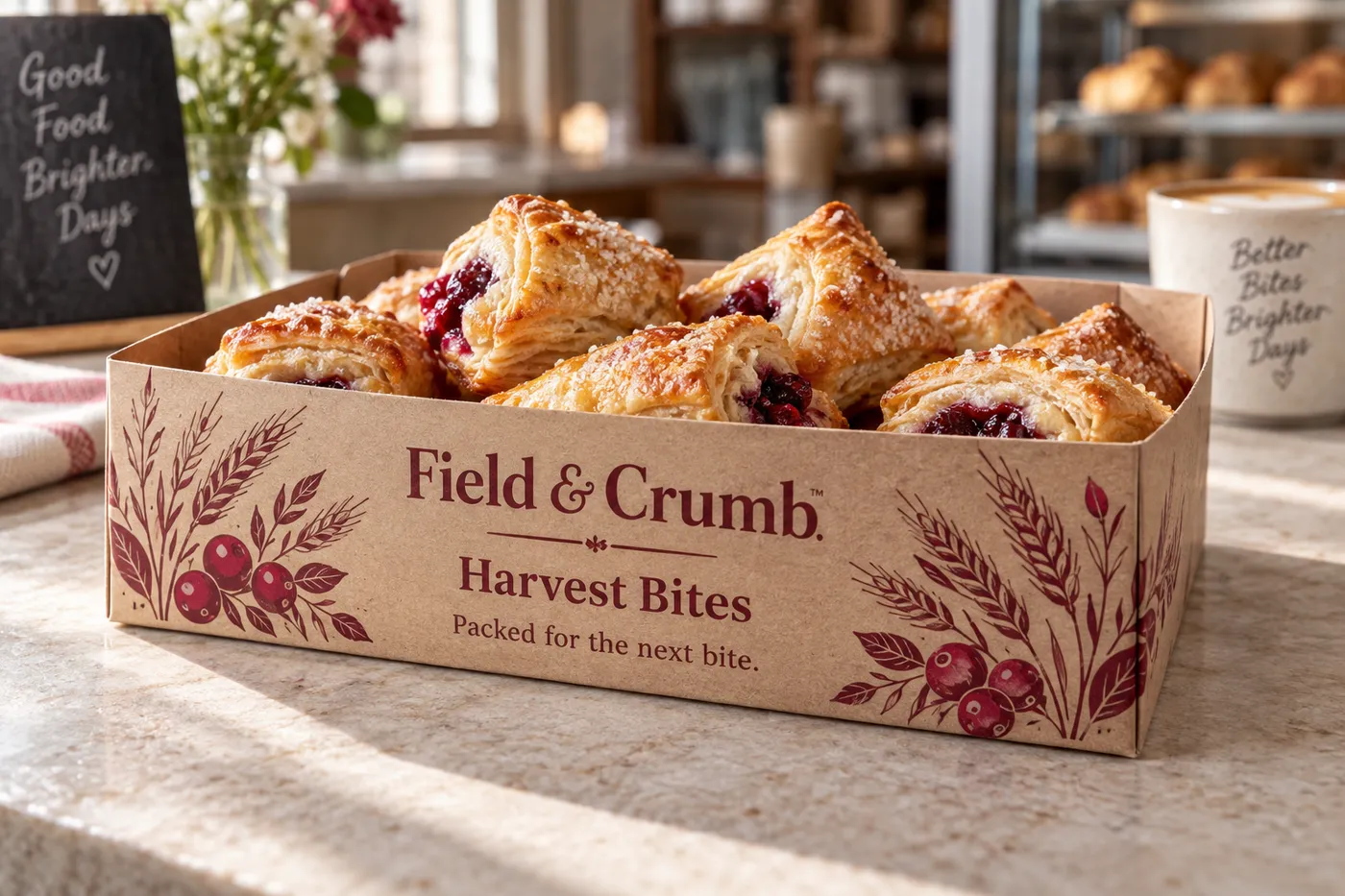
A printed box can frame warm pastries, buns, or mixed baked portions when the lid clearance, grease condition, and serving view are mapped around the actual food.
A more structured carton can support prepared food moving through a short courier route when portion weight, sauce, condensation, stacking, and the delivery distance are reviewed together.
Map artwork on the flat dieline and the closed carton. The lid, front panel, side folds, tuck, vent, glue areas, and any hidden contact surface all affect how a logo, product name, or handling message is seen after filling.
The packed portion, folds, closure, and delivery route are considered together. Depending on the food and service method, the box may use a tuck top, hinged lid, sleeve, vent detail, or another reviewed structure after the filled presentation is understood.
Base footprint, highest fill point, headspace, food weight, and any insert determine the carton dimensions and lid clearance.
Temperature at packing, grease, sauce, condensation, and hold time guide the material and ventilation discussion without assuming a universal barrier.
The lid, front panel, tuck, and carrying route should be mapped together so the brand remains visible when the box is stacked or handed over.
A useful quote starts with the filled portion, the temperature and moisture conditions, and the handoff route. These steps turn that service description into a reviewable carton format.
Provide base length and width, highest fill point, headspace, portion weight, liner or insert, lid clearance, and any uneven toppings or components.
State the food type, packing temperature, grease or moisture exposure, sauce, condensation, hold time, and whether food touches the carton.
Explain whether you need a tuck top, hinged lid, sleeve, vent, gap, or selectively open edge, and how the box will be stacked and carried.
Share preferences for Grease-Resistant Kraft Paper, Kraft Paperboard, SBS Paperboard, or a sturdier direction, plus any listed lamination, Spot UV, foil, or embossing.
Check the flat layout, fold orientation, closure, vent position, visible logo area, contact surface, and assembled filled view in the digital proof.
Need help with structure, materials, or production planning? See how we manufacture custom packaging.
A sample kit carries a $44.99 USD shipping charge credited toward your first order, useful when you need to compare board feel, fold behavior, closure, print coverage, and warm-food presentation before approving a custom box.
Shipping charge: $44.99. Credited toward your first order.
Request a Sample KitFind clear answers about fit, materials, and ordering below.
It is a printed carton or reviewed takeaway structure sized around a warm food portion. The format, closure, headspace, ventilation question, material direction, and print panels follow the actual food and the way it is handed over or delivered.
Send the packed base length and width, highest fill point, headspace, portion weight, lid clearance, liner or insert, and any toppings or uneven components. Include the food type, packing temperature, grease or moisture exposure, hold time, and delivery route.
Grease-Resistant Kraft Paper is a category direction to discuss when oil can reach the interior. The proposed construction still needs review against the actual food, moisture, temperature, contact time, closure, and intended service method.
Sometimes a vent, gap, perforation, or open edge can help manage steam, but it is a product-specific structural choice. The proof should review the food, hold time, lid path, condensation, stacking, and route rather than assume any vent is leakproof or microwave-safe.
Artwork can be mapped across the lid, front, sides, tuck, and other approved panels. Matte Lamination, Gloss Lamination, Spot UV, Foil Stamping, and Embossing/Debossing can be considered subject to the board, fold, contact-surface, and food-use review.
The standard fulfillment path starts at 50 units. Production begins from 7 business days after digital proof approval, with free US shipping and dieline and proof review included at no extra charge. Your final unit price is confirmed in a quote because the filled portion and carton specification determine the work.
Orders start at 50 units and scale up to 500,000 for bulk runs, with pricing from $0.20 per unit on larger quantities. Standard production is from 7 business days after digital proof approval.
Compare nearby products and request the format that best fits your next run.
Available product
Available product
Available product
Available product
Plan the warm-food handoff
Send the packed dimensions, temperature and moisture details, closure or vent preference, artwork status, material direction, finish choice, and destination. Easy Box Packaging can then review the folds, containment, print visibility, and delivery presentation as one quote-ready specification.
Add your product details to see a quote summary.