Multi-flavor balm sets
A coordinated group of tubes or pots where color, flavor, or scent variation is part of the set presentation.

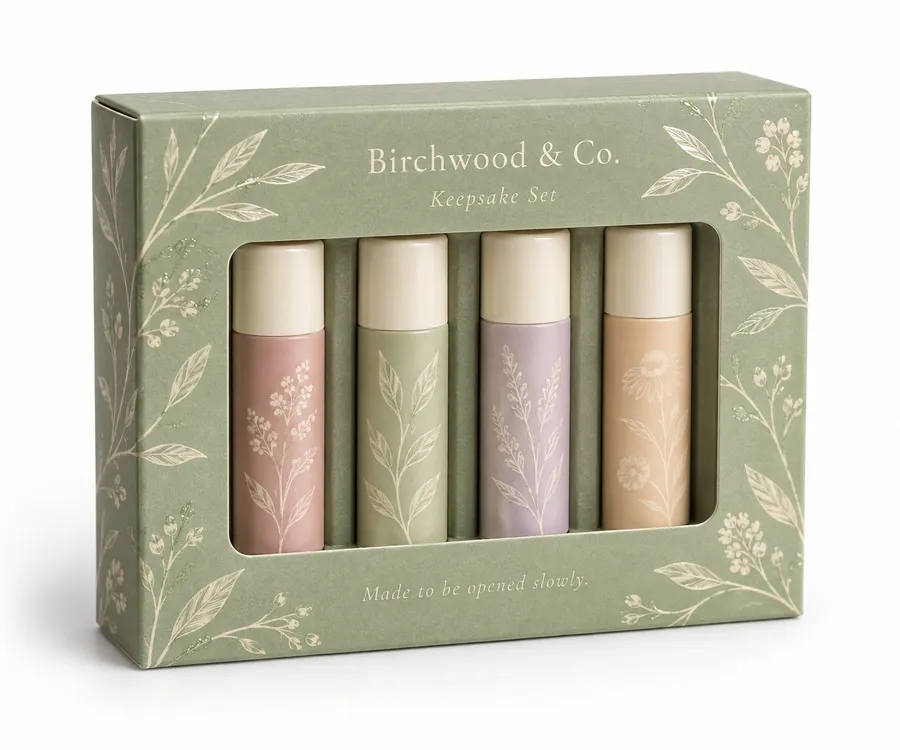
Closed sage green lip balm gift carton with four pastel tubes visible through its window
Gift Boxes
Custom packaging for a coordinated lip balm gift set, sized around the real tube or pot count, filled height, and closure shape. Choose a folding carton with a fitted paperboard tray or a rigid two-piece presentation box, then use a window, print, and finish to decide how much of the set is revealed before opening.
Last updated
Working quote
Product brief
A lip balm gift set is a group of small products that has to read as one gift while keeping each tube or pot in a deliberate position. A larger empty box does not solve that presentation problem by itself. The interior needs to account for the number of products, the shape of each primary container, whether the pieces match, and how the set should look when the lid opens. A fitted paperboard tray can give each piece a defined position, while a more open cavity may suit a set where a little variation is part of the presentation.
The product format matters as much as the count. A twist-up tube has a narrow body and a cap that may add width at the top. A balm pot has a wider footprint and may be opened from above. A mixed set can combine those formats, but the tray should be planned around their different footprints rather than forcing every item into repeated slots. Share photographs or physical samples when the closure, shoulder, or cap projects beyond the main body. Those details affect how the interior is laid out and how the box presents the products together.
Start with the filled product, not an assumed carton size. For each tube or pot, record the widest body measurement, filled height, cap or lid width, and the orientation you want at presentation. Note whether the product stands upright, lies flat, or needs to be lifted from a shallow cavity. A short tube with a broad cap can need a different opening than a taller narrow tube, even when the two products hold a similar amount of balm.
Also provide the set count and whether the pieces are identical, mixed by flavor or color, or paired with an accessory such as a small applicator or card. The box's internal dimensions are developed from those product measurements and the clearance needed for the chosen structure. The outer dimensions then follow from the interior, board construction, closure, and any presentation features. A change to the product size or set composition normally means a new size review and dieline, even when the same general gift-box style is retained.
A folding carton can be a practical choice when the gift set also needs to ship and store flat before assembly. It can carry a fitted paperboard tray, an opening window, and printed graphics across the lid and panels. A rigid two-piece box arrives with a more permanent shape and can suit a set where the box itself is meant to remain part of the keepsake presentation. Both structures can be customized, but they lead to different decisions around assembly, storage, shipping volume, and how the recipient opens the package.
The right choice depends on the product count, the desired reveal, the fulfillment path, and the role the box plays after purchase. A small set of matching tubes may work well in a shallow folding carton with a repeated tray layout. A mixed-format set or a gift intended for a slower unboxing moment may need a deeper presentation structure with a more considered interior. The structural choice should be settled before artwork is prepared because it changes the printable panels, folds, lid relationship, and tray arrangement.
Internal support depends on the product geometry, weight, orientation, fragility, outer structure, desired reveal, and how the finished set will be handled. A paperboard tray can separate small tubes, create a raised presentation, or give a wider pot its own defined position. A divided cavity can work when the pieces are similar and the design calls for a simpler opening. The actual support approach is confirmed against the product details rather than selected from a generic insert template.
A die-cut window can show the caps, colors, or coordinated arrangement before the box is opened. That can be useful when the visible set is part of the product story. A fully enclosed lid keeps the contents hidden until opening and gives the printed surface more control over the first visual impression. Window placement should leave the products, tray edges, and brand panel readable together. The window shape, film choice if applicable, and tray position are part of the same presentation review.
SBS paperboard can suit a smooth, bright printed surface, while kraft paperboard can create a more natural board character. The choice should follow the visual direction, the amount of color coverage, the intended finish, and how the tray and outer box need to work together. An FSC-certified paper option is available as a material choice when that sourcing detail is important to the order. It is an option to confirm for the selected stock, not a blanket claim about every box.
Foil stamping can draw attention to a wordmark or a small line of artwork. Embossing or debossing can add a tactile change to selected areas. Spot UV can create a controlled gloss contrast against a matte surface, while matte or gloss lamination changes the way the printed board feels and reflects light. These effects depend on the artwork and construction, so the chosen combination is reviewed against the actual panels rather than promised as a universal result.
Once the structure and interior are understood, send the product measurements, set count, preferred box style, window preference, material direction, and any print or finish requirements. Easy Box Packaging can then review the specification and prepare the dieline for the selected format. The digital proof is reviewed and approved before production starts, so the printed panels, opening direction, tray relationship, and visible product position should all be checked at that stage.
Standard orders start at a minimum of 50 units. Production begins after digital proof approval and runs from 7 business days. The indicative unit price range for a structurally comparable multi-item gift set is $0.33–$0.99 per unit and remains subject to the final size, board, interior, print, finish, and order details. US shipping is included on the standard path. If you want to compare board and finish before placing a production order, a $44.99 sample kit is credited toward your first order.
Include the number of tubes or pots in one set, the filled height and widest body measurement for each format, cap or lid dimensions, and whether the pieces should stand upright or lie flat. Add the preferred folding or rigid structure, window or enclosed presentation, artwork status, and any requested finish. Those inputs give the specification review a useful starting point without assuming that every lip balm container has the same geometry.
The quote can then be developed around the actual set rather than a generic small cosmetic box. A sample kit is available for a closer look at board and finish. Keep the set count and product measurements consistent between the quote request, dieline review, and proof approval so the final presentation is evaluated against the same contents.
Proof points
The useful decisions are visible in the structure, interior, and presentation rather than hidden behind a generic small-box format.
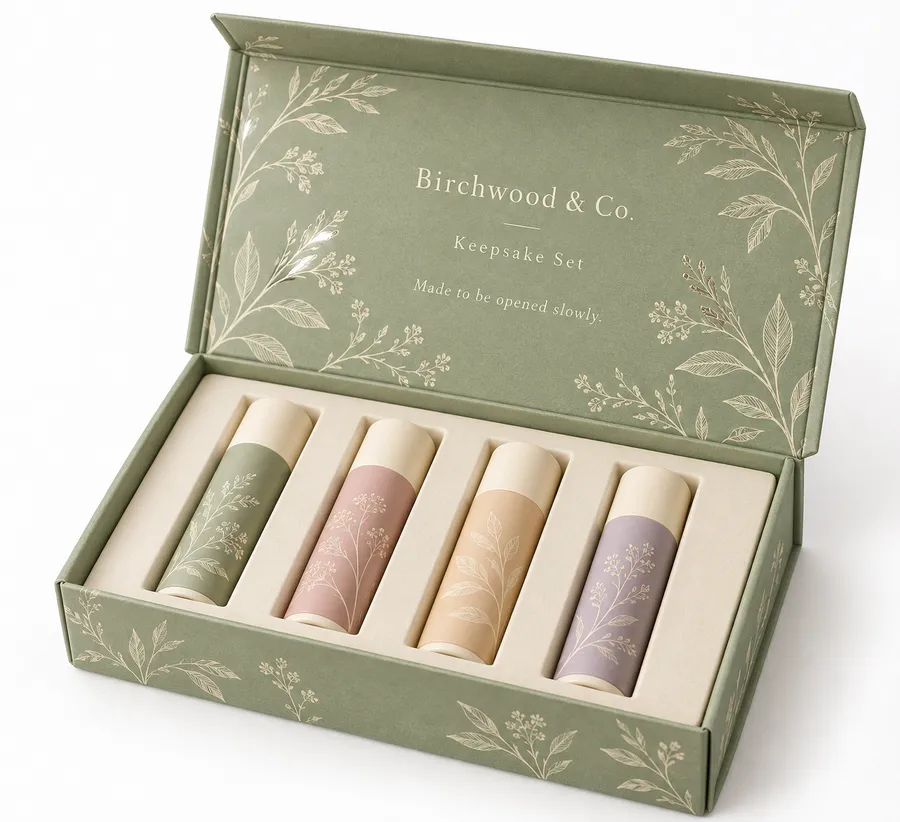
A lip balm gift set needs an interior that keeps tubes or pots positioned as a coordinated group rather than a loose collection in one empty cavity. The layout is developed from the real product count, body shape, cap or lid geometry, and the reveal the recipient should see when the box opens.
A coordinated group of tubes or pots where color, flavor, or scent variation is part of the set presentation.
A lip balm assortment paired with a small accessory or note card in one branded gift format.
A limited-edition set that uses the outer print, window, and opening sequence to carry the occasion theme.
Print and finish choices can be combined with the selected board and structure, subject to artwork and construction review.
The support approach is chosen from the product geometry and presentation brief together, so the tray or cavity works with the selected box structure and opening direction.
A narrow twist-up tube, a broad balm pot, and a mixed set need different cavity footprints and opening access.
Matching pieces can use a repeated layout, while mixed sizes, caps, or accessories call for a more specific arrangement.
Window position, upright or flat orientation, and the way the set is lifted from the box all influence the support detail.
The customer-facing process starts with the contents and finishes with a proof approved against the chosen structure.
Send the set count, filled height, widest body measurement, cap or lid dimensions, and preferred orientation.
Confirm whether a folding carton or rigid two-piece box better suits the presentation and fulfillment path.
Confirm the tray or divided cavity, window position, opening direction, and product reveal against the specification.
Review and approve the digital proof before production starts.
Production runs from 7 business days after digital proof approval.
Need help with structure, materials, or production planning? See how we manufacture custom packaging.
A $44.99 sample kit, credited toward your first order, lets you compare paperboard surface, print, and finish references before committing to a full production run.
Shipping charge: $44.99. Credited toward your first order.
Request a Sample KitFind clear answers about fit, materials, and ordering below.
Yes. A mixed-format set can be planned, but the tray or divided cavity needs to account for each body's footprint, cap or lid shape, and the way the products should be presented together.
Share the filled height, widest body measurement, cap or lid dimensions, product count, and preferred orientation for each format. Photographs or samples can help clarify unusual shoulders, closures, or accessories.
A die-cut window can reveal selected products, colors, or the tray arrangement. A fully enclosed box keeps the products hidden until opening and gives the printed lid more control over the first reveal.
The support detail depends on the product geometry, set composition, orientation, box structure, handling, and desired presentation. A fitted tray, divided cavity, or simpler interior can be reviewed against the actual specification.
The standard production estimate is from 7 business days after digital proof approval. The final schedule is confirmed with the approved specification and order details.
Orders start at 50 units and scale up to 500,000 for bulk runs, with pricing from $0.32 per unit on larger quantities. Standard production is from 7 business days after digital proof approval.
Custom packaging for a coordinated lip balm gift set, sized around the real tube or pot count, filled height, and closure shape. Each order is made to order around your packed product and artwork, and the specification is confirmed against a digital proof before production.
Compare nearby products and request the format that best fits your next run.
Available product
Available product
Available product
Available product
Ready to configure your set
Share your tube or pot dimensions, set count, preferred structure, and presentation direction to start a packaging review.
Add your product details to see a quote summary.