Scented jar retail packs
Center one glass jar and give the fragrance name, burn story, and care information a clear shelf-facing order.

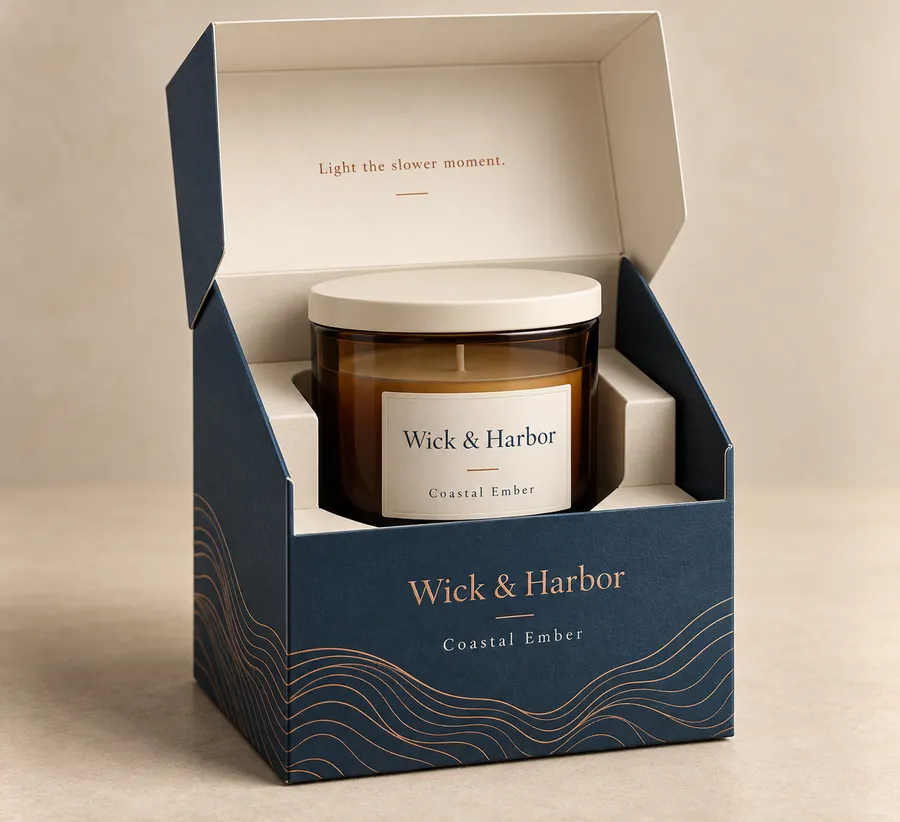
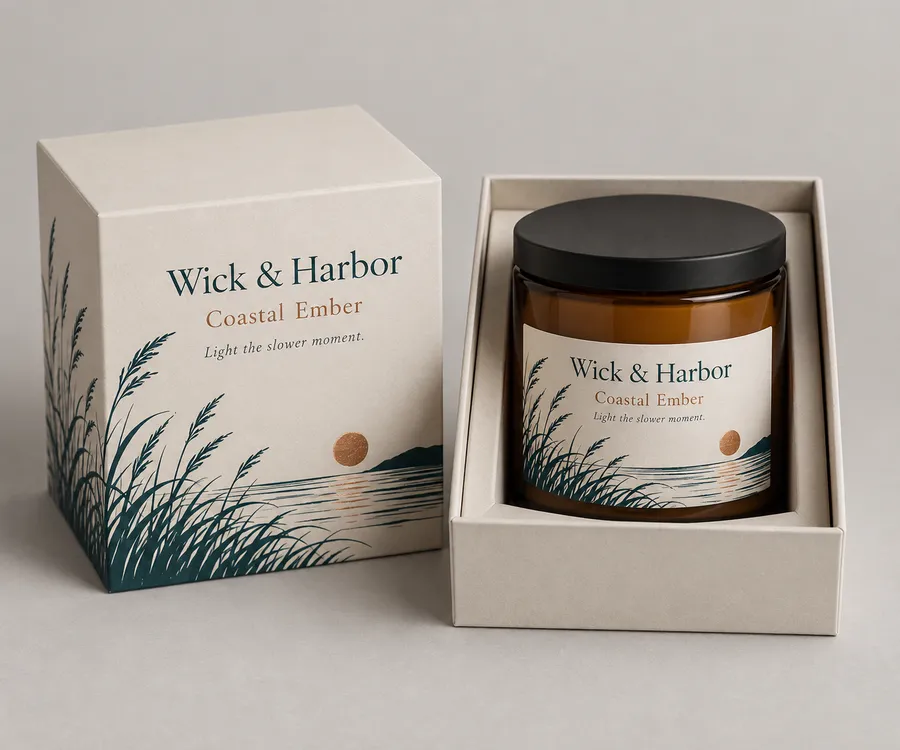
Open ivory and ocean-blue candle carton showing an amber jar, copper line motif, and Wick & Harbor print.
Candle Boxes
Luxury candle packaging is planned around the vessel, the unboxing sequence, and the information a shopper should read first. A fitted insert can steady a glass jar or tin, while a carefully mapped print surface carries fragrance, care, and brand details. Share the packed profile, board direction, finish priorities, artwork, quantity, and shipping route so Easy Box Packaging can review the complete box as one product.
Last updated
Working quote
Product brief
Luxury candle packaging starts with control rather than decoration. The box should hold the jar or tin without unnecessary movement, present the fragrance story in a clear reading order, and make the first opening feel deliberate. Begin with the vessel as it will actually be packed: outside diameter or length and width, total height including the lid, rim or shoulder changes, label position, approximate weight, and any wrap that stays on the candle. Those details determine the footprint, clearance, insert relationship, and panel proportions.
A measured paperboard support may center one vessel and keep the lid away from the top panel. A sleeve can reduce material around a secure container, while a folding carton can provide more room for care copy, scent notes, and a structured unboxing sequence. The useful choice depends on the product geometry and route, not on a generic luxury label.
The packed profile is the starting point for a box that feels quiet and precise. Allow for the widest point, lid clearance, closure movement, and the way the customer lifts the product from the pack. A jar with a shoulder may need a different support edge than a straight-sided tin. If the candle travels through e-commerce handling, an insert can limit scuffing and keep the front label facing the intended reveal. For a short shelf path, the outer carton may carry more of the presentation while the vessel already has a secure lid.
Share whether the pack is a single jar, a tin, or a small gift set. A candle with matches, a card, or an accessory can use a divided support, but the cavity arrangement should follow the actual packed pieces. Confirm the vessel before the dieline is treated as final; a box sized only to the wax fill can pinch the closure or leave the candle moving inside.
SBS Paperboard offers a smooth print face for fragrance names, care instructions, and restrained artwork. Kraft Paperboard can introduce a warmer, more tactile direction when the brand system suits it. Corrugated Board is a consideration when the route needs more cushioning or a stronger shipping-oriented structure. The final board should be reviewed with the span, folds, insert, and handling path together.
Use Matte Lamination where low glare helps small copy stay readable. Gloss Lamination can add a brighter surface direction for selected artwork. Spot UV can isolate a logo, constellation, or line detail against a matte field; Foil Stamping can reserve metallic emphasis for a name or border; Embossing/Debossing can add touch at a defined mark. These treatments are options to map on the artwork, not promises that every finish suits every stock or fold.
The digital proof should show the assembled outer box, vessel position, insert edges, closure, print panels, and finish map together. The images illustrate how print can sit on the package; your own brand artwork is placed on the dieline during proofing. Review fragrance hierarchy, care copy, warnings, net contents, panel orientation, fold safety, and the contrast of any foil or spot gloss. If a window or open reveal is part of the direction, confirm that it frames the intended face without crossing a seam or weak edge.
The standard fulfillment path begins at 50 units, and production is from 7 business days after digital proof approval. Free US shipping is available on that path. A sample kit has a $44.99 USD shipping charge credited toward the first order. Send the packed profile, artwork status, quantity, destination, and finish priorities so the quote can stay tied to the real construction instead of an assumed universal size.
A single scented jar can use a rigid-feeling presentation with a centered label and an insert that keeps the reveal aligned. A shallow tin may benefit from a restrained carton that leaves room for scent and care information. Gift sets can separate a candle and matches while keeping the outer identity coherent. Seasonal or subscription drops can reuse a structural direction while changing artwork after the vessel and cavity are confirmed.
The best next step is a concise brief: vessel dimensions with lid, approximate weight, desired reveal, material direction, finish priorities, artwork, quantity, and shipping route. Easy Box Packaging can then review the box, insert, print surface, and proof as one coordinated specification.
Proof points
Review the box as an assembled product so structure, copy, and decoration agree before production.
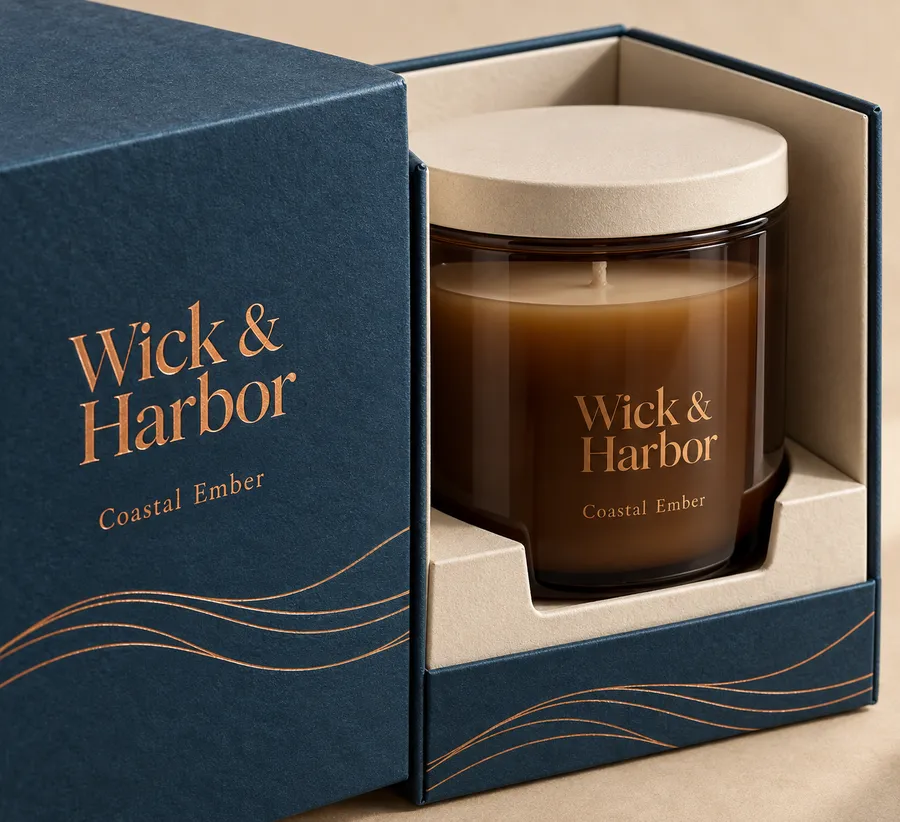
The vessel, insert, print surface, finish map, and opening sequence should be reviewed together. A useful brief starts with the packed profile and the moment the customer should see first, then connects that information to board, closure, support, and route.
Center one glass jar and give the fragrance name, burn story, and care information a clear shelf-facing order.
Use a compact carton or sleeve direction that protects the lid while leaving room for a distinct scent system.
Review a divided support for the candle, matches, card, or accessory so each piece has a defined place.
Keep a repeatable structure while changing artwork after each edition’s vessel, cavity, and route are confirmed.
Map fragrance, care, and brand information on the assembled package so folds, closures, inserts, and the opening sequence remain intentional. Finish choices should support legibility and tactile emphasis rather than cover every surface by default.
A centered jar or tin can feel more intentional when the support follows its widest point, lid clearance, weight, and orientation. Inserts remain conditional on the geometry and route rather than a default feature.
Use the packed diameter or length and width, total height, rim, shoulder, and lid to inform the cavity and clearance.
Keep the label, vessel face, and fragrance name oriented toward the intended shelf or unboxing view.
When a candle travels with matches or a card, review divided support around the actual companion pieces.
A quote is easier to evaluate when the candle, pack structure, artwork, and route are described together. These steps keep the construction review tied to the real product.
Provide outside diameter or length and width, total height including the lid, approximate weight, widest points, label, rim, taper, and closure.
State whether the first reveal should show the label, vessel material, wax surface, or a companion piece, and identify the orientation.
Share whether the pack needs an insert, sleeve, divided support, or a simpler carton based on the route and vessel movement.
Note preferences for SBS Paperboard, Kraft Paperboard, Corrugated Board, Matte Lamination, Gloss Lamination, Spot UV, Foil Stamping, or Embossing/Debossing.
Check assembled panels, copy hierarchy, folds, closure, vessel position, insert edges, and finish placement in the digital proof.
Need help with structure, materials, or production planning? See how we manufacture custom packaging.
Request a sample kit to compare paper surfaces, print treatment, and finish direction. The $44.99 USD shipping charge is credited toward your first order.
Shipping charge: $44.99. Credited toward your first order.
Request a Sample KitFind clear answers about fit, materials, and ordering below.
Measure the candle’s outside diameter or length and width, total height with the lid, widest points, rim or shoulder, label position, and approximate weight. Include any wrap that remains on the product so the box and insert are reviewed around the packed profile.
No. An insert depends on the vessel geometry, weight, orientation, movement risk, and route. A measured support can center a glass jar or tin for shipping or a controlled reveal, while a secure vessel with a short shelf path may suit a simpler carton or sleeve.
SBS Paperboard, Kraft Paperboard, and Corrugated Board are category directions to review with the span, folds, support, and handling route. The final board should follow the actual construction and artwork rather than a generic luxury assumption.
Matte Lamination, Gloss Lamination, Spot UV, Foil Stamping, and Embossing/Debossing can be considered where the artwork benefits. Map the finish on the assembled proof so small copy remains readable and tactile or metallic details stay defined.
The standard fulfillment path starts at 50 units. Production is from 7 business days after digital proof approval, and free US shipping is available on that path. Final timing and quote review remain tied to the approved specification.
Orders start at 50 units and scale up to 500,000 for bulk runs, with pricing from $0.36 per unit on larger quantities. Standard production is from 7 business days after digital proof approval.
Yes. Free US shipping is included on the standard fulfillment path. Delivery timing and carrier details are confirmed when your quote is prepared.
Compare nearby products and request the format that best fits your next run.
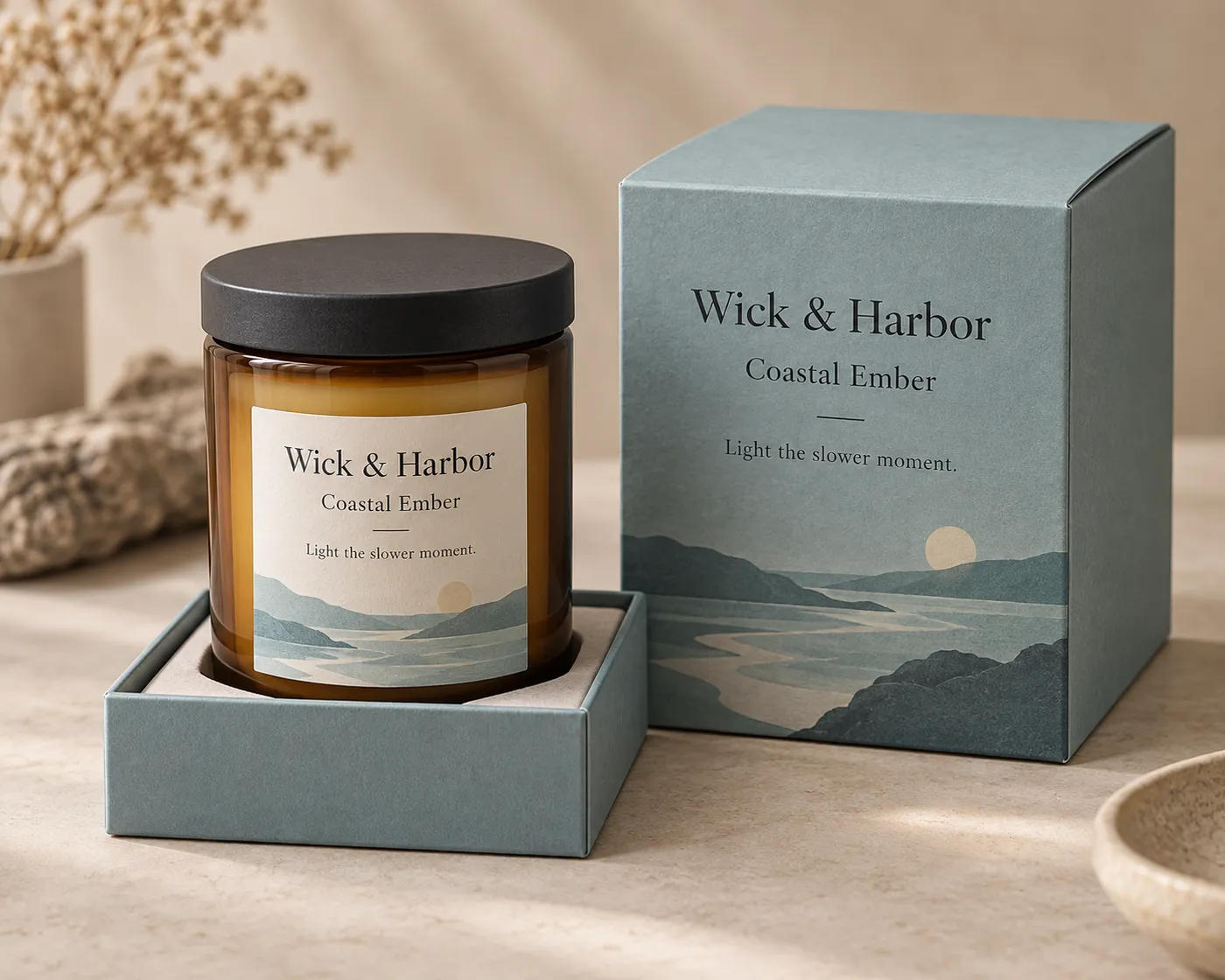
Available product
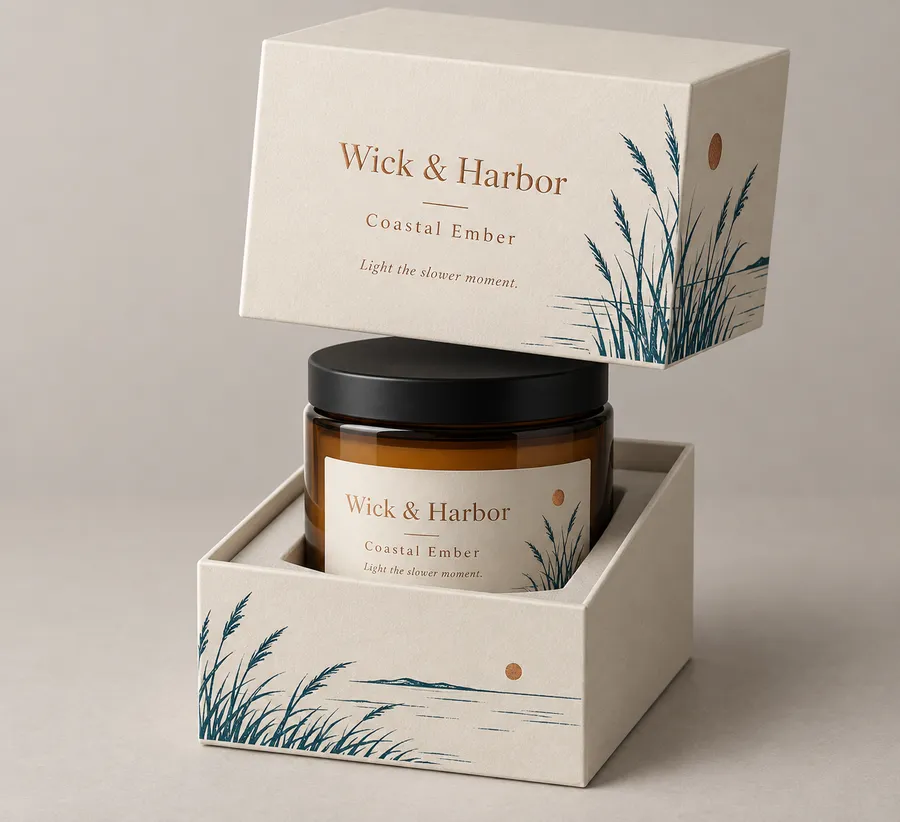
Available product
Available product
Available product
Plan the candle presentation
Send the vessel details, opening sequence, artwork status, board and finish direction, quantity, and destination. Easy Box Packaging can then review the structure and printed presentation as one quote-ready specification.
Add your product details to see a quote summary.