Curated skincare collections
A jar, tube, and bottle presented together as one collection rather than as separate retail packs.

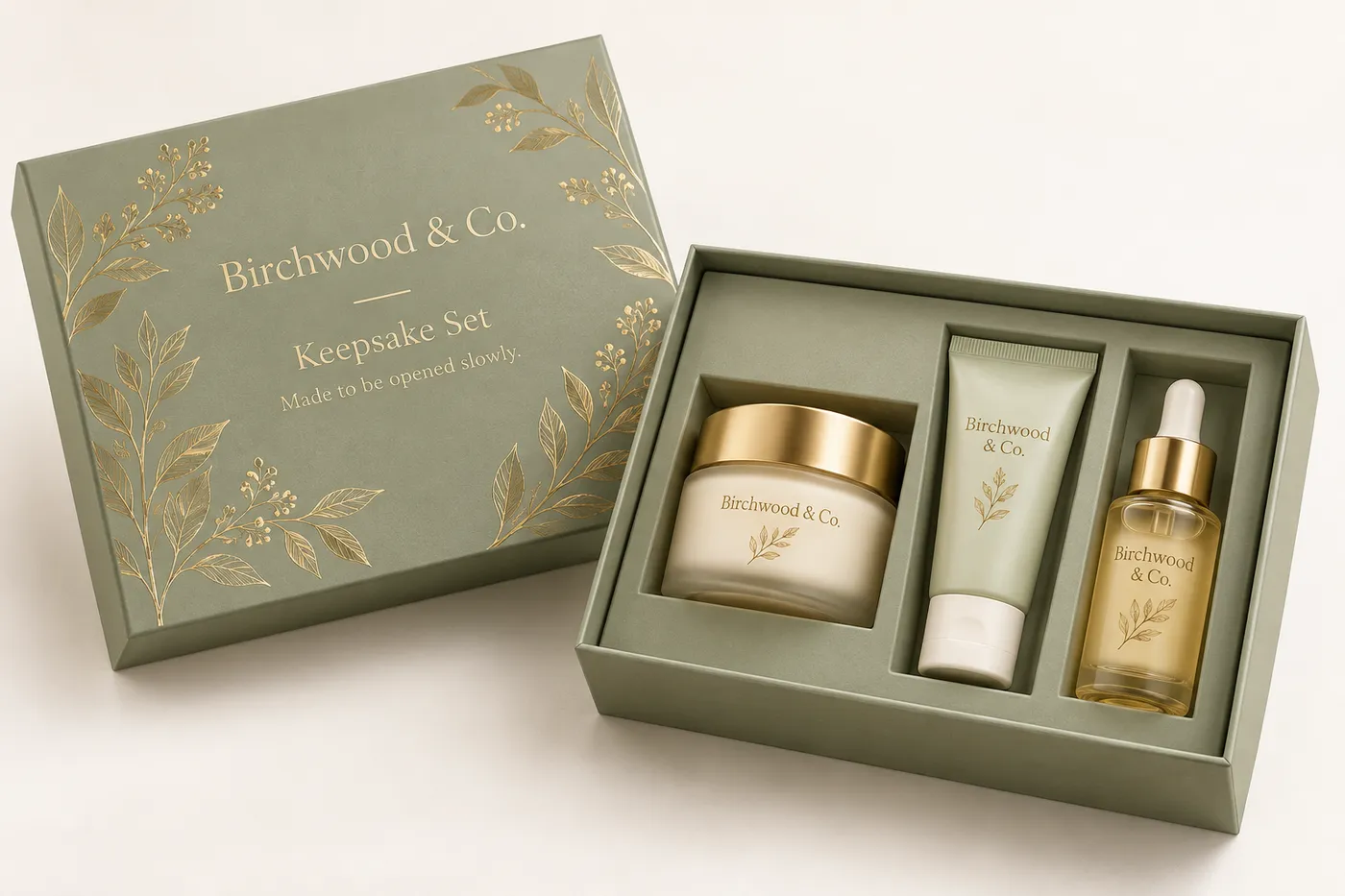
Open sage-green skincare gift set box with divided tray and three printed containers
Gift Boxes
Skincare gift set packaging built around the assembled jars, tubes, and bottles in your collection. A divided paperboard tray or shaped internal support keeps the pieces presented as one coordinated gift, while the outer box, print coverage, and finish are selected around the opening experience and how the set will be handled.
Last updated
Working quote
Product brief
Skincare gift set packaging works best when the internal plan starts with the products that will actually be packed. A round cream jar, a slim tube, and a dropper serum bottle do not share the same footprint or center of mass. Their assembled heights, widest points, closure shapes, and label-facing sides all affect how the set can be arranged. The box should be sized around those real profiles rather than around a generic idea of a beauty collection.
Share the product list, assembled measurements, and the way each item should face when the lid opens. Note any raised lid, shoulder, pump, dropper, or cap that changes the widest point. Also identify which items are intended to remain upright and which can lie flat. That information gives the packaging team a practical basis for deciding the tray layout, the outer proportions, and the amount of clearance needed around the set.
A multi-item skincare set needs more than an outer carton with empty space around the products. Internal support can be integrated into the paperboard structure or provided as a separate paperboard tray, depending on product geometry, weight, orientation, and presentation requirements. The useful choice is the one that positions each item without making the box feel crowded when it is opened.
A divided tray can give each product a defined place and keep different container shapes from shifting into one another. A shaped cavity can work when the products have a simpler arrangement and the outer pack needs a compact footprint. The layout may also reserve a narrow area for an insert card or care note, provided that addition is included in the actual brief. The final arrangement is reviewed against the products, not assumed from the product name alone.
The order of the items matters as well. A wider jar can anchor one side of the tray, while a slim tube or bottle can sit beside it with its front label facing the opening. If the set includes a dropper bottle, the closure height may determine whether the lid needs extra depth. These are small structural decisions, but they are what make a skincare gift set read as a deliberate collection rather than several unrelated packs placed in one box.
A rigid two-piece base-and-lid box creates a formed presentation structure for a set where the box itself is part of the gift moment. It gives the lid and base stable panels for the brand treatment and can hold a fitted paperboard tray inside. This direction suits a more defined opening sequence, especially when the set is handed over as a complete gift or used for a launch presentation.
A folding carton with divided paperboard support is a lighter alternative. It can arrive flat before assembly and gives the set a more efficient outer format when storage, fulfillment, or shipping space matters. Its panels can still carry the collection name, product hierarchy, and artwork, while the tray or shaped cavity keeps the components in position. The decision depends on the intended opening experience, product weight, storage method, and how the finished pack will be handled. Neither structure is a universal answer for every skincare set.
SBS paperboard offers a smooth print surface for a clean, color-led skincare collection. Kraft paperboard gives the same layout a more natural surface character and changes how light colors, dark ink, and fine linework read. An FSC-certified paperboard option is available as a material choice when that detail is part of the brief; it should not be treated as a blanket certification of every material or finished box.
The outer lid, front panel, and side panels can carry different parts of the brand system. Foil stamping may highlight a product name or small botanical mark. Embossing or debossing can create a tactile change on the lid. Spot UV can add a localized gloss contrast to selected artwork, while matte lamination or gloss lamination changes the overall surface character. Finish combinations remain subject to artwork review so fine lines, board choice, coverage, and the opening structure are considered together.
A coordinated set benefits from one clear visual hierarchy. The collection name can own the lid, individual product names can sit on an insert or internal card, and secondary information can stay on a side panel. That approach gives the buyer a readable first view without covering every surface in copy. The print plan should follow the way the set is opened, not just the available flat area on the dieline.
A quote brief should include the assembled height, widest diameter or width, closure details, desired orientation, number of products, target quantity, artwork status, and whether the set is intended for retail, direct shipment, gifting, or a launch presentation. Reference photos can help explain unusual shoulders, pumps, droppers, or decorative caps that are difficult to capture in a single measurement.
Standard orders start at a minimum of 50 units. Production begins from 7 business days after digital proof approval, and free US shipping applies on the standard fulfillment path. A $44.99 sample kit shipping charge is credited toward your first order, which gives you a way to inspect board, print, and finish references before confirming a larger run. Dieline and proof review are included on every order at no extra charge.
Once the products and opening sequence are clear, the packaging direction can be narrowed to the appropriate structure, tray approach, board, print coverage, and finish. The digital proof then gives the team a shared view of the artwork and layout before production begins. If the product lineup changes after the layout is approved, the updated assembled measurements should be checked against the same structure instead of being treated as a small copy change.
This format can support a curated skincare collection, a seasonal beauty gift, a new-product launch set, or a direct-to-consumer bundle that needs to arrive as one presentation. A rigid box can make the opening sequence more defined. A folding carton can keep the set lighter and easier to store before filling. In either case, the strongest starting point is the actual product lineup and the order in which the recipient should discover it. The packaging should make that sequence easy to understand at a glance, then keep each jar, tube, and bottle in its intended place until the box is fully opened.
Proof points
The product lineup, internal placement, board, print coverage, and finish are reviewed as one specification so the finished pack supports both the set and the intended opening moment.
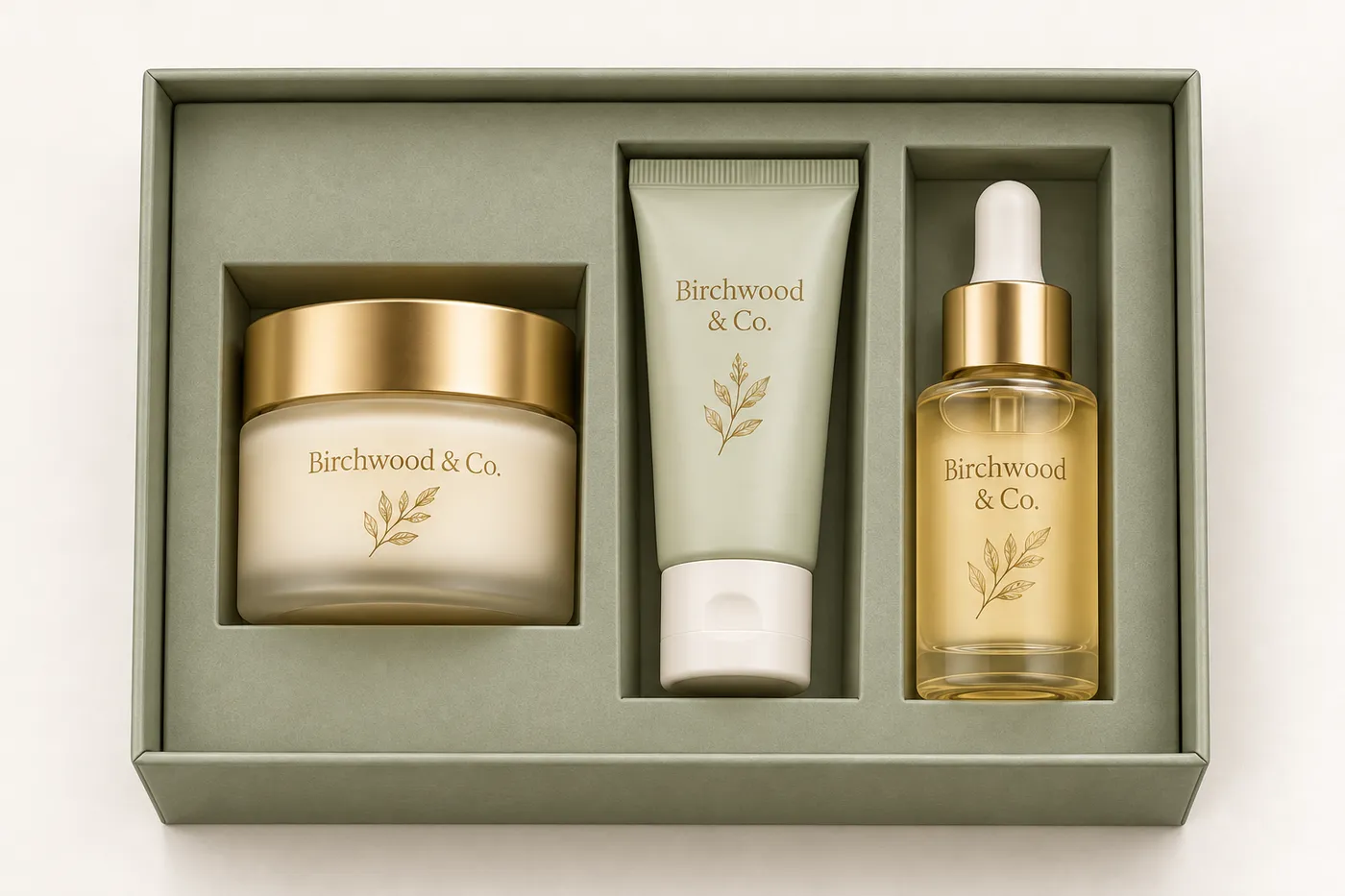
The set layout starts with the assembled jars, tubes, and bottles, including their widest points, closure heights, intended orientation, and label-facing sides. Those details determine whether a divided paperboard tray or another shaped internal support gives the collection the clearest opening without leaving the components loose inside the outer box.
A jar, tube, and bottle presented together as one collection rather than as separate retail packs.
A gift-ready set with a defined lid, tray layout, and artwork direction for an occasion or campaign.
A coordinated presentation set that introduces a new product family through one opening sequence.
A divided outer pack that keeps mixed skincare containers together as one shipped bundle.
A folding-carton direction for a compact collection that needs defined placement inside a larger shipment.
The lid, front, side panels, tray card, or insert can carry different parts of the collection identity. Finish combinations are reviewed against the board, artwork, and surface area before the proof is approved.
The tray decision follows the product profiles and the way the recipient will discover the set. A collection with mixed container shapes needs different support considerations from a group of matching jars.
A round jar, slim tube, and dropper bottle each create a different footprint and closure height inside the same presentation box.
The way each item should face and whether it must stay upright affect the tray depth, clearance, and support approach.
The first-view product, collection name, insert card, and lid artwork can be arranged together so the set reads as one gift when opened.
A clear product and artwork brief keeps the structural choice tied to the actual collection instead of a generic set format.
Send assembled heights, widest points, closures, desired orientations, target quantity, and the intended use of the set.
Confirm the tray or shaped support, first-view product, insert area, and outer structure against the real items.
Review print coverage, collection hierarchy, and finish treatment across the lid, panels, and any internal printed surface.
Production begins from 7 business days after the final proof is approved.
Need help with structure, materials, or production planning? See how we manufacture custom packaging.
A sample kit lets you inspect paperboard, print, and surface treatment before confirming the production specification for the skincare gift set.
Shipping charge: $44.99. Credited toward your first order.
Request a Sample KitFind clear answers about fit, materials, and ordering below.
The internal layout starts with each item's assembled height, widest point, closure shape, and intended orientation. A divided paperboard tray or shaped support can then give each product a defined position inside the outer box.
A rigid two-piece box suits a more defined presentation and arrives as a formed base and lid. A folding carton is lighter, can arrive flat before assembly, and can use divided paperboard support. The better direction depends on the opening experience, product weight, storage, and fulfillment method.
Send the assembled height, widest width or diameter, closure details, and desired orientation for every jar, tube, and bottle. Product photos, target quantity, artwork status, and the intended gifting or shipping context also help scope the layout.
The category supports foil stamping, embossing or debossing, spot UV, matte lamination, and gloss lamination. The final combination is reviewed against the board, artwork linework, coverage, and the panels selected for the set.
Standard orders start at a minimum of 50 units. Production begins from 7 business days after digital proof approval, and free US shipping applies on the standard fulfillment path.
Orders start at 50 units and scale up to 500,000 for bulk runs, with pricing from $0.35 per unit on larger quantities. Standard production is from 7 business days after digital proof approval.
Common uses include curated skincare collections, seasonal beauty gifts, skincare launch packaging, direct-to-consumer bundles, and beauty subscription inserts. The final specification is set by the packed product and how it will be handled.
Compare nearby products and request the format that best fits your next run.
Available product
Available product
Available product
Available product
Start with the actual product collection
Send the assembled dimensions, product photos, quantity, artwork status, preferred structure, and opening sequence for a quote scoped to the set.
Add your product details to see a quote summary.