Small Retail Products
A printed folding carton for a single compact product where front-panel presentation and a tidy closure matter.

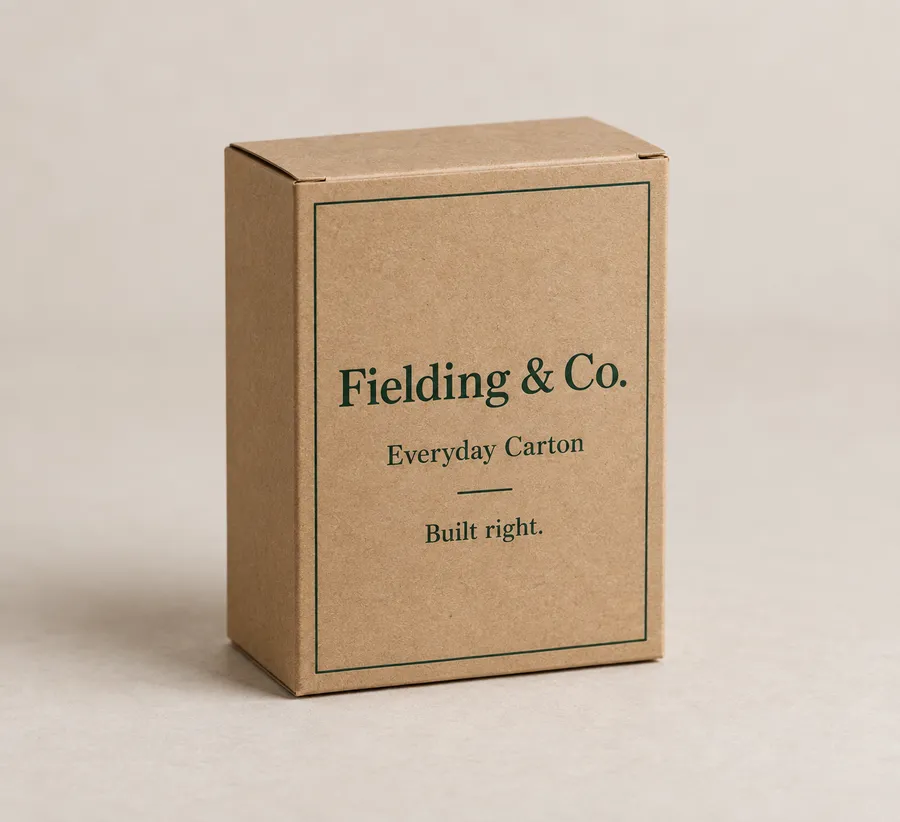
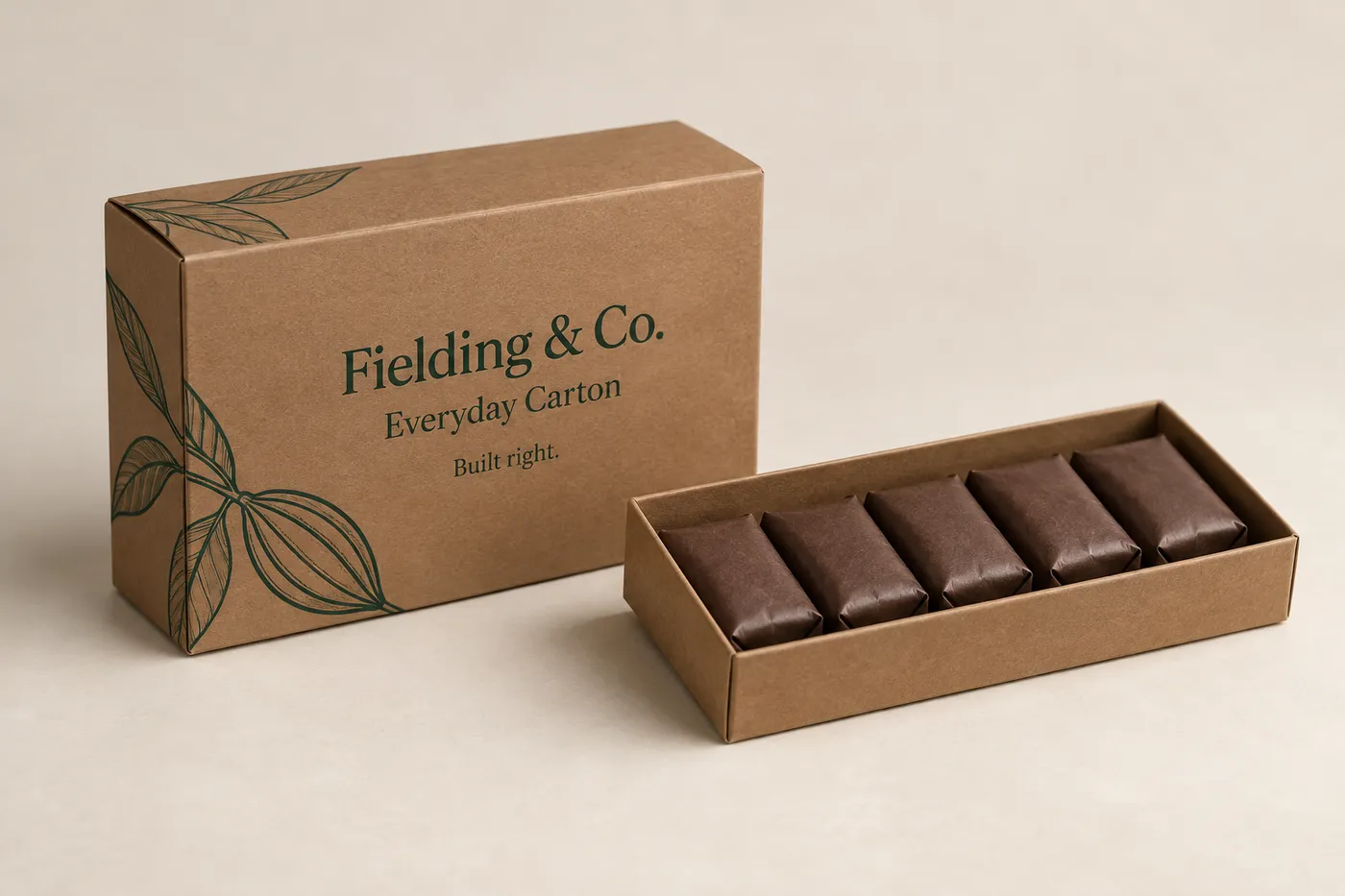
Closed small cardboard box with kraft paperboard, green border print, and Fielding & Co. branding
Cardboard Boxes
Small cardboard boxes made to order around the packed product, with a compact footprint, custom printed panels, and a choice of paperboard or corrugated construction reviewed against the way the box will be handled.
Last updated
Working quote
Product brief
Small cardboard boxes are most useful when the format is decided around the item going inside them, not around a generic small-size label. A compact folding carton can give a shelf product a clean printed face and a simple tuck closure. A small corrugated box can make more sense when the package will be handled through parcel shipping or needs more protection from knocks. Those are different jobs, so the first brief should describe the product, the handoff, and the route the box will take.
This product is made to order rather than selected from a fixed stock assortment. The finished footprint, height, closure, and print panels are coordinated in the dieline, then checked in a digital proof before production. That sequence matters for a small package because a few millimeters of unnecessary clearance can make a compact item move inside the carton, while too little room can press against a corner, label, or fragile surface. The right size is a packaging decision tied to the item, not a promise that one nominal small box will fit every product.
Start with the packed product as it will actually be presented or shipped. Share its length, width, height, weight, and any inner tray, wrap, sleeve, or product label that needs to travel inside the box. If the item is sold as a set, share the full arrangement rather than measuring only one component. A pair of small jars may need a divider or a wider footprint; a single bar, accessory, or sample may need a shallower carton with a tighter presentation. The outside dimensions follow those internal requirements after board thickness, folds, and closure clearances are considered.
The opening style also changes the brief. A tuck top keeps loose parts out of the customer handoff and gives the front panel a clear place for the brand name. A lift-off lid or a more structured presentation format may be considered when the opening moment matters more than flat storage. Internal support is not automatic: it depends on product geometry, weight, orientation, clearance, and whether the item must stay fixed while it is carried. If an insert is needed, its shape and position should be reviewed with the product dimensions rather than assumed from the box title.
Material choice follows the handling job. Kraft paperboard gives the outside a natural fiber character and works well when the package should feel direct and tactile. SBS paperboard gives a smoother, cleaner base for fine printed panels and surface treatments. Corrugated board adds a fluted layer between liners, which can be the better direction when a small box needs more resistance to compression or impact during transit. The category reference includes common 300-400gsm, 14pt, and 18pt examples, but those are competitor reference points rather than confirmed EBP specifications; the final board direction is confirmed during quotation and proofing.
For a shelf or counter package, the visible panel, fold quality, and closure alignment usually deserve as much attention as the board choice. For a parcel-bound box, the product weight, shipping route, stacking exposure, and internal movement deserve more attention. A small box can be physically compact and still need a different construction from another box of the same outside size. That is why the quote brief should say where the package will be used instead of asking for the smallest available carton.
The printed surface can carry the approved brand name, product name, instructions, ingredients, handling notes, or a restrained pattern across the panels that remain visible after folding. Foil stamping can call attention to a short mark or detail when the artwork supports the line weight. Matte lamination reduces surface sheen for a quieter presentation, while gloss lamination gives the panels a brighter reflective finish. These options belong in the artwork review because folds, seams, closure flaps, and coating coverage affect where a mark can sit cleanly.
Send the artwork with the product information so the dieline can show panel orientation before the proof is approved. For a small folding carton, the front, top, side, and bottom panels may be close together, so a wordmark that looks centered on a flat layout can shift visually after folding. For a corrugated mailer-style build, the top panel and opening sequence may carry more of the customer-facing message. The proof is where those choices become specific to this box rather than remaining a general print option.
A compact paperboard carton can package a single retail item, a small gift, a personal-care accessory, a sample, or a product sold at a counter where the outside presentation is part of the handoff. A small corrugated format can be used for a light parcel, a subscription component, or a product that needs more separation from the shipping environment. A small box can also group two or more pieces when a divider, tray, or other support is included in the structure.
The use case should be stated plainly in the quote request. A box that sits on a shelf is judged by print placement, opening, and panel proportions. A box that travels through parcel handling is judged by clearance, closure, board direction, and how the packed product is supported. A box used for a gift set has another requirement: the contents should present in the intended order when the lid or flap opens. Naming the route helps the packaging team review the right construction details.
Orders start at 50 units on the standard fulfillment path. Production typically begins from 7 business days after digital proof approval, and free US shipping is included. A sample kit is available when you want to examine board feel, print surface, or a comparable construction before committing to a full run; the sample-kit shipping charge is $44.99 and is credited toward the first order. No product-specific unit price is stated here because this SKU does not have a defensible, product-specific price source in the supplied evidence, so the finished quote remains dependent on dimensions, quantity, material direction, and artwork.
For a useful first quote, send the packed product dimensions, product weight, quantity, intended use, preferred material direction, and artwork status. Include any insert, divider, sleeve, or inner wrap that must travel inside the box. If the box will be shipped, describe the shipping route and whether it will be placed inside another mailer or sent on its own. If it will be handed over at a counter or displayed on a shelf, describe that setting instead.
The team can then review the construction, prepare the dieline, and return a digital proof showing the panels, folds, closure, and printed artwork. Check the proof against the real product before approval, including the fit at the corners and the position of any copy close to a fold. After approval, production begins from 7 business days under the standard estimate. This makes the small cardboard box an order-specific package with a clear reason for its size, material, and printed layout rather than a generic carton selected by name alone.
Proof points
The construction is selected around product fit, handling exposure, and the printed presentation required by the finished package.
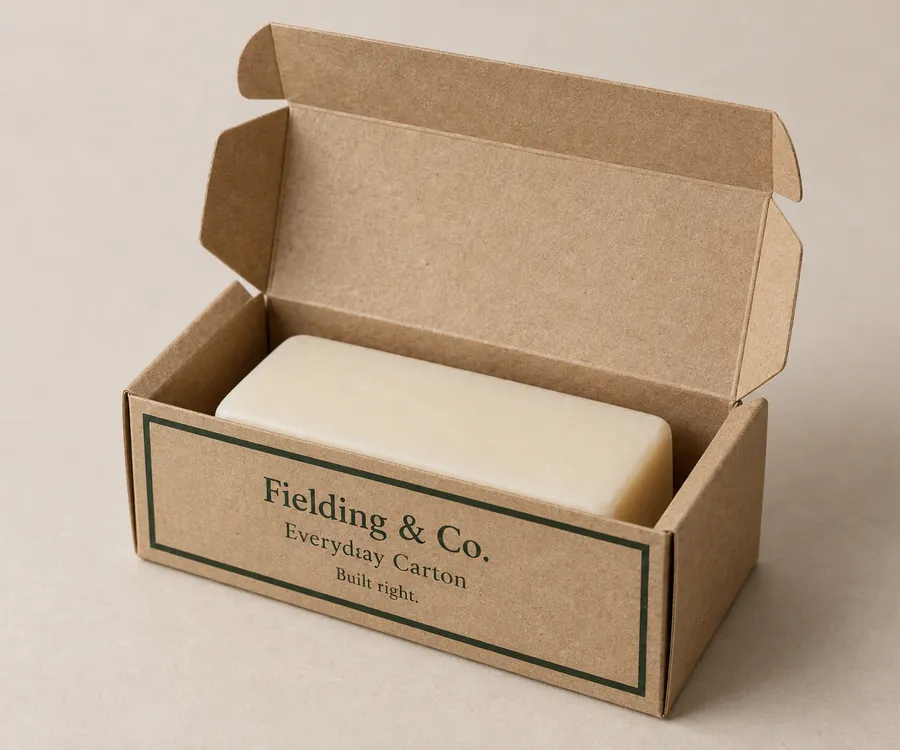
Sizing starts with the packed product's length, width, height, weight, and any inner support. The dieline then accounts for board thickness, closure clearances, folds, and the panels that need to remain readable after the box is assembled.
A printed folding carton for a single compact product where front-panel presentation and a tidy closure matter.
A shallow package for a sample, accessory, or small item that needs a defined place in the handoff.
A box arranged around two or more pieces when a divider, tray, or other internal support keeps the set in order.
A small corrugated format reviewed around product movement, shipping exposure, and the way the package is carried.
The artwork is mapped to the assembled package so the brand name, product information, folds, closure, and finish remain readable on the surfaces customers actually see.
The packaging brief becomes useful when it describes the packed item and the route the box will take, not just the requested outside size.
Share product dimensions, weight, quantity, and any wrap, tray, divider, or insert that must fit inside the box.
Explain whether the package will sit on a shelf, be handed across a counter, or travel through parcel handling.
Review panel orientation, folds, closure position, and artwork placement in the digital proof before approval.
The order path turns the product brief into a confirmed structure, printed layout, and production-ready proof.
Provide the packed product dimensions, weight, quantity, intended use, and any insert or divider.
Discuss kraft paperboard, SBS paperboard, or corrugated board against the handling route and printed presentation.
Send the artwork or describe its status so the print panels and fold positions can be mapped.
Check the closure, panel orientation, clearances, and artwork placement against the real product.
Confirm the reviewed digital proof before the order moves into production.
Need help with structure, materials, or production planning? See how we manufacture custom packaging.
Check board feel, print surface, closure, and fit before committing to a full run; the $44.99 sample-kit shipping charge is credited toward the first order.
Shipping charge: $44.99. Credited toward your first order.
Request a Sample KitFind clear answers about fit, materials, and ordering below.
Start with the packed product's length, width, height, weight, and any inner wrap, tray, divider, or insert. The dieline then accounts for board thickness, closure clearances, folds, and the printed panels that need to remain readable after assembly.
Choose the material direction around the handling job. Kraft or SBS paperboard can suit compact printed presentation, while corrugated board can be reviewed when the box needs more resistance to compression or impact during transit.
The minimum order is 50 units on the standard fulfillment path. Production typically begins from 7 business days after digital proof approval, and free US shipping is included.
Yes. Custom printed panels can be reviewed with foil stamping, matte lamination, or gloss lamination, subject to the artwork, board direction, folds, closure, and surface coverage.
Orders start at 50 units and scale up to 500,000 for bulk runs, with pricing from $0.36 per unit on larger quantities. Standard production is from 7 business days after digital proof approval.
Common uses include small retail products, samples and accessories, gift sets and paired items, and light parcel packaging. The final specification is set by the packed product and how it will be handled.
Yes. Free US shipping is included on the standard fulfillment path. Delivery timing and carrier details are confirmed when your quote is prepared.
Compare nearby products and request the format that best fits your next run.
Available product
Available product
Available product
Available product
Get Started
Send the packed product dimensions, quantity, intended handling route, material direction, and artwork status to request a quote.
Add your product details to see a quote summary.