Restaurant takeaway orders
A gusseted or flat-bottom carrier can group meal cartons when filled weight, handle load, steam, and the short-distance handoff are part of the brief.

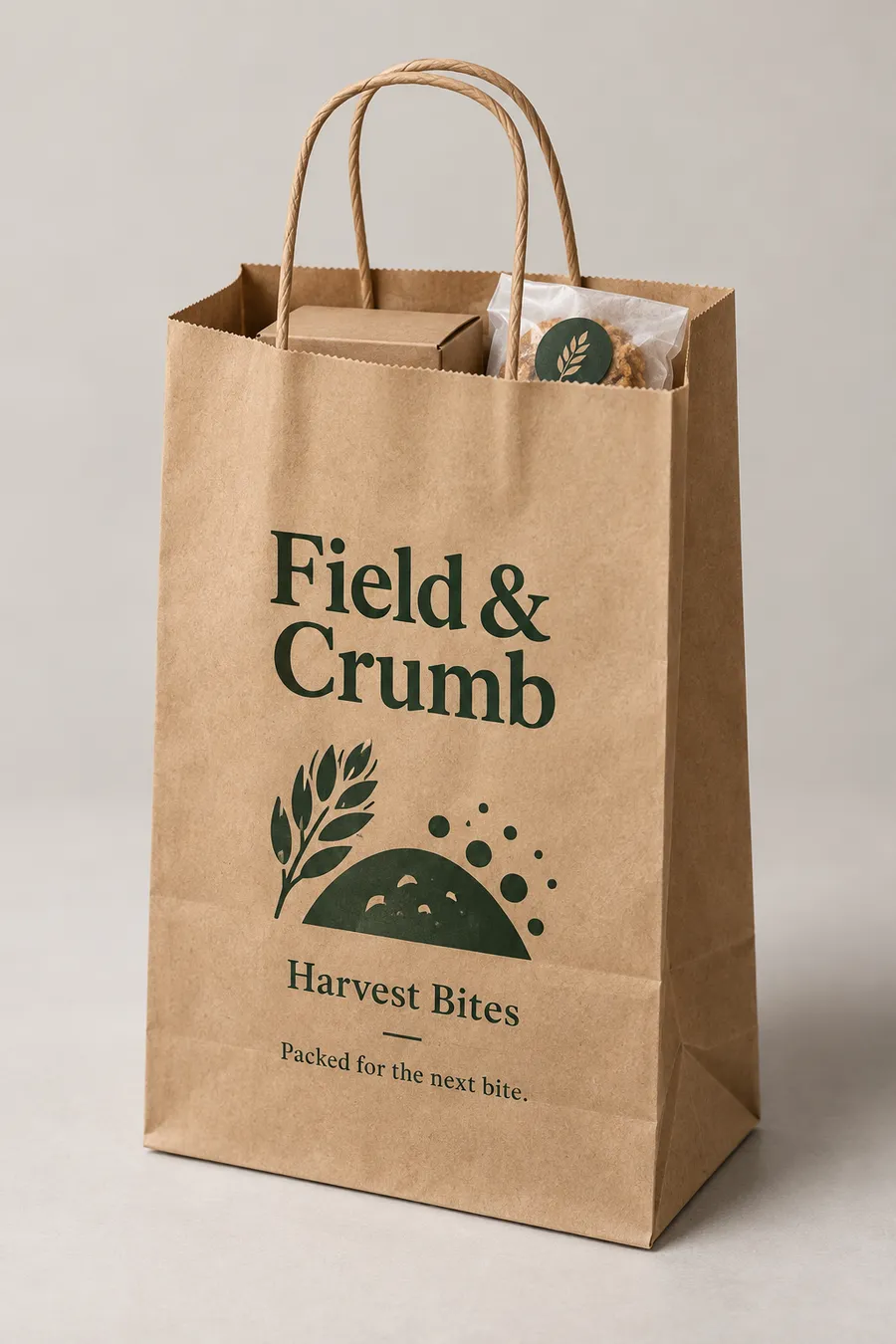
Printed kraft food-service bag with a bakery order inside.
Food Boxes
Wholesale custom paper bags for food service give restaurants, bakeries, takeaway counters, and snack brands a printed carry format planned around the packed order, bag footprint, opening, and handoff route. Kraft Paperboard, SBS Paperboard, or Grease-Resistant Kraft Paper can be considered against the food's warmth, grease, moisture, and contact context. Share filled dimensions, weight, handle preference, artwork, and quantity so the bag is scoped for a real service run.
Last updated
Working quote
Product brief
Wholesale custom paper bags food service buyers use should start with the order as it leaves the counter, not a generic grocery-bag size. Record the packed length, width, height, fullest depth, weight, headspace, orientation, and whether the order contains one tray, several cartons, a bakery box, or loose wrapped portions. Note sharp edges, steam, sauce, crumbs, aroma, grease, and moisture. Those conditions change the base footprint, gusset depth, opening, handle patch, and the clear front area available for the brand. A mixed restaurant order can need a different carrier from one pastry even when both are handed over in a paper bag.
State how the filled bag is moved. A counter handoff may need a wide front panel and an easy opening; a short walk to a car may make base stability and handle placement more important; a grouped delivery can require the outer bag to be sized around inner cartons rather than loose food. Provide a sample packed order or a sketch when the contents settle unevenly. The formed-bag view should show the actual silhouette and how much of the printed front remains visible after filling.
A flat paper bag can suit a light wrapped item, while a gusseted or flat-bottom carrier can create more room for a carton, bakery box, or grouped takeaway order. A folded top, die-cut handle, twisted paper handle, or flat paper handle changes the opening, load path, and available print area. The choice depends on filled weight, product geometry, orientation, base footprint, carry distance, and whether the customer lifts the bag once or holds it for longer. No single handle or closure should be treated as universal.
If an order includes several portions, explain whether they sit in one row, in layers, or in separate cartons. A paper bag may surround an inner food box or wrap rather than touching every item directly. Internal support or a separate liner depends on geometry, weight, fragility, temperature, grease or moisture, presentation, and the outer handling route together. The quote brief should identify the inner pack, the bag opening, the base, and any divider or tray so the dieline is built around the assembled order.
Kraft Paperboard, SBS Paperboard, and Grease-Resistant Kraft Paper are relevant category directions for a printed food-service bag. The proposed paper, coating, liner, or inner pack still needs review against the actual food-contact context, temperature, grease, moisture, aroma, and market requirements. A material name alone does not establish food-contact approval, leak resistance, compostability, a barrier rating, or a particular board weight. Put those requirements in the quote brief so the selected construction can be checked for the intended order.
A warm pastry, a sauced meal carton, and a dry snack portion create different questions for the outer bag. If an inner wrap or carton carries the food directly, describe how it sits in the carrier and whether the outer bag is for presentation, transport, or both. A paper bag is a handoff format rather than an automatic shipping case, so state the distance, stacking, and delivery context.
Map the front, back, side folds, gussets, base, opening edge, handle patch, and any code area on the dieline. The front panel can carry the restaurant, bakery, or product identity; the back or side may need ingredients, allergen information, preparation guidance, a barcode, or a handling message. Keep required type clear of folds, seams, gussets, the base, and handle reinforcement. Check the formed bag at the customer viewing angle, because the same mark can shift when the panel turns around a gusset or when contents settle below the opening.
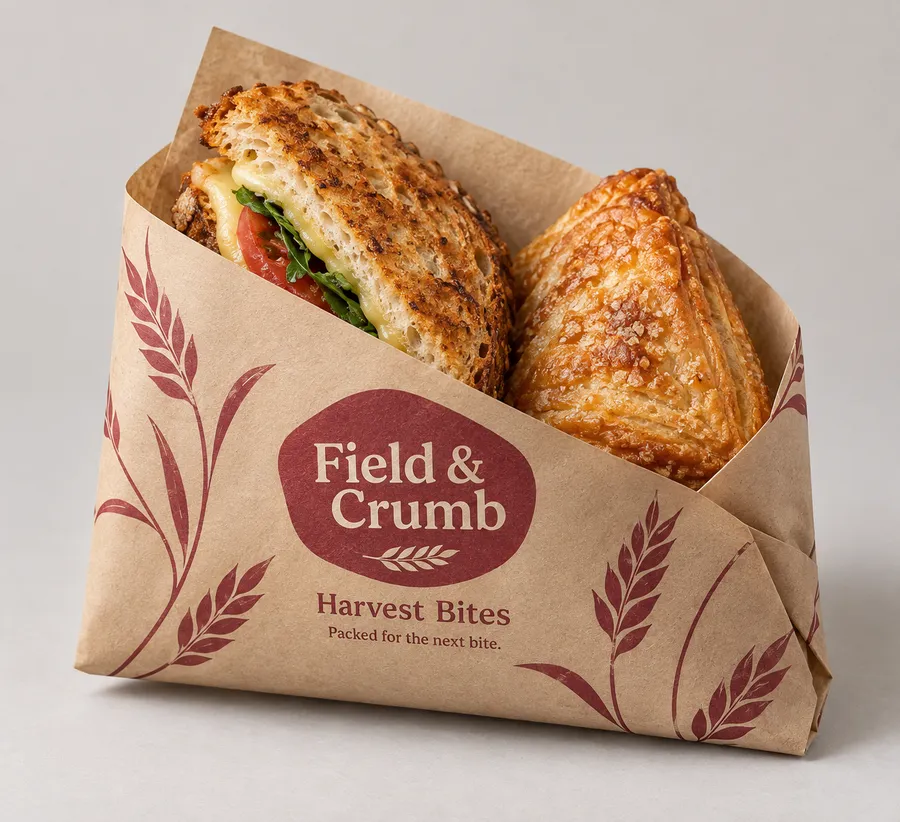
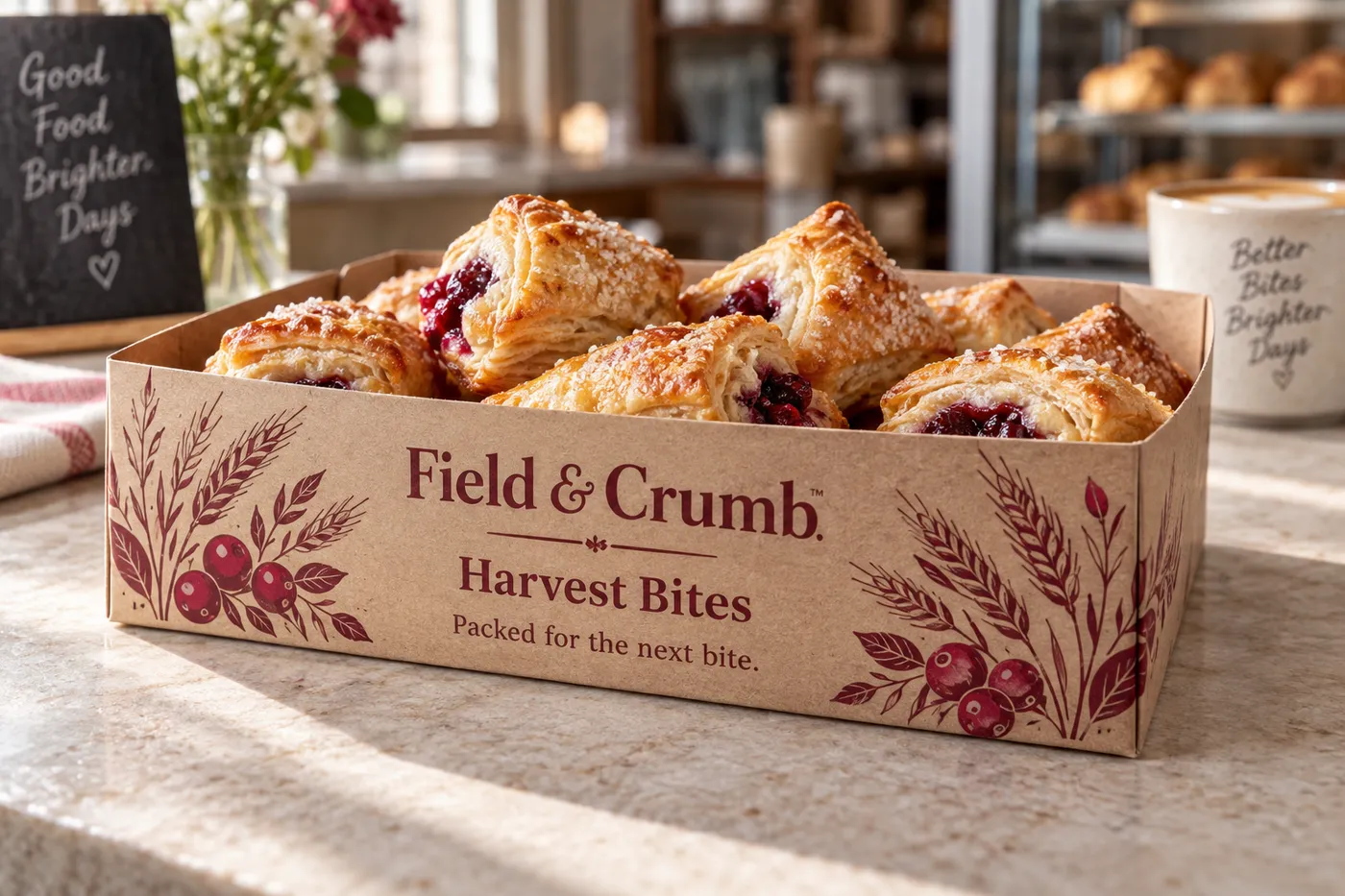
Matte Lamination and Gloss Lamination can be reviewed for the paper construction and intended handling. Spot UV may highlight a selected mark, while Foil Stamping or Embossing/Debossing can be considered for limited graphic areas subject to paper and artwork review. The product images show an illustrative print layout. Replace it with approved brand, product, ingredient, allergen, and handling information for the actual food-service program.
Send the filled length, width, height, fullest depth, fill weight, headspace, item count, and whether the order is boxed, wrapped, or loose. Add warmth, grease, moisture, steam, aroma, the counter or delivery route, preferred opening and handle, information panels, artwork status, material direction, finish preference, destination, and quantity. If different menu items use different carriers, list each packed profile instead of averaging them into one nominal size.
The standard fulfillment path starts at 50 units, and production is from 7 business days after digital proof approval. Free US shipping and dieline and proof review are included at no extra charge. A sample kit carries a $44.99 USD shipping charge credited toward the first order when you need to compare paper feel, print coverage, handle placement, base behavior, and the formed bag. Pricing remains quote-only because bag geometry, paper direction, food conditions, artwork, finish, quantity, and destination determine the specification. Quote requests are typically answered the same business day and always within 24 hours.
Before approving production, check the flat artwork and assembled bag together: front and back orientation, gusset direction, handle patch, base clearance, required information, inner pack, and the way the filled order sits below the opening. A well-scoped wholesale custom paper bag is a defined food-service handoff package, not a stock sack with a food name added. When the packed order, route, paper, carry path, and printed panels are described together, the review can focus on the choices that still need confirmation.
Proof points
The proof should show both the flat artwork and the formed bag. Compare the packed silhouette, front and back panels, gussets, base, handle patch, opening, required information, inner pack, and intended handling route with the wholesale quote brief.
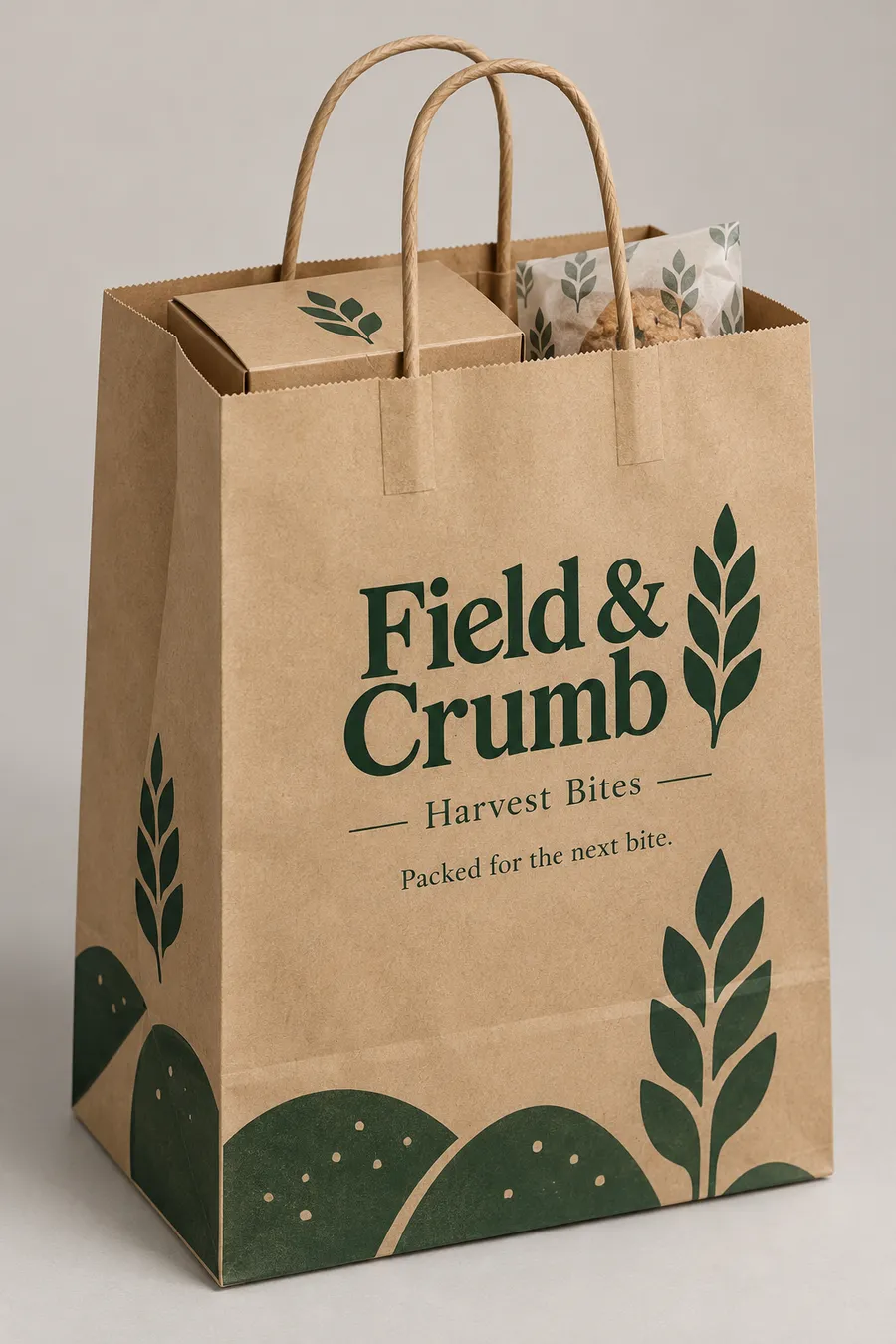
The bag must fit the packed order, leave a workable opening and print area, and carry the intended load through the handoff route. Start with product shape, weight, temperature, grease or moisture, base, handle, inner pack, and required information so the paper format is reviewed around a real restaurant, bakery, or takeaway job.
A gusseted or flat-bottom carrier can group meal cartons when filled weight, handle load, steam, and the short-distance handoff are part of the brief.
Printed paper bags can carry pastries, bread, or boxed bakery portions when the base, opening, warmth, crumbs, and any grease barrier are mapped.
A smaller paper format can present wrapped snacks or confectionery when the packed profile, print panel, closure, and required product information are clear.
A printed food bag can sit around inner cartons or wraps when the item count, outer footprint, stacking route, and destination are specified together.
Map the artwork on the flat layout and the formed bag. Front and back panels, side folds, gussets, handle patches, base, and customer viewing angle all affect what stays readable after a food-service order is filled.
The food, paper direction, base, handle, artwork, inner pack, and route are considered together. Depending on the filled profile, the bag may use flat panels, gussets, a flat bottom, a die-cut handle, a twisted paper handle, or another reviewed construction after the packed order is understood.
Packed width, height, fullest depth, headspace, irregular pieces, item count, and fill weight establish the bag footprint and panel proportions.
Base width, handle patch, paper direction, and carry route are checked with the filled load, inner carton, and expected handoff.
Warmth, grease, moisture, steam, aroma, counter use, delivery distance, and any inner wrap define the questions for paper and lining review.
A useful quote starts with the filled order and handoff route, then connects bag geometry, paper, handle, artwork, and outer handling needs. These steps turn that information into a reviewable wholesale specification.
Provide filled length, width, height, fullest depth, fill weight, headspace, item count, orientation, irregular edges, and whether the bag is flat, gusseted, or flat-bottom.
State warmth, grease, moisture, steam, aroma, counter use, delivery distance, and any inner wrap or carton.
Explain whether the pack needs a die-cut, twisted paper, flat paper, or another reviewed handle and opening feature.
Identify front branding, back ingredients or allergen information, barcode, date code, side folds, handle patch, base, and safe print boundaries.
Share the Kraft Paperboard, SBS Paperboard, or Grease-Resistant Kraft Paper direction and any listed lamination, Spot UV, foil, or embossing preference for artwork review.
Need help with structure, materials, or production planning? See how we manufacture custom packaging.
A sample kit carries a $44.99 USD shipping charge credited toward your first order, useful when you need to compare paper feel, print coverage, handle placement, base behavior, and the formed food-service bag before approving a wholesale run.
Shipping charge: $44.99. Credited toward your first order.
Request a Sample KitFind clear answers about fit, materials, and ordering below.
They are printed paper carry bags planned around a restaurant, bakery, snack, or takeaway order's filled profile, base, opening, handle, inner pack, and information panels. The final paper, lining, and structure depend on the food, warmth, grease or moisture, contact context, and handling brief.
Send filled length, width, height, fullest depth, fill weight, headspace, item count, orientation, product edges, and any inner carton or wrap. Include warmth, grease or moisture, the counter or delivery route, and the required front, back, side, base, handle, and code areas.
Kraft Paperboard, SBS Paperboard, or Grease-Resistant Kraft Paper are relevant category directions to discuss. The proposed paper or liner still needs review against the actual food, temperature, grease, moisture, contact context, and market requirements.
A die-cut handle, twisted paper handle, flat paper handle, or another opening route can be considered when it suits the filled load, base, reinforcement, paper direction, and carry distance. The proof should show the handle patch and the space it uses.
Map the front, back, side folds, gussets, base, handle patch, opening edge, and code area on the dieline, then check the formed-bag view. Keep important branding and required information clear of boundaries that may hide or distort it.
The standard fulfillment path starts at 50 units. Production begins from 7 business days after digital proof approval, with free US shipping and dieline and proof review included at no extra charge. Your final unit price is confirmed in a quote because the food-bag specification determines the work.
Orders start at 50 units and scale up to 500,000 for bulk runs, with pricing from $0.24 per unit on larger quantities. Standard production is from 7 business days after digital proof approval.
Compare nearby products and request the format that best fits your next run.
Available product
Available product
Available product
Available product
Plan the food-service handoff
Send the packed dimensions, weight, warmth, grease or moisture conditions, handle preference, artwork status, material direction, information panels, item count, and carrying route. Easy Box Packaging can then review the paper, base, handle, print coverage, and formed bag as one quote-ready specification.
Add your product details to see a quote summary.