Retail truffle and bonbon assortments
A front window can let shoppers read the collection and see a defined row while a tray keeps pieces aligned behind the cutout.

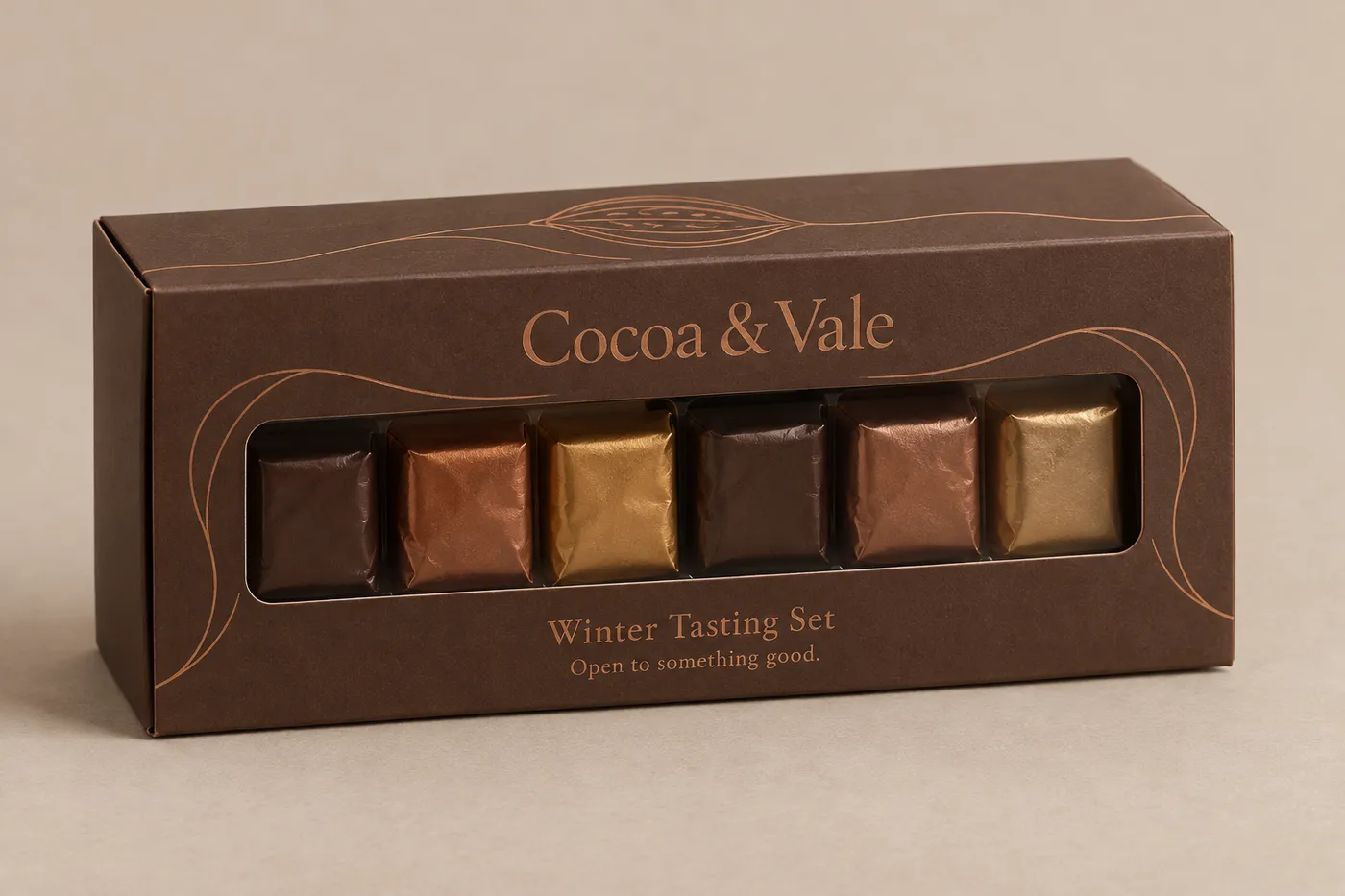
Closed cocoa-brown window chocolate carton showing a tray of wrapped pieces
Chocolate Boxes
Custom window chocolate boxes made around the packed piece count, cavity layout, product height, and the view the package needs to provide. Set the window position, insert, opening route, and printed panel hierarchy together so a retail or gift presentation shows the chocolates clearly without leaving the interior loose.
Last updated
Working quote
Product brief
A window chocolate box works when the visible area answers a buyer's question at a glance: how many pieces are inside, how the assortment is arranged, or what makes the collection distinct. Begin with the completed packed product, not a generic carton footprint. Share the chocolate count, each piece's length and width, the tallest decoration, the wrap or cup, the insert or divider, and the clearance needed above the assortment. A truffle row, a single bar, and a mixed tasting set need different window proportions even when the outer package uses the same phrase.
Decide whether the window is primarily for shelf recognition, a gift reveal, or a handoff at a counter. A front-facing cutout can make a small assortment legible on a retail shelf. A lid window can frame a tray when the recipient opens the box from above. A narrow side window may be useful when a sleeve or label carries the main story on the front. The opening and the viewing angle should be reviewed with the actual chocolate arrangement so the clear area does not land over an empty spacer or hide the piece that matters most.
A folding carton is a practical starting point when the box needs connected panels, compact storage before filling, and a die-cut window in a defined front or top panel. A rigid base-and-lid can create a slower gift opening with a window in the lid or sleeve, especially when the tray is part of the presentation. The choice follows the piece count, product height, insert, storage route, and the way the customer receives the package. A window is one construction feature, not a complete box format.
Ask how the package will be handled after it is filled. A counter pack may be opened once and handed across a shop. A seasonal gift set may be carried by a recipient and opened at a table. A direct-to-customer order may place the chocolate box inside a separate outer shipper. Each route changes how much of the assortment should be visible, where the front panel must read, and how the window edge should relate to folds, flaps, or the lid seam.
The window should be drawn around a stable interior arrangement. A paperboard tray, divider, or shaped support can hold individual truffles in sequence and keep a visible row from shifting behind the opening. For a bar or a small count, a simple support may be enough; for mixed pieces, the cavity spacing and orientation need to be reviewed together. Include the assembled wrap, cup, or inner sleeve in the measurements because each layer changes the viewable height.
Provide a top view and side view when a piece has a raised decoration, an angled profile, or more than one level. Note the highest point and the amount of headspace needed under the panel or lid. The window perimeter also needs a margin from creases, cut edges, glue areas, and important print. These are specification decisions to confirm from the actual product rather than assumptions about a standard chocolate size.
SBS paperboard can provide a smooth printed face when the brand needs color and fine type around the window. Kraft paperboard can give the carton a natural paper tone that supports a restrained label or seasonal story. Corrugated board can be reviewed when the construction or route calls for a different board direction. The category pack lists these as material directions; the appropriate choice remains tied to the box structure, packed weight, printed surface, and handling route.
The window itself should be treated as part of the artwork and construction review. Keep the collection name, flavor or variant, and required copy away from the transparent area and from fold lines. If an inside-lid message or printed tray is important, name it in the first brief so the exterior and interior can be considered together. A clear view is useful only when the text, piece alignment, and opening sequence still make sense after the box is assembled.
Artwork is checked on the assembled package, not only on a flat dieline. A short wordmark can sit above the cutout, while the side panel carries the flavor note or assortment description. Foil stamping can mark a selected word or border, and matte or gloss lamination can set the surface contrast around the window. Spot UV can draw attention to a defined printed detail, while embossing or debossing can create a tactile change outside the transparent area. The final combination depends on the selected board, cutout, folds, and artwork.
Keep the sample print layout simple in visual planning: a short brand line and a product name are enough to demonstrate a printed window carton without inventing nutrition, certification, or price claims. On a production brief, replace the sample layout with the supplied brand artwork and identify which text must remain readable when the box is closed and viewed from the shelf.
The standard fulfillment path starts at 50 units. Production is estimated from 7 business days after digital proof approval, and free US shipping is included on that standard path. A sample kit carries a $44.99 USD shipping charge credited toward the first order, which can help compare board feel, print treatment, window position, insert fit, and the opening sequence before a larger run. Product-specific pricing remains quote-based because no approved window-chocolate-box price range is in the current sourcing record.
Dieline and proof review are included at no extra charge. For a useful quote, send the packed chocolate dimensions, piece count, weight, orientation, cup or wrap, tray or divider details, preferred window position, quantity, delivery route, artwork status, and finish direction. If several variants share a visual style, identify which window, cavity, or product-height dimensions change between them.
For a retail shelf, start with the face that must read from a short distance and the part of the assortment that should be visible without opening the package. For a gift set, decide whether the window is a preview of a lift-off reveal or the main presentation surface. For a corporate, wedding, or hospitality favor, use the window to show a defined portion while keeping the event message on the printed panel. For direct shipment, explain whether the chocolate box sits inside an outer shipper and whether the window needs protection during that handoff.
The ordering path is straightforward: share the packed product details, describe the viewing and delivery route, choose a carton or rigid direction, set the window and insert requirements, submit artwork, review the dieline and digital proof, then approve the proof for production. A complete brief keeps the cutout, interior arrangement, printed panels, and opening presentation moving together.
Before approving a window chocolate box, inspect the assembled front or lid, the cutout edge, the clear view of every intended piece, the tray or divider position, the headspace, and the relationship between the window and printed type. Close the package and view it from the same angle a customer will use. Confirm that the box still reads correctly when folded, that no chocolate is hidden behind a structural panel, and that the insert keeps the assortment in its planned order. This final check turns a window concept into a quote-ready specification without promising a universal size or performance claim.
Proof points
The package is reviewed as an assembled presentation in which the cutout, insert, printed surfaces, and opening route work together.
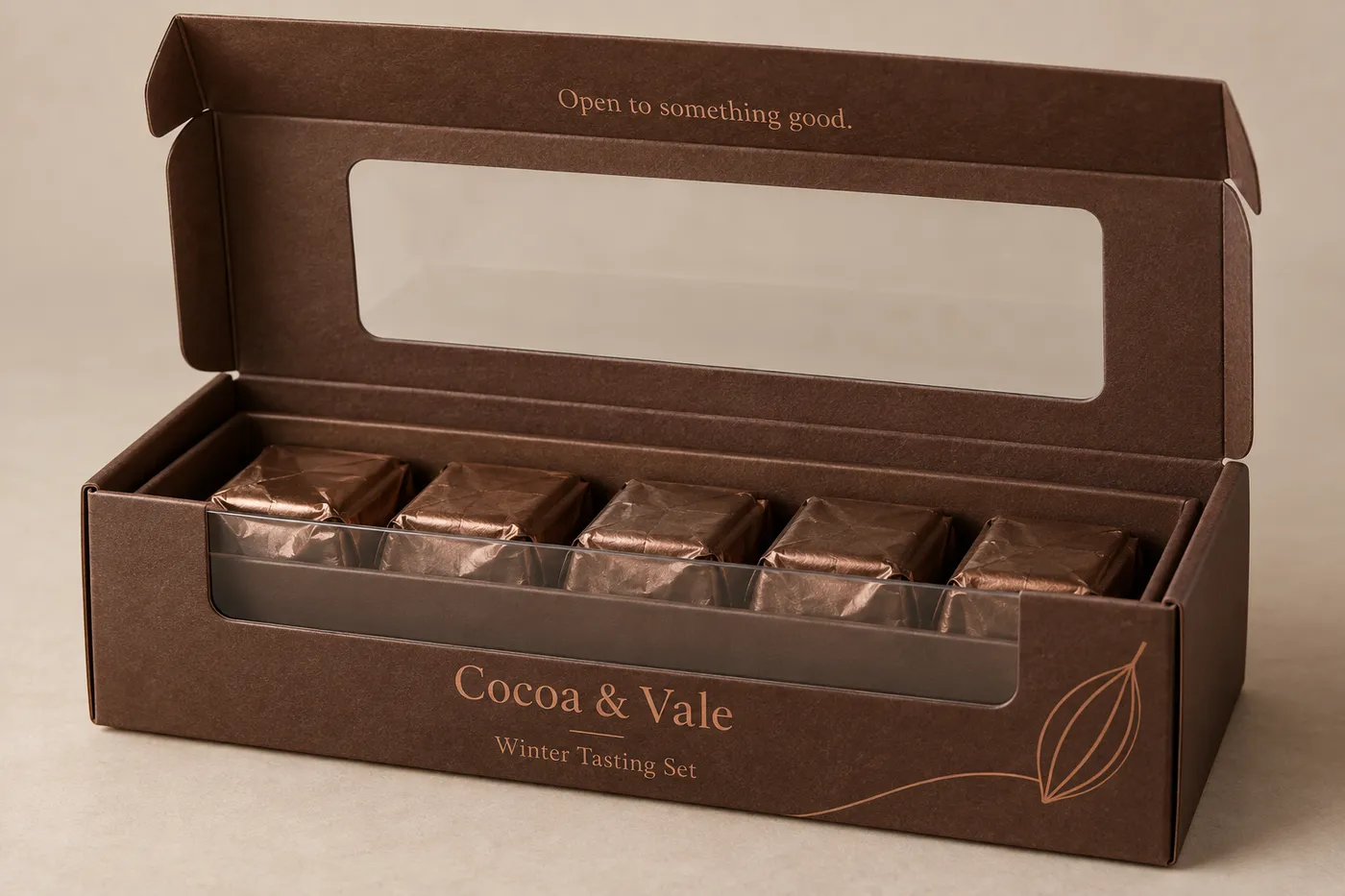
Sizing starts with the completed packed assortment, including pieces, cups or wraps, tray, divider, product height, and required headspace. Share the view you want from the shelf or gift opening so the window, folds, printed panels, and interior support can be coordinated around the real chocolate geometry.
A front window can let shoppers read the collection and see a defined row while a tray keeps pieces aligned behind the cutout.
A printed lid or carton can carry the seasonal treatment while a reviewed window and insert show the changing assortment.
A compact window can show the chocolate portion while an outside panel carries an event name, greeting, or collection message.
The window box can act as an inner presentation pack inside an outer shipper, with the delivery route included in the structure brief.
Artwork is mapped to the assembled package so the collection name, variant, cutout, folds, and finish remain intentional after the box is closed.
A useful brief connects the viewing area to the packed product, structure, and handoff so the clear cutout does not become an isolated artwork decision.
Share the finished dimensions, weight, piece count, wrap or cup, tray, divider, tallest point, and headspace needed above the chocolates.
Explain whether the window faces a retail shelf, counter, gift table, or a lid reveal inside an outer shipper.
Identify the front or lid panel, window position, clear-area margin, required text, artwork status, and preferred finish direction.
The quote process is clearer when the chocolate is described as a packed assortment with a defined viewing area, insert, opening, and delivery route.
Provide the packed dimensions, weight, piece count, arrangement, wrap or cup, orientation, tallest point, and headspace requirement.
Explain whether the window faces a shelf, counter, gift table, or an opening reveal inside a direct-shipment pack.
Discuss a front-window folding carton or lid-window rigid box with SBS, kraft, or corrugated board.
Identify the visible pieces, clear-area margin, collection name, variant wording, brand artwork, and panel priorities.
Check the cutout edge, folds, closure, tray or divider position, headspace, printed panels, and finish coverage against the packed assortment.
Need help with structure, materials, or production planning? See how we manufacture custom packaging.
A sample kit carries a $44.99 USD shipping charge credited toward your first order, useful when you need to review board feel, printed surface, cutout position, tray fit, and the opening sequence before approving a window chocolate box run.
Shipping charge: $44.99. Credited toward your first order.
Request a Sample KitFind clear answers about fit, materials, and ordering below.
Measure the completed packed assortment, including chocolate pieces, wraps or cups, tray, divider, tallest decoration, and required headspace. Include the intended viewing angle and a simple top-and-side view when the window needs to frame a particular row.
The position depends on what a customer must see and how the box opens. A front cutout can suit a shelf-facing carton, while a lid cutout can preview a tray in a gift format. Keep the clear area away from folds, glue zones, and essential type.
A folding carton can suit connected panels and compact storage before filling. A rigid base-and-lid can suit a slower gift opening around a tray. The choice depends on the assortment, insert, product height, handoff route, and window position.
An insert or divider can help when the chocolates need separation, a defined row, or a stable view behind the cutout. The decision depends on piece geometry, orientation, headspace, outer structure, and the handling route together.
SBS paperboard, kraft paperboard, and corrugated board are material directions in the category pack. Foil stamping, matte or gloss lamination, spot UV, and embossing or debossing are finish directions reviewed against the cutout, artwork, and box structure.
The standard minimum order is 50 units. Include the packed chocolate dimensions, window view, assortment, intended use, artwork status, and preferred structure or finish in the quote request so the box can be scoped around the actual order.
The approved standard estimate is from 7 business days after digital proof approval. Free US shipping is included on the standard fulfillment path, and dieline or proof review is included at no extra charge.
Orders start at 50 units and scale up to 500,000 for bulk runs, with pricing from $0.28 per unit on larger quantities. Standard production is from 7 business days after digital proof approval.
Compare nearby products and request the format that best fits your next run.
Available product
Available product
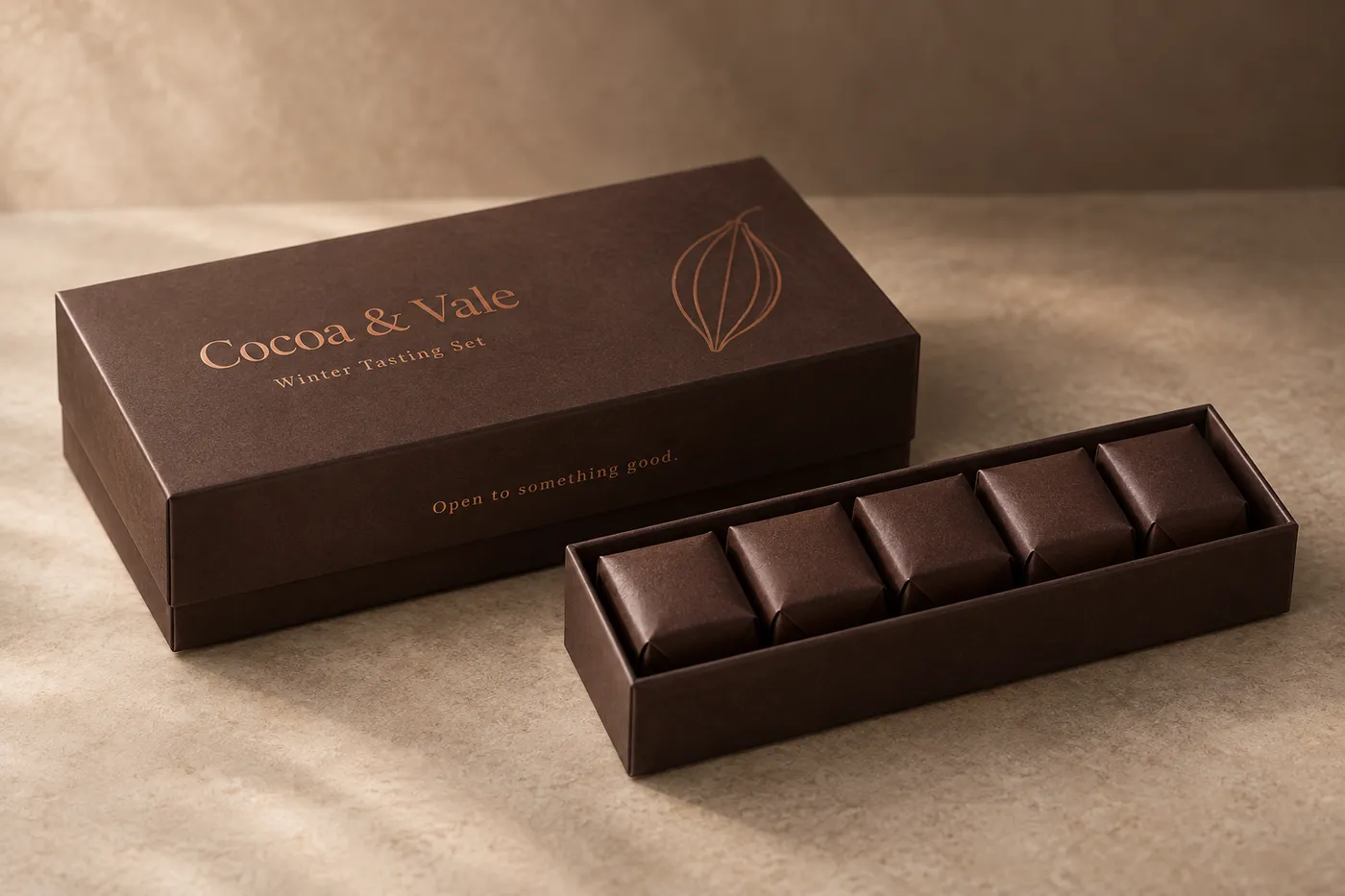
Available product
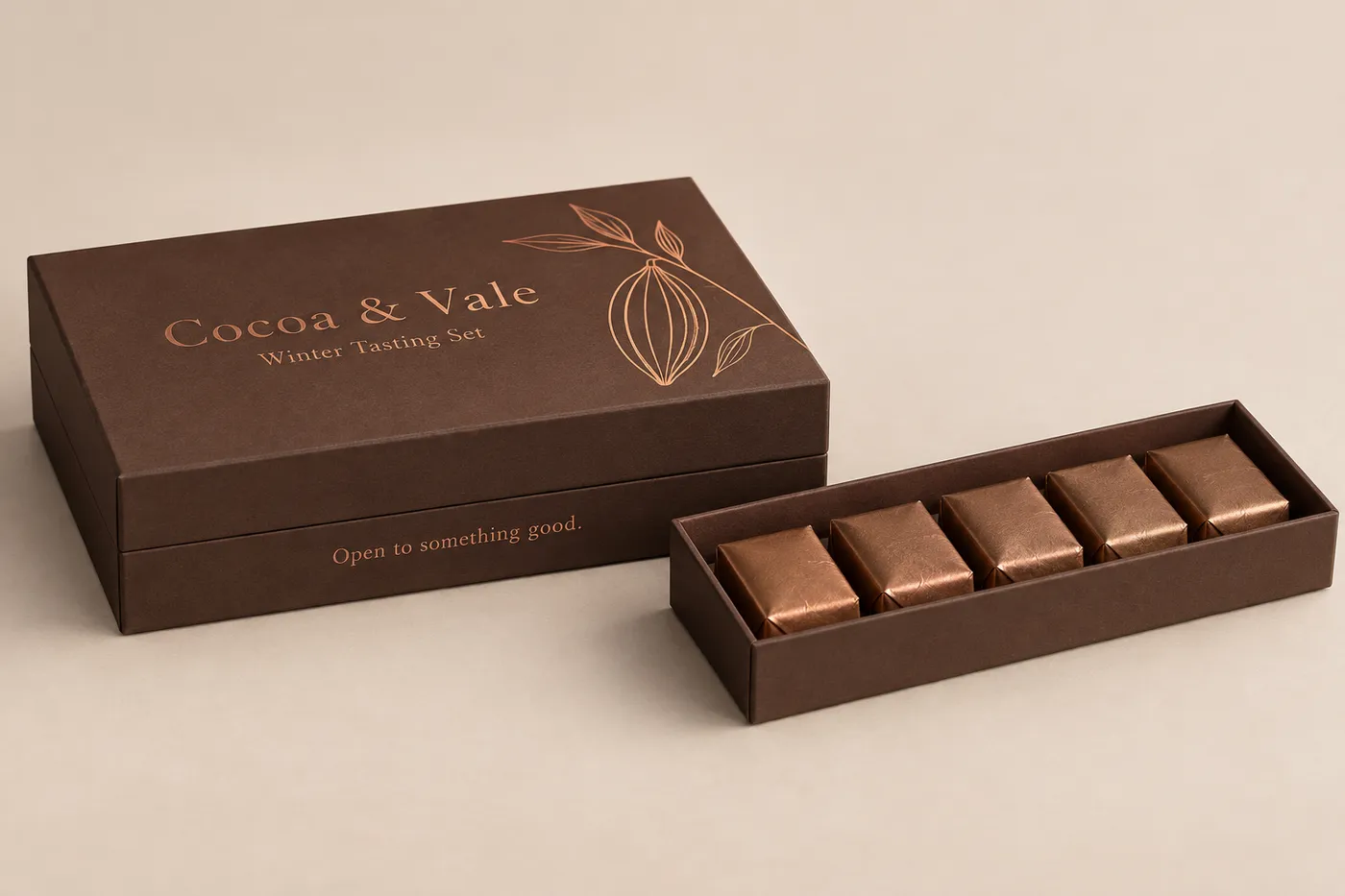
Available product
Plan the visible chocolate presentation
Send the packed chocolate details, viewing and delivery route, quantity, artwork status, preferred structure, window position, material direction, and finish preference so Easy Box Packaging can review the package as one quote-ready specification.
Add your product details to see a quote summary.