Auto Bottom vs Snap Lock vs 1-2-3 Bottom: Box Base Styles Explained
Auto bottom box vs snap lock vs glued bottom compared: assembly speed, holding weight, and MOQ impact, plus how to request a free custom packaging quote.
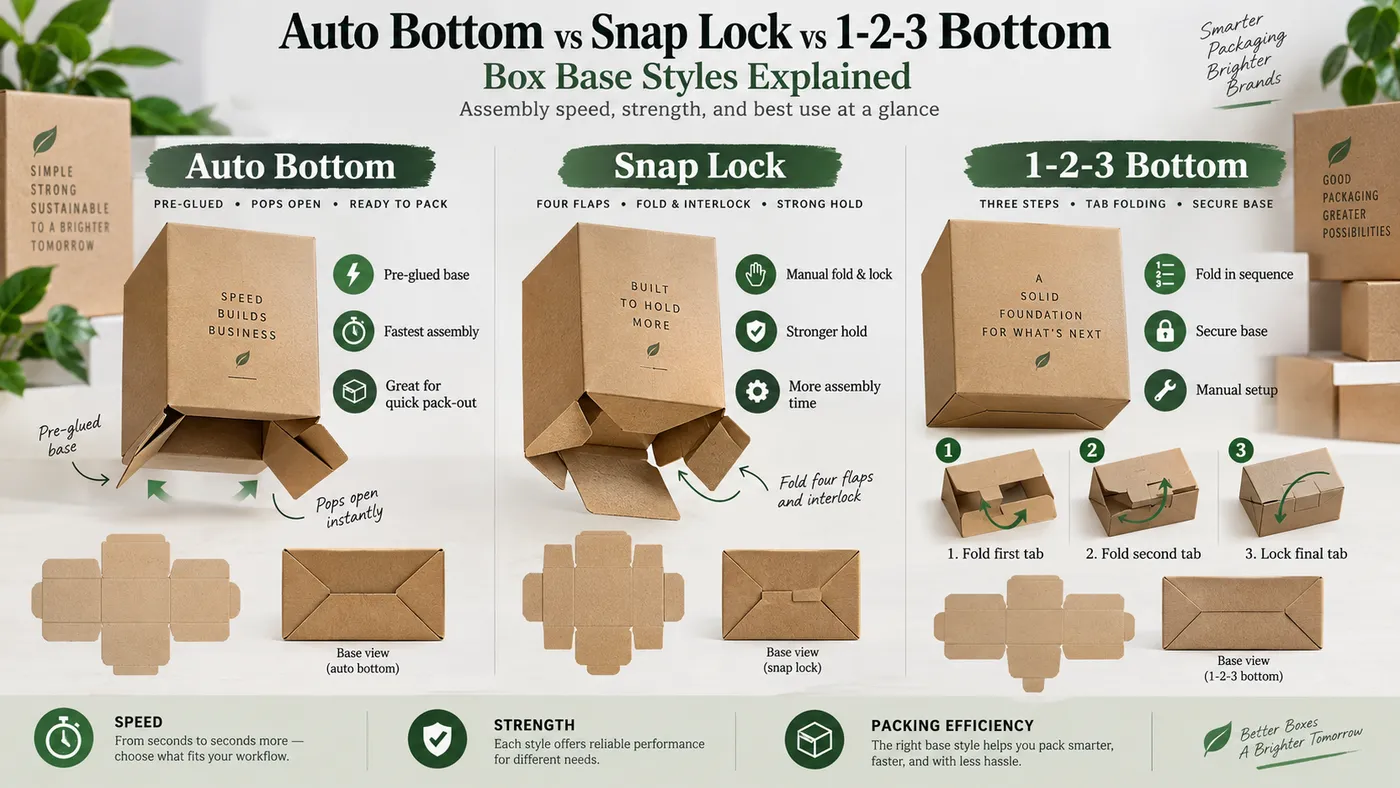
An auto bottom box has pre-glued base flaps. They spring open and lock into a flat, square base. This happens the moment you open the box. No folding, no tabs. Snap lock, also called 1-2-3 bottom, uses four tabs. You fold and interlock them by hand. It holds more weight, but it takes longer to assemble. A glued bottom is sealed flat as one piece at the factory. It never needs folding at pack-out.
This article covers auto bottom box styles in plain terms. It covers how each base folds. It covers what each one holds, and which fits your product.
Auto Bottom Box Styles: The Three Main Bases at a Glance
Nearly every folding carton uses one of three base styles. Each trades assembly speed for holding strength in a different way. Picking the right one comes down to two things. What does your product weigh? How fast does your team need to pack boxes?
Auto-Bottom (Crash Lock) Explained
Auto-bottom, also called crash lock, is the fastest base to assemble. Picture four flaps, pre-glued in pairs at the factory. They fold flat for shipping and storage. Pop the box open. Push down on the base. The flaps snap into a locked square automatically. That’s the “crash” in crash lock. No manual folding step happens at pack-out.
This speed comes from work done earlier in production. The gluing happens during manufacturing, not at pack-out. That extra step can raise the minimum order quantity on very small runs. Setting up a gluing line only makes sense past a certain volume.
Snap Lock (1-2-3 Bottom) Explained
Snap lock and 1-2-3 bottom are two names for the same base style. Picture four interlocking tabs, folded by hand in sequence. Fold the first tab, then the second. The third tab locks the first two in place. That’s where the “1-2-3” name comes from.
This base needs no factory gluing at all. That keeps it accessible for smaller first-run orders. The tradeoff is assembly speed. Someone has to fold each base by hand at pack-out, tab by tab.
Snap lock also tends to hold more weight than auto-bottom. The tabs interlock directly with each other. They don’t rely on a pre-glued seam.
Glued Bottom Explained
A glued bottom is sealed as one piece at the factory. Picture a base with no visible flaps or tabs at all. It’s just a flat, fully closed panel. There’s nothing to fold or lock at pack-out. The box arrives with its base already sealed.
This style works well for boxes filled from the top only. It’s common on retail boxes. The base never needs to open again once the product is loaded. The Fibre Box Association publishes general construction standards for base styles like these. Its guidance covers the wider corrugated and folding carton industry.
The MOQ Detail Most Guides Skip
I’ve seen a brand plan a small first run of a snack box. They picked auto-bottom because it sounded like the faster, better option. Their supplier flagged a problem before production started. The order was too small to justify auto-bottom’s gluing step. Switching bases would have raised the minimum order quantity.
They switched to snap lock for that first run instead. No gluing line was needed, so the smaller order worked fine. Sales picked up over the following months. They moved the reorder to auto-bottom once volume grew, where faster assembly paid off.
Auto bottom box economics often come down to one question. Is your order large enough to make the factory gluing step worth it?
Products that fit this guide
A few Easy Box Packaging products that fit what this article covers.
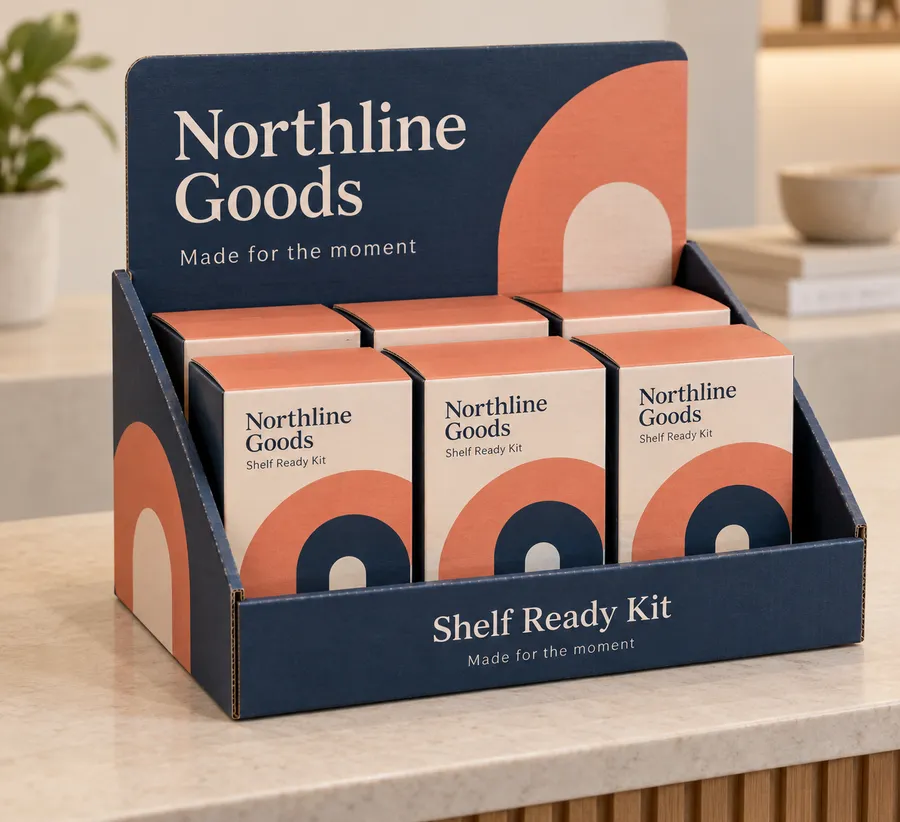
A retail counter display groups several packaged units into a customer-facing tray or tiered presentation for a checkout, service desk, or compact retail surface. Specify the individual pack dimensions, unit count, facing, loaded weight, available footprint, board direction, print coverage, and finish so the display can be planned around the actual assortment.
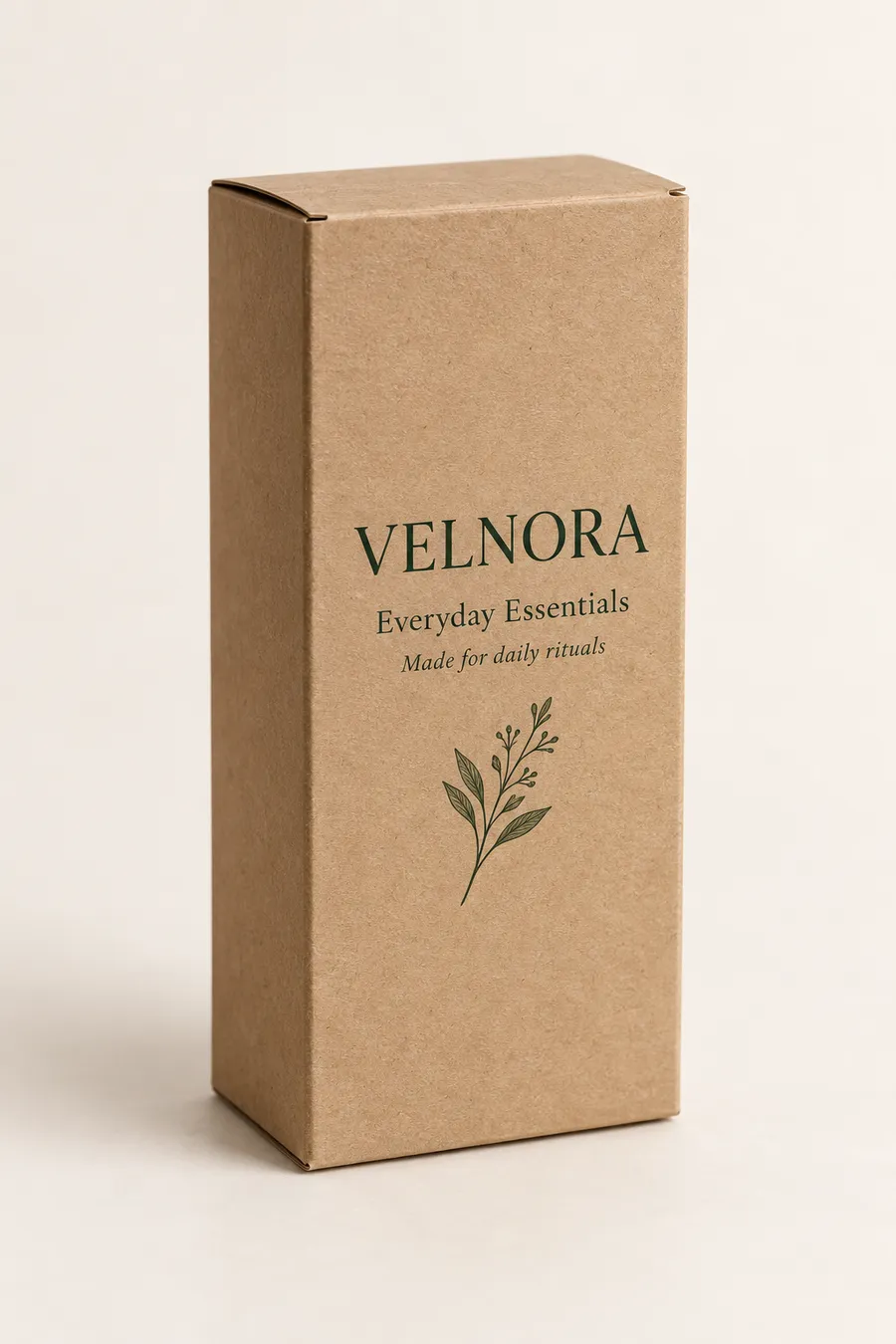
Custom kraft product boxes pair a natural brown paperboard surface with printed artwork for individual retail items. Plan the carton around your packed dimensions, opening direction and shelf presentation, then review print coverage and any internal support with the proposed structure. Board grade and finish suitability are checked for the specific item.
Custom printed corrugated boxes sized around the packed product and the way it will be shipped, displayed, or handed over. Plan the board construction, opening, printed panel coverage, and finish together so a practical protective shell also carries clear brand and product information.
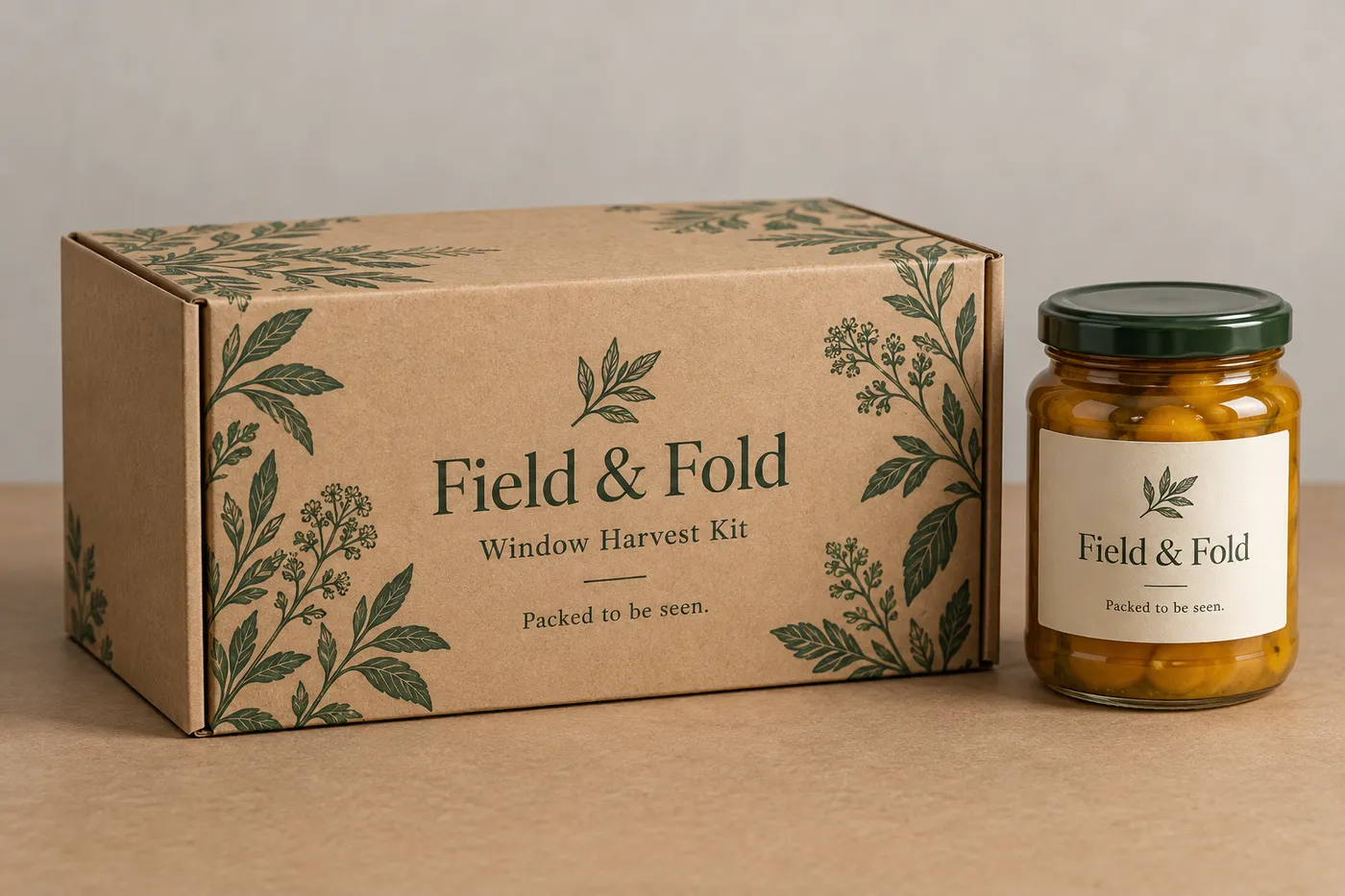
Custom retail shipping boxes are sized around the packed product, the opening sequence, and the route from fulfillment to customer. Corrugated or paperboard construction, printed exterior and interior panels, practical closures, and optional support can be reviewed together so the box works as both a shipper and a retail touchpoint.
Custom retail cardboard boxes planned around the packed product, shelf position, opening route, board direction, printed panels, and finish. Choose a folding carton or more structural corrugated direction after sharing the real dimensions, weight, count, artwork needs, quantity, and delivery route.
A 2 piece rigid box uses a separate base and lift-off lid to give a single product or compact set a stable presentation. Share the packed footprint, height, weight, insert needs, opening direction, print coverage, and finish preference so the structure can be reviewed around the actual item.
Comparison: Auto-Bottom vs Snap Lock vs Glued Bottom
Factor
Auto-Bottom
Snap Lock (1-2-3)
Glued Bottom
Assembly time
Fastest, no folding
Slower, hand-folded tabs
None, arrives sealed
Holding weight
Good
Higher, interlocking tabs
Highest, fully sealed
MOQ impact
Can raise MOQ on small runs
Lower MOQ, no gluing needed
Varies by supplier
Typical uses
Retail boxes, subscription boxes
Heavier products, food service
Top-load-only retail boxes
Which Base Style Fits Your Product?
Choose an auto bottom box when pack-out speed matters most. Your order also needs to clear your supplier’s MOQ for the gluing step. This fits high-volume retail and subscription boxes. A team can assemble hundreds of these in a single shift.
Choose snap lock when your product is heavier. It’s also the better fit when your first order is too small for auto-bottom’s factory setup. A rigid box isn’t always practical for lighter folding-carton products. Snap lock becomes the strength-focused option within the folding carton category itself.
Choose a glued bottom when the box only opens from the top. Many boxes in the food packaging category work this way. A fully sealed base adds strength with zero assembly step at pack-out.
Common Mistakes
The first mistake is picking an auto bottom box purely for speed. Brands skip checking their order volume against the supplier’s MOQ for that base style. A small first run can end up costing more once the gluing setup gets added in.
A related mistake is assuming snap lock and 1-2-3 bottom are different base styles. Some brands request quotes for both, expecting a difference. They’re the same style under two common names. Confirm with your supplier before doubling up on quote requests.
The third mistake is picking auto-bottom for a heavy product without testing it first. Snap lock’s interlocking tabs generally hold more weight. Request a sample of both bases loaded with your actual product before you commit.
A fourth mistake is confusing base style with top-opening style. A straight tuck or reverse tuck flap is a separate decision from the base. Mixing up these two choices in a supplier conversation can lead to the wrong quote.
A fifth mistake is skipping a physical sample. A digital mockup can’t show you how fast a base assembles by hand. It also won’t show how the base holds up loaded with your actual product weight.
Questions, answered
FAQ
What is an auto bottom box?+
It’s a folding carton with pre-glued base flaps. They snap into a locked square base automatically when the box opens. No manual folding is needed.
Is 1-2-3 bottom the same as snap lock?+
Yes. They’re two names for the same base style. Both are built from four interlocking tabs, folded by hand in sequence.
Which base style holds the most weight?+
A fully glued bottom generally holds the most weight. It’s sealed as one piece. Snap lock comes next. An auto bottom box holds the least of the three, though it still performs well under normal use.
Does auto-bottom cost more than snap lock?+
It depends on your order volume. Auto-bottom’s factory gluing step can raise the MOQ on small runs. Snap lock needs no gluing setup at all. Our guide to die cutting covers a related structural choice that also affects cost. So does our guide to rigid boxes vs folding cartons.
Get a free quote, dieline and design support included.
Talk to the team
Choosing a box base style?
Tell us what you are packing and how it will be sold or shipped. Easy Box Packaging will review the specification and send a quote.