Single-item presentation
A cosmetic, accessory, candle, or keepsake can use the lift-off lid to frame one product in a defined base.

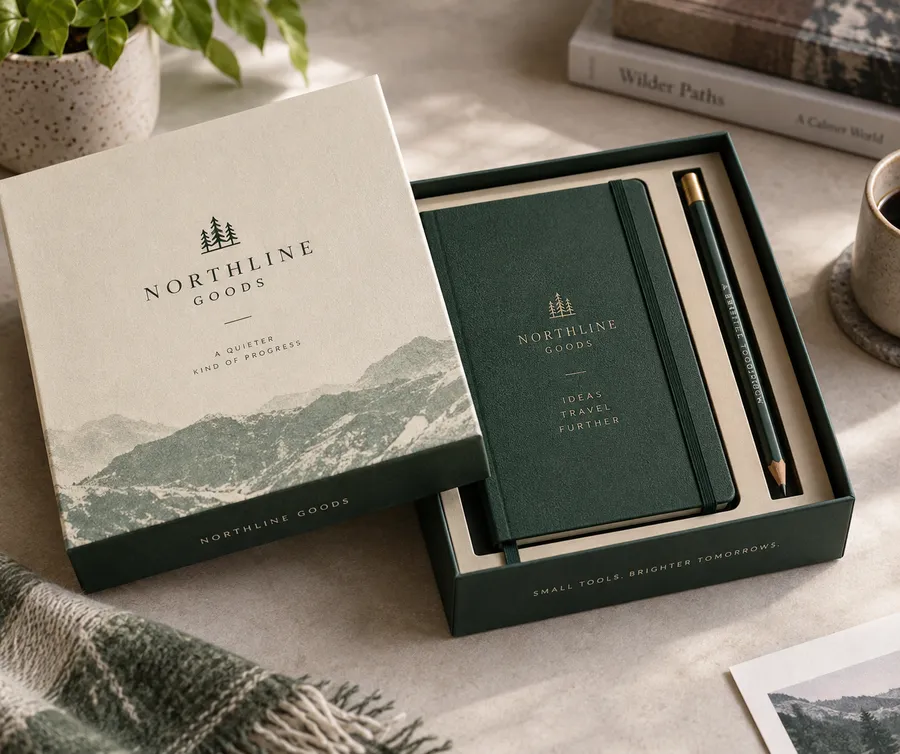
Open two-piece rigid box with a printed lift-off lid, fitted notebook and pencil insert, and Northline Goods mockup.
Rigid Boxes
A 2 piece rigid box uses a separate base and lift-off lid to give a single product or compact set a stable presentation. Share the packed footprint, height, weight, insert needs, opening direction, print coverage, and finish preference so the structure can be reviewed around the actual item.
Last updated
Working quote
Product brief
A 2 piece rigid box is useful when a product needs a shape-holding base and lid rather than a carton that folds flat. The base supports the packed item while the lid creates a deliberate lift-off reveal. Begin with the product as it will be presented: packed length, width, height, weight, orientation, and any sleeve, tissue, card, or insert that remains inside. A compact accessory, candle, cosmetic set, or keepsake can each create a different clearance and cavity question.
The format is not one fixed proportion. A shallow base may suit a flat accessory, while a taller base can make room for a bottle or a layered set. Lid depth, wall build, and the way the product is lifted all affect the finished opening. Describe whether the box will sit on a retail shelf, arrive in an ecommerce shipment, or be handed over as a gift so the outer pack and internal support are considered together.
Measure the assembled product or product set, not a marketing name for its category. Record the widest point, tallest point, packed weight, orientation, and the location of anything that projects such as a cap, clasp, handle, or corner. Include the thickness of a paper wrap, card, or protective layer that stays in the cavity. The useful interior is set by the packed arrangement and the clearance needed for the lid to lift without catching.
A two-piece box also needs an outside plan. Wall thickness, wrap direction, lid overlap, and the chosen opening side change the finished footprint. If the product should face a particular panel, note that before the dieline is reviewed. For a set, sketch the component order and explain whether each item needs a separate pocket, divider, riser, or simply a shared base. Those decisions are more informative than choosing an oversized box from a sample photograph.
The base-and-lid construction keeps the opening route simple: the customer lifts the lid, then sees the product or insert in the base. That can suit single-item presentation, launch kits, and small gift sets where the reveal matters. A shoulder, drawer, or hinged construction may be a better direction when a different opening motion or repeated access is central to the brief; the two-piece format should not be treated as the answer for every product.
Internal support depends on product geometry, weight, orientation, fragility, outer structure, product-to-box clearance, fulfillment route, and the desired reveal. Depending on those variables, support may be integrated into the base or provided as a separate insert. A paperboard riser can change how a small item is seen, while a divider can keep several components in a defined order. The quote should show the packed arrangement before the cavity and lid relationship are finalized.
SBS Paperboard can provide a smooth wrapped print field, Kraft Paperboard can keep a more natural paper character, and Corrugated Board can be considered when the route calls for a more structured board direction. These are category options rather than a promise of one fixed thickness or performance level. The selected construction should be reviewed with the product weight, wall proportions, storage needs, and shipping pack.
Matte Lamination and Gloss Lamination change the surface appearance and handling feel. Foil Stamping, Embossing/Debossing, or Spot UV can be reserved for a name, mark, or panel detail where contrast or touch adds useful information. Artwork scale, folds, wrap seams, and the lid edge should be checked together; a finish is not a substitute for a clear front panel.
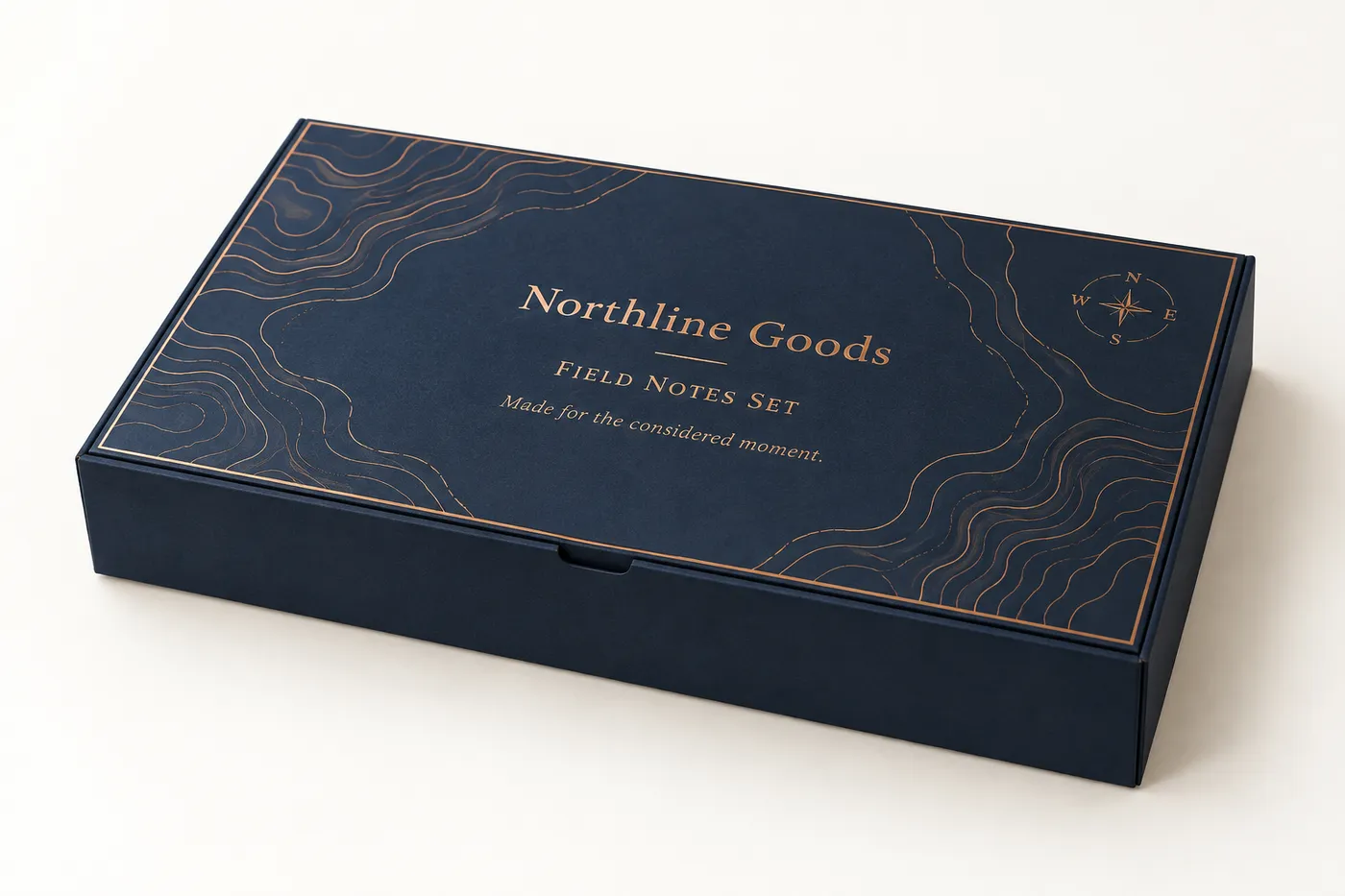
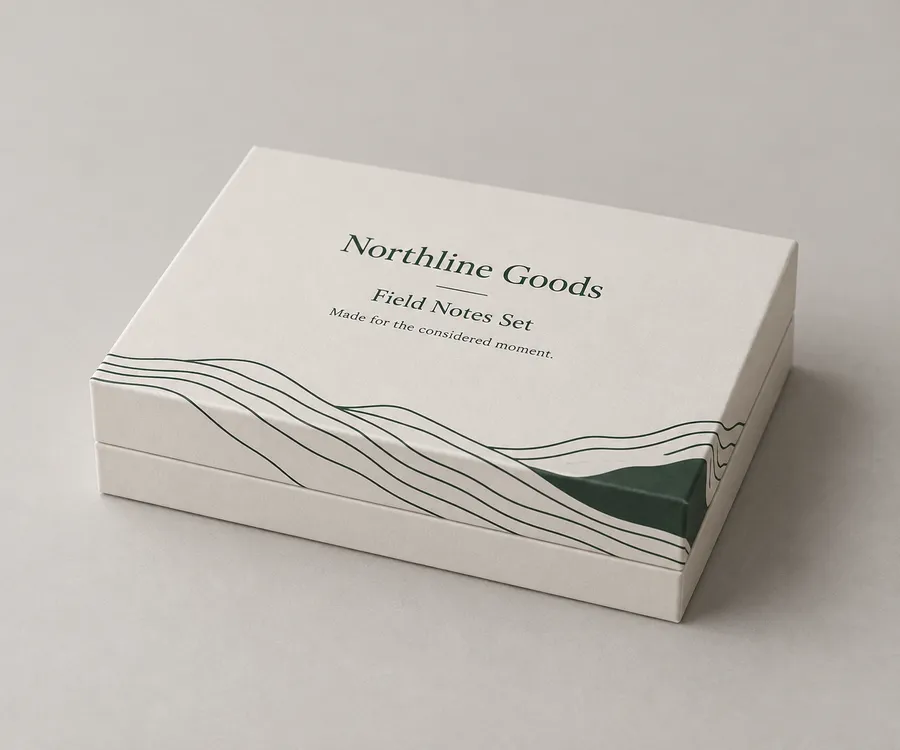
Map the lid, base, side walls, interior, and any insert-facing panel before artwork is treated as final. State which surface carries the primary brand message and which information must remain readable after the lid is removed. The pictured print is an example of artwork placement. Production artwork should use the buyer's approved identity and required copy.
The digital proof is the point to review the assembled proportions, lid lift, seam placement, print orientation, insert relationship, and finish locations. Look at the box as an object rather than only as a flat spread. If the product size, component count, or opening direction changes, the structure and artwork should be reviewed again instead of assuming the same dieline applies.
Include packed length, width, height, weight, quantity, orientation, product photos or sketches, insert or divider requirements, preferred material direction, print coverage, finish ideas, and destination. Orders start at 50 units, production is from 7 business days after digital proof approval, and Free US shipping is included on the standard fulfillment path. A sample kit has a $44.99 USD shipping charge credited toward the first order, and quote requests are typically answered the same business day and always within 24 hours.
A clear brief lets the reviewer connect the base, lid, cavity, wrap, artwork, and shipping route before production. The result is a two-piece rigid box with an opening sequence that matches the product instead of a decorative shell chosen without the item inside.
Proof points
The useful proof connects the product inside to the lid, base, insert, and customer-facing print so the whole opening sequence can be judged at once.
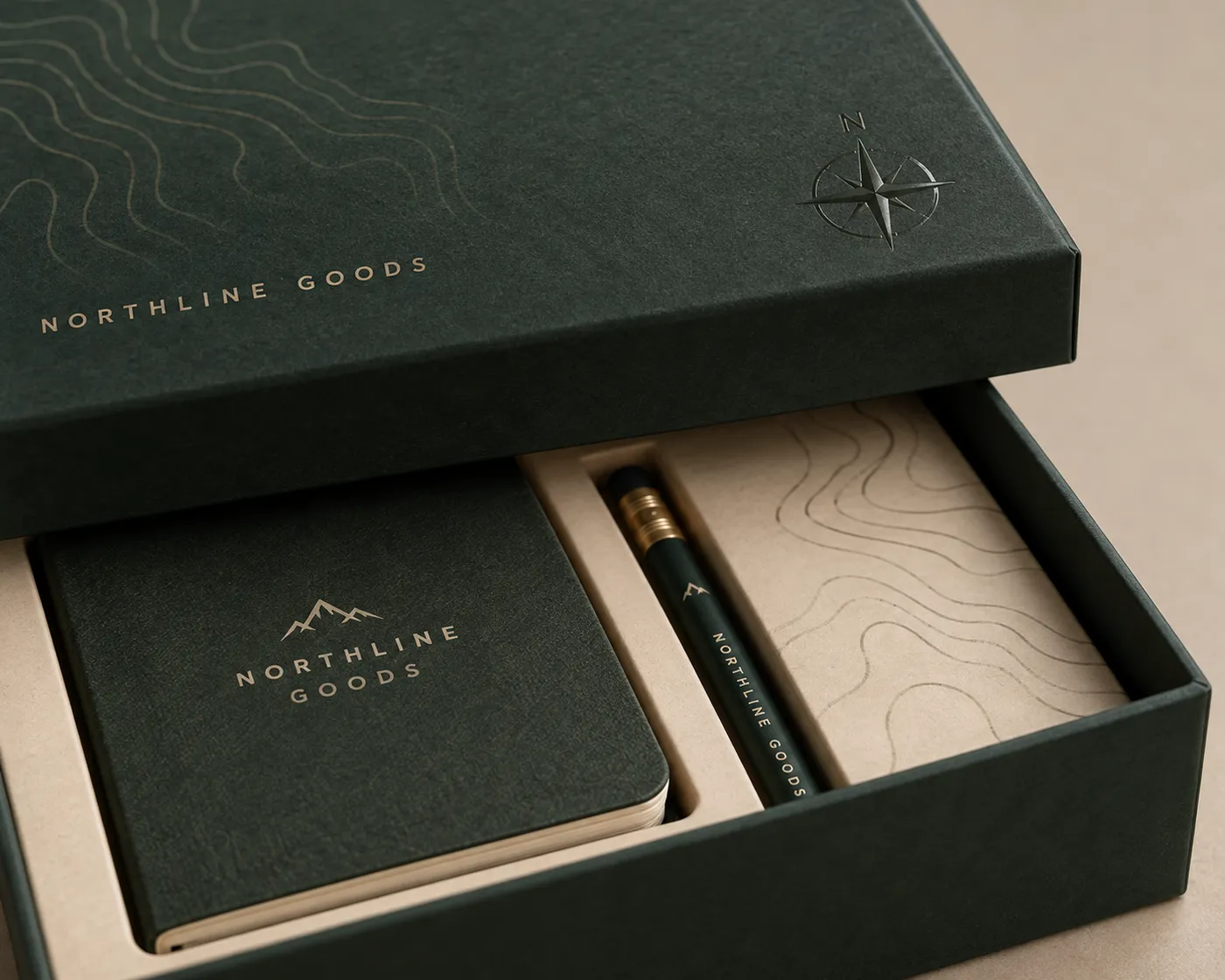
The two-piece format creates a stable base and a lift-off opening, but the usable cavity, lid overlap, insert, and printed wrap still depend on the packed item. Share the product arrangement before the artwork and finished footprint are treated as final.
A cosmetic, accessory, candle, or keepsake can use the lift-off lid to frame one product in a defined base.
Several coordinated pieces can be arranged with a divider, riser, or shared cavity when the set order matters during opening.
A printed lid and planned insert can organize a small product, card, and supporting component in one presentation pack.
The rigid outer form can be placed inside a shipping mailer or carton when the opening sequence should survive the delivery route.
Use the broad lid and base panels for clear brand information, then select surface treatments that support the reading angle, touch, or contrast of the specific artwork.
A concise packaging brief keeps the review focused on the opening route, cavity, surface, and shipment rather than an empty sample box.
Provide the finished length, width, height, weight, component count, orientation, and any wrap or card that stays inside the base.
Describe the lift-off direction, desired reveal, insert or divider idea, and whether the box will be opened once or accessed repeatedly.
State the lid and base panels, brand information, material direction, print coverage, and finish details that must be checked on the assembled pack.
The fastest review starts with the packed product and ends with an assembled proof that shows the opening, support, and printed wrap together.
Share product dimensions, weight, component count, orientation, photos or sketches, destination, and the desired handoff.
Note the base-and-lid preference, cavity or insert idea, material, print coverage, finish, and artwork status.
Check the lid lift, cavity, seam, artwork orientation, insert relationship, and shipping footprint before approving production.
Once the specification and proof are approved, the order can proceed from the quoted quantity and agreed production route.
Need help with structure, materials, or production planning? See how we manufacture custom packaging.
A sample kit can help compare rigid surface character, lift-off opening, insert direction, and finish treatment before the product-specific proof. Shipping is $44.99 USD and is credited toward the first order.
Shipping charge: $44.99. Credited toward your first order.
Request a Sample KitFind clear answers about fit, materials, and ordering below.
It uses a separate rigid base and lift-off lid. The cavity, wrapped panels, and any insert or divider are specified around the packed product.
Send the packed length, width, height, weight, widest points, orientation, and any sleeve or insert that remains inside. Lid clearance and wall proportions are then reviewed with the actual arrangement.
It can suit a compact set when the components, order, and support needs are clear. A shared cavity, divider, riser, or separate insert may be considered depending on the set.
Matte Lamination, Gloss Lamination, Foil Stamping, Embossing/Debossing, and Spot UV are category directions; the final choice and placement depend on the artwork and assembled box.
The standard fulfillment path starts at 50 units, with production from 7 business days after digital proof approval. Your final unit price is confirmed in a quote because the specification sets the unit cost.
Orders start at 50 units and scale up to 500,000 for bulk runs, with pricing from $0.24 per unit on larger quantities. Standard production is from 7 business days after digital proof approval.
Common uses include single-item presentation, compact gift sets, launch and limited-edition kits, and direct-to-consumer unboxing. The final specification is set by the packed product and how it will be handled.
Compare nearby products and request the format that best fits your next run.
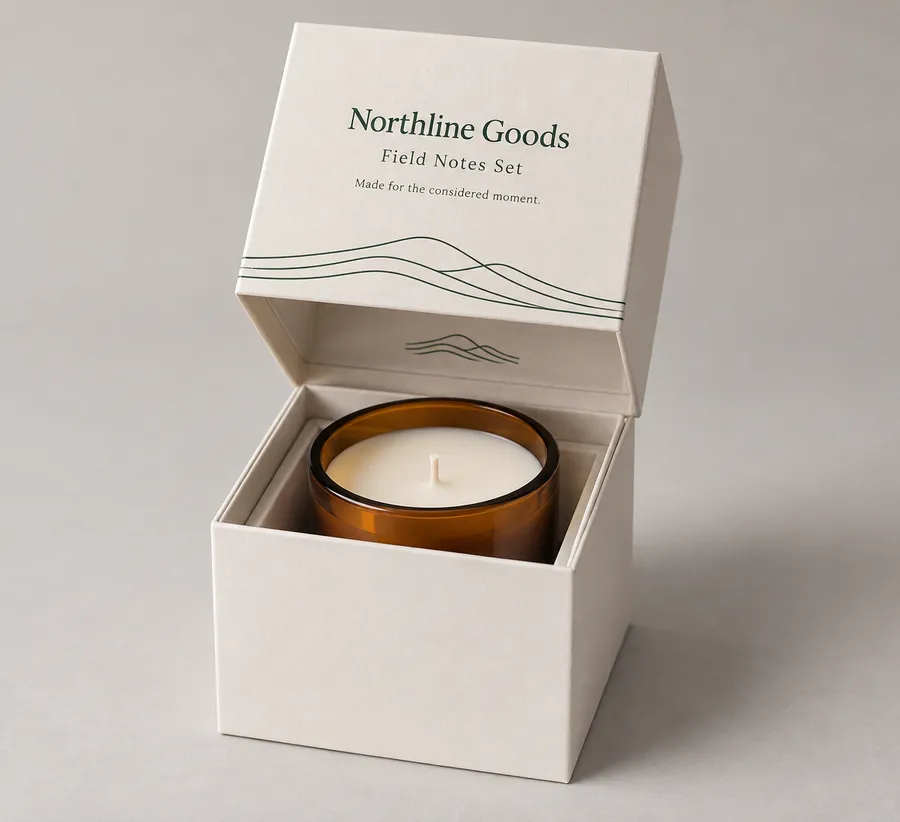
Available product
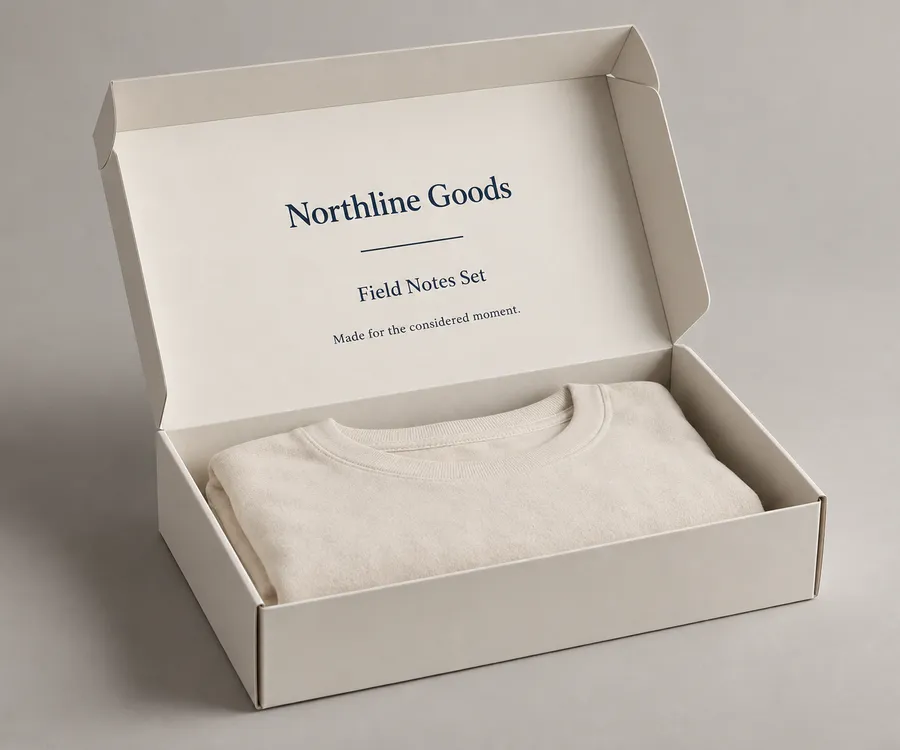
Available product
Available product
Available product
Ready to scope the box?
Tell us what sits inside, how the lid should open, and which printed surface you want to review. Easy Box Packaging can then shape the base, lid, support, and artwork discussion around the actual pack.
Add your product details to see a quote summary.