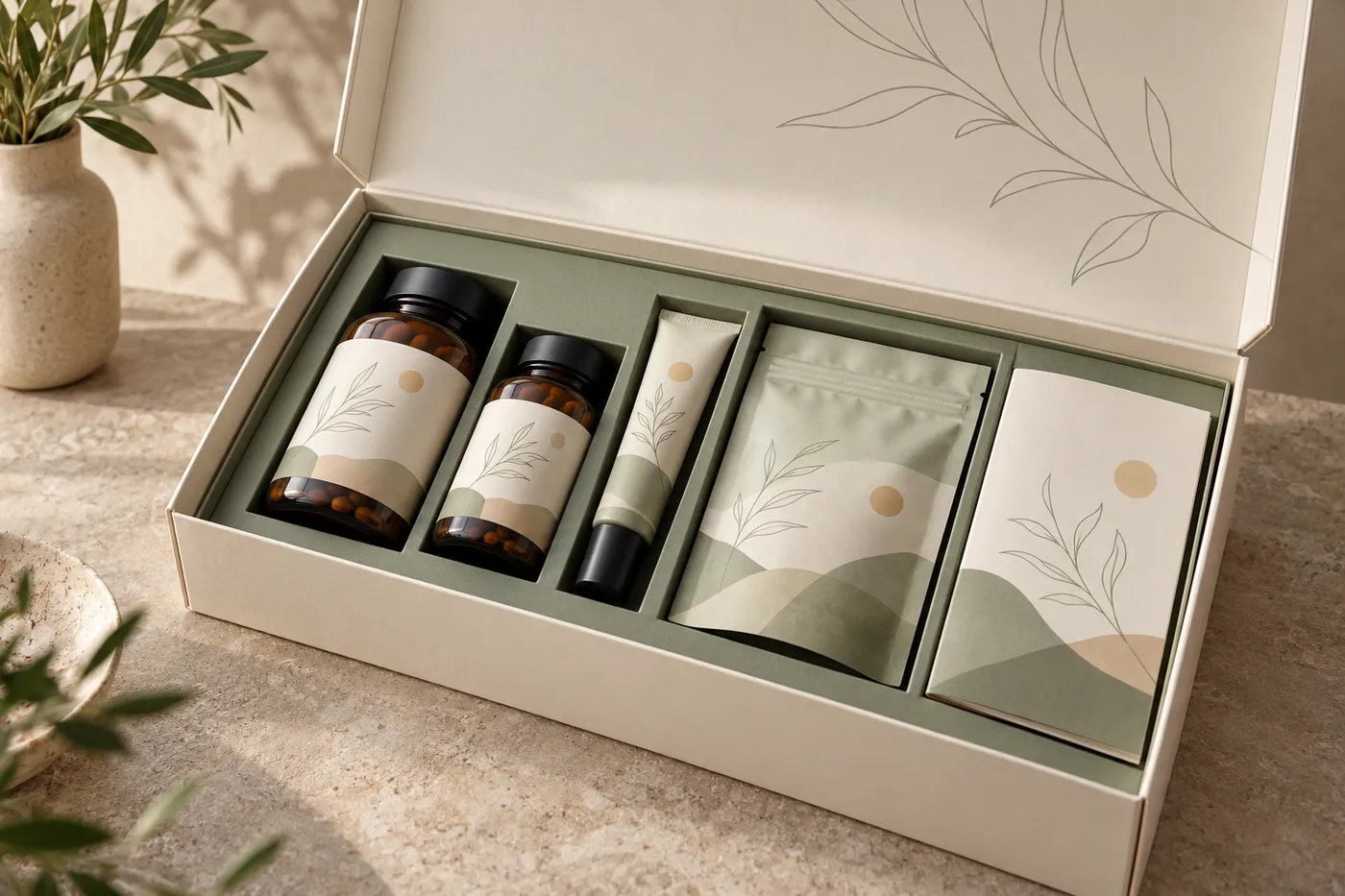
Pharmaceutical & Healthcare Kits
Custom Wellness Kit Boxes
Custom rigid boxes and folding carton kits for multi-product wellness sets, subscriptions, and gift packaging.
Request a Quote
Industry Specific Packaging
How to get custom pharmaceutical packaging made: the brief checklist, label panel planning, structural formats and what to expect from the process.
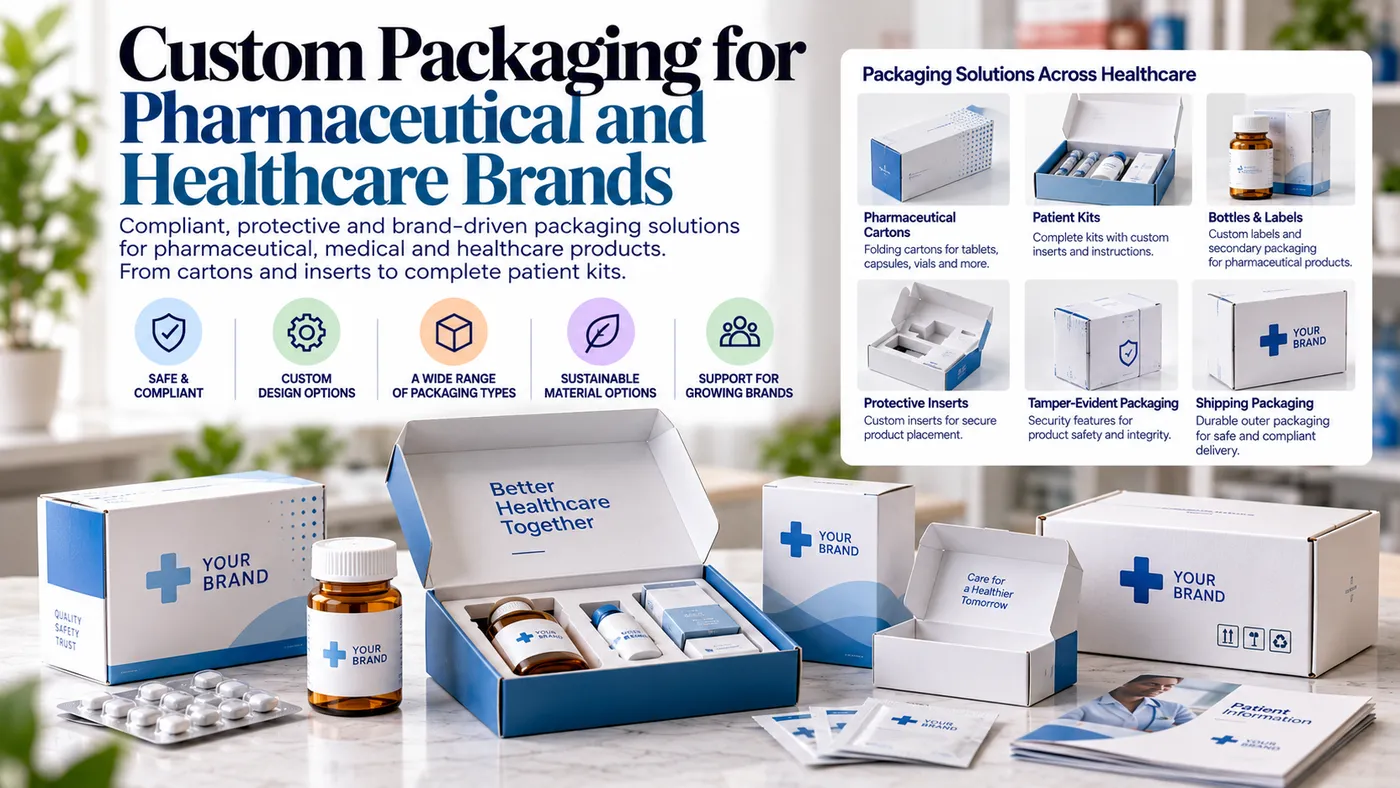
Quick answer: To get custom pharmaceutical packaging made, confirm four things before a dieline is drawn. You need the filled container size, a parts list, label copy approved by your regulatory team, and your quantity and destination. The maker draws the dieline around those. Orders start from 50 units.
*Last updated: November 2026.*
Custom pharmaceutical packaging is harder to brief than a standard consumer box. The label copy must be approved first. The container must be measured filled. The insert must hold the contents still and keep every panel readable. The table below shows what a brief needs.
Brief item | What to confirm | Why it matters |
|---|---|---|
Filled container size | L × W × H of the sealed, capped container | The box is built around the filled container |
Component list | Every part, with sizes and display order | Sets the insert layout |
Label copy | Panel text approved by your regulatory team | Sets panel size and box size |
Quantity and destination | Run size and delivery address | Sets structure options and logistics |
Key takeaway: Confirmed copy is a starting point, not a finishing step. If it arrives late, the box may need resizing.
When makers say custom pharmaceutical packaging, they mean secondary packaging. That's the outer box and the insert tray around the primary container. The vial, bottle, blister, pouch or syringe is made and filled elsewhere.
Secondary packaging covers four things:
1. The outer folding carton or rigid box. 2. The insert tray, foam insert or divider. 3. All printed panels with label copy, branding and barcodes. 4. Any leaflets, insert cards or dosing guides in the kit.
It doesn't cover sterile barriers, filling, laminate film or blister tooling. It never involves the drug or device itself. For a deeper look at the four kit types, see our guide to pharmaceutical packaging kits by type.
Buyers are mostly mid-size brands and procurement teams. Typical runs are 50 to 2,000 units. Large pharma companies with in-house packaging lines run on different supply chains. The usual buyers here are:
Buyer | Typical project |
|---|---|
Supplement and nutraceutical brands | Moving from stock boxes to branded cartons |
OTC drug brands | Launching a new SKU or rebranding one |
Biotech and pharma sponsors | Trial supply for a Phase I or II study |
Medical device companies | Outer cartons for a CE- or FDA-cleared device |
Wellness and healthcare brands | A branded kit for e-commerce or retail |
Veterinary supplement brands | Moving from plain labels to structured boxes |
The common thread is simple. The product is regulated, or close to it. The label copy is fixed. The box must work in a shop, a clinic or a parcel network.
This is where most briefs stall. A dieline can't be drawn until four items are confirmed. Estimates won't do.
1. Filled container dimensions. Build the box around the filled, sealed container. An empty amber bottle is shorter than a filled, capped one. A vial with a stopper and crimp is taller than the vial alone. Measure in the final closed state, in millimetres or inches.
2. Full component list. If the kit has more than one item, list each with its size. Say which goes where in the insert. That might be a bottle and a sachet, a device and accessories, or a trial drug and a patient diary.
3. Approved label copy. Your regulatory affairs team must approve the Supplement Facts, Drug Facts, UDI or trial text first. We plan space around your copy. We don't write or approve it. Send final text.
4. Quantity and destination. Structure and timing depend on run size. Add the delivery address now so logistics start early. Our packaging RFQ template lists every field a quote needs.
Every brief starts with a panel review before the dieline is drawn. The goal is to fit all required elements at a readable size.
1. The label copy arrives with the brief. 2. Panel space is mapped across the front, back, sides, top and bottom. 3. Each required element is placed at its minimum size and format. 4. Any clash between copy and box size is flagged before artwork goes on.
If the copy is too large for the box, we resize the box first. We don't wait until the artwork is done. That's why confirmed copy comes first.
Product category | Key panel element | Regulation reference |
|---|---|---|
Dietary supplement | Supplement Facts, ingredient list, net quantity, manufacturer address | 21 CFR Part 101 |
OTC medication | Drug Facts panel (6pt minimum), tamper-evident statement, NDC | 21 CFR Part 201, 211.132 |
Clinical trial IMP | Protocol number, patient ID field, lot and expiry fields, blinding identifier | ICH E6, local regulations |
Medical device | UDI barcode and HRI, intended use, IFU reference | 21 CFR Part 801, EU MDR |
Nutraceutical | Nutrition Facts or Supplement Facts (confirm with regulatory team) | 21 CFR Part 101 |
Veterinary supplement | Caution statement, lot and expiry, net quantity | NASC guidelines |
This table is a planning aid, not legal or regulatory advice. Have your regulatory team confirm the rules for your product.
A few Easy Box Packaging products that fit what this article covers.
Pharmaceutical & Healthcare Kits
Custom rigid boxes and folding carton kits for multi-product wellness sets, subscriptions, and gift packaging.
Request a Quote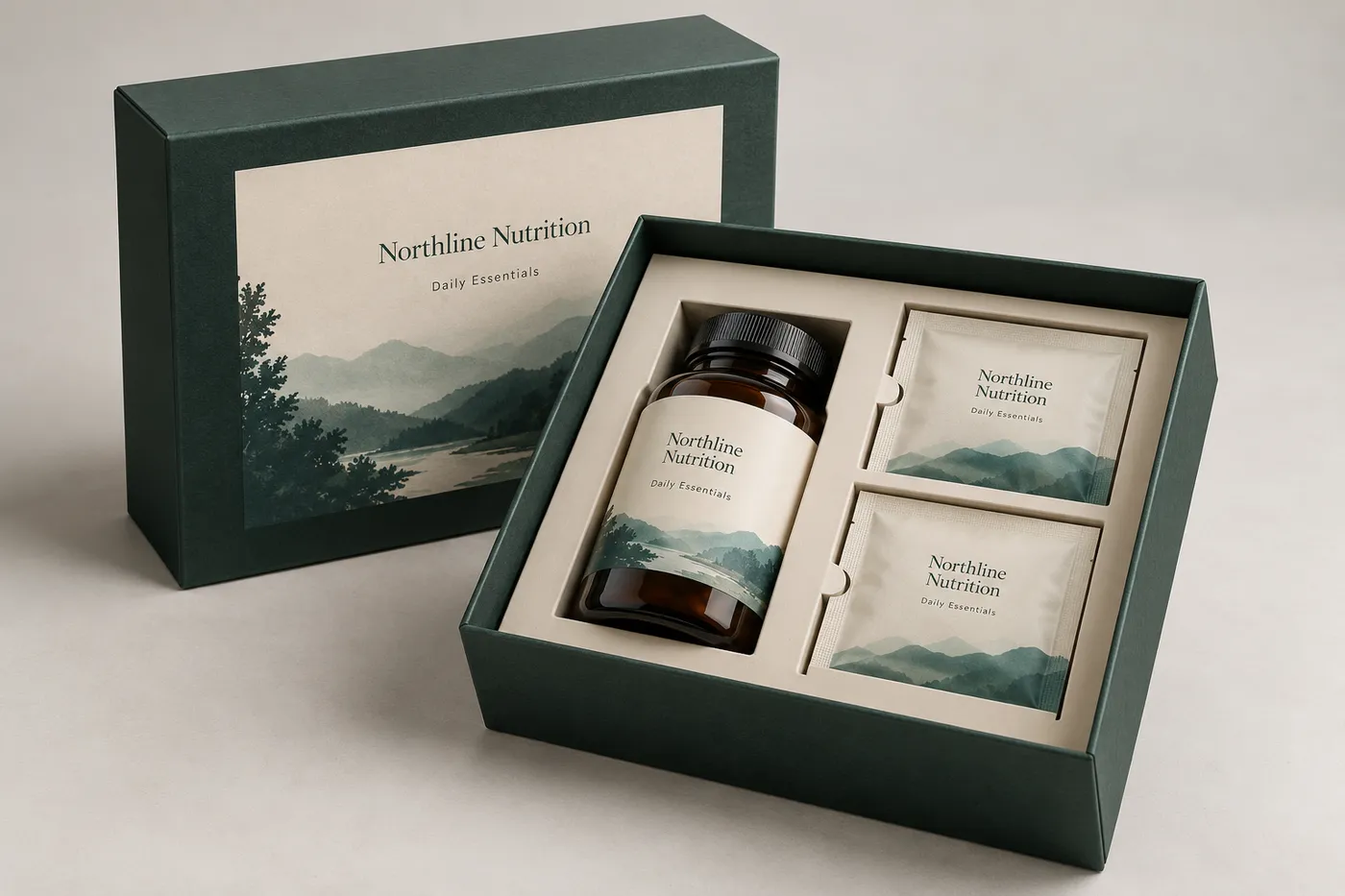
Pharmaceutical & Healthcare Kits
Custom supplement box kits coordinate an outer folding carton or rigid box, an insert or tray, and the label panels needed around a bottle, pouch, or sachet. The format is for vitamin, mineral, and wellness brands preparing a quote-based packaging brief.
Request a Quote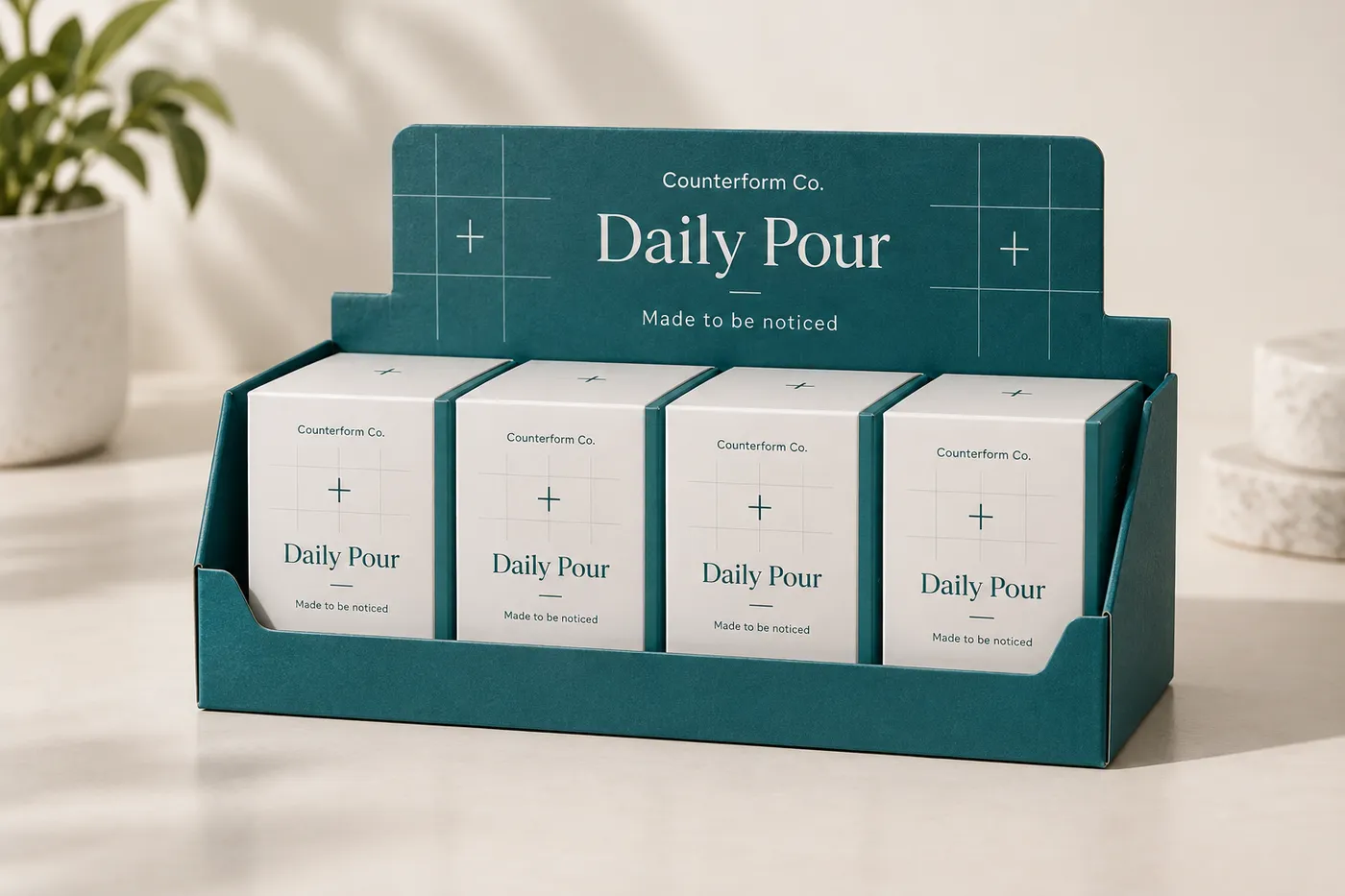
Display Boxes
Custom pharmaceutical display boxes give medicine cartons, supplement packs, or pharmacy samples a structured printed presentation at a counter, shelf, or checkout area. The layout can use an open front, raised header, divider, or tear-away access panel, sized around the packed product, number of facings, refill routine, and intended handling route.
Request a Quote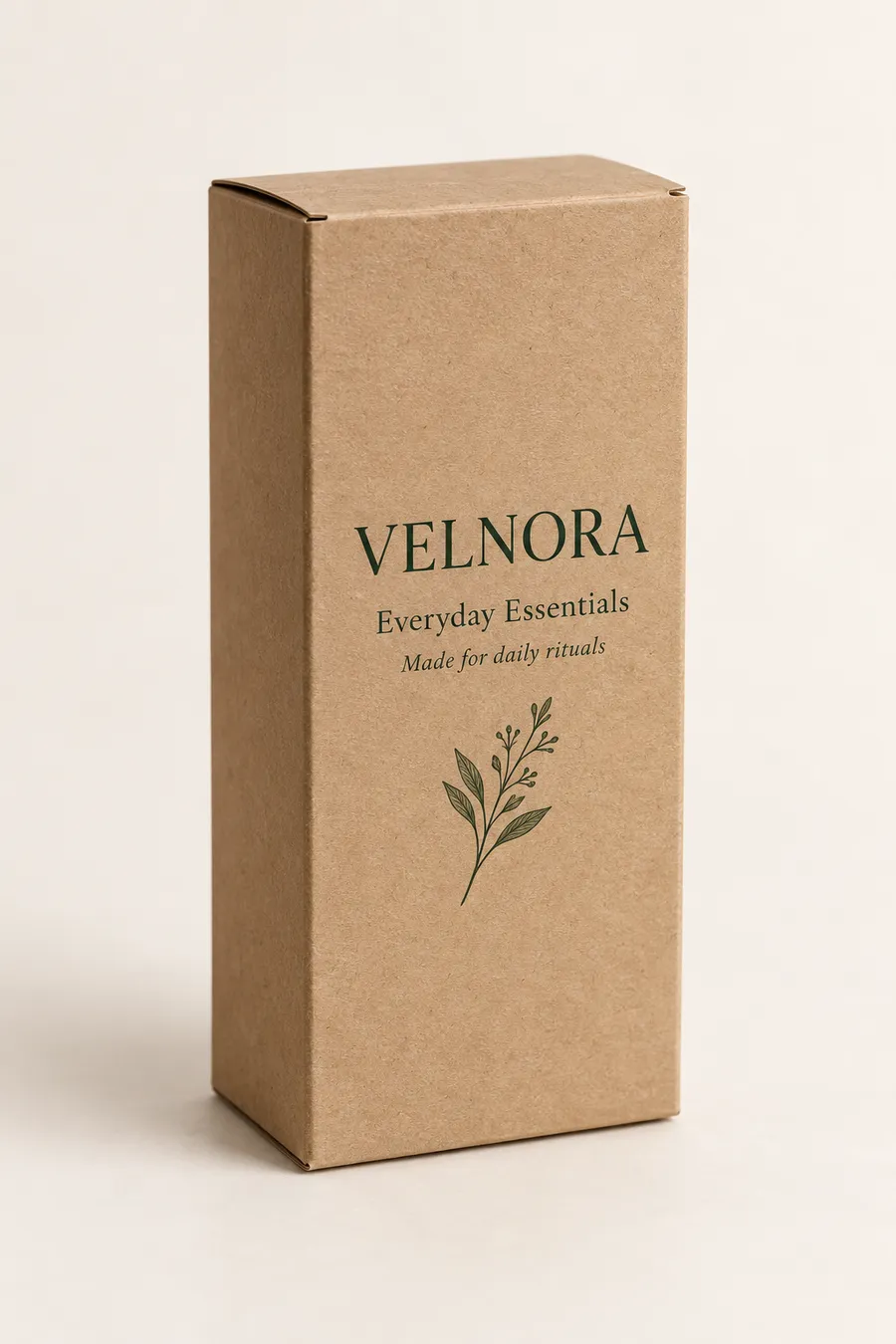
Retail & Product Boxes
Custom kraft product boxes pair a natural brown paperboard surface with printed artwork for individual retail items. Plan the carton around your packed dimensions, opening direction and shelf presentation, then review print coverage and any internal support with the proposed structure. Board grade and finish suitability are checked for the specific item.
Request a Quote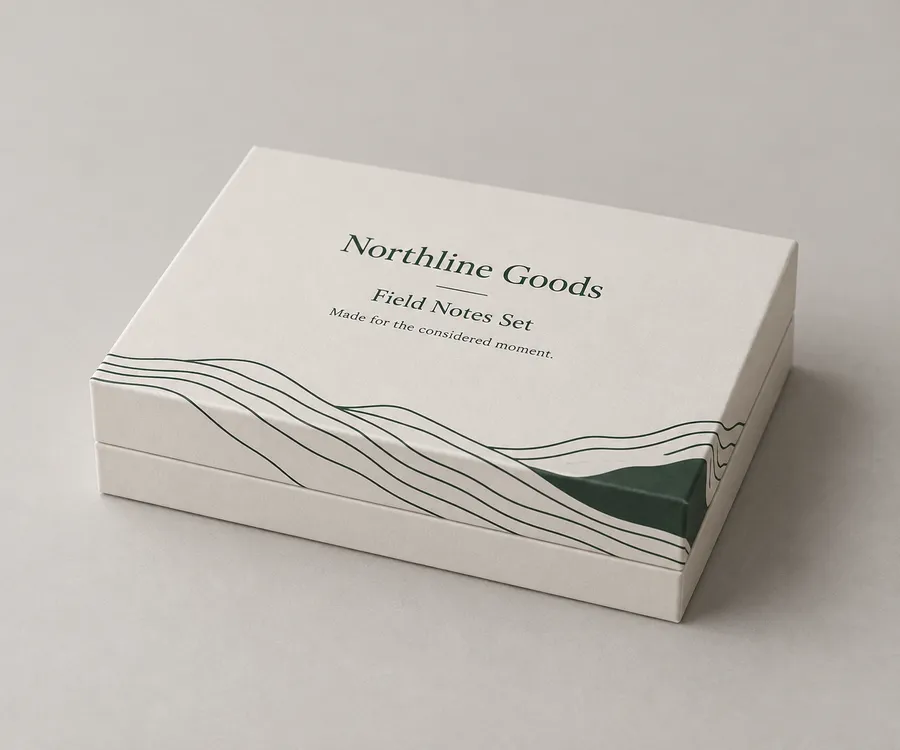
Rigid Boxes
Small rigid boxes give compact products a firm base-and-lid presentation without forcing a nominal stock size. The finished footprint is scoped around the packed item's length, width, height, weight, insert needs, opening sequence, printed panels, and shipping route.
Request a Quote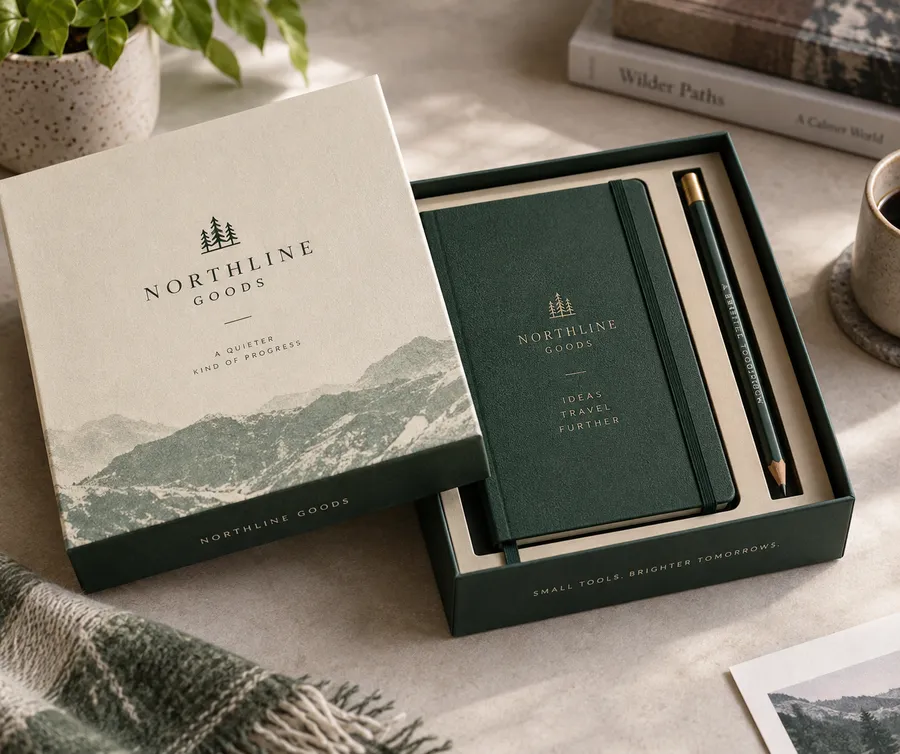
Rigid Boxes
A 2 piece rigid box uses a separate base and lift-off lid to give a single product or compact set a stable presentation. Share the packed footprint, height, weight, insert needs, opening direction, print coverage, and finish preference so the structure can be reviewed around the actual item.
Request a QuoteFormat | How it works | Best for |
|---|---|---|
Folding carton, tuck-end | Printed flat, assembled at filling; all four panels carry copy | Single-container supplement, OTC and diagnostic kits |
Folding carton, auto-bottom | Stable base that holds shape under weight | Heavier or multi-part kits |
Rigid lid and base | Set-up box on thick greyboard; more protective, higher unit cost | Premium kits, physician starter packs, patient samples |
Sleeve and tray | Sleeve slides off to show a tray of contents | E-commerce wellness kits and subscriptions |
Multi-compartment carton or rigid box | Fixed or removable dividers hold parts in place | Multi-period trial kits, multi-accessory device kits |
My opinion: start with a folding carton unless the kit is handled by a person who will notice the opening. Rigid costs more and rarely pays back in bulk clinical supply. Compare material options in our guide to custom packaging inserts.
1. Submit the brief. Send container sizes, components, approved copy, quantity and destination. 2. Dieline review. We draw the dieline around your sizes and copy. Panel placement is confirmed here. 3. Structure approval. You review the structure, insert layout and panels before artwork goes on. 4. Artwork. Print-ready art is placed on the approved dieline, and we generate a digital proof. 5. Proof approval. You check panel accuracy, barcode placement and brand look. Production starts after approval. 6. Production and shipping. Standard production runs from 7 business days after proof approval. US shipping is available.
Production is rarely the slowest step. Getting approved copy and print-ready art takes longer. Our lead times guide shows what adds time.
Kits are available from 50 units. That covers folding cartons, rigid boxes and sleeve formats across supplement, OTC, trial, device and wellness categories. Pricing is confirmed in your quote. Structure, insert, material, finish, print and quantity all set the price. We don't publish list prices.
Browse the pharmaceutical and healthcare kits page for formats. Or go straight to supplement box kits or clinical trial supply kits.
What is the minimum order for custom pharmaceutical packaging? From 50 units, for folding cartons and rigid boxes. That covers supplement, OTC, trial, device and wellness kits. Share your brief for a quote.
Does the manufacturer write the label copy? No. Your regulatory affairs team confirms the copy. We plan panel space around it. We check that every element fits before the dieline is drawn.
How long does production take? From 7 business days after digital proof approval on the standard route. The clock starts at proof approval, not at the quote. Approved copy and print-ready art are usually the slowest parts.
Can small brands order fewer than 1,000 units? Yes. Kits start from 50 units. That includes supplement and OTC cartons, rigid boxes for premium kits, and trial cartons for smaller studies.
Do you make the bottle, vial or sterile pouch? No. We make secondary packaging only, meaning the outer box and insert. Primary containers, sterile barriers and filling are outside scope.
What do I need to measure first? Measure the filled, sealed container in its final closed state. Give length, width and height. A capped, filled bottle is taller than an empty one.
Can one kit hold several items? Yes. A compartment insert can hold bottles, sachets, devices and printed guides in fixed spots. List every part with sizes and display order.
Does Easy Box Packaging guarantee regulatory compliance? No. Label compliance is the brand's responsibility. We build the box to your approved copy and spec. Have your regulatory team confirm all label content first.
Custom pharmaceutical packaging goes smoothly when the brief is complete. Measure the filled container, list every part, and get the copy approved. Then the dieline follows without surprises. This guide isn't legal or regulatory advice, so check your own rules.
Ready to share your brief? Get a free quote. We'll confirm the structure, minimum and timeline with your quote.
Questions, answered
From 50 units, for folding cartons and rigid boxes. That covers supplement, OTC, trial, device and wellness kits. Share your brief for a quote.
No. Your regulatory affairs team confirms the copy. We plan panel space around it. We check that every element fits before the dieline is drawn.
From 7 business days after digital proof approval on the standard route. The clock starts at proof approval, not at the quote. Approved copy and print-ready art are usually the slowest parts.
Yes. Kits start from 50 units. That includes supplement and OTC cartons, rigid boxes for premium kits, and trial cartons for smaller studies.
No. We make secondary packaging only, meaning the outer box and insert. Primary containers, sterile barriers and filling are outside scope.
Measure the filled, sealed container in its final closed state. Give length, width and height. A capped, filled bottle is taller than an empty one.
Yes. A compartment insert can hold bottles, sachets, devices and printed guides in fixed spots. List every part with sizes and display order.
No. Label compliance is the brand's responsibility. We build the box to your approved copy and spec. Have your regulatory team confirm all label content first.
Start a packaging brief
Share the product, quantity, dimensions, and route to market. Easy Box Packaging will help connect those requirements to a practical structure and production path.