Cosmetic and fragrance pieces
A jar, compact, or small bottle can sit in a cavity with the label oriented toward the first reveal.

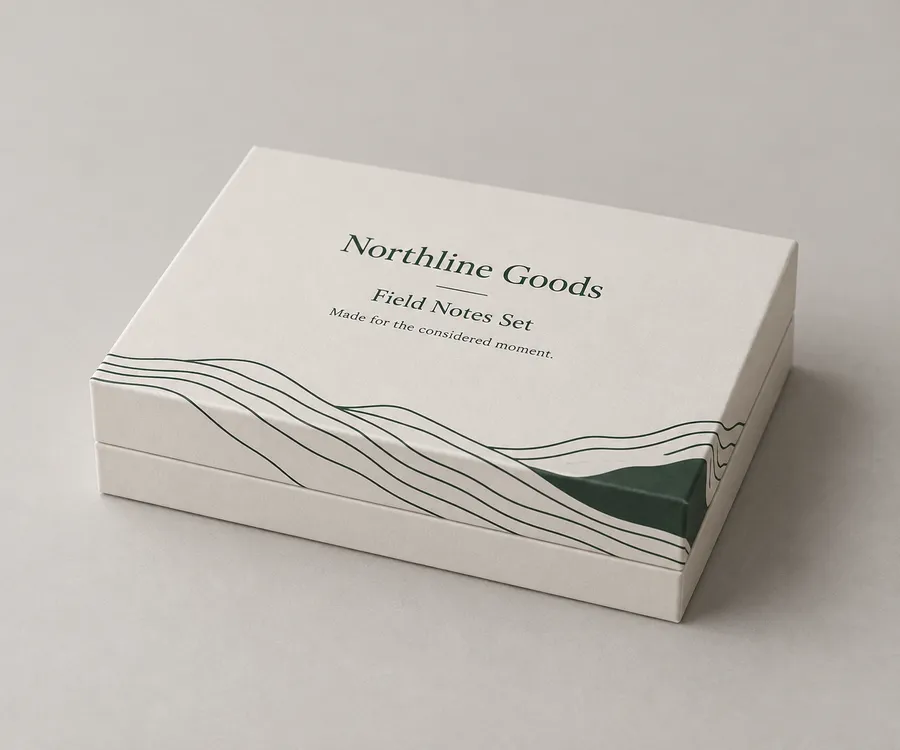
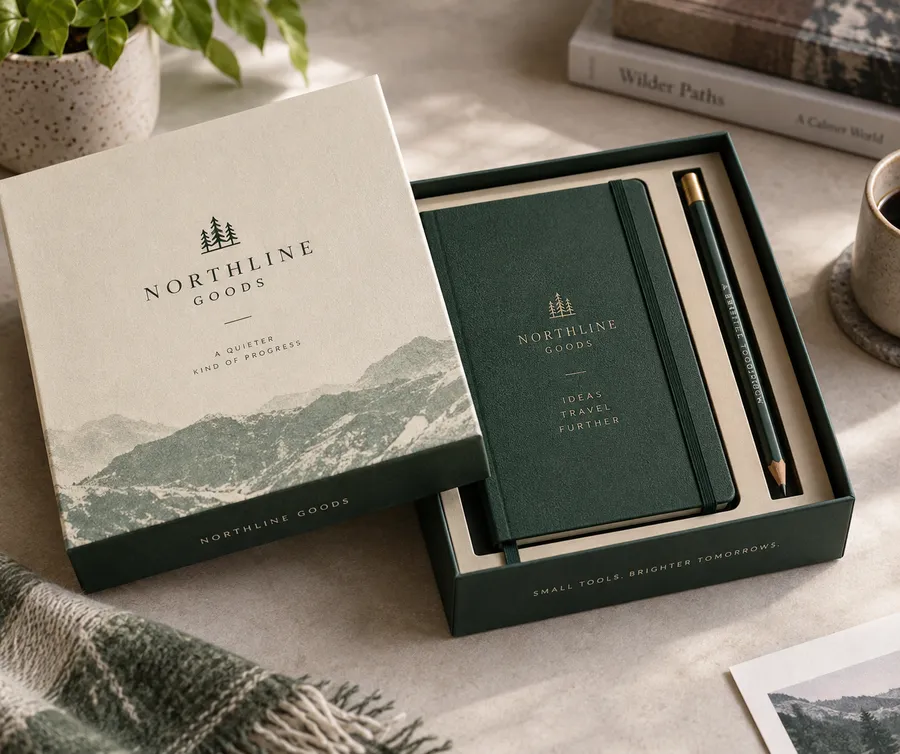
Closed small rigid box with a forest-green motif and fictional printed brand mockup
Rigid Boxes
Small rigid boxes give compact products a firm base-and-lid presentation without forcing a nominal stock size. The finished footprint is scoped around the packed item's length, width, height, weight, insert needs, opening sequence, printed panels, and shipping route.
Last updated
Working quote
Product brief
Small rigid boxes are useful when a compact product still deserves a box that holds its shape. A two-piece base and lift-off lid creates a defined opening around a single item, while a drawer or fitted presentation construction can guide the reveal when the product needs a different handoff. The point of the small format is not simply to make a larger box shorter. It is to keep the finished package close to the packed product so the interior feels intentional, the product does not wander, and the outer footprint remains practical for storage and handling. Easy Box Packaging makes these boxes to order with custom printed panels and a reviewed construction brief.
Start with the product that will actually be packed. A small rigid box can suit a candle, cosmetic jar, fragrance sample, jewelry piece, accessory, keepsake, premium confection, or a compact gift component, but the right structure changes with the product's geometry and weight. Measure the longest length, width, and height at the widest points, then record any cap, shoulder, handle, wrap, or accessory that stays inside the box. A product that is only 2 inches wide may still need more room if a rounded shoulder or protective wrap changes its loading path. The packed condition matters more than a label such as small or travel size.
A single item can use a simple base and lid when it stays stable on its own. A heavier glass jar, an irregular object, or a set of two or more components may need a cavity, riser, divider, or platform. The insert should leave enough clearance for loading and removal while keeping the visible face, label, or top surface aligned. Do not choose an insert from an abstract box ratio: share the product, its weight, the intended orientation, and how the customer should first see it.
The outside dimensions follow the interior arrangement, board construction, wrap, and lid engagement. The base must accommodate the product and any support without making the box feel loose. The lid must travel over the base cleanly and close without crushing an edge or catching a printed panel. For a compact box, a few millimeters of unnecessary clearance can be noticeable because the product occupies a larger share of the interior; too little clearance can make removal awkward. Final allowances are confirmed during specification and dieline review rather than copied from a generic small-box template.
Decide the opening before artwork is finalized. A lift-off lid keeps the base still while the top comes away, which suits a deliberate handoff or a product customers may keep in the box. A drawer construction keeps the sleeve stationary while a tray travels forward, which can make sense for a flat accessory or a staged reveal. A fitted presentation box can hold several small pieces in an ordered layout. These are different customer experiences even when the outer footprint is similar.
Kraft Paperboard, SBS Paperboard, and Corrugated Board are the category's material directions. Kraft can retain a natural paper character; SBS can provide a smooth printed surface for fine type and clean color fields; Corrugated Board can suit a more substantial small pack or a product that travels inside an outer shipper. The final material depends on the packed weight, finished dimensions, print coverage, wrap, handling, and delivery route. The category pack does not establish a universal board thickness or paper weight, so those details should be confirmed for the specific construction.
Matte Lamination, Gloss Lamination, Spot UV, Foil Stamping, and Embossing/Debossing can be considered as finish directions subject to artwork review. On a small lid, the most useful approach is usually to reserve one clear panel for the brand or product name and use a selected treatment for a mark or short line of copy. Foil or embossing can lose legibility when detail is too fine, and a full coverage effect can make a compact package visually busy. The dieline should show which edges, seams, and inside panels will be visible when the box is closed and opened.
Send the packed length, width, height, weight, number of components, preferred orientation, insert or divider direction, opening style, material preference, print coverage, finish choices, quantity, and shipping destination. If the product is already wrapped or has a cap, include that condition in the dimensions. Artwork can be supplied with the brief, or the printed panels can be planned against the dieline before the digital proof. Dieline and proof review are included on every order at no extra charge.
The standard fulfillment path starts at a minimum of 50 units. Production is from 7 business days after digital proof approval, and free US shipping applies on that path. A sample kit carries a $44.99 USD shipping charge credited toward the first order when you want to compare board feel, surface texture, print, or finish before committing to the run. Those are confirmed service facts; a product-specific unit price is not stated here because no defensible comparable source was available for this small rigid box.
A clear brief lets the quote focus on the actual decisions: how the product sits, how the lid or tray opens, which panel carries the printed identity, what support protects the contents, and how the finished package will move through fulfillment. That discipline keeps a small rigid box compact without making it feel improvised.
Proof points
A small rigid box is defined by the packed product, the base-and-lid or drawer relationship, the interior support, and the visible printed surfaces reviewed for the actual run.
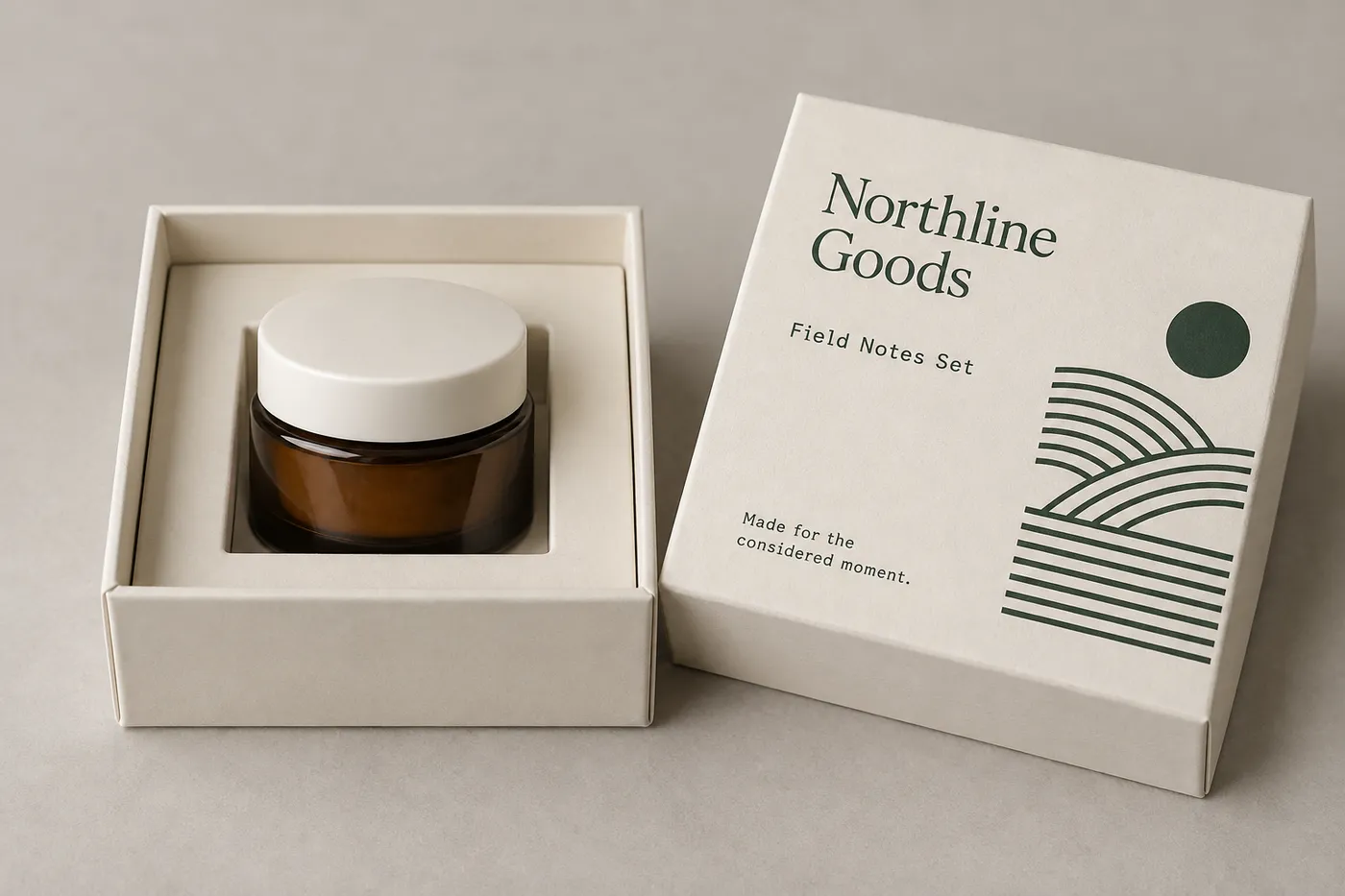
Scope the base, lid, tray, or insert from the packed product's finished length, width, height, weight, orientation, and removal path. Final clearance and lid engagement are confirmed during specification and dieline review rather than fixed to a generic small-box ratio.
A jar, compact, or small bottle can sit in a cavity with the label oriented toward the first reveal.
A fitted platform or insert can keep a small accessory ordered and visible when the lid lifts.
A compact jar or object can be framed by a rigid base and lid that customers may keep after opening.
A small presentation box can hold one sample or a planned set when component count and dimensions are known.
Reserve the clearest lid or sleeve panel for the primary identity, then decide whether the base, inside lid, tray, or insert should carry supporting artwork. The dieline keeps print and finish decisions tied to seams and edges.
The outer box protects the presentation, but the internal support is a separate decision based on product geometry, weight, fragility, orientation, clearance, and the intended reveal.
Record the product's widest points, cap or shoulder, wrap, and any accessory that changes how it loads into the base.
Use a fitted cavity, riser, divider, or platform when the item could shift or when several small pieces need an ordered layout.
Leave practical finger clearance and position the support so the first visible face is the one the customer should see.
The quote process turns the packed product and presentation brief into a reviewed structure, insert, print, and finish specification.
Send length, width, height, weight, wrapping, and component count in the condition that will actually be packed.
Describe whether a lift-off lid, drawer tray, or fitted presentation opening best matches the handoff.
Identify a cavity, divider, riser, platform, or no separate insert and explain the first visible face.
Name the material direction, print coverage, lamination, foil, relief, or spot detail you want to evaluate.
Review fit, seams, artwork panels, and the digital proof at no extra charge before production.
Need help with structure, materials, or production planning? See how we manufacture custom packaging.
A sample kit lets you compare board feel, surface texture, print, and finish before committing to a full run. The $44.99 USD shipping charge is credited toward the first order.
Shipping charge: $44.99. Credited toward your first order.
Request a Sample KitFind clear answers about fit, materials, and ordering below.
It is a compact structured package that holds its shape, commonly as a separate base and lid, drawer, or fitted presentation format. The finished footprint is sized around the packed product rather than a generic stock ratio.
Cosmetic jars, fragrance samples, jewelry, accessories, candles, keepsakes, premium samples, and small gift components can suit the format when their dimensions, weight, and opening are reviewed together.
Not always. A stable single item may need little internal support, while a heavier, fragile, irregular, or multi-component pack may need a cavity, riser, divider, or platform.
The category directions include Kraft Paperboard, SBS Paperboard, and Corrugated Board. Matte Lamination, Gloss Lamination, Spot UV, Foil Stamping, and Embossing/Debossing can be considered subject to artwork and construction review.
The standard fulfillment path starts at 50 units, with production from 7 business days after digital proof approval. Free US shipping applies on that path, and the final schedule depends on the approved specification, artwork, quantity, and destination.
Send packed length, width, height, weight, component count, orientation, insert direction, opening style, material, print coverage, finish, quantity, shipping destination, and artwork status.
Orders start at 50 units and scale up to 500,000 for bulk runs, with pricing from $0.18 per unit on larger quantities. Standard production is from 7 business days after digital proof approval.
Compare nearby products and request the format that best fits your next run.
Available product
Available product
Available product
Available product
Get Started
Send the packed dimensions, weight, quantity, preferred opening, interior support, material direction, print coverage, finish preference, and artwork status to request a quote.
Add your product details to see a quote summary.