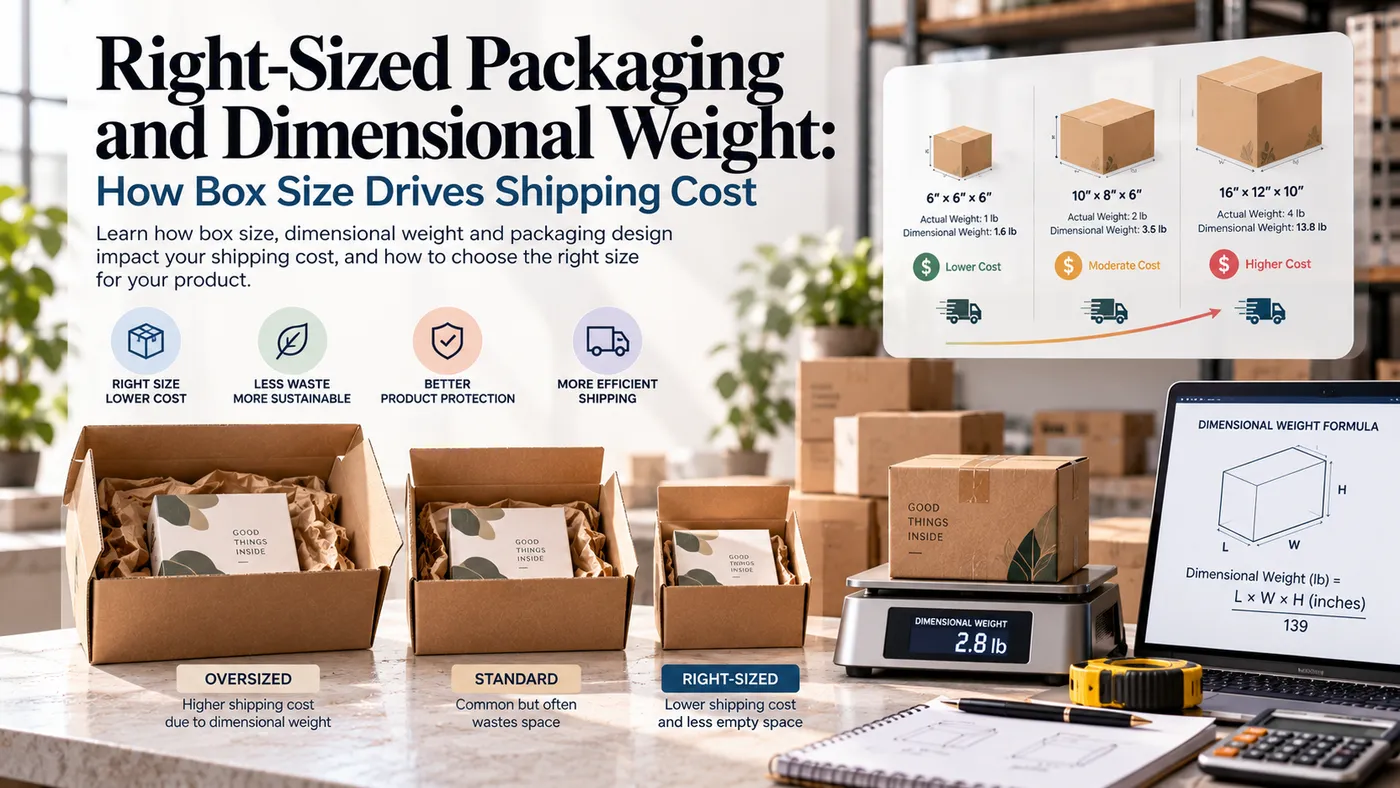
Quick answer: Dimensional weight packaging is about volume, not just pounds. Carriers multiply a box's length, width, and height, then divide by a set number. USPS Priority Mail uses 139 for parcels over 1,728 cubic inches. They bill whichever weight is greater, actual or dimensional. A smaller box can lower your billable weight.
*Last updated: November 2026.*
Dimensional weight packaging decisions start with one question: how much of your box is air? The table below shows what happens when the same 3 lb product ships in four different boxes. It uses the USPS Priority Mail rule, a divisor of 139. These are illustrative calculations, not quotes.
Box size (L x W x H, in)
Cubic inches
DIM weight at 139
Actual weight
Billable weight (illustrative)
18 x 14 x 12
3,024
21.76, rounds to 22 lb
3 lb
22 lb
16 x 12 x 10
1,920
13.81, rounds to 14 lb
3 lb
14 lb
15 x 12 x 10
1,800
12.95, rounds to 13 lb
3 lb
13 lb
14 x 12 x 8
1,344
Not applied (under 1,728)
3 lb
3 lb
Key takeaway: The product never changed. Only the box did. In this example, the billable weight falls from 22 lb to 3 lb. Every inch you remove is volume you're not paying to move.
What Dimensional Weight Is
Dimensional weight, often called DIM weight, is a pricing weight. It reflects the space a package takes up on a truck or plane. Carriers have limited room. A light, bulky box fills that room as surely as a heavy, dense one.
So carriers compare two numbers. One is the scale weight. The other is the volume-based weight. You're billed on the larger one.
Most small, dense products never trigger this. A box of books or a bag of coffee beans often bills on actual weight. Light, bulky items are the ones that get hit. Think pillows, apparel, candles in oversized boxes, or anything wrapped in a lot of padding.
How to Calculate Dimensional Weight Packaging Costs
The formula is short. Measure the outside of the packed box, in inches.
1. Multiply length by width by height to get cubic inches. 2. Divide by the carrier's divisor. 3. Round up to the next whole pound. 4. Compare the result with the actual weight. The higher number is the billable weight.
For USPS Priority Mail, the Domestic Mail Manual says to round each measurement up to the nearest whole inch. It then applies DIM weight only when the volume exceeds 1,728 cubic inches, or one cubic foot. Above that, it divides by 139. The rule is in the USPS Domestic Mail Manual, section 123. The same section caps dimensional weight at the 70-pound price.
Here's a worked example. Say your box measures 16 x 12 x 10 inches. That's 1,920 cubic inches. Divided by 139, you get 13.81. Round up and the dimensional weight is 14 lb. If the product weighs 3 lb, the carrier bills 14 lb.
That 1,728-cubic-inch threshold explains the last table row. A 14 x 12 x 8 box is 1,344 cubic inches, so this rule doesn't apply. It bills on its 3 lb scale weight.
UPS and FedEx. We're not quoting a UPS or FedEx divisor, because we couldn't confirm one on their own pages. Each carrier sets its own divisor. It can differ by service, package size, and year. Check the current UPS and FedEx rate guides for your service first.
Why Shipping Air Costs Money
Empty space inside a box has three costs. You pay for the bigger box. You often pay for extra void fill. And your carrier may bill you for volume you aren't using.
Picture two boxes holding the same item. One has an inch of clearance per side. The other has four inches of dead space per side. The second box has far more volume, so its box size shipping cost can run much higher.
I've seen this most with brands that grow out of stock boxes. They order a "close enough" size to get started and never revisit it. Two years later, they're shipping thousands of parcels with a couple of inches of air in each one.
Poor dimensional weight packaging causes other problems too. Items shift, and void fill gets crushed in transit. A half-empty box is also a poor first impression.
How to Right-Size a Box in Four Steps
Right sized packaging isn't about the tightest box possible. It's about the smallest box that still protects the product. Here's how to find it.
Step 1: Measure the product. Measure length, width, and height at the widest points. Include lids, handles, caps, or anything that sticks out.
Step 2: Add the protection layer. Decide what your product needs. A candle in a glass jar needs more cushioning than a folded T-shirt. Add the thickness of that protection to each side.
Step 3: Add clearance. Boxes need a little room to close, and board has thickness. Plan for roughly a quarter inch of clearance per side as a starting point, then adjust after testing. Fit varies by product and board.
Step 4: Test the pack. Pack ten real orders. Shake the box. Drop it from waist height onto a hard floor. If the product moves or gets damaged, add protection before you shrink anything else.
Material matters. A thinner paperboard mailer saves space but protects less than corrugated. Our corrugated boxes can be cut to your measured size. You aren't stuck with the nearest stock dimension.
Inserts vs. Void Fill
Void fill like paper or air pillows is flexible. It fits many products, and it needs no custom tooling. But it fills space you shouldn't have had in the first place.
A custom insert holds the product in place using the box's own shape. That usually allows a smaller outer box. The trade-off is that inserts add a part to source and assemble. For fragile or high-value items, I think that trade is worth it. For sturdy goods, simple paper fill is often enough.
Products that fit this guide
A few Easy Box Packaging products that fit what this article covers.
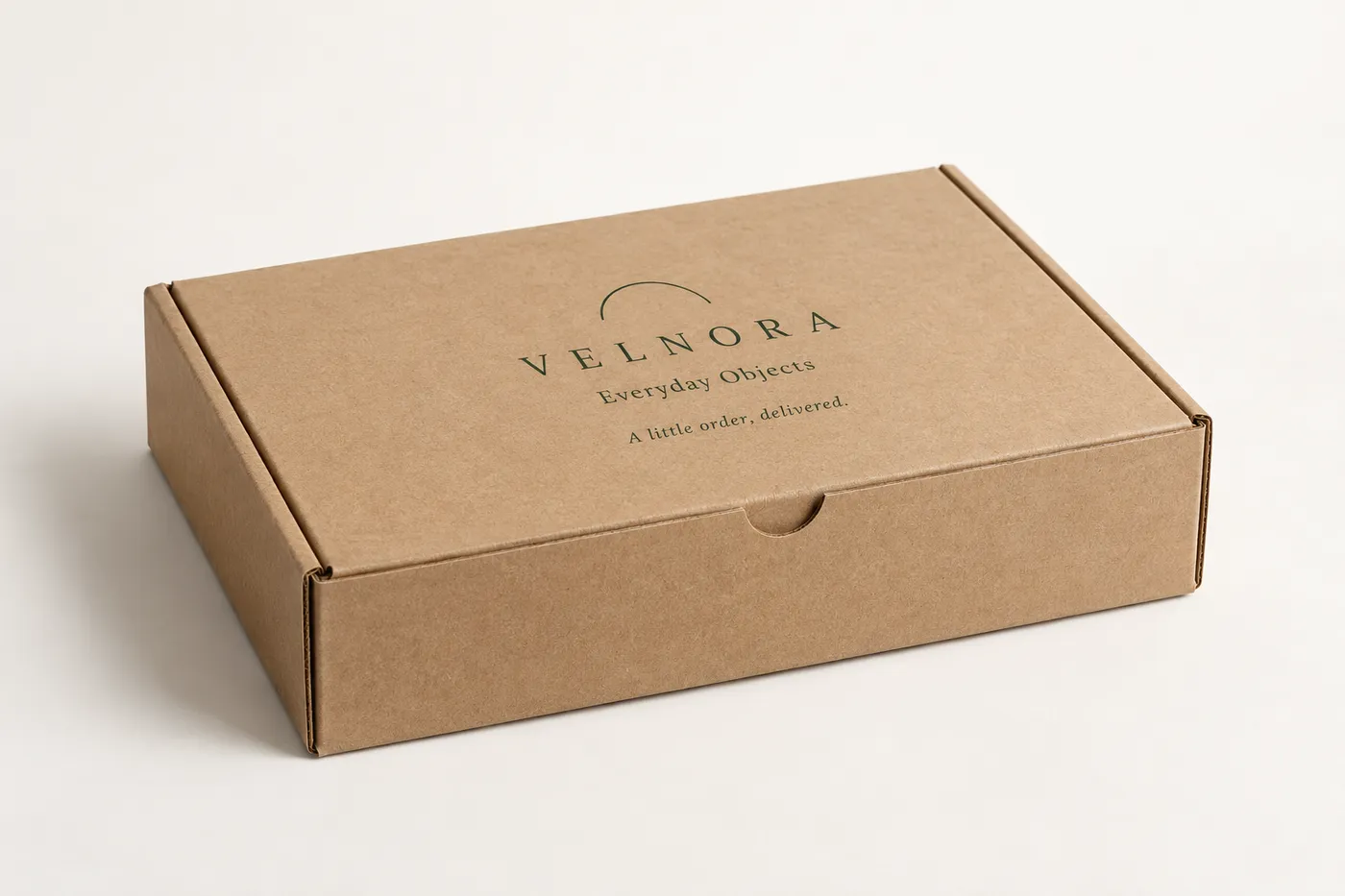
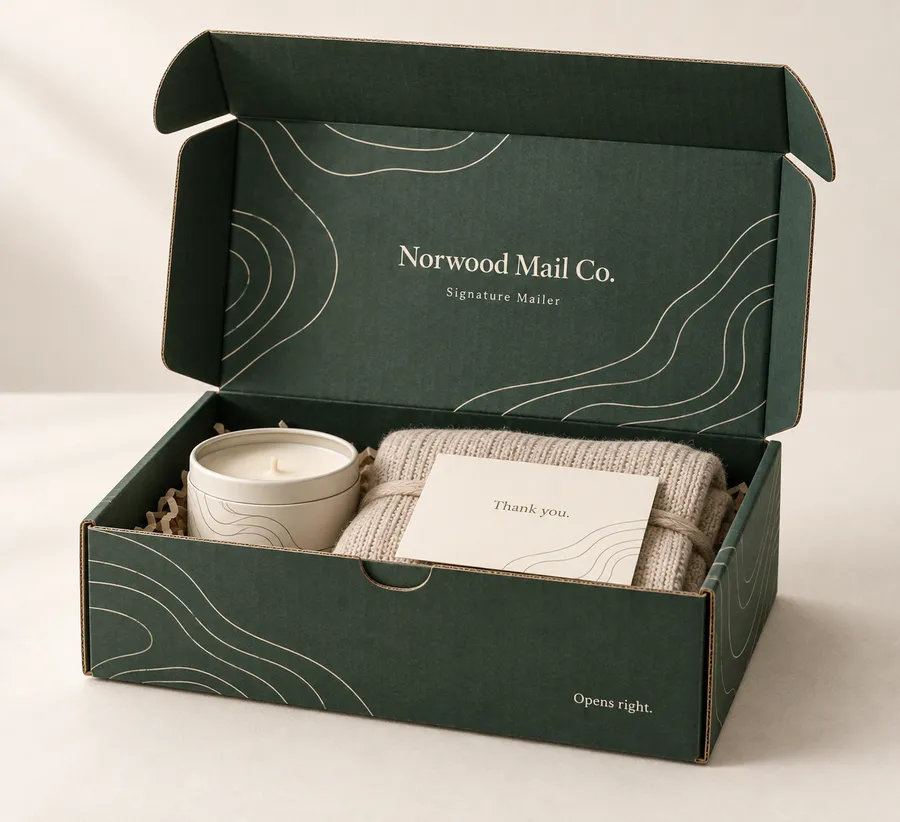
Custom mailer boxes coordinate the packed size, closure and printed presentation of an e-commerce order. Discuss corrugated construction, inside and outside artwork, and any insert or divider requirements. Easy Box Packaging reviews the proposed specification and proof before production, with the final board, finish and delivery terms confirmed in your quote.
A custom-printed corrugated mailer designed for repeat subscription shipments, consistent inside-lid reveals, insert planning, and efficient recurring fulfillment.
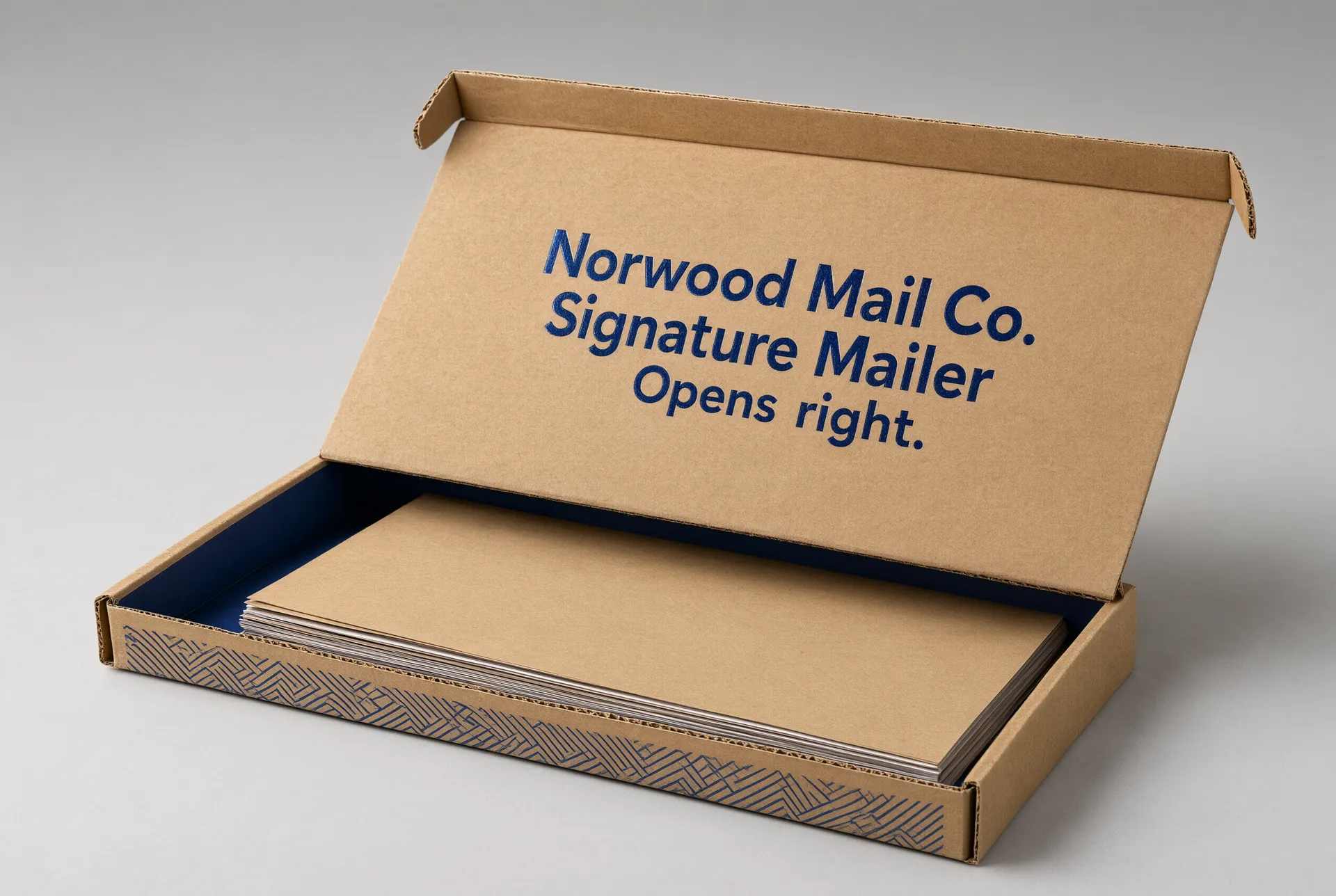
Custom literature mailer boxes built as a flat, auto-lock-bottom corrugated mailer sized around catalogs, brochures, or printed materials. Printed with your own branding inside and out, and sized close to the contents rather than built for a bulkier product.
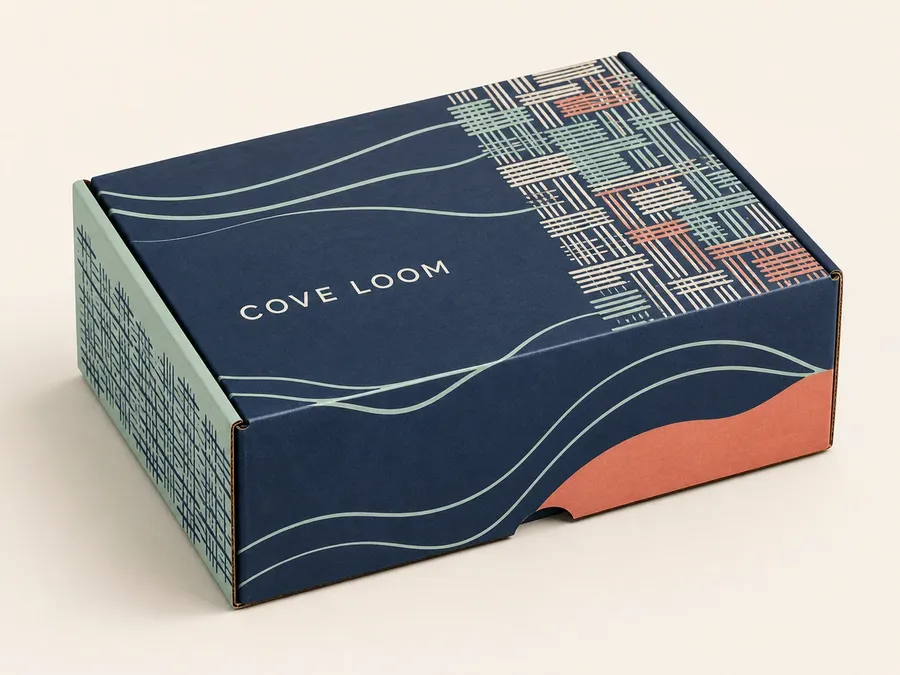
Custom mailer gift boxes combine a protective shipping structure with a printed unboxing presentation for subscription gifts, retail bundles, and direct-to-recipient orders. Choose the packed dimensions, board family, outside or inside print, and finish around the gift set you are shipping, then review the dieline and digital proof before production.
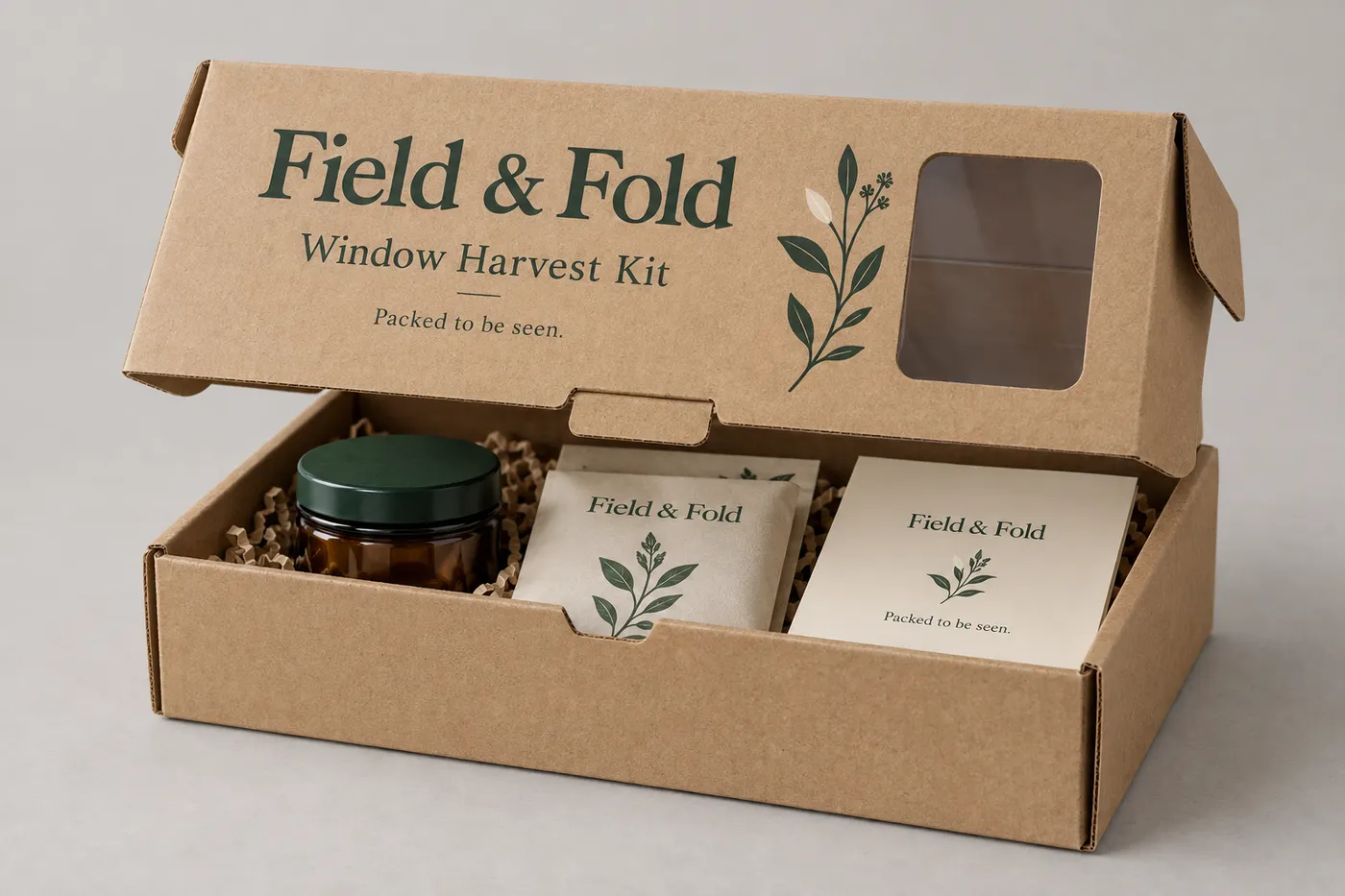
Custom corrugated mailer boxes give ecommerce, subscription, and promotional orders a shaped paperboard shell with a printable exterior and a practical closure. Size the interior around the packed product, then review tuck or locking tabs, optional viewing windows, internal support, board direction, print coverage, and finish against the way the box will be packed and handled.
Some products don't need a full shipping carton. A mailer box folds from a single piece of board, and it's often shallower than a regular shipping box. That helps with dimensional weight packaging, because height is one of the three numbers you multiply.
Flat or low-profile items fit this well. Apparel, books, small cosmetics, and subscription kits are common examples. Our mailer boxes come in custom sizes. For standard dimensions, see our mailer box sizes guide.
If you need a broader reference for stock cartons, see our guide to shipping box sizes. It's a good starting point before you commit to a custom dimension.
Here's my opinion: mailers are underused. Many brands default to a regular slotted shipping box because it's familiar. If your product is under about two inches thick when packed, test a mailer first.
When Right-Sizing Hurts
There's a limit. Cut the box too far and you trade a shipping charge for a damage claim. A replaced order costs you the product, a second shipment, and a customer's patience. That usually costs more than the air you removed.
Watch for these warning signs:
- Product corners press against the box wall with no cushion. - Glass, ceramics, or liquids ship with less than a protective layer on every side. - The box bulges when closed, which weakens the board. - Your damage or return rate rises after a size change.
I'd treat damage rate as the real scoreboard. Smaller is only better if the product arrives intact. If a trimmed box raises your breakage, move back up a size. Don't chase a number on a calculator.
Dense products are the exception. A heavy item in a small box bills on actual weight, so shrinking the box won't change it.
Right-Sizing Checklist
- Measure your product with lids, caps, and handles included. - Add protection thickness for each side. - Add clearance for closing the box. - Multiply L x W x H using the packed outside dimensions. - Divide by the carrier's current divisor for your service. - Compare the result with the scale weight. - Drop-test a real packed sample. - Check whether a mailer or a custom insert would let you go smaller. - Re-check the carrier's rules before each peak season.
Carrier Rules Change: Check Before You Ship
Carrier specs and pricing change. Divisors, size thresholds, and surcharges get updated, sometimes more than once a year. The USPS figures in this article come from the Domestic Mail Manual as of October 2026. Verify every number at the carrier's own site before you ship, and re-check on a regular schedule. We haven't quoted any postage prices here on purpose.
Nothing in this guide promises a specific saving. Your result depends on your product, carrier, service, and volume.
FAQ
What is dimensional weight in shipping? It's a billing weight based on package volume. Carriers multiply length, width, and height, then divide by a divisor. They bill the higher of that number or the actual weight.
What divisor does USPS use for dimensional weight? For USPS Priority Mail retail parcels, the divisor is 139. It applies when the package exceeds 1,728 cubic inches, per the Domestic Mail Manual.
What size box avoids dimensional weight on USPS Priority Mail? A box of 1,728 cubic inches or less, such as 12 x 12 x 12 inches, stays under the threshold. Measurements round up to the next whole inch.
How do I calculate DIM weight by hand? Multiply length by width by height, divide by the divisor, and round up. A 16 x 12 x 10 box at 139 gives 14 lb.
Does a smaller box always lower shipping cost? No. If your package bills on actual weight, a smaller box won't change the billable weight. It may still reduce material and void fill.
How much clearance should I leave inside a box? Start with about a quarter inch per side, plus your protection layer. Fit varies, so test real packed samples.
Are mailer boxes better than shipping boxes for DIM weight? Often, for flat or low-profile items. A mailer's shallow height reduces the cubic inches, so the dimensional weight can fall.
Can EBP make a box in my exact size? Yes. We offer custom sizing, and many products start from 50 units. Standard production is 7 business days after approval, with rush from about 4 days.
Dimensional Weight Packaging: Where to Start
Dimensional weight packaging rewards the brands that measure. Run your current box through the formula, then a trimmed version. If the numbers move and the product still survives a drop test, you've found something worth changing.
Not sure where the air is hiding? Our manufacturing page shows how we build to custom dimensions.
Want a box sized to your product? Get a free quote. We'll build to your exact dimensions and confirm the timeline with your quote.
Questions, answered
Frequently Asked Questions
What is dimensional weight in shipping?+
It's a billing weight based on package volume. Carriers multiply length, width, and height, then divide by a divisor. They bill the higher of that number or the actual weight.
What divisor does USPS use for dimensional weight?+
For USPS Priority Mail retail parcels, the divisor is 139. It applies when the package exceeds 1,728 cubic inches, per the Domestic Mail Manual.
What size box avoids dimensional weight on USPS Priority Mail?+
A box of 1,728 cubic inches or less, such as 12 x 12 x 12 inches, stays under the threshold. Measurements round up to the next whole inch.
How do I calculate DIM weight by hand?+
Multiply length by width by height, divide by the divisor, and round up. A 16 x 12 x 10 box at 139 gives 14 lb.
Does a smaller box always lower shipping cost?+
No. If your package bills on actual weight, a smaller box won't change the billable weight. It may still reduce material and void fill.
How much clearance should I leave inside a box?+
Start with about a quarter inch per side, plus your protection layer. Fit varies, so test real packed samples.
Are mailer boxes better than shipping boxes for DIM weight?+
Often, for flat or low-profile items. A mailer's shallow height reduces the cubic inches, so the dimensional weight can fall.
Can EBP make a box in my exact size?+
Yes. We offer custom sizing, and many products start from 50 units. Standard production is 7 business days after approval, with rush from about 4 days.
Start a packaging brief
Turn the article into a packaging brief.
Share the product, quantity, dimensions, and route to market. Easy Box Packaging will help connect those requirements to a practical structure and production path.