
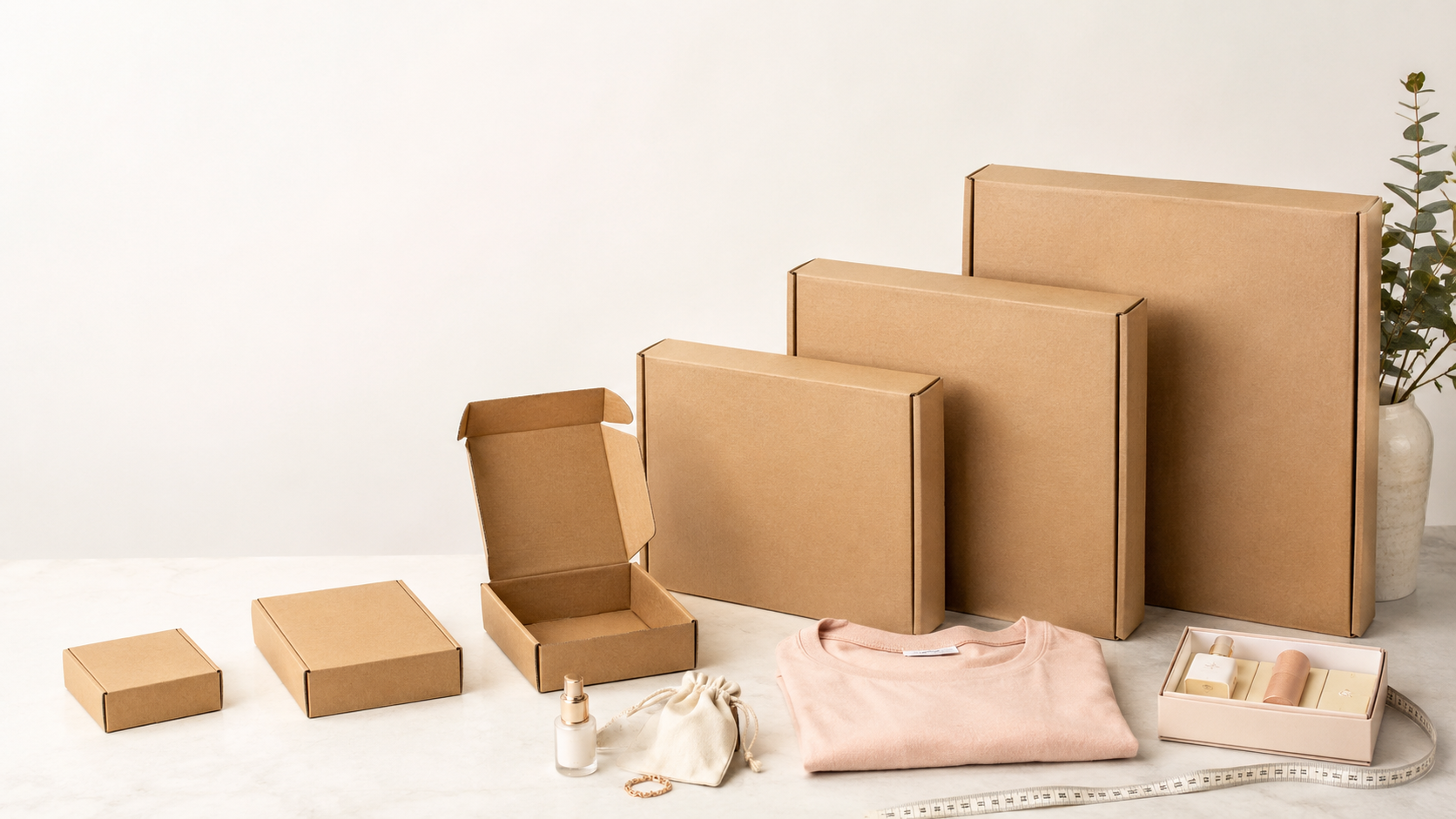
A standard mailer box for e-commerce runs about 12 × 9 × 4 inches. That size fits apparel and small multi-item orders. Mailer boxes are a different animal from the corrugated shipping cartons in our shipping box sizes guide. They’re flatter, self-locking, and built to double as part of the unboxing experience. The chart below covers the full size range, plus when a mailer box is the wrong choice entirely. This post is part of our size guide series, alongside our cake box sizes guide. For everything else, our full box size guide covers the rest.
Mailer Box Size Chart
| Size Category | Dimensions (L×W×H, inches) | Dimensions (cm) | Typical Use |
|---|---|---|---|
| XS | 6 × 4 × 2 in | 15.2 × 10.2 × 5.1 cm | Jewelry, small accessories |
| Small | 9 × 6 × 2 in | 22.9 × 15.2 × 5.1 cm | Snack and beauty subscriptions |
| Small-Medium | 10 × 7 × 2 in | 25.4 × 17.8 × 5.1 cm | Beauty boxes, small retail sets |
| Medium | 12 × 9 × 3 in | 30.5 × 22.9 × 7.6 cm | Apparel and lifestyle subscriptions |
| Medium-Large | 12 × 9 × 4 in | 30.5 × 22.9 × 10.2 cm | Most common ecommerce mailer size |
| Large | 16 × 12 × 4 in | 40.6 × 30.5 × 10.2 cm | Bulkier apparel, multi-item orders |
Every size above tops out at 4 inches of height. That’s the format’s defining trait. Mailer boxes stay flat and wide rather than tall. That’s exactly what makes them different from the shipping cartons in our other guide.
Mailer Box vs. Shipping Carton: Which One Do You Need
A mailer box is a single sheet of corrugated board. It folds into shape and locks with tabs, no tape required. A shipping carton works differently. It’s built from separate panels taped shut, and it can go much taller and hold much more weight.
That construction difference decides which one fits the job. Mailer boxes work well for flat or semi-flat products: apparel, books, subscription sets, small retail goods. They’re not built for anything heavy, fragile, or tall enough to need real vertical clearance. For those, the corrugated cartons in our shipping box sizes guide are the better fit. The corrugated flute types guide covers which flute gives that carton the right crush resistance for your product weight and shipping distance. A quick way to decide: would the product sit flat on a table without rolling or toppling? If yes, a mailer box probably works. If it needs to stand upright, or stack multiple layers deep, reach for a carton instead.
How to Measure for a Mailer Box
Lay the product flat. Measure its length and width at the widest point, then add a half inch of clearance on each side. Height works differently here than it does for a shipping carton. Most mailer boxes stay under 4 inches, so stack whatever’s going inside and measure the actual stacked height. Don’t just measure the tallest single item and assume the rest will fit around it.
Printed mailer boxes add one more variable: interior branding. A folded insert card or a layer of tissue paper adds up to half an inch of extra height. That’s easy to forget when sizing the box off the product alone. It’s the most common reason a “perfectly sized” mailer box arrives looking overstuffed.
The Self-Locking Trade-off
Self-locking tabs are the whole appeal of a mailer box. There’s no tape gun, no dispenser, and a cleaner unboxing moment when the customer opens it. That convenience has a limit, though.
A taped shipping carton seals every edge under real pressure. A self-locking mailer relies on friction and the fold of the board itself instead. It holds up fine in normal handling. It’s not the right choice for anything that needs to survive rough transit. The same goes for anything sitting at the bottom of a stack of heavier packages. Most brands use a mailer box for the final customer-facing package. They wrap a shipping carton around it for anything going any real distance. That’s especially true through a busy fulfillment network with multiple handoffs.
Custom Mailer Box Sizes
The chart above covers standard subscription and retail sizes. It doesn’t cover oddly shaped products or multi-compartment inserts. It also doesn’t cover branding elements like a magnetic flap. A printed interior that needs specific dimensions to look right falls outside the standard chart too.
Easy Box Packaging builds mailer boxes to the exact size and branding a product needs, self-locking tabs included. A box that’s an inch too tall looks half-empty the moment a customer opens it. That undercuts the whole reason to use a printed mailer in the first place. The unboxing moment is often the entire point of choosing this format.
Frequently Asked Questions
What’s the most common mailer box size? 12 × 9 × 4 inches. It fits most apparel and small multi-item subscription orders without excess empty space.
Can I ship heavy items in a mailer box? Not reliably. Mailer boxes are built for flat, lightweight products. Heavier or fragile items are safer in a taped corrugated shipping carton.
Do mailer boxes need extra padding inside? Usually a little. Even a well-fitted mailer box benefits from tissue paper or a thin insert. It stops light items from sliding during transit, especially on longer shipping routes.
The Bottom Line
Mailer boxes and shipping cartons solve different problems. Picking between them comes down to what’s inside: flat and light favors a mailer, heavy or fragile favors a carton. Get a quote and get a mailer box sized and branded to match what you’re actually shipping.