Ecommerce orders
A printed corrugated shell with a practical closure can carry one product or a small order through a parcel handoff.

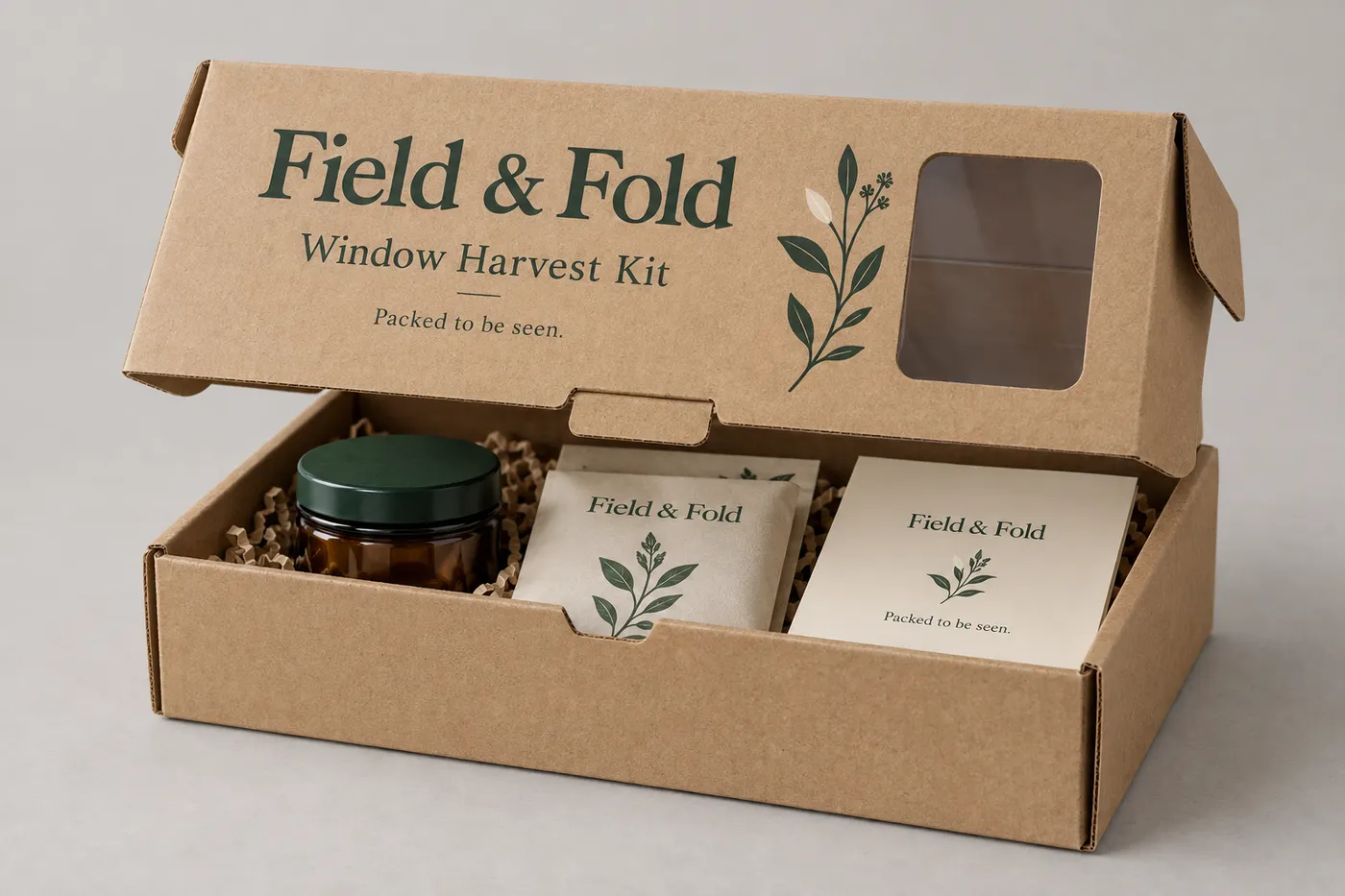
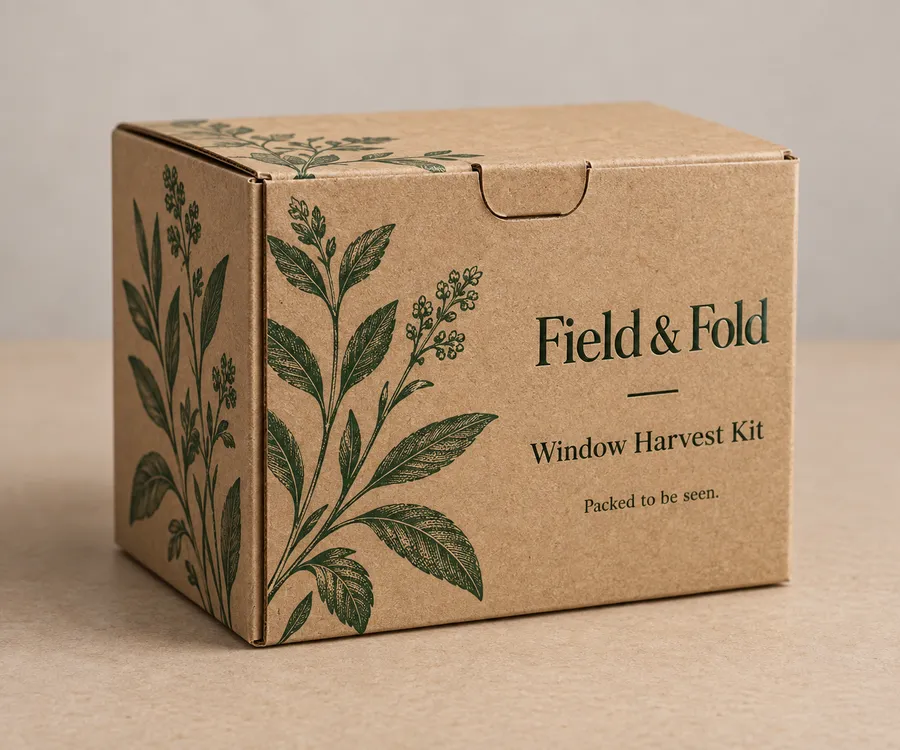
Printed kraft corrugated mailer with a window showing a packed harvest kit
Corrugated Boxes
Custom corrugated mailer boxes give ecommerce, subscription, and promotional orders a shaped paperboard shell with a printable exterior and a practical closure. Size the interior around the packed product, then review tuck or locking tabs, optional viewing windows, internal support, board direction, print coverage, and finish against the way the box will be packed and handled.
Last updated
Working quote
Product brief
Custom corrugated mailer boxes work best when the box is planned around the order that will actually leave your facility. A single product, a product with a leaflet, and a subscription set with several pieces create different questions around the interior footprint, closure reach, and the amount of printed panel that remains visible. Begin with the packed length, width, height, orientation, and item count. Then describe the handoff: parcel delivery, local delivery, retail-ready presentation, or a recurring kit. That brief determines whether a simple tuck closure, a locking mailer, a divider, or a controlled viewing opening is worth considering.
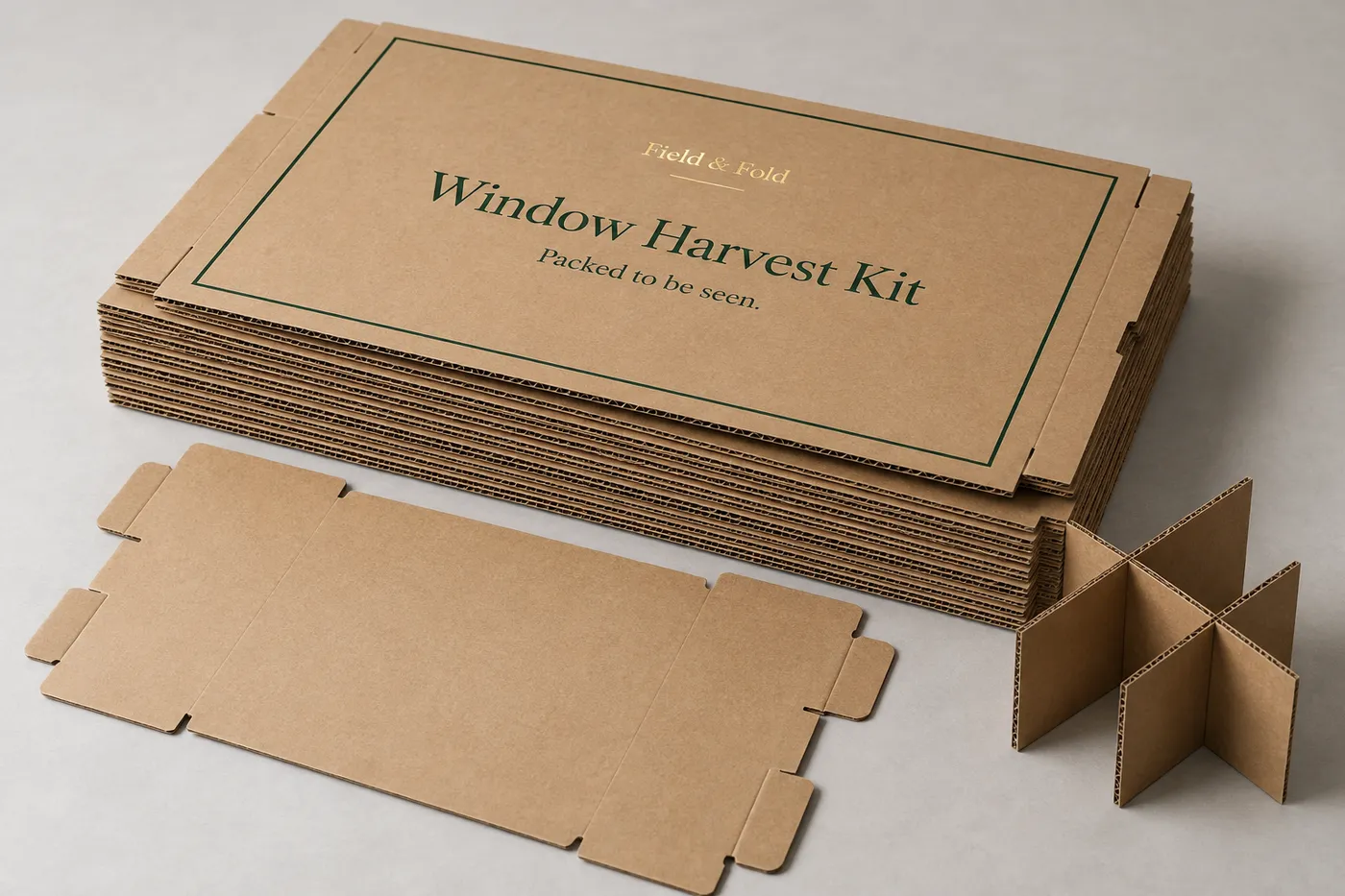
A corrugated mailer can use a one-piece folding shell with a tuck front, locking tabs, or another scored closure reviewed in the dieline. A tuck front can give a familiar opening sequence for a customer unpacking an order. Locking features can reduce the need for separate closure hardware when the box is filled by hand. An optional die-cut window can reveal a deliberate part of the product or kit, while a fully enclosed lid keeps the exterior artwork uninterrupted. These are not interchangeable decorations: each changes the panel map, the fold sequence, and what is exposed during handling.
The structure should also reflect how the box is assembled. If a packing team loads the mailer from one direction, the opening and internal support should leave that path clear. If the box moves through a parcel network, the packed arrangement and closure should be reviewed together rather than treating the printed sleeve as the whole specification. The final geometry is set from the supplied product brief and dieline review, not from a generic mailer size.
For a useful quote, send the packed product's assembled length, width, height, widest points, protrusions, weight, orientation, and number of items per box. Include any leaflet, accessory, tissue, divider, insert, or protective component that will be inside the mailer. When a kit includes several products, provide the loaded arrangement rather than adding the individual product dimensions and assuming the result will fit. A photo or simple top and side view helps when the contents are irregular.
Clearance, fold reach, and closure engagement are confirmed during specification and digital proof review. Avoid choosing a mailer from the outside dimensions of an unfilled product: a bottle with a shoulder, a flat apparel item, and a mixed subscription kit need different internal allowances and orientation decisions. If a window is requested, mark the surface the customer should see and the area that must remain protected by board. The window position should align with the real product reveal, not an assumed center point.
Corrugated Board is the primary material direction for this mailer format because the fluted paperboard construction can be shaped into a folded shipping and presentation shell. Kraft Paperboard or SBS Paperboard may be considered when the brief calls for a different printed surface or folding direction, but no stock is universally right for every load. Discuss the packed weight, stacking or parcel route, surface appearance, and artwork coverage together. The category includes a natural kraft look as well as smoother printed directions; the chosen board should follow the job the box must perform.
Internal support depends on product geometry, weight, orientation, fragility, closure geometry, presentation, fulfillment, clearance, and the desired reveal. Support may be formed from the corrugated structure or supplied as a separate insert after the specification is reviewed. A light irregular item can need more control than a heavier item with a stable footprint, and a visible window can change where support may sit. Describe the product and presentation together so the support does not block the opening or the printed message.
The lid, front wall, side walls, and inside flap can each carry a different part of the brand story. Artwork should identify the customer-facing panel, closure area, score lines, cut edges, and any region hidden when the mailer is closed. Matte Lamination or Gloss Lamination can change the surface appearance, Spot UV can add localized gloss contrast, Embossing/Debossing can add raised or recessed detail, and Foil Stamping can highlight selected lettering or linework; each direction remains subject to artwork and construction review. Keep a wordmark away from a crease or a window edge where it could be interrupted.
The pictured print is an example of artwork placement. That mockup is illustrative, not a promise that every order uses a window or the same colorway. Your approved artwork and the final panel map control production.
The standard fulfillment path starts at 50 units, and production runs from 7 business days after digital proof approval. Quote requests are typically answered the same business day and always within 24 hours. Free US shipping and dieline and proof review are included at no extra charge on the standard path. A sample kit carries a $44.99 USD shipping charge credited toward the first order when you want to inspect the corrugated surface, folds, closure, window treatment, or printed finish in hand. Pricing remains quote-only because the packed dimensions, board direction, closure, support, print coverage, finish, and quantity set the actual specification.
Send the loaded product dimensions, item count, packing direction, intended route, closure preference, window or enclosed-lid direction, artwork status, print coverage, finish direction, and delivery destination. The quote can then reflect the real mailer rather than a stock carton. Before production, review the product position, fold sequence, closure, support, window edge, printed panels, and finish representation in the digital proof and approve the specification that matches your order.
Proof points
The useful proof shows the loaded product, not just a flat outline. It should make the mailer's board direction, fold sequence, closure, support, viewing area, and printed panel map clear enough to compare with the order brief.
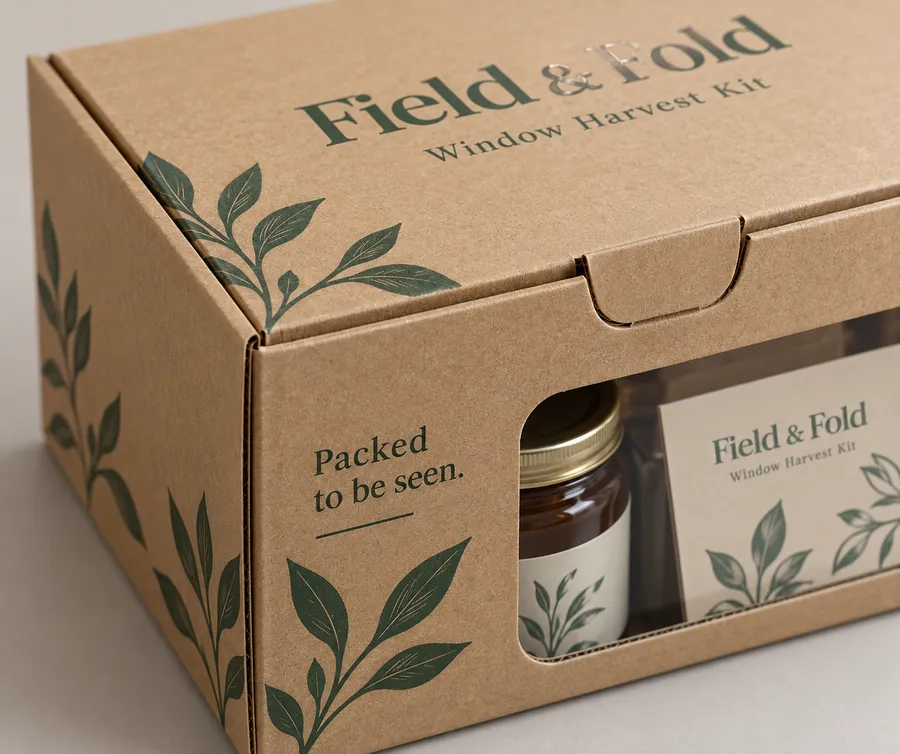
Size the mailer from the loaded order rather than an empty product category. Share the packed length, width, height, widest points, item count, orientation, and any leaflet, insert, or protective component. A window or printed lid should be positioned around the product the customer is meant to see, while the fold and closure are checked in the dieline and digital proof.
A printed corrugated shell with a practical closure can carry one product or a small order through a parcel handoff.
A repeatable interior arrangement can organize several products, a leaflet, or an accessory while keeping the lid and first reveal intentional.
A fully printed exterior or controlled viewing opening can let the same mailer move from fulfillment to a counter or shelf presentation.
A shaped closure, printed inside flap, or window can frame a launch kit or gift set when the opening sequence is part of the experience.
The lid, front wall, side panels, and inside flap create different reading angles on a mailer. Matte Lamination and Gloss Lamination can change the surface appearance, Spot UV can add localized gloss contrast, Embossing/Debossing can create tactile detail, and Foil Stamping can highlight selected lettering or linework. Each option should be checked against crease lines, cut edges, tuck tabs, window edges, and the artwork scale.
A mailer is reviewed as a folded shipping shell, a printed brand surface, and an opening sequence. The product arrangement, tuck or locking closure, internal support, window or enclosed lid, panel artwork, and selected finish are checked together before the proof is approved.
Packed dimensions, widest points, weight, orientation, item count, accessories, and protective components inform the interior and fold plan.
Tuck panels, locking tabs, window placement, and the first customer-facing surface are reviewed against the way the mailer is packed and opened.
Artwork is checked against score lines, cut edges, hidden flaps, window edges, and the chosen print or finish direction.
A quote is easier to evaluate when the loaded order, handling route, closure, and artwork status are described together. Send the product brief first, then identify the visual and structural choices that still need review.
Provide packed dimensions, widest points, weight, item count, orientation, accessories, leaflet, and any insert or protective component.
Explain whether the mailer is packed by hand or on a line and whether it is for parcel delivery, local handoff, retail presentation, a subscription, or a gift.
Note your preference for tuck or locking closure, viewing window or enclosed lid, internal support, board direction, and printed coverage.
Send available artwork or note that the brand mark, inside message, seasonal design, or product panel is still being prepared.
Check the loaded position, fold sequence, closure, support, window edge, panel orientation, and finish representation before production begins.
Need help with structure, materials, or production planning? See how we manufacture custom packaging.
Request a sample kit to compare the corrugated surface, folds, closure, window treatment, and printed finish before approving a larger custom mailer run.
Shipping charge: $44.99. Credited toward your first order.
Request a Sample KitFind clear answers about fit, materials, and ordering below.
Share the loaded length, width, height, widest points, weight, orientation, number of items, and any leaflet, accessory, divider, insert, or protective component. A photo or simple top and side view helps when the contents are irregular.
Yes. A tuck front, locking tabs, or another scored closure can be considered when it matches the packing direction, opening sequence, and handling route. The final fold and closure relationship is checked in the dieline and digital proof.
A die-cut window can reveal a deliberate part of a product or kit, while a fully enclosed lid leaves more uninterrupted space for print. The opening should be positioned around the intended reveal and reviewed with the panel folds and support.
Support depends on product geometry, weight, orientation, fragility, closure geometry, structure, fulfillment, clearance, and the desired reveal. It may be integrated into the corrugated structure or supplied as a separate insert after the specification is reviewed.
Corrugated Board is the primary material direction, with Kraft Paperboard or SBS Paperboard considered when the brief calls for another surface or structure. Matte Lamination, Gloss Lamination, Spot UV, Embossing/Debossing, and Foil Stamping can be reviewed against the artwork and folds.
The standard minimum order is 50 units. Production runs from 7 business days after digital proof approval, and quote requests are typically answered the same business day, always within 24 hours. Your final unit price is confirmed in a quote because the packed dimensions, board, closure, support, print, finish, and quantity set the specification.
Orders start at 50 units and scale up to 500,000 for bulk runs, with pricing from $0.38 per unit on larger quantities. Standard production is from 7 business days after digital proof approval.
Compare nearby products and request the format that best fits your next run.
Available product
Available product
Available product
Available product
Plan the mailer around the order
Send the loaded product dimensions, item count, delivery route, closure preference, window or enclosed-lid direction, artwork status, and finish direction. Easy Box Packaging can then review the dieline, support, printed panels, and proof as one quote-ready specification.
Add your product details to see a quote summary.