Bakery and snack portions
A rounded front can frame dry bakery portions, cookies, or snacks while the broad panel carries the product cue and storage information.

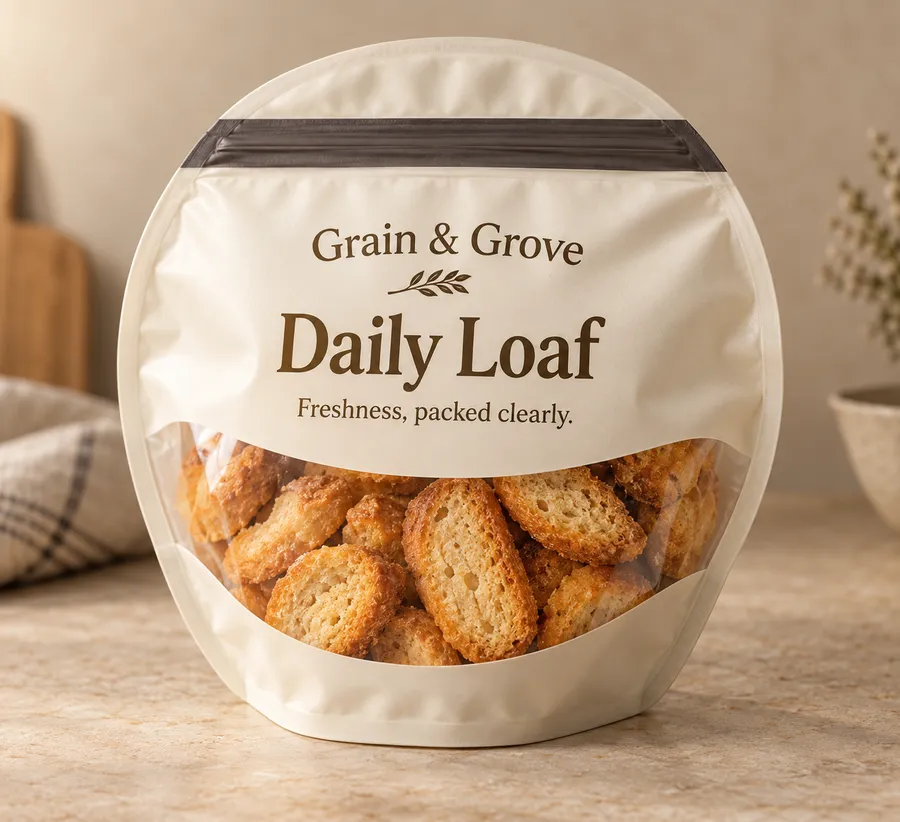
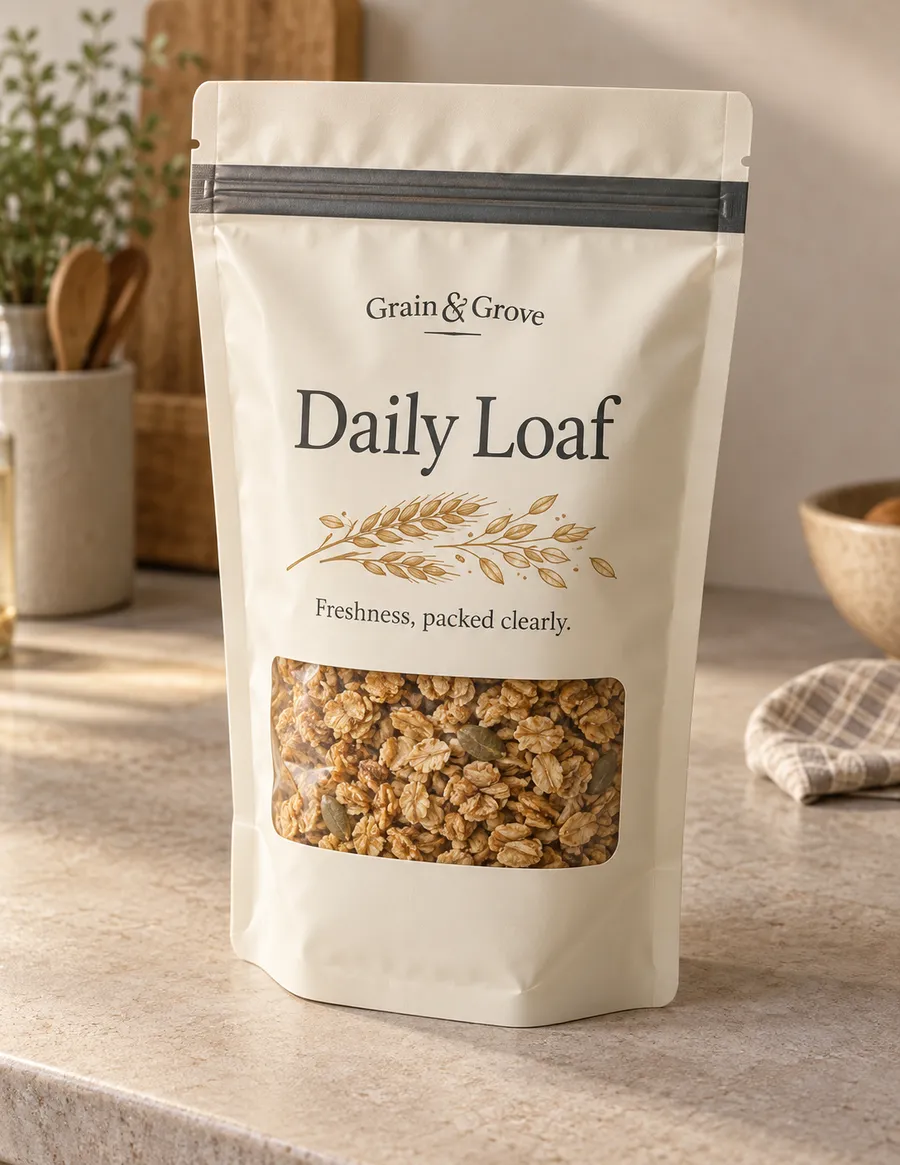
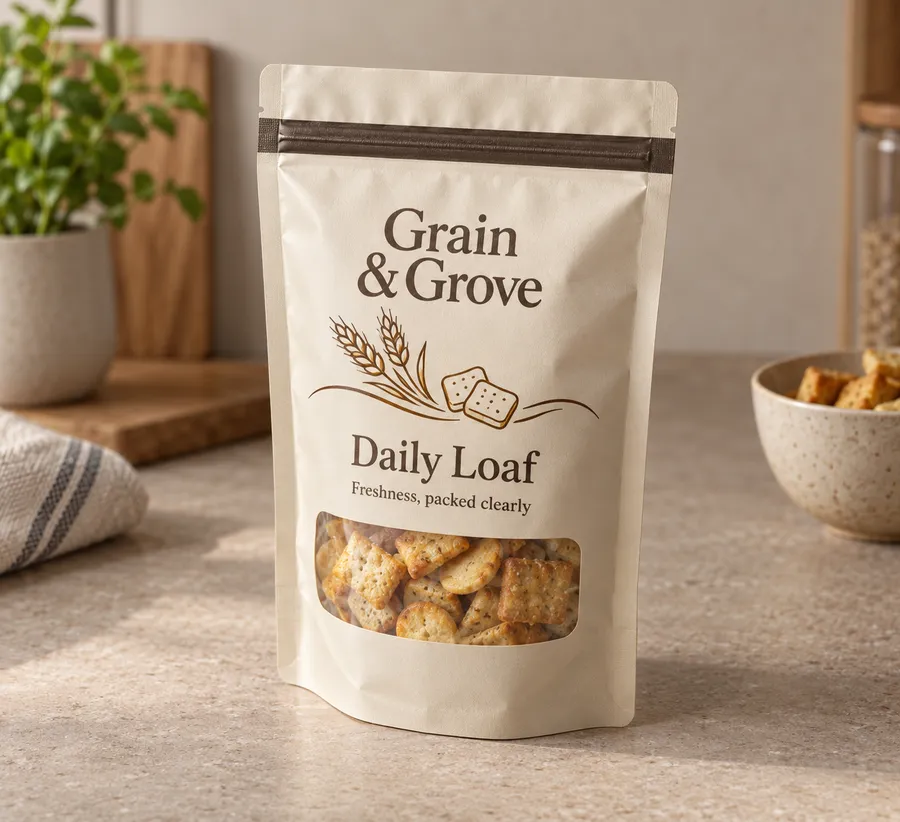
A warm ivory circular mylar pouch holds golden bakery pieces beneath a printed Grain and Grove front panel.
Mylar Bags
Custom circle mylar bags are printed flexible pouches with a rounded front silhouette for dry foods, portions, and small-batch products. Choose the film structure, barrier, closure, gusset, and print coverage around the filled product, then review the circular dieline and digital proof before production.
Last updated
Working quote
Product brief
Custom circle mylar bags use a rounded or circular silhouette to make the pack feel intentional without losing the working parts of a flexible pouch. The outline can suit a portion, a seasonal design, a bakery item, or a product whose front-facing shape is part of the shelf cue. Start with the filled product, not the artwork. Share its length, width, height, widest point, weight, product count, and the way it must sit during filling. A circle drawn on a screen can need a short gusset, a flattened base, or a different seal path once it carries the actual contents.
The dieline is the map for that decision. It marks the circular edge, top seal, zipper or tear notch, bottom gusset, hanging feature if needed, and safe print zones. A round pouch may lie flat, stand on a shallow base, or use a small gusset to keep the front panel facing forward. Keep ingredients, storage guidance, and barcode information on the broadest stable area rather than close to a curve, seam, zipper track, or crimp. The final allowance is confirmed in the proof instead of borrowed from a generic rectangular bag.
Send a filled sample, measured dummy, or dimensioned sketch. Record the packed length, width, height, widest section, narrow shoulder or neck if present, approximate weight, product count, and intended orientation. Note whether the contents are loose, individually wrapped, layered, or paired with an inner wrap. If the bag will stand, show the footprint and where the filled package should balance. If it will ship flat in an outer mailer, describe the fold direction and the seal edge that needs to remain accessible.
Those details guide the circle, headspace, seal margin, and opening together. A small change to the perimeter can move the zipper or reduce the readable front area. A dense fill may need a different base than a light snack portion. Explain how the pouch will be loaded, removed, opened, stored, and shipped so the construction reflects the real handling route rather than an attractive but impractical outline.
Food-grade flexible pouch film is a starting direction for dry bakery items, snacks, granola, spices, powders, supplements, and similar products. A metalized or foil barrier laminate can be reviewed when moisture, aroma, oxygen, or light sensitivity is part of the brief. Polyethylene sealant film may be considered as the seal layer. These are construction choices, not a universal shelf-life promise: the recipe, fill temperature, storage route, and intended time in market still need review.
A resealable zipper can suit a pouch that will be opened repeatedly. A heat-sealed top can fit a single-use route or a pack that needs a tamper-evident opening sequence, while a tear notch can make first opening easier. The circular perimeter, closure, seal width, and filling equipment should be checked as one specification so the opening does not cross a narrow or unstable edge.
Place the brand and product cue in the broadest part of the front circle, then reserve the reverse for ingredients, allergens, preparation, storage, barcode placement, and required pack information. Matte lamination can reduce glare across an illustrated surface; gloss lamination can create a brighter reflective direction; spot gloss or spot UV can highlight a small logo or contour. Metallic ink or a foil accent can be reviewed for selected linework after artwork checks.
The product images show an illustrative print layout; your approved artwork replaces it at the proof stage. The digital proof should show the filled pouch, the circular edge, the zipper or seal, the bottom support, and the way artwork stays inside the safe zone.
The standard fulfillment path starts at 50 units. Production is from 7 business days after digital proof approval, free US shipping is included on the standard path, and dieline and proof review are included at no extra charge. Quote requests are typically answered the same business day and always within 24 hours. Pricing stays quote-only because the circle, filled dimensions, film structure, closure, print coverage, finish, and quantity change the actual cost.
For a useful quote, send the filled dimensions, approximate weight, product count, loading method, preferred opening, barrier concerns, destination, quantity, and artwork status. Mark any zipper, tear notch, gusset, hanging hole, window, or seal requirement. A sample kit has a $44.99 USD shipping charge credited toward the first order, which can help compare film feel, opacity, seal behavior, and finish before committing to a custom run.
Custom circle mylar bags can suit bakery portions, dry snacks, confectionery, pet treats, powders, supplements, and small-batch pantry products when a flexible pack needs a distinctive front profile. A round face can also support a seasonal badge or an illustrative mascot-like cue while keeping the package light and easy to ship. The correct construction changes with moisture, weight, product shape, and handling, so the circle should be treated as a packaging decision rather than decoration added after the artwork is finished.
A clear brief prevents common mismatches: a perimeter that consumes the readable panel, a zipper that lands too close to a curve, or a shallow base that cannot support the filled pouch. Define the actual product, then let the circular dieline and proof show how the silhouette, closure, barrier, and artwork work together before production.
Proof points
The digital proof should show the filled circular pouch and the artwork on the assembled profile. Compare the perimeter, closure, seal margin, orientation, and finish placement with the product brief.
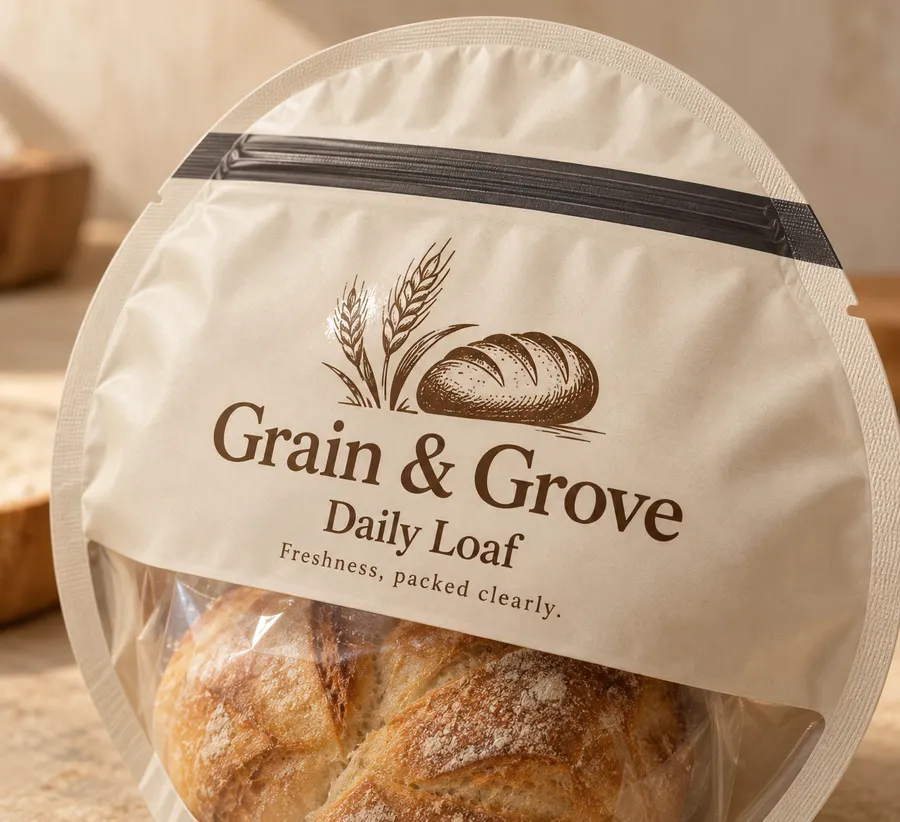
Start with the filled product and the moment it is handled. The rounded profile, seal path, closure, barrier, and printed panels should make the pack distinctive without placing important information on a curve, fold, zipper, or crimp.
A rounded front can frame dry bakery portions, cookies, or snacks while the broad panel carries the product cue and storage information.
A circular silhouette can support a seasonal outline or illustrative mascot-like cue when filled dimensions and the seal path are supplied before artwork is finalized.
A stand-up or lightly gusseted profile can present treats, granola, spices, or other dry portions with a closure matched to repeat opening or single-use handling.
A rounded pouch can organize a small powder or supplement portion when barrier, seal, filling route, and required back-panel information are defined together.
Map artwork on the filled profile so the brand, product cue, ingredients, storage guidance, and required information remain readable when curved edges, seams, and seals are visible.
A circle-shaped bag is reviewed as an assembled package rather than a flat outline. Product geometry, filling route, orientation, closure, barrier, and print-safe areas all affect the practical specification.
Provide packed length, width, height, widest points, narrow shoulders or curves, weight, count, and intended facing so the dieline follows the real product.
A zipper, tear notch, or heat-seal route should be placed where the filled circle can open and close without crossing an unstable edge.
Reserve the broadest front area for the brand and product cue, then place ingredients, storage guidance, barcode, and required information away from seams and folds.
A useful quote starts with the filled product and the way it will be filled, opened, stored, and displayed. These steps turn that routine into a circular pouch specification that can be checked before production.
Provide packed length, width, height, widest points, narrow shoulders or curves, product count, approximate weight, and any unusual surface or decoration.
State whether the pouch will stand, lie flat, hang, ship inside an outer mailer, or be opened repeatedly, and identify the preferred closure.
Mark the front, back, curved edge, gusset, seal, zipper, barcode, ingredient, allergen, and storage-information zones in the artwork or brief.
Check the circular perimeter, film direction, closure position, seal margin, print orientation, and finish placement on a filled-product proof.
Need help with structure, materials, or production planning? See how we manufacture custom packaging.
A sample kit carries a 44.99 USD shipping charge credited toward your first order, useful when you need to compare film feel, opacity, seal behavior, and finish direction before approving a custom circle mylar bag.
Shipping charge: $44.99. Credited toward your first order.
Request a Sample KitFind clear answers about fit, materials, and ordering below.
Send the packed length, width, height, widest and narrowest points, approximate weight, product count, and any unusual curves or decoration. Include how the bag will stand, lie flat, ship, and be opened, plus any inner wrap or insert that shares the pouch.
Yes. The opening route is selected around the filled profile and handling routine. A zipper can suit repeat opening, while a heat seal can fit a single-use route; a tear notch can be considered with either option.
Artwork can be mapped across front, back, selected curved edges, and seal-safe zones. Keep ingredients, allergen notes, storage guidance, and barcode information away from folds, seams, zipper tracks, and the top crimp.
No universal shelf-life result should be assumed. Film and barrier selection depend on the product recipe, moisture, aroma, oxygen or light sensitivity, filling temperature, and storage route, so those variables should be reviewed with the actual product.
The standard fulfillment path starts at 50 units. Production starts from 7 business days after digital proof approval; the final schedule is confirmed with the quote and proof.
Orders start at 50 units and scale up to 500,000 for bulk runs, with pricing from $0.31 per unit on larger quantities. Standard production is from 7 business days after digital proof approval.
Common uses include bakery and snack portions, seasonal pantry packs, pet treats and granola, and powders and supplements. The final specification is set by the packed product and how it will be handled.
Compare nearby products and request the format that best fits your next run.
Available product
Available product
Available product
Available product
Shape the product story
Send the filled dimensions, weight, product count, closure preference, handling route, artwork status, barrier concerns, and finish direction. Easy Box Packaging can then review the circle, film, seal-safe print map, and proof as one quote-ready specification.
Add your product details to see a quote summary.