Retail shelf products
A printed front and side panel system for a single product displayed upright or flat, with the closure and barcode area placed around the shelf-facing view.

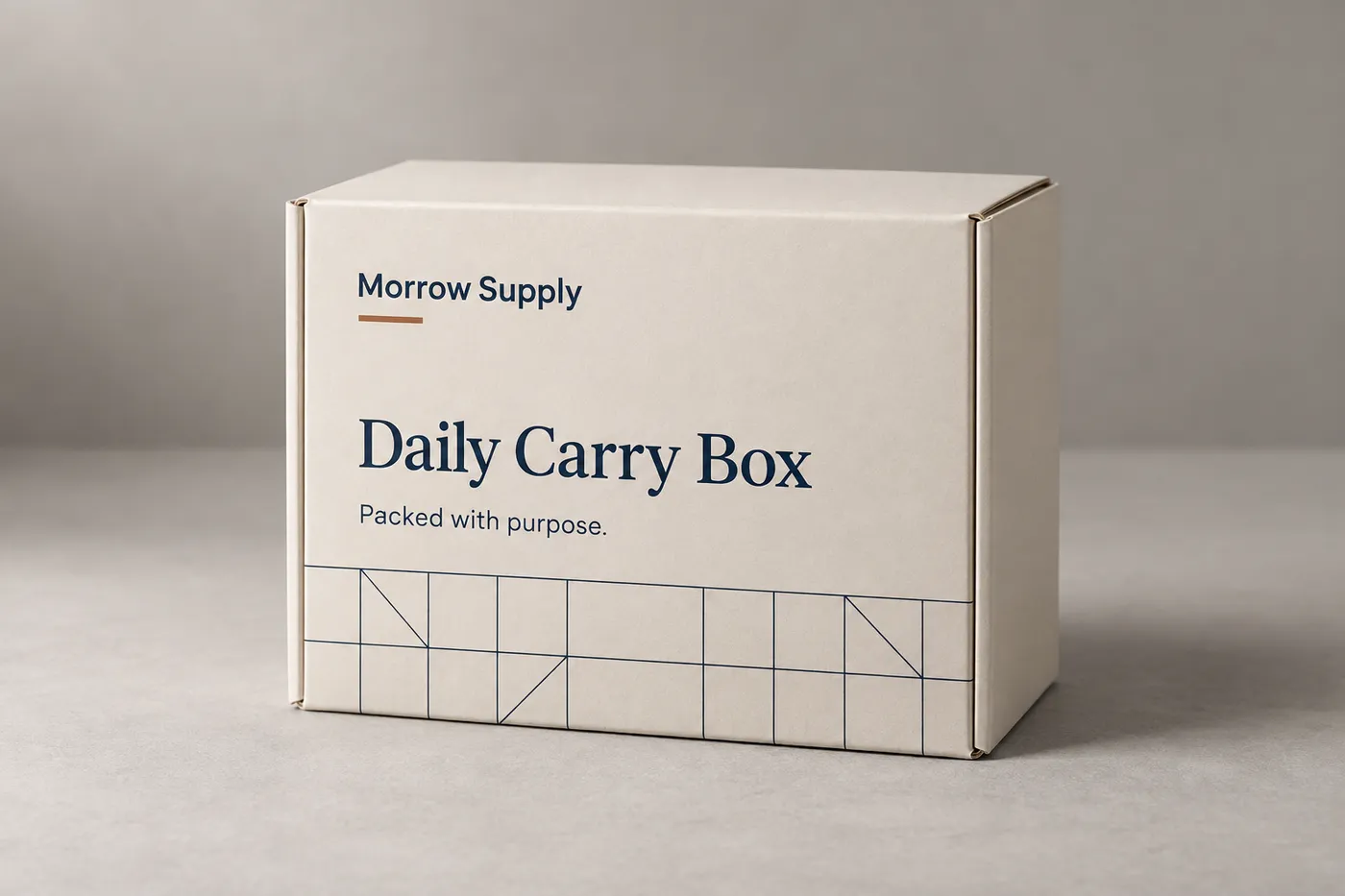
Closed ivory folding product box with navy geometric print and copper accent
Product Boxes
A custom classic product box is a printed folding carton planned around the product it will hold. Choose a tuck-style opening or another reviewed closure, set the footprint around the packed item, and decide whether the product needs an internal riser, divider, or separate insert before the artwork and finish are approved.
Last updated
Working quote
Product brief
A classic product box is a versatile folding paperboard carton for a product that needs a defined retail or direct-to-customer presentation. The familiar shape is not a fixed stock size: the finished length, width, height, closure route, printed panels, and interior support are set around the item and the way it reaches the customer. A tuck-top or related folding closure can keep the package straightforward to open and close, while a different panel arrangement may suit a product that needs a wider front face, a hanging tab, or an opening that reveals the item gradually. The right starting point is the packed product and its handling conditions, not the word classic by itself.
The product box can be fully enclosed or planned with a defined opening, depending on what the customer should see before opening. If the package is handed over at retail, the front and side panels may carry the product name, instructions, and brand message. If it travels in a parcel, the specification should also consider how the carton sits inside the outer shipper and whether a separate insert is needed. Share the intended use early so the structure and artwork are reviewed as one package.
Measure the product in its packed state, including a cap, wrap, sleeve, accessory, or other component that will remain inside the carton. Provide the length, width, and height at the widest points, plus any shoulder, handle, corner, or uneven surface that changes the cavity. State whether the box holds one product or a group, and note the orientation the item should keep during packing and handoff. A bottle, a boxed device, and a flat accessory set may all use a classic folding carton, but their proportions and closure panels will not be interchangeable.
Weight and fragility belong in the same brief as the dimensions. Internal support may be integrated into the carton structure, created as a riser or divider, or supplied as a separate insert depending on the product geometry, weight, orientation, fragility, desired reveal, and fulfillment route. Final clearance is confirmed during specification and dieline review rather than copied from a generic tolerance. If the product changes after the first review, send the revised dimensions and quantity before proof approval because a changed footprint can require a new dieline.
A straight-tuck or reverse-tuck folding carton can suit a single retail product when a light, printable package and a clear opening route matter. The tuck direction changes which panels overlap and where the main front message can sit. A full-overlap or reinforced panel can be discussed when the product needs a different handoff or more controlled closure, while a sleeve-and-tray arrangement can be considered when the opening itself is part of the presentation. These are structural directions to compare against the actual product; no one style is right for every size or delivery route.
A separate insert can hold a product in a repeatable orientation, divide multiple components, or control the first reveal when the outer carton alone cannot do the job. The insert decision should be made alongside the carton footprint, packed weight, product-to-box clearance, and the way the item is packed and removed. A simple single-item carton may need little internal structure, while a fragile or multi-part product may need a fitted paperboard support. The final choice is documented in the specification and shown in the proof.
Kraft Paperboard can keep a natural paper character visible in the finished pack. SBS Paperboard offers a clean light surface for small type, color fields, and detailed artwork. Corrugated Board can be discussed when the product or delivery route calls for a different structural direction. The category materials are options for review, not a promise of a particular thickness, flute, recycled percentage, or load rating. The chosen stock is confirmed against the assembled footprint, filled weight, print coverage, folds, and the desired surface character. An FSC-certified paperboard option is available on request as a material choice, rather than a blanket claim about every box.
The classic carton gives the brand several readable surfaces: front, back, side panels, top, bottom, and tuck flaps. Plan the product name, instructions, barcode area, and key brand mark around the folds and the panels that remain visible when the carton is closed. Matte Lamination and Gloss Lamination can be reviewed for different surface appearances. Spot UV can create a localized gloss contrast, while Foil Stamping can highlight selected lettering or linework. Embossing or debossing can also be considered where the artwork, board direction, and fold layout allow it. Each finish is subject to artwork and dieline review; finish names alone do not establish a technical result.
Easy Box Packaging includes dieline and digital proof review on every order at no extra charge. That review checks the assembled footprint, closure panels, artwork orientation, print coverage, insert position, and finish areas together. Send the latest product name and instructions before the proof is prepared so the package does not reach production with a message hidden under a tuck flap or placed on a panel that will not face the customer.
Send the packed product length, width, height, weight, quantity per box, orientation, closure preference, insert or divider needs, intended use, delivery route, board direction, artwork status, print coverage, finish preference, and destination. A photo or existing sample helps explain unusual shoulders, accessories, or a desired opening sequence. If several products share one outer carton, list each footprint and say whether the items need separate cavities or a common tray.
The standard minimum order is 50 units. Production runs from 7 business days after digital proof approval, so keep that 7 business day point beside the approval step when planning a launch. Quote requests are typically answered the same business day, always within 24 hours. Pricing remains quote-only because the box footprint, structure, insert, print coverage, finish, and quantity are scoped to the actual product. Free US shipping is available on the standard fulfillment path. A sample kit can be requested when you need to inspect the paper surface, folded edge, and finish direction before a full run.
After the product details are confirmed, Easy Box Packaging prepares the specification and dieline for review. Check the closure, assembled footprint, internal support, artwork panels, and finish areas in the digital proof, then approve the proof before production starts. If the product, quantity, or opening changes later, ask for a revised review so the classic product box continues to match the item it is meant to hold.
Proof points
This format is a printed folding paperboard carton for a defined product footprint. The important construction questions are the closure route, panel arrangement, internal support, board direction, and the way the finished box is handled after packing.
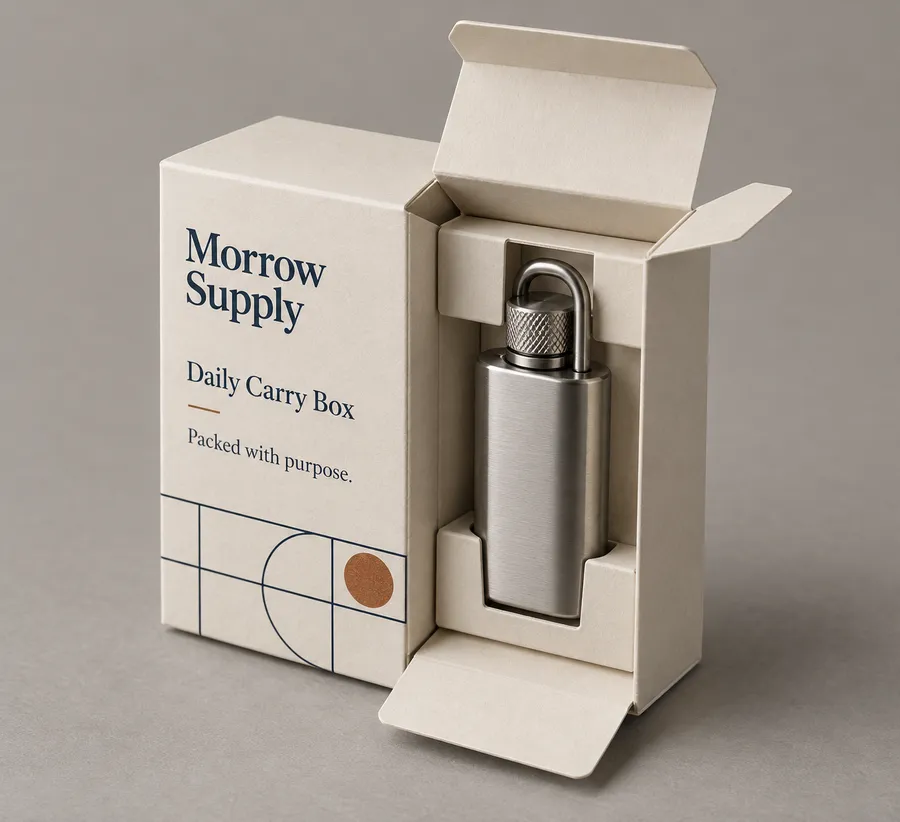
A custom classic product box is a printed folding carton with a defined footprint, opening route, and panel plan. The specification can include a tuck-style closure, an internal riser or divider, selected board, printed artwork, and a reviewed finish. Share the packed product, quantity, orientation, and intended handoff so the outer carton and any internal support are designed as one package rather than a generic box with a label added later.
A printed front and side panel system for a single product displayed upright or flat, with the closure and barcode area placed around the shelf-facing view.
A branded carton planned to sit inside an outer shipper, with the opening and internal clearance reviewed for packing and handoff.
A carton with a divider, riser, or fitted insert when a main product and smaller components need a defined arrangement.
A short-run presentation direction for a product announcement, seasonal message, or limited assortment where printed panels carry the story.
The carton can carry a restrained one-color mark or a fuller printed panel system depending on the artwork and viewing angle. Matte Lamination and Gloss Lamination change the surface appearance, Spot UV can create localized gloss contrast, Foil Stamping can highlight selected lettering or linework, and Embossing/Debossing can add a tactile treatment subject to artwork and dieline review.
The box is reviewed as a complete package: product footprint, closure, printed panels, internal support, artwork, and finish. Dieline and digital proof review are included on every order at no extra charge, and quote requests are typically answered the same business day, always within 24 hours. A sample kit is available when the board surface or finish direction needs an in-person check.
The assembled size, tuck direction, overlap, and opening route are checked against the packed product and handoff.
Printed panels, folds, barcode or instruction areas, and selected finish zones are reviewed in the dieline and proof.
Insert, divider, or riser needs are considered with the product, and a sample kit can help compare board and finish direction.
A quote can be scoped accurately when the product, pack arrangement, and presentation goal are described together. Send the packed dimensions, weight, quantity, closure preference, support needs, board direction, artwork status, print coverage, finish preference, and destination.
Provide length, width, height, widest point, weight, orientation, accessories, and quantity per box.
Explain the preferred tuck direction or opening, whether the box ships inside an outer carton, and whether the product needs an insert, divider, or riser.
Share whether Kraft Paperboard, SBS Paperboard, Corrugated Board, or another reviewed direction fits the product and presentation.
List the brand mark, product name, instructions, barcode area, visible panels, print coverage, and finish preference.
Check the assembled footprint, closure, artwork orientation, support, and finish areas in the digital proof before production.
Need help with structure, materials, or production planning? See how we manufacture custom packaging.
Request a sample kit to inspect the paper surface, folded edges, print treatment, and finish direction before committing to a full production run.
Shipping charge: $44.99. Credited toward your first order.
Request a Sample KitFind clear answers about fit, materials, and ordering below.
It is a custom printed folding carton planned around a product's packed dimensions, closure route, panel layout, and any internal support. The familiar tuck-style format is adapted to the item rather than selected as a universal stock size.
Measure the packed product at its widest points and provide length, width, height, weight, orientation, accessories, and quantity. Final clearance and the insert or divider approach are confirmed during specification and dieline review.
It depends on the product geometry, weight, orientation, fragility, desired reveal, and fulfillment route together. Support may be integrated into the carton or supplied as a riser, divider, or separate insert after the specification is reviewed.
Kraft Paperboard, SBS Paperboard, and Corrugated Board are material directions for review. Matte Lamination, Gloss Lamination, Spot UV, Foil Stamping, and Embossing/Debossing can be considered subject to the artwork, board, folds, and dieline.
The standard minimum order is 50 units. Production runs from 7 business days after digital proof approval, and quote requests are typically answered the same business day, always within 24 hours. Your final unit price is confirmed in a quote because the structure, footprint, print, finish, and quantity are scoped to the product.
Yes, the product box can be reviewed as an inner branded carton inside an outer shipper. Share the packed product, outer shipping route, and any movement or presentation concerns so the internal support and carton footprint are considered together.
Orders start at 50 units and scale up to 500,000 for bulk runs, with pricing from $0.15 per unit on larger quantities. Standard production is from 7 business days after digital proof approval.
Compare nearby products and request the format that best fits your next run.
Available product
Available product
Available product
Available product
Get a Product Box Specification
Send the packed dimensions, closure preference, support needs, artwork status, and finish direction to start a quote for a custom classic product box.
Add your product details to see a quote summary.