Countertop product launch
Present a short row of packaged goods with a printed lid or header that opens for placement and keeps the front faces readable.

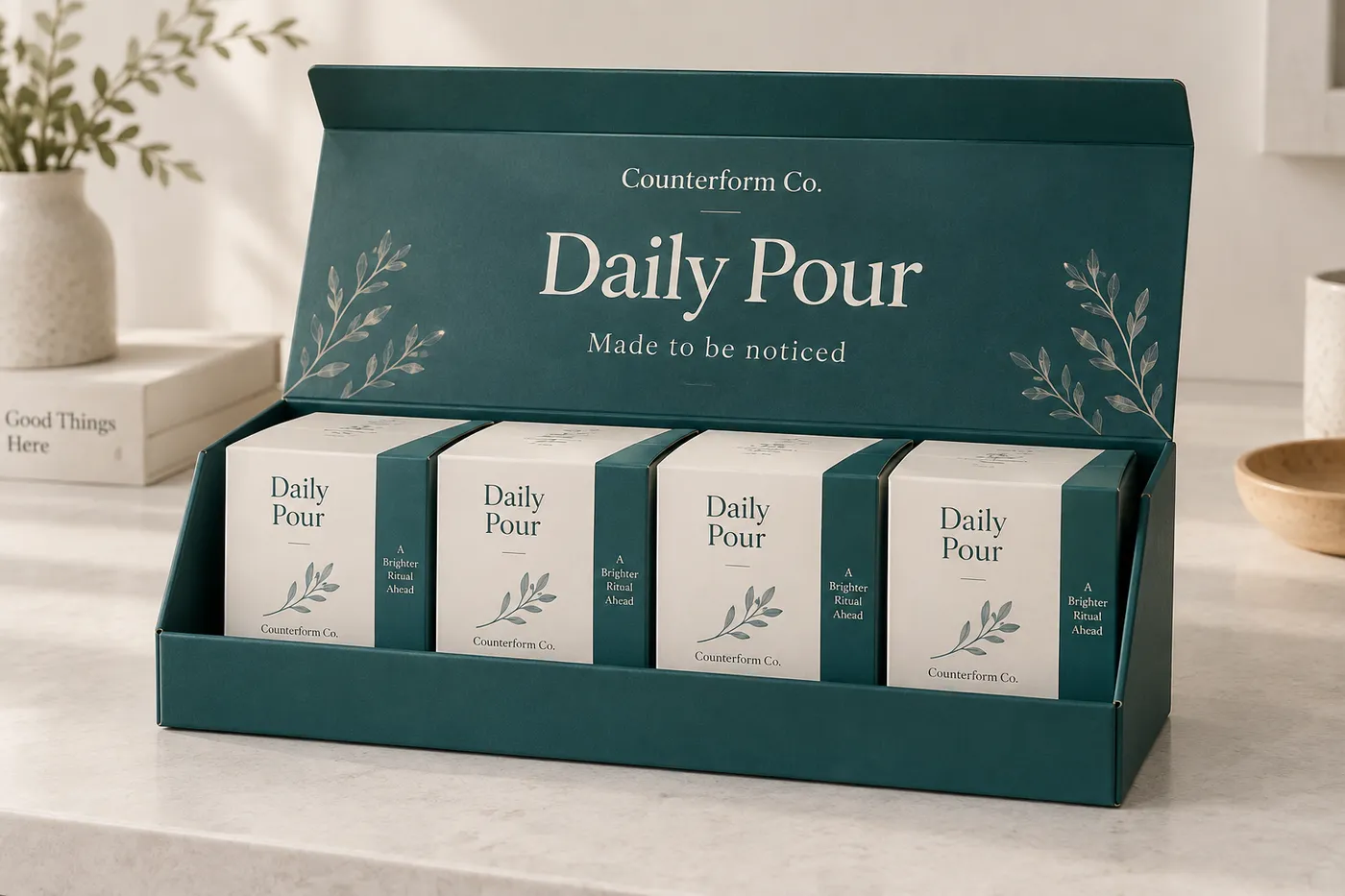
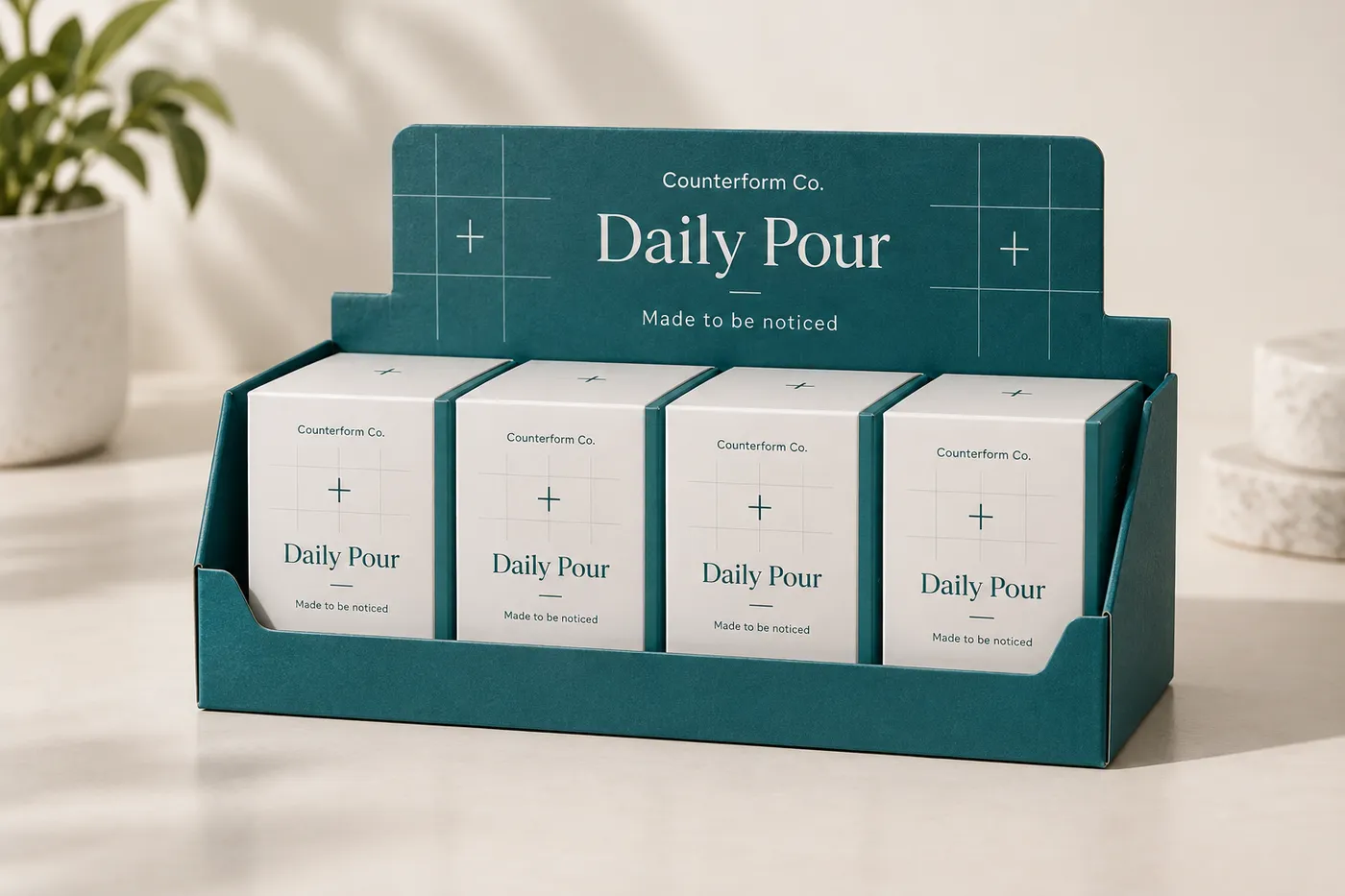
Deep-teal display lid box open as a printed header around four fictional cartons with Counterform Co. print.
Display Boxes
Custom display lid boxes combine a printed presentation face with a lid, header, or access panel that protects the product between replenishments. The structure can be planned as a hinged lid, removable cover, open-front tray, or tear-away section around the packed product, number of facings, counter footprint, refill routine, and handling route.
Last updated
Working quote
Product brief
A display lid box should make the first product easy to recognize while giving staff a clear way to open, refill, and close the unit. A hinged lid can protect the printed face during storage and then fold back as a header; a removable lid can keep a presentation clean until the display is placed; an open-front or perforated section can keep the first row accessible. The lid is part of the display behavior, not an excuse to treat every format as a small shipping carton.
Start with the product that will actually be loaded. Share the packed height, width, depth, widest points, projecting tabs or closures, product count, and the face that must point toward the shopper. A shallow counter display for small cartons has a different center of gravity from a deeper tray for pouches or a mixed assortment. Note whether people lift products from the front, top, or rear, and whether the display will be moved from a stockroom before it reaches the counter.
A hinged lid works when the cover needs to stay attached and become a visible backer or header. A removable lid suits a presentation that is opened once at placement, while a tear-away or perforated section can support repeated access when the unit arrives as a replenishable display. If the lid carries the main message, reserve an uninterrupted panel for the printed brand lockup and keep the hinge or tear line away from the most important type. The finished opening should be reviewed against the loaded product so a front wall does not hide the first row.
The number of facings and the available footprint also matter. One row may need a shallow base and a clear front edge; two or more rows may need dividers or a deeper tray to prevent packs from leaning into the lid. A display that ships flat and is assembled at the destination needs a different conversation from a unit that arrives ready to place. State the handling route early, including whether the filled box is lifted by the side walls or carried from its base.
SBS Paperboard can be considered for a smooth printed face with small type and a clean lid panel. Kraft Paperboard can support a natural paper character when the artwork uses warm, restrained tones. Corrugated Board can be discussed when the display must coordinate with a sturdier packed configuration. These are category material directions, not a promise of a particular grade, flute, load rating, food-contact approval, or recycling outcome; the selected structure still needs to match the product and route.
Finishes should help the display read in its setting. Matte Lamination can reduce glare on a counter under bright lights, while Gloss Lamination gives selected artwork a more reflective surface. Spot UV can focus attention on a short message or logo area. Embossing/Debossing adds tactile relief, and Foil Stamping can provide a controlled accent. Check each option against folds, hinge movement, tear lines, exposed edges, and the way staff will handle the lid.
Provide the filled package dimensions, product count, facings, preferred orientation, lid opening angle or removal preference, and available counter or shelf footprint. Include any cap, tab, spout, blister edge, or pouch seal that changes the profile. A pack photograph or physical sample can clarify how the product sits when the lid is open and where a hand needs to reach. If the display will be restocked in batches, explain the loading sequence; if it will be picked one unit at a time, explain which access edge should remain clear.
Plan the artwork panel by panel. The lid or raised backer may carry the strongest message, while the front edge and side walls can use quieter supporting graphics. The digital proof should show the flat artwork and assembled display together so print placement, hinge position, access opening, and finish areas can be checked before approval.
The verified standard minimum order is 50 units. Production is from 7 business days after digital proof approval, and Free US shipping is available on the standard fulfillment path. A sample kit has a $44.99 USD shipping charge credited toward the first order. Pricing remains quote-only because the finished footprint, lid construction, product count, board direction, print coverage, finish, and handling route can change the specification.
Send the packed dimensions, unit count, facings, display location, lid or access preference, artwork status, material direction, finish request, and delivery destination. Then review the proposed structure and proof before approval. This gives Easy Box Packaging enough context to discuss a hinged, removable, open-front, or tear-away display lid without claiming that one construction fits every product.
Proof points
The proof should make the physical and printed decisions visible at the same time. Check the packed product, lid movement, display opening, readable panels, and finish placement before the production path begins.
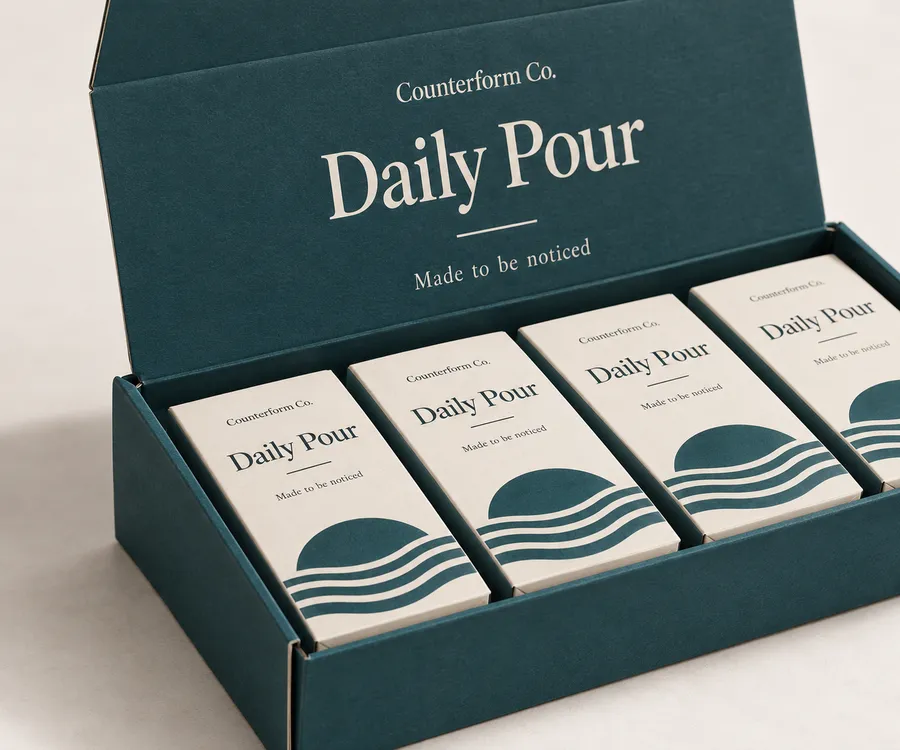
A hinged lid, removable cover, open-front tray, or tear-away access panel can be evaluated around the actual product profile. The display footprint, facings, refill direction, and printed lid or header are reviewed together so presentation and access work as one specification.
Present a short row of packaged goods with a printed lid or header that opens for placement and keeps the front faces readable.
Use a defined base and access edge for a shelf viewing angle, then size the lid or backer around the actual packed units.
Keep a compact footprint and clear opening so individual units are easy to pick while the printed lid carries the campaign message.
Plan a repeatable display structure for a launch or seasonal reset, with lid behavior tied to how staff refill the unit.
Keep the main product and brand message on the panel customers can actually see after loading. The supplied material and finish directions can be compared with artwork hierarchy, display light, fold positions, hinge movement, and handling context.
The useful brief connects product visibility with the way the lid opens and the unit is replenished. Three decisions usually set the direction: which face must stay readable, where the main message belongs, and how the filled display moves from storage to counter or shelf.
Choose hinged, removable, open-front, or tear-away access according to placement and refill frequency.
Reserve the lid, header, or front edge that remains visible after loading for the sample print layout or approved message.
Describe whether the display ships flat, arrives assembled, or is moved while filled so the base and access can be reviewed together.
A complete product and fixture brief lets the quote focus on the right lid behavior instead of a generic counter silhouette.
Send filled height, width, depth, projecting features, product count, facings, and preferred orientation.
Identify the counter, shelf, checkout, event, or stockroom handoff and the available footprint.
Note hinged or removable behavior, front or rear access, header needs, approved copy, board preference, and finish direction.
Check the flat dieline and assembled display for product visibility, lid movement, panel placement, and finish areas.
The standard minimum order is 50 units and production is from 7 business days after digital proof approval.
Need help with structure, materials, or production planning? See how we manufacture custom packaging.
A sample kit can help you compare paperboard character, print treatment, lid movement, front-wall visibility, and the way a packed product sits in a display. The kit carries a $44.99 USD shipping charge credited toward your first order.
Shipping charge: $44.99. Credited toward your first order.
Request a Sample KitFind clear answers about fit, materials, and ordering below.
It presents a defined group of packaged products on a counter, shelf, checkout, or event surface while a lid, header, or access panel controls presentation and replenishment. The filled profile, unit count, facings, orientation, and handling route determine the base and lid layout.
A hinged lid stays attached and can fold back as a header or backer. A removable lid suits a display opened once at placement, while a perforated or open-front section can support repeated access. The best direction depends on the loading sequence and where the printed message must remain visible.
The category material directions are SBS Paperboard, Kraft Paperboard, and Corrugated Board. SBS can suit a smooth printed face, Kraft can retain a natural paper character, and Corrugated Board can be discussed for a sturdier configuration. Final suitability depends on the product and handling route.
Send the filled package height, width, depth, projecting features, number of units, facings, preferred orientation, display footprint, lid or access direction, artwork status, board preference, finish request, and delivery destination. A pack photograph or physical sample can clarify a closure, tab, seal, or unusual profile.
The standard minimum order is 50 units. Production is from 7 business days after digital proof approval, and the final quote still depends on the display footprint, product count, lid construction, board, print coverage, finish, and destination.
Yes. A sample kit can be requested when you need to compare board appearance, print treatment, lid movement, front-wall visibility, or the way the packed product sits in the display. The kit carries a $44.99 USD shipping charge credited toward your first order.
Orders start at 50 units and scale up to 500,000 for bulk runs, with pricing from $0.34 per unit on larger quantities. Standard production is from 7 business days after digital proof approval.
Compare nearby products and request the format that best fits your next run.
Available product
Available product
Available product
Available product
Display packaging for a defined product format
Tell Easy Box Packaging what the display will hold, where it will sit, how the lid will open, and which printed panels matter most. We can then review the base, lid, access, board, artwork, and finish as one specification.
Add your product details to see a quote summary.