Checkout counters
Keep a small range of tubes visible beside a till or service desk where quick picking matters.

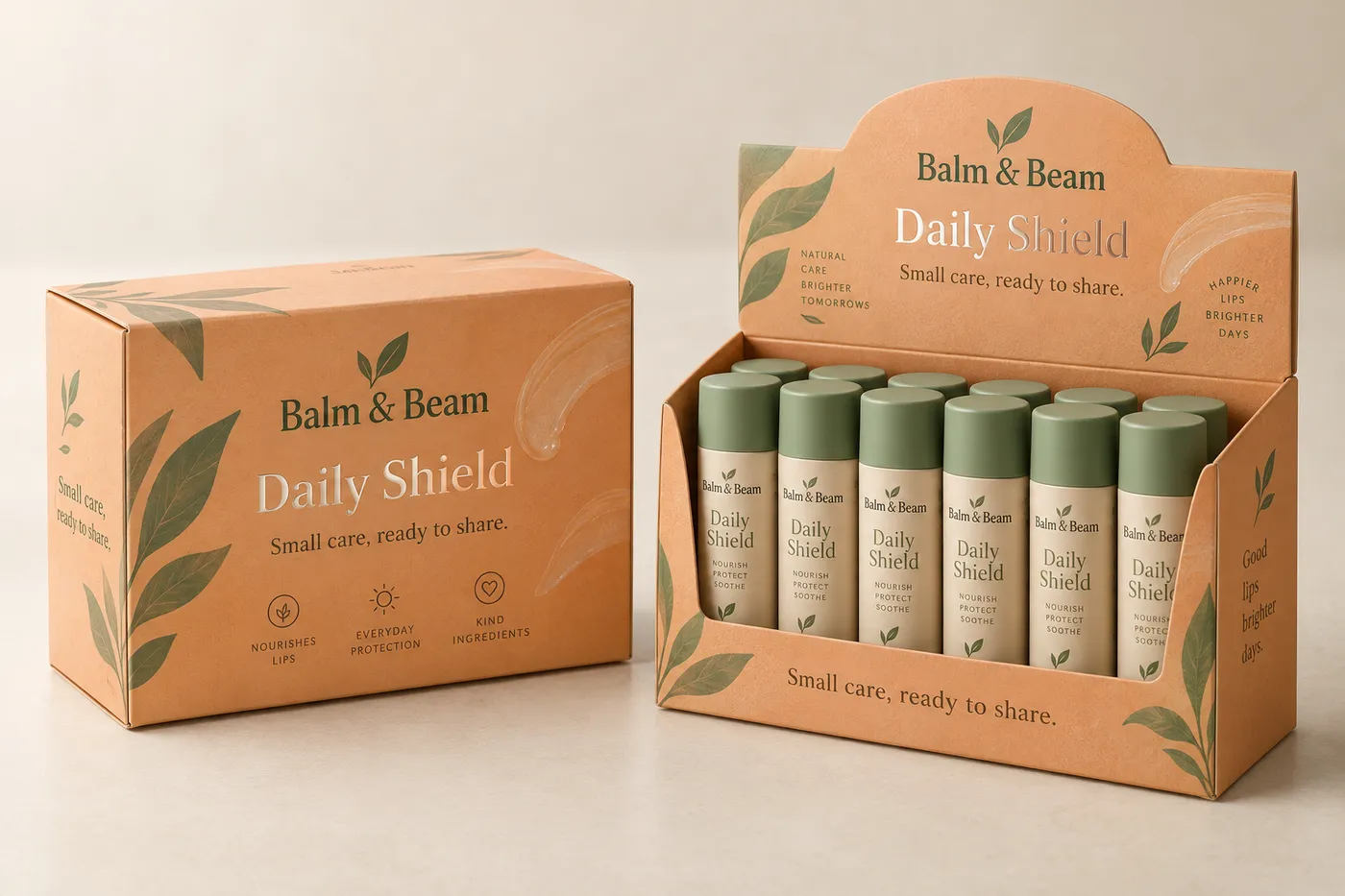
Apricot lip balm display box with Balm & Beam branding and capped tubes visible at the front.
Display Boxes
Lip balm display boxes give small tubes a defined retail footprint, readable branding, and an access opening that supports quick replenishment. Choose an open-front tray or tuck-top carton around the tube diameter, cap profile, row count, and counter space. SBS, kraft, or corrugated board can then be paired with print and finish choices that suit the display setting.
Last updated
Working quote
Product brief
A lip balm display works when the shopper can identify the range and reach the first tube without moving the whole pack. Begin with the filled tube's widest body measurement, cap width, height, and whether it stands upright or lies in a shallow row. Record the number of facings and the quantity that should be visible at once. A display sized around those inputs can keep the front line orderly; an oversized carton can let narrow tubes lean, while a tight opening can make restocking awkward.
The retail setting also changes the brief. A countertop tray beside a till benefits from a low front cut-out and a short sightline. A shelf-ready display may need a tear-away panel or a header that remains visible above the product. If the unit travels from a stockroom through parcel handling, the structure may need more enclosed panels than a display that is assembled directly at an event. Share the packed tube orientation and the handling route before a dieline is prepared.
An open-front tray shows the first row of tubes and lets staff refill from the top or rear. It suits a compact range where product recognition and pick-up speed matter. A tuck-top display carton gives more printed surface around the contents and can arrive closed before it is opened for the shelf. A perforated tear-away front is another option when the shipper should become the retail display, but the tear line, header, and product clearance need to be reviewed together.
The right format depends on tube count, cap geometry, refill frequency, and whether the display stays on a counter or moves between locations. Keep the opening large enough for a hand to remove one tube without disturbing the next facing. Keep the header clear of the cap line so the brand name remains legible at the viewing distance. These are practical construction decisions, not fixed features that can be promised without the product dimensions.
SBS paperboard provides a smooth surface for fine type, flavor names, and high-contrast color. Kraft paperboard brings a warmer board tone and changes how pale inks appear, so artwork should be proofed on the selected stock. Corrugated board can be considered when the display is deeper, carries more filled weight, or needs additional structure during transport. The final board family should follow the packed load, front-panel span, and handling path rather than a generic strength label.
The outside dimensions are developed from the product row, board construction, folds, and any header or rear support. If tubes have different caps, note the largest diameter and the tallest filled height. If the display combines flavors or shades, decide whether the row is grouped by variant or mixed for a more varied shelf read. A paperboard divider or stepped insert may help separate facings, but it should be specified only after the actual tube arrangement is understood.
A small display has limited panel area, so give the front one clear job: identify the balm, show the variant, or explain the range. Reserve a calm field for the brand name and keep flavor or scent cues close to the tube row. A die-cut window can reveal cap colors or the front tube when that view supports selection. If the tubes already carry strong graphics, an enclosed front may give the display a cleaner branded block.
Matte lamination can reduce glare under bright counter lighting, while gloss lamination increases surface reflection and color presence. Spot UV can pick out a wordmark or a small motif without covering the whole panel. Foil stamping or embossing/debossing can be used as a focused accent when the artwork and board support it. The proof should check registration, fold placement, window clearance, and barcode or ingredient-panel space; it should not imply cosmetic or regulatory approvals that have not been supplied.
Easy Box Packaging starts the review with the filled tube dimensions, cap profile, row count, intended orientation, retail footprint, board preference, print sides, and finish. The standard fulfillment path has a minimum order of 50 units. The approved production estimate is from 7 business days after digital proof approval, and quote requests are typically answered the same business day and always within 24 hours. Those figures describe the established path; unusual inserts, multiple artwork versions, or a special tear-away panel can change the review needed before approval.
A digital proof is the point to check the front opening against the tube diameter, the header against the tallest cap, and the side panels against the counter footprint. Request a sample when board tone, fit, or a tactile finish will decide the launch. The sample kit carries a $44.99 shipping charge credited toward the first order, giving the team a physical reference before a larger production run.
Provide the packed tube width, depth, and height; the widest cap measurement; the number of facings; the target quantity; and a photo or physical sample when available. Add whether tubes stand upright, lie flat, or alternate by variant. Then identify the intended display location, access style, board direction, print coverage, window preference, and finish. Keeping those inputs consistent between the quote, dieline, and proof lets the finished display be judged against the same product row.
The page remains quote-only because no defensible product-specific price range is recorded for this display. That keeps the commercial decision tied to the actual tube geometry, board, finish, and order quantity instead of a copied figure.
Proof points
A useful proof makes the physical and printed decisions visible before the production run.
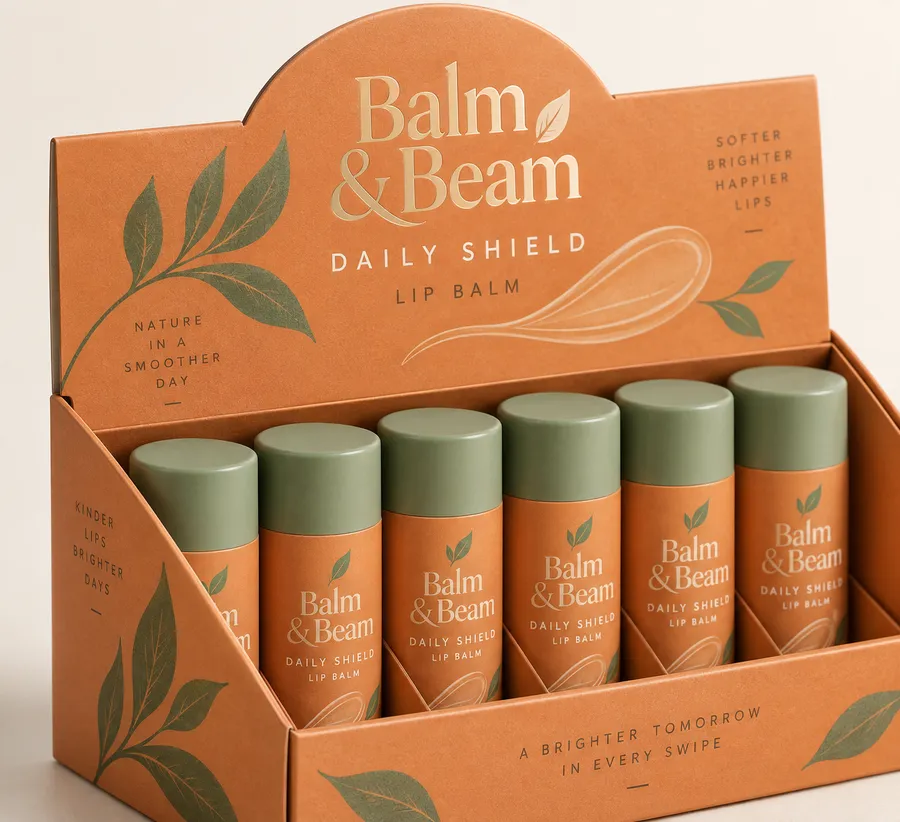
Set the opening, header, and tray depth around the real tube diameter, cap profile, row count, and retail footprint so the first facings stay visible and replenishment is practical.
Keep a small range of tubes visible beside a till or service desk where quick picking matters.
Use a header and grouped facings to help shoppers compare flavors, scents, or cap colors.
Pair an easy-access tray with a concise product message at a sampling or pop-up station.
Use a tuck-top or tear-away format when campaign artwork needs more enclosed printed surface.
Select print and finish options around viewing distance, board tone, and the information that must remain legible.
The specification stays focused on the variables that change a lip balm display's fit, visibility, and handling.
Record the filled height, widest body, cap diameter, orientation, and number of facings before sizing the tray.
Compare an open front, tuck-top, or tear-away panel against refill speed and the display location.
Review folds, header clearance, print registration, window placement, and panel legibility before approval.
A clear brief keeps the quote and proof tied to the product row that will actually sit in the box.
Share filled width, depth, height, cap diameter, facings, orientation, target quantity, and display location.
Decide between open-front access, a tuck-top carton, or a tear-away panel, then select board and finish preferences.
Check folds, header clearance, window placement, artwork hierarchy, and barcode or ingredient-panel space.
Confirm the quantity, final construction, and production path from 7 business days after proof approval.
Need help with structure, materials, or production planning? See how we manufacture custom packaging.
The sample kit carries a $44.99 shipping charge credited toward your first order, giving you a practical way to review fit, board tone, and finish.
Shipping charge: $44.99. Credited toward your first order.
Request a Sample KitFind clear answers about fit, materials, and ordering below.
Yes. Upright or flat orientation can be planned from the filled tube height, widest body, cap profile, and the access opening. Share the real dimensions so the tray depth and header clearance are not based on a placeholder tube.
SBS paperboard suits smooth detailed printing, kraft paperboard supports a warmer board character, and corrugated board can be considered for a deeper or heavier display. Filled weight, panel span, and handling should decide the final choice.
The standard fulfillment path starts at 50 units. Quantity, board, finish, inserts, and the display format are confirmed in the quote.
The approved production estimate is from 7 business days after digital proof approval. Special inserts, multiple artwork versions, or unusual access panels may require additional review.
Your final unit price is confirmed in a quote because no defensible product-specific price range is recorded. A quote can reflect the actual tube dimensions, board, finish, and quantity instead of a generic figure.
Orders start at 50 units and scale up to 500,000 for bulk runs, with pricing from $0.36 per unit on larger quantities. Standard production is from 7 business days after digital proof approval.
Yes. Free US shipping is included on the standard fulfillment path. Delivery timing and carrier details are confirmed when your quote is prepared.
Compare nearby products and request the format that best fits your next run.
Available product
Available product
Available product
Available product
Ready for a measured display brief?
Tell Easy Box Packaging how the tubes will be arranged, where the display will sit, and which printed details matter most. We will shape the box and proof around that information.
Add your product details to see a quote summary.