Single bar retail pack
A wrapped or labeled bar can use a tuck carton or sleeve to keep the front name, scent, and information together on a defined panel.

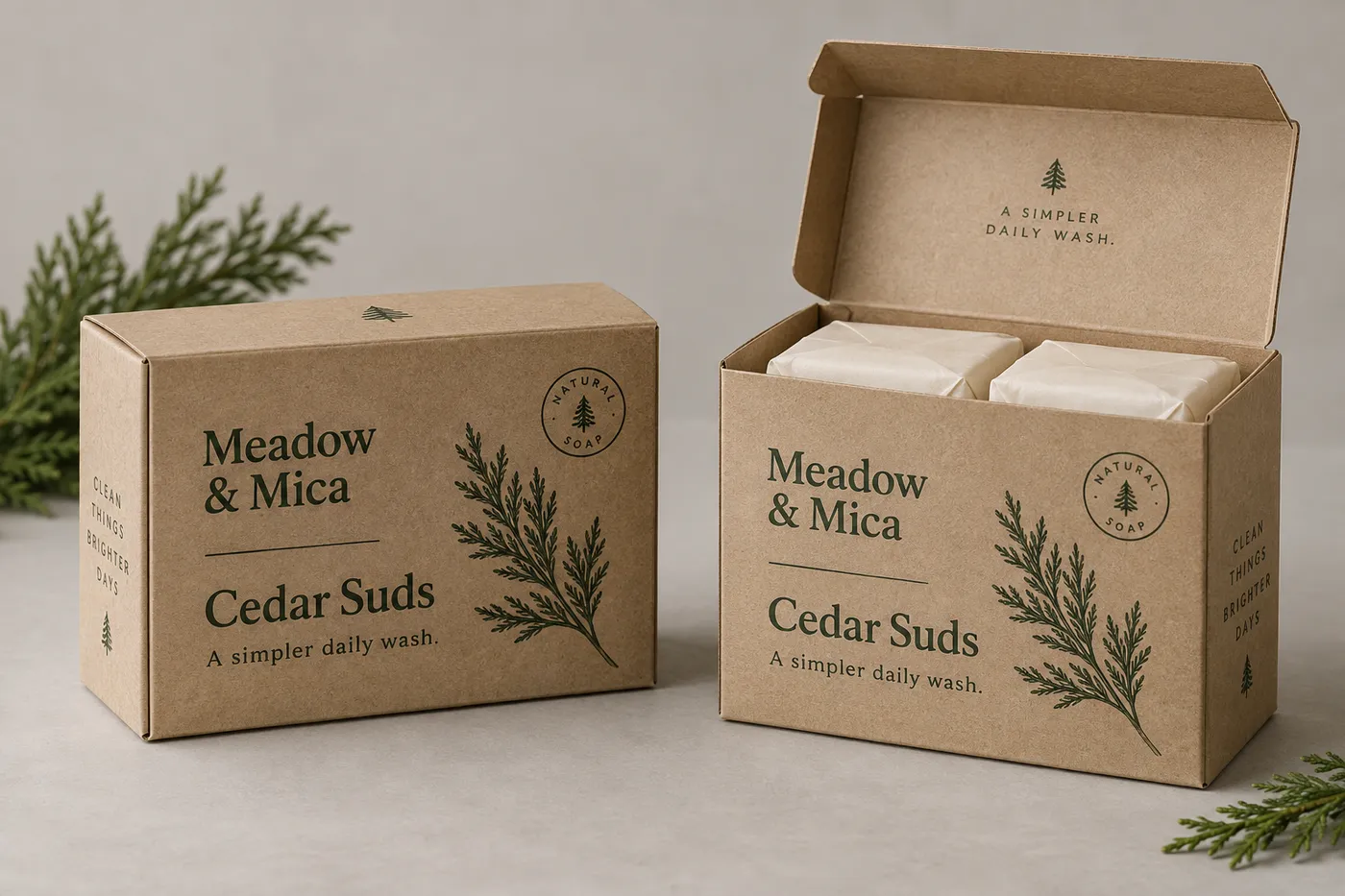
Printed kraft soap carton with a tuck flap and two wrapped ivory bars from the Meadow and Mica mockup.
Eco-Friendly Boxes
Custom soap boxes give wrapped or unwrapped bars a defined retail and gifting presentation. Share the finished bar footprint, wrap thickness, bar count, closure preference, print panels, and delivery route so Easy Box Packaging can review a paperboard carton, sleeve, or set box around the actual product.
Last updated
Working quote
Product brief
Custom soap boxes work best when the carton is planned around the bar as it will actually be sold. Measure the finished length, width, height, weight, widest points, wrap thickness, and orientation before choosing a tuck carton, sleeve, window panel, or set box. A paper band, label, tissue layer, or insert that stays inside the pack changes the usable cavity. The right brief describes the product inside first, then the printed surface and opening route.
A single wrapped bar may need a compact carton with a clear front panel. Two or more bars may need a shared cavity, divider, or simple spacing plan so the customer sees the intended order. A gift set with a card or small accessory introduces a different arrangement again. These decisions should be considered with the shelf, market table, hospitality handoff, or parcel route in mind. The box style is a construction decision, not a promise that one size suits every bar.
Measure the bar after its final wrap or band is in place. Record the widest point rather than relying on a nominal bar name, and note any corner, bevel, label overlap, or card that projects into the cavity. If a set includes different bar shapes, send the dimensions for each one and describe the order in which they should sit. This information helps the reviewer discuss clearance, flap depth, sleeve overlap, and whether a separate support is useful.
The outside footprint matters as well. Board direction, folded edges, closure panels, and any window or cutout change how the package reads in hand. A carton for a market table may prioritize a clear front and easy opening; a parcel order may need an outer shipping pack around the retail box. State the handling route early so the box is reviewed as a complete handoff rather than a flat artwork file.
A tuck-end carton gives one bar a defined front, back, and side-panel system. It can carry the product name, scent or variant, ingredients, directions, and other copy where those details need to remain visible. A sleeve can leave more of the wrapped bar exposed while keeping a printed band around the center. A window panel can show the wrap or label, but the opening, panel space, and window material should be confirmed for the actual structure.
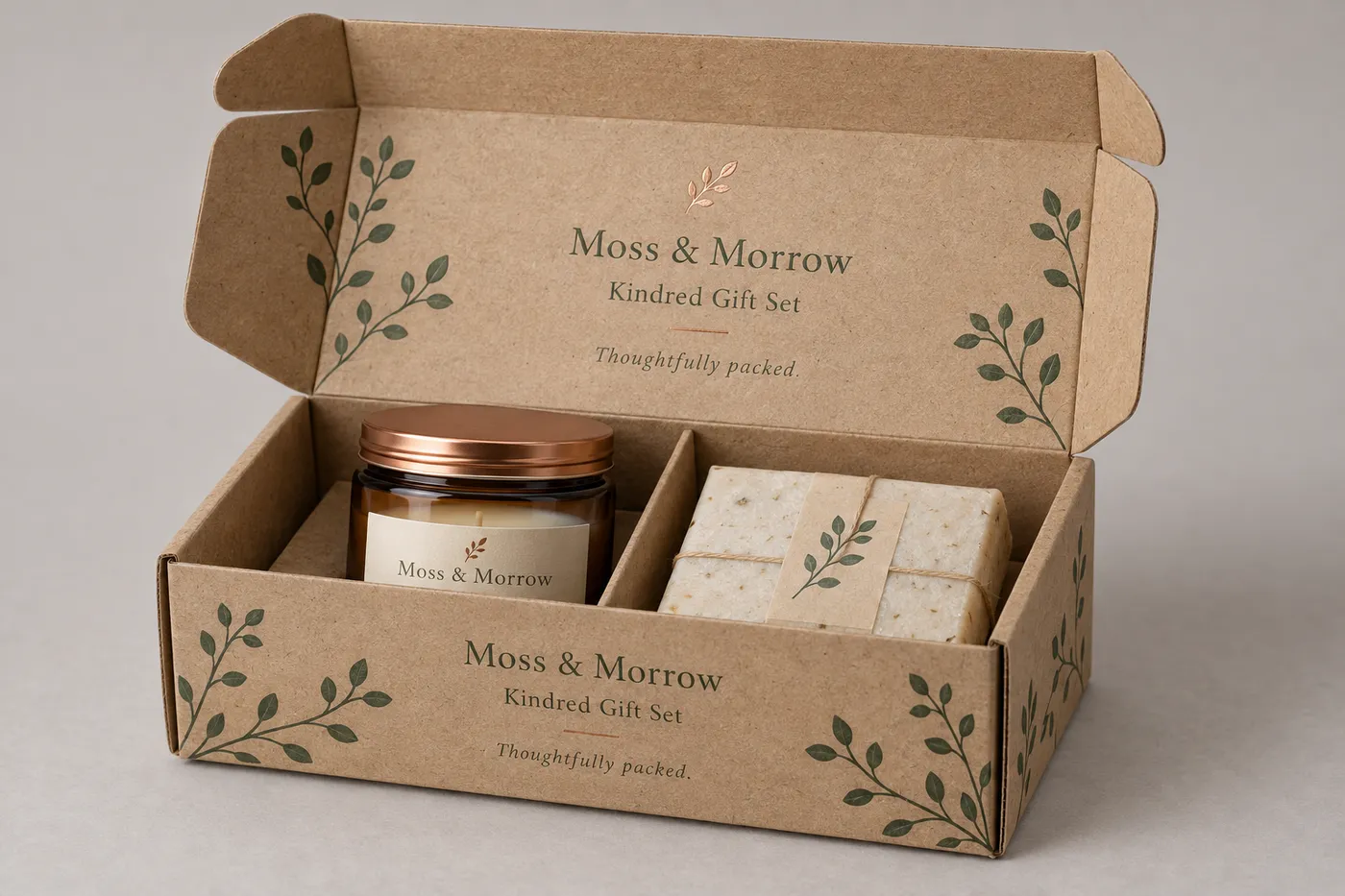
For two or more bars, a compact set box can keep the pieces together and create a planned reveal. Depending on the bar geometry, weight, orientation, and presentation, support may be a shared cavity, paperboard divider, riser, or separate insert. Avoid assuming that an insert is always required or never required; the decision depends on the product and the handling route together. Share a sketch or photo when the set order matters.
Kraft Paperboard can keep a warm paper character behind the print. SBS Paperboard provides a smoother printed field when a cleaner color surface is important. Corrugated Board can be considered for an outer pack or a structure that needs a more defined board direction during shipping. These are material directions; confirm the finished pack's disposal guidance and performance with the selected specification. The selected board should be confirmed against the bar, wrap, storage conditions, artwork coverage, and destination.
Matte Lamination and Gloss Lamination change the surface appearance and handling feel. Spot UV can reserve a small gloss contrast for the circular brand mark or another approved detail. Foil Stamping can highlight a short name or line, while Embossing/Debossing can give a mark a raised or recessed touch. Finish placement depends on the artwork, folds, seams, and panel size; a treatment should support the information hierarchy rather than obscure it.
Map the front, back, sides, top flap, interior, and any sleeve overlap before the artwork is treated as final. State which panel carries the primary brand message and which information must remain readable after the carton is opened. The printed example in the images shows print placement only. Production artwork should use the buyer's approved identity, ingredient copy, directions, and required market information.
The digital proof is the point to inspect the assembled proportions, tuck direction, seam placement, print orientation, panel hierarchy, and finish locations. Look at the carton as an object rather than only as a flat spread. If the bar size, bar count, wrap, or opening direction changes, the structure and artwork should be reviewed again instead of assuming the same dieline still applies.
Send the finished bar dimensions, packed weight, wrap or band thickness, count, orientation, product photos or sketches, desired format, board direction, print coverage, finish ideas, destination, and artwork status. Orders start at 50 units, production is from 7 business days after digital proof approval, and Free US shipping is included on the standard fulfillment path. A sample kit has a $44.99 USD shipping charge credited toward the first order, while quote requests are typically answered the same business day and always within 24 hours.
A clear brief lets Easy Box Packaging connect the cavity, closure, printed panels, and handling route before production. The result is a soap carton or sleeve with a deliberate opening and information hierarchy, sized around the actual bar rather than a generic category assumption.
Proof points
The useful proof connects the finished bar to the carton panels, closure, seam, and customer-facing print so the whole handoff can be judged together.
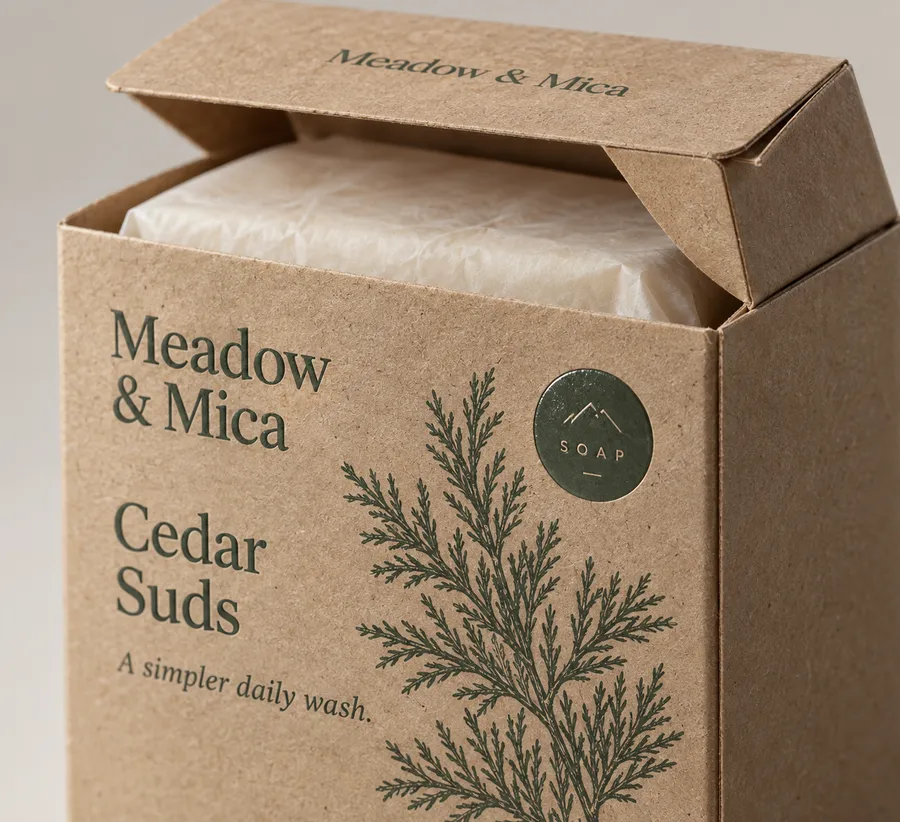
The useful starting point is the bar as it will be sold, including its wrap, band, label, or insert. A tuck carton, sleeve, or small set box can then be reviewed around the packed footprint, closure, printed information, and the way the pack will be handled.
A wrapped or labeled bar can use a tuck carton or sleeve to keep the front name, scent, and information together on a defined panel.
Two or more bars can be arranged in a shared carton with a divider or simple spacing plan when the set order matters during opening.
A printed set box can frame coordinated bars, a card, or a small bath accessory when the reveal and panel hierarchy are part of the brief.
A compact carton or sleeve can carry the variant name, directions, and required copy for handoff at markets, hotels, or welcome kits.
Use the front and side panels for a clear bar name and required information, then select surface treatments that support the reading angle, touch, or contrast of the specific artwork.
A short brief keeps the review focused on fit, print area, closure, and delivery instead of an empty sample shape.
Provide the cured bar length, width, height, weight, widest points, wrap thickness, and whether one bar or a set sits inside.
Describe the tuck direction, sleeve overlap, window idea, insert or divider need, and whether the customer opens the pack once or repeatedly.
List the front brand panel, scent or variant name, ingredients, directions, required market copy, and the panels that need the clearest reading.
The fastest review starts with the finished bar and ends with an assembled proof that shows the closure, information panels, and printed surface together.
Share bar dimensions, weight, wrap or band, bar count, photos or sketches, destination, and the desired shelf, gifting, or parcel handoff.
Note the tuck carton, sleeve, window, or set-box preference, plus board direction, print coverage, finish, and artwork status.
Check the bar fit, flap or overlap, seam, panel orientation, required copy, insert relationship, and handling footprint before approval.
Once the specification and proof are approved, the order can proceed from the quoted quantity and agreed production route.
Need help with structure, materials, or production planning? See how we manufacture custom packaging.
A sample kit can help compare paperboard surface character, tuck or sleeve opening, printed panel treatment, and finish direction before the product-specific proof. Shipping is $44.99 USD and is credited toward the first order.
Shipping charge: $44.99. Credited toward your first order.
Request a Sample KitFind clear answers about fit, materials, and ordering below.
It can be a tuck carton, sleeve, window carton, or compact set box sized around the finished bar, wrap, count, closure, printed panels, and handling route.
Send the packed length, width, height, weight, widest points, wrap thickness, and orientation. The usable cavity and closure clearance are reviewed against that finished footprint.
It can suit a compact set when the bar count, order, and support needs are clear. A shared cavity, divider, riser, or separate insert may be considered depending on the arrangement.
Matte Lamination, Gloss Lamination, Spot UV, Foil Stamping, and Embossing/Debossing are category directions; the final choice and placement depend on artwork and the assembled pack.
The standard fulfillment path starts at 50 units, with production from 7 business days after digital proof approval. Your final unit price is confirmed in a quote because the specification sets the unit cost.
Orders start at 50 units and scale up to 500,000 for bulk runs, with pricing from $0.34 per unit on larger quantities. Standard production is from 7 business days after digital proof approval.
Common uses include single bar retail pack, sampler and duo sets, gift and seasonal presentation, and market and hospitality bars. The final specification is set by the packed product and how it will be handled.
Compare nearby products and request the format that best fits your next run.
Available product
Available product
Available product
Available product
Ready to scope the carton?
Tell us what sits inside, how the pack should open, and which printed surfaces you want to review. Easy Box Packaging can then shape the carton, sleeve, support, and artwork discussion around the actual soap format.
Add your product details to see a quote summary.