Counter pastry handoff
Use a shallow folding carton or paper carrier for a pastry, cookie order, or small loaf that is loaded and carried directly from the bakery counter.

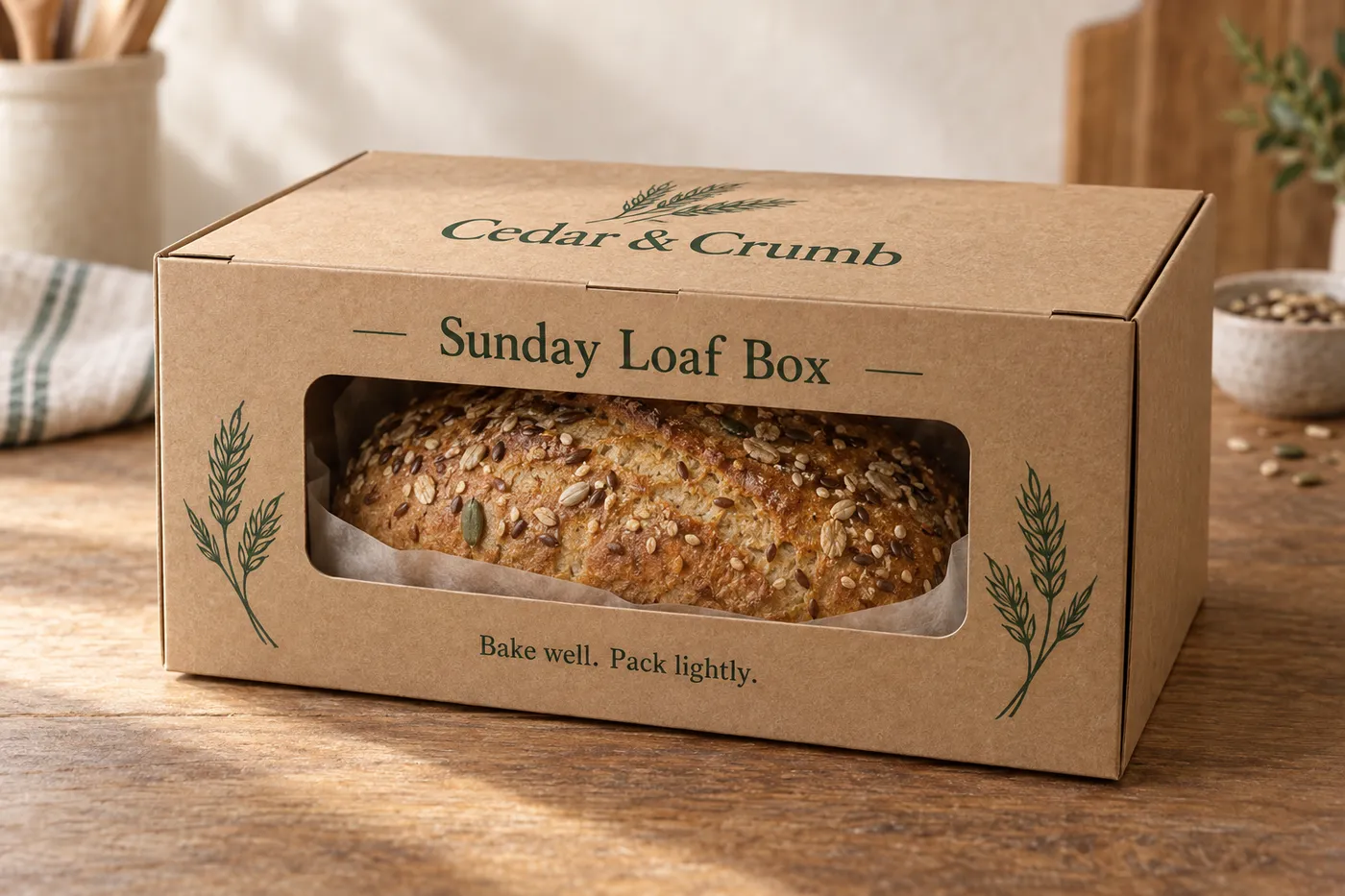
Printed kraft bakery carton with a window showing a seeded loaf on a parchment liner.
Eco-Friendly Boxes
paper-based bakery packaging gives bakeries a printed paper or board format for bread, pastries, cookies, and giftable bakes. Choose the box footprint, tuck or locking closure, window position, grease-resistant paper direction, print coverage, and finish around the item as it is actually carried or delivered.
Last updated
Working quote
Product brief
Paper-led bakery packaging works when its material and structure match the food, the service moment, and the way the empty pack can be handled afterward. A low folding carton can hold cookies or a pastry assortment at a counter; a deeper paperboard box can give a loaf or filled pastry more room; a corrugated outer box can protect several bakery packs during a courier route. These are different jobs even when all three are described as bakery boxes. Send the finished length, width, and height of the item, the packed count, its orientation, and any liner, parchment, or inner wrap that stays with it. Note whether the bake is warm, oily, iced, or prone to condensation, because those details change the useful paper treatment and the clearance around the product.
The standard fulfillment path starts at 50 units, with production from 7 business days after digital proof approval. Pricing remains quote-only: the final number depends on the assembled footprint, board or paper direction, closure, window, artwork coverage, finish, quantity, and destination.
A folding carton gives the handoff a defined footprint and keeps the printed front panel facing the customer. Tuck flaps, locking tabs, and a mailer-style lid each create a different loading and opening route, so the preferred closure should be described with the item rather than selected from a generic size. A shallow cookie box may use a broad top panel and a low depth; a filled bun or iced pastry may need more headroom and a way to keep the lid clear of the topping. If a customer should see the bake before opening, a die-cut window can be placed on the lid or front panel. The window, its border, and the inside surface are part of the same artwork and construction review.
For a mixed order or a delivery route, consider how the boxes sit together. A corrugated board outer pack can surround smaller printed cartons when the parcel needs more separation from handling. If the package is only a short counter-to-home carry, a lighter kraft paperboard carton may be the more direct format. Share the actual stack, bag, or carrier arrangement so the box is not sized in isolation from the rest of the handoff.
Kraft Paperboard keeps a natural fiber look behind a restrained print treatment and can suit a bread, pastry, or cookie carton. SBS Paperboard offers a smooth white surface when color matching and small type need a clean face. Grease-Resistant Kraft Paper can be relevant around oily pastries or bakery liners, but the finished construction and food-contact suitability still need to be confirmed for the intended item. Corrugated Board adds fluting and a more protective outer structure for grouped packs or a longer delivery route.
An FSC-certified paper option is available on request as a material direction; that option does not make every stock or finished package automatically certified. Likewise, the empty package's disposal route depends on its actual board, window, coating, adhesive, and the collection facilities serving the customer. We do not assign a broad end-of-use label without a matching confirmed specification.
Map the front, lid, side, back, and any visible interior on the assembled box. Matte Lamination can change the surface feel and glare, while Gloss Lamination creates a brighter surface direction; either should be reviewed with the chosen board and fold pattern. Spot UV can pick out a small mark or ingredient callout, and Foil Stamping can reserve a metallic or pigmented accent for a wordmark. Embossing/Debossing adds relief to selected artwork, subject to the board and depth review. Keep the printed mockup simple enough to read at a counter: Cedar & Crumb, Sunday Loaf Box, and Bake well. The pictured print is an example of artwork placement, and your approved brand artwork takes its place once the proof is signed off.
Provide the packed dimensions, count per box, approximate weight, warm or chilled handoff, grease or moisture notes, desired opening, window requirement, preferred material, print sides, finish direction, artwork status, quantity, and delivery destination. Photos from the top and side help clarify a tall topping or irregular edge. If more than one bake will use the same box, list the meaningful variations so the clearance and loading route can be considered together. A physical sample can also show how the lid, liner, and product meet.
A digital proof should make the closure, panel order, window cut, printed brand, and readable information easy to check before production. The standard timing begins after that proof is approved. A sample kit is available for comparing paper and board surfaces; its $44.99 USD shipping charge is credited toward the first order.
It may not be the same specification. Warmth, condensation, topping height, grease, and the liner or insert change the clearance and paper direction. Share both packed arrangements if one carton is intended for more than one bake.
No broad disposal claim should be assumed from the word kraft. The actual board, window, coating, adhesive, and local collection rules determine what happens to the empty package, so those details should be confirmed before a specific end-of-use statement is printed.
Yes, a window can be planned on a lid or front panel when the viewing area and opening route are clear. The cutout, border, print map, and window material should be reviewed together.
The standard path starts at 50 units. Production is from 7 business days after digital proof approval; the final schedule follows the confirmed specification.
Send dimensions, packed count, item notes, structure preference, material and finish direction, artwork status, quantity, and destination. Those details let Easy Box Packaging respond with a quote-ready construction direction.
Proof points
The proof should let the bakery check fit, opening, print orientation, and material direction as one assembled package rather than as disconnected artwork panels.
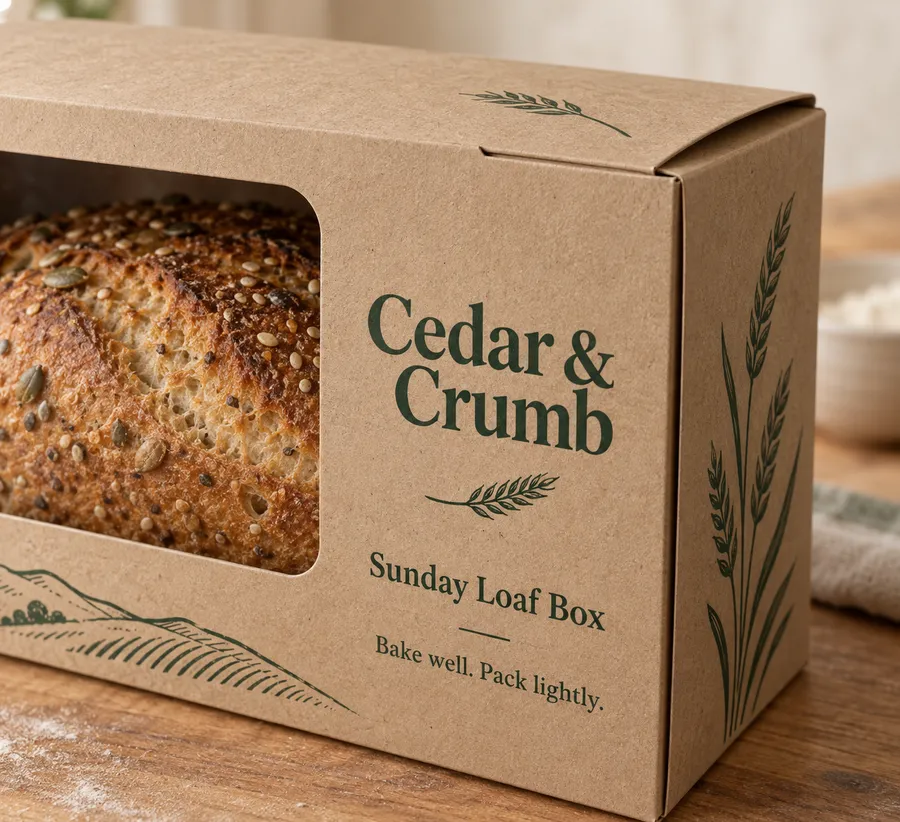
The product footprint, warmth, grease or moisture, loading direction, closure, viewing panel, board choice, and delivery route determine the useful paper-based bakery packaging brief. Share those variables before the printed surface is treated as final.
Use a shallow folding carton or paper carrier for a pastry, cookie order, or small loaf that is loaded and carried directly from the bakery counter.
Place a die-cut window on the lid or front panel when customers need to see the finish of a tart, loaf, or giftable bake before opening.
Plan a closed carton with enough headroom for an iced or filled item, then review how several cartons sit in a carrier or delivery bag.
Use a corrugated outer format around smaller printed bakery packs when multiple items share a parcel and the route includes more handling.
The lid, front, side, back, and any visible interior form one reading system. Map the Cedar & Crumb mockup on the assembled box so folds, windows, opening, and required information remain intentional.
A concise product brief connects the food, the box geometry, and the customer handoff before a dieline and digital proof are prepared.
Provide finished length, width, height, count, orientation, topping height, liner, wrap, and any irregular edge.
Note whether the item is warm, chilled, oily, iced, or likely to create condensation during the intended handoff.
Identify the closure, window, counter presentation, carrier or parcel route, stacking arrangement, and destination.
A quote is easier to evaluate when the food, packed arrangement, construction, print map, material direction, and delivery route are described together.
Send dimensions, count, weight, orientation, topping height, warmth, grease or moisture notes, and photos from the top and side.
Explain counter service, gifting, short delivery, courier shipment, stacking, carrier use, and whether a liner or inner wrap stays inside.
Identify artwork status, logo or mockup, required information, window position, print coverage, and finish direction on each panel.
Check the assembled footprint, closure, window, panel reading order, material direction, and digital proof before production begins.
Need help with structure, materials, or production planning? See how we manufacture custom packaging.
Request a sample kit to compare kraft, paperboard, print treatment, and surface feel. The $44.99 USD shipping charge is credited toward your first order.
Shipping charge: $44.99. Credited toward your first order.
Request a Sample KitFind clear answers about fit, materials, and ordering below.
Share the packed dimensions, count, weight, orientation, food condition, desired structure, window requirement, material direction, print coverage, finish, quantity, and destination. Photos or a physical sample help clarify a tall topping or irregular edge.
It can be explored when the items share a workable footprint and opening route. Warmth, condensation, grease, topping height, and the liner or inner wrap should be listed for each meaningful arrangement rather than hidden behind one generic size.
No. The actual paper or board, window, coating, adhesive, and local collection rules determine the empty package's disposal route. Those details should be confirmed before a specific end-of-use claim is printed.
Yes. A window can be placed on a lid or front panel when the viewing area, border, closure, and opening route are reviewed together with the baked item.
The standard path starts at 50 units. Production is from 7 business days after digital proof approval; the final schedule follows the confirmed construction and artwork.
Orders start at 50 units and scale up to 500,000 for bulk runs, with pricing from $0.33 per unit on larger quantities. Standard production is from 7 business days after digital proof approval.
Common uses include counter pastry handoff, windowed retail presentation, short-distance delivery, and grouped courier shipment. The final specification is set by the packed product and how it will be handled.
Compare nearby products and request the format that best fits your next run.
Available product
Available product
Available product
Available product
Plan the bakery handoff
Send the packed bake details, structure direction, material and finish preference, artwork status, quantity, and destination. Easy Box Packaging can then review the box, print map, and handling route as one quote-ready brief.
Add your product details to see a quote summary.