Carton seals
A repeatable sticker across a folding-carton or mailer flap, with the closure position and panel depth shown before proof approval.

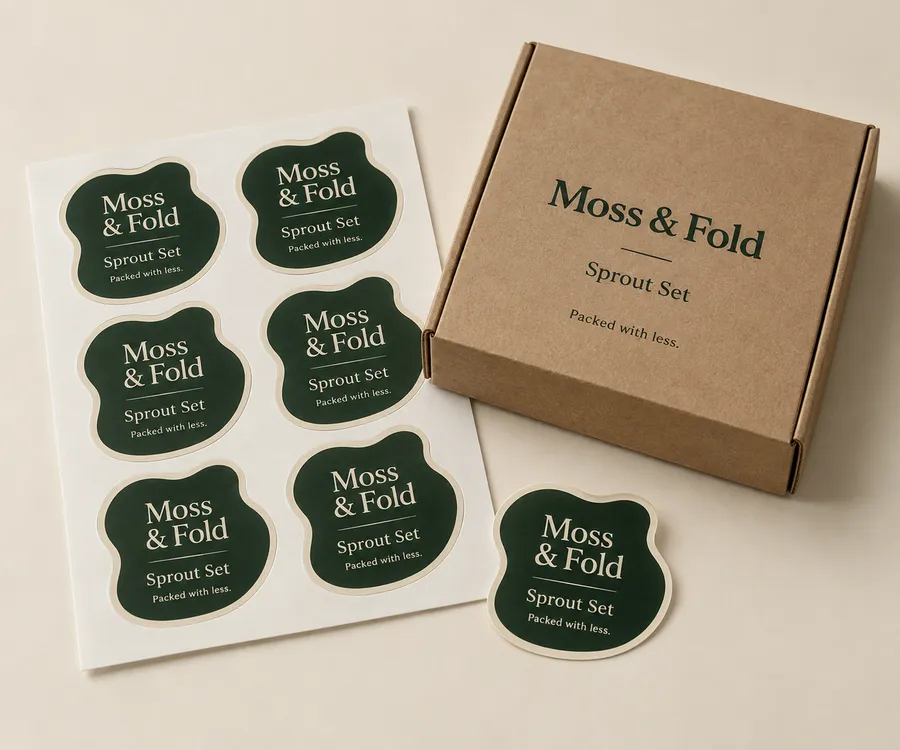
Custom eco friendly stickers with contour artwork beside a natural paperboard carton
Eco-Friendly Boxes
Custom paper based stickers are shaped and printed around a defined packaging job, such as a carton seal, product label, insert, or retail detail. The quote should identify the face stock, contour, finished size, application surface, quantity, and print treatment. Environmental wording stays tied to the confirmed material and disposal context rather than an unsupported blanket claim.
Last updated
Working quote
Product brief
Custom paper based stickers are not one universal material. They are printed adhesive pieces planned around a product label, carton seal, order insert, event handout, or retail detail, with the environmental brief stated as a specification question rather than a slogan. Tell us where the sticker will be used, how it will be applied, and what it needs to show. A label on a folding carton has a different review context from a loose insert or a seal across a mailer flap.
The environmental brief can refer to a paper-forward face, a reduced-material presentation, a defined disposal route, or a preference to avoid a particular surface treatment. Those are different decisions. The quote should name the intended face stock and the disposal or handling context you can support. Specific material and disposal performance are not assumed from the product name alone; they need product-specific confirmation before appearing as a claim.
A custom contour keeps the visible sticker edge connected to the artwork. Share the finished width and height, the widest and tallest points of an irregular shape, and any notch, point, bridge, or interior cutout that matters to the design. A compact round seal, a tall wordmark, and an illustrated leaf can all be called packaging stickers, but their cut paths, clear borders, and peel handling are not interchangeable.
State whether the pieces should arrive individually, on a sheet, or in another reviewed format. If one operator will apply 2 stickers to each pack, say so; if each carton uses 1 seal across a flap, show that placement. The application surface also matters. A smooth folding carton, a natural Kraft Paperboard box, an SBS Paperboard carton, a coated pouch, glass, and a textured insert can present different questions about the sticker face and adhesive direction. The digital proof should show the cut line and artwork together so the physical edge is not approved separately from the visible design.
A responsible brief identifies what is known and what still needs review. If the sticker is paired with a paperboard package, describe the box construction separately: Kraft Paperboard can retain a natural fiber appearance, while SBS Paperboard provides a smoother printed surface. That description does not certify the sticker itself or decide how a local disposal stream will treat the combined pack. If the sticker and box will be separated before disposal, include that handling step in the brief.
Avoid promising a disposal outcome for every order unless the exact face stock, adhesive, liner, ink, and disposal route have been confirmed. A narrower statement is more useful: name the paper-based direction under review, explain which component is being changed, and leave the final environmental wording for the approved specification. This keeps the product page useful to a brand manager without turning a material preference into a guarantee.
The print plan should leave the sticker readable at its finished size. Share the brand name, product name, variable information, artwork coverage, and the area that must remain clear for the contour. Fine text near a point, a line crossing a narrow bridge, or a solid panel at the edge can need a closer proof than a broad central mark. The production review connects the artwork scale, cut path, face stock, adhesive direction, and intended application.
Matte Lamination can be considered for a lower-sheen surface direction. Spot UV can add localized gloss contrast to selected artwork areas, and Foil Stamping can highlight a small word or line when the stock and artwork support it. Embossing/Debossing may be discussed for a tactile detail when the construction and scale are suitable. None of these finishes is an environmental certification, and none should be treated as automatic. A simple print treatment may be the clearer choice when the sticker needs to remain easy to read and straightforward to separate from a paper pack.
A custom contour can close a folding carton or mailer flap when the seal position is known. It can identify a product on a paperboard box, add a short instruction to an order insert, or carry a seasonal mark at a retail counter. A small run can use individual pieces for hand application, while a repeat packing line may need a presentation format that keeps each design oriented and easy to pick up. The application route should lead the format decision.
If the sticker sits across a fold, share the panel depth and closure position before the proof. If it goes on a natural kraft surface, check the artwork contrast against that brown field instead of assuming the same color balance as a white sheet. If it is applied to a curved container or handled in a damp area, describe that condition and keep any performance claim subject to review. The finished sticker should be specified around the actual surface, not an imagined universal use.
The standard fulfillment path starts at 50 units. Production begins from 7 business days after digital proof approval, Free US shipping is included on the standard path, and dieline and proof review are included at no extra charge. Quote requests are typically answered the same business day and always within 24 hours. A sample kit carries a $44.99 USD shipping charge credited toward the first order when you need to compare the printed face, contour, color, or finish in hand.
No product-specific unit price is stated because no defensible live EBP sibling or approved price source was supplied for this sticker format. Pricing should be quoted after the quantity, finished size, face stock, adhesive direction, artwork coverage, presentation format, and any finish have been reviewed together. This keeps the commercial answer tied to the actual build rather than copying a generic range from an unrelated package.
For the quote, send the artwork or contour reference, finished width and height, quantity, application surface, disposal context if a material claim is being considered, preferred print and finish direction, and artwork status. The proof should confirm the silhouette, visible border, printed panels, orientation, liner presentation, and any area crossing a fold or closure. Once the proof is approved, production can begin from 7 business days under the standard estimate.
A useful custom contour sticker brief connects 1 visible label or seal to the real pack, the actual handling route, and the specific material question being reviewed. With those details together, the team can discuss a paper-based direction responsibly, keep the artwork legible, and leave unsupported environmental promises out of the finished specification.
Proof points
The proof brings the cut, printed face, application surface, and environmental wording into one review so the visible design and the material statement stay aligned.
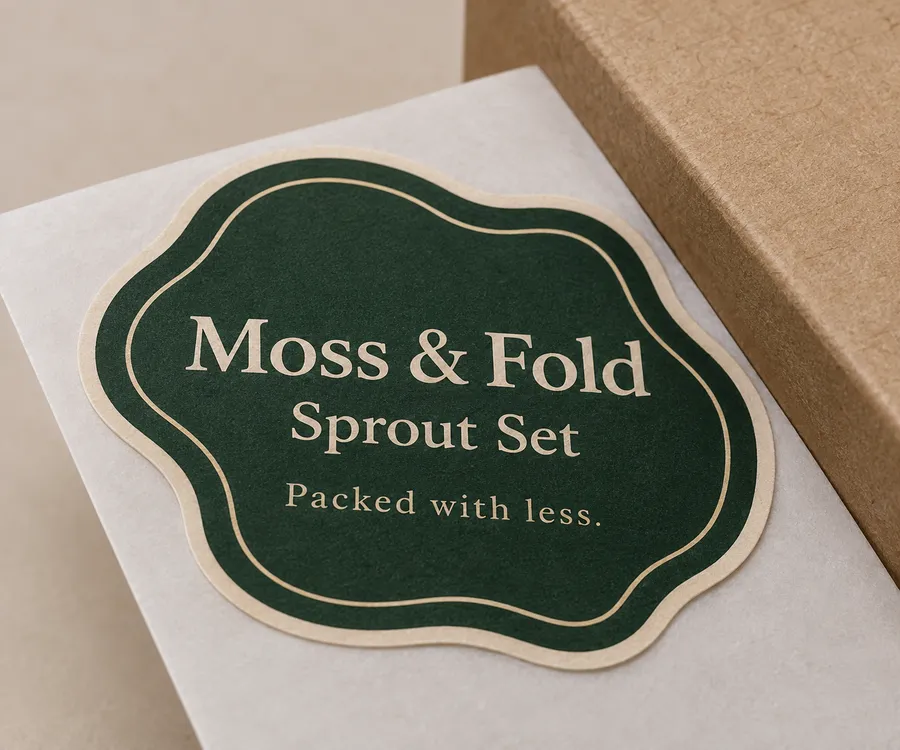
The contour, face stock, adhesive direction, and print treatment should be reviewed alongside the carton, mailer, insert, or retail surface receiving the sticker. Environmental wording stays specific to the confirmed component and handling route.
A repeatable sticker across a folding-carton or mailer flap, with the closure position and panel depth shown before proof approval.
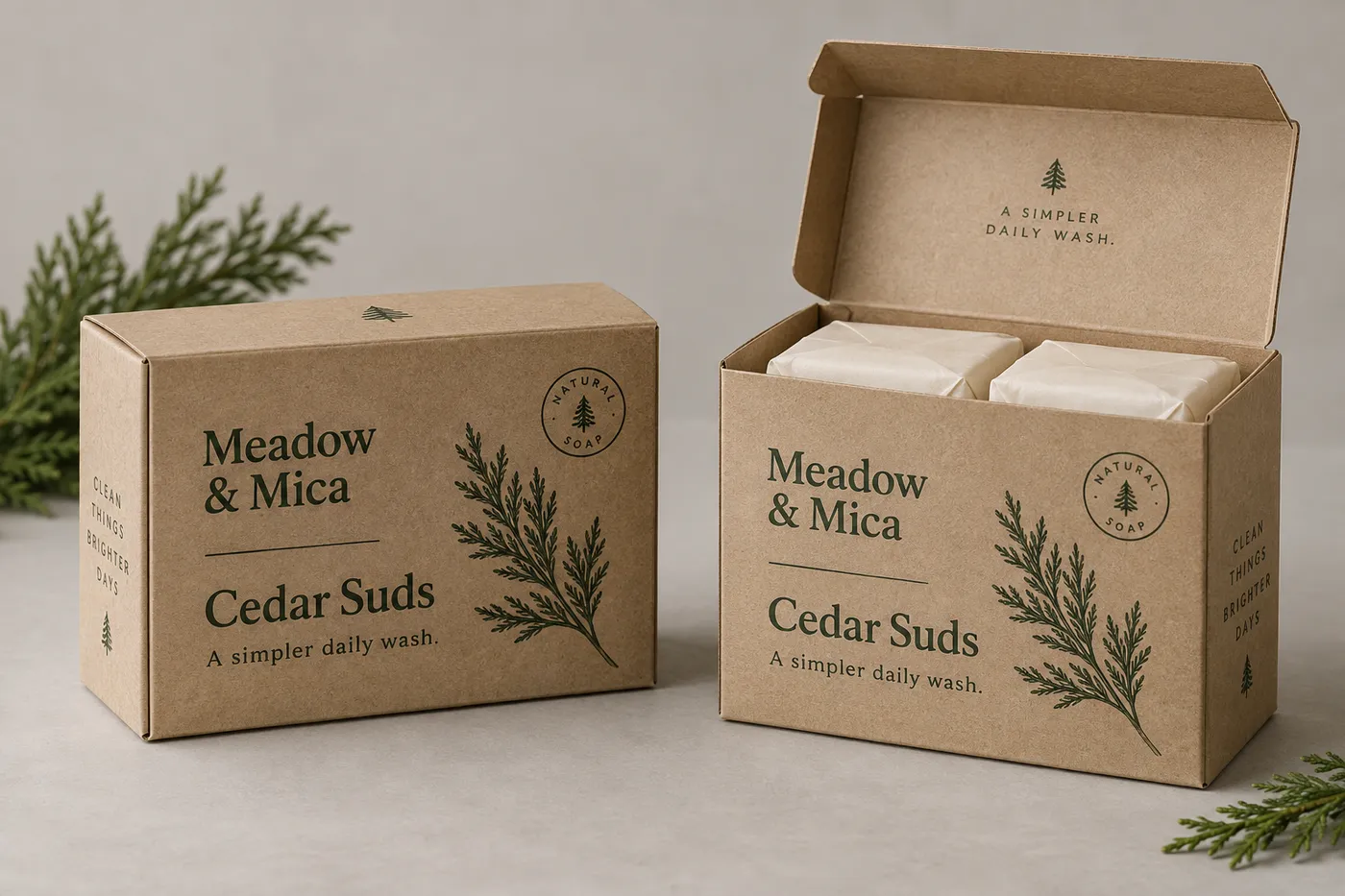
A shaped printed label for a Kraft Paperboard box or SBS Paperboard carton where artwork contrast and surface treatment are part of the review.
Separate printed pieces packed with an order as a small brand detail, with the delivery format and handling route stated in the brief.
Custom-shaped pieces for a counter display, campaign handout, or defined retail panel where the sticker itself carries the printed message.
The printed face should be reviewed with the contour, artwork scale, box surface, adhesive direction, and the environmental wording that the final specification can support.
A clear brief gives the proof a physical setting and keeps the environmental question testable instead of turning it into a broad promise.
Share the artwork or outline, finished width and height, widest and tallest points, visible border, and any small cut detail.
Identify the carton, Kraft Paperboard box, SBS Paperboard carton, insert, or other surface, plus whether pieces are applied individually or supplied in another format.
Name the face-stock direction under review and explain how the sticker and package are expected to be separated, handled, or discarded.
The order starts with the package job and material question, then confirms the sticker specification, digital proof, and production path.
Provide the artwork or a clear outline for the desired shape, including any irregular edge, fold crossing, or small cut detail.
Provide the finished width and height, quantity, receiving package, application method, and whether pieces should arrive individually.
Name the face-stock direction and disposal context under review, without assuming an unsupported performance outcome.
Discuss artwork coverage, Matte Lamination, Spot UV, Foil Stamping, or Embossing/Debossing against the contour and stock.
Check the cut path, artwork placement, visible border, fold position, liner presentation, and any material wording before approval.
Need help with structure, materials, or production planning? See how we manufacture custom packaging.
A sample kit ships for a $44.99 USD charge credited toward your first order, useful when you need to compare the printed surface, cut detail, color, or finish before approving a larger run.
Shipping charge: $44.99. Credited toward your first order.
Request a Sample KitFind clear answers about fit, materials, and ordering below.
The answer depends on the confirmed face stock, adhesive, liner, ink or finish, and the disposal context. State the material and handling details that can be supported by the final specification.
Share the artwork or contour, finished width and height, quantity, receiving surface, application method, presentation format, material direction, disposal context, and any print or finish preference.
Yes, a sticker can be reviewed for a folding carton, Kraft Paperboard box, SBS Paperboard carton, mailer, or insert. The surface, fold position, artwork contrast, adhesive direction, and handling route should be stated before the proof.
Matte Lamination, Spot UV, Foil Stamping, and Embossing/Debossing are category finish directions. The selected treatment remains subject to the supplied artwork, stock, contour, and application review.
The standard fulfillment path starts at 50 units, with production beginning from 7 business days after digital proof approval. Free US shipping is included on the standard fulfillment path.
Yes. A sample kit can be requested to compare the printed surface, contour, or finish before a larger order. Sample-kit shipping is $44.99 and is credited toward the first order.
Orders start at 50 units and scale up to 500,000 for bulk runs, with pricing from $0.16 per unit on larger quantities. Standard production is from 7 business days after digital proof approval.
Compare nearby products and request the format that best fits your next run.
Available product
Available product
Available product
Available product
Define the material question
Send the artwork contour, finished size, quantity, receiving surface, disposal context, and print direction to request a quote that keeps the environmental statement as precise as the sticker itself.
Add your product details to see a quote summary.