Snack and granola portions
A stand-up pouch can present a measured snack fill while a controlled iridescent field carries the product cue and front-panel artwork.

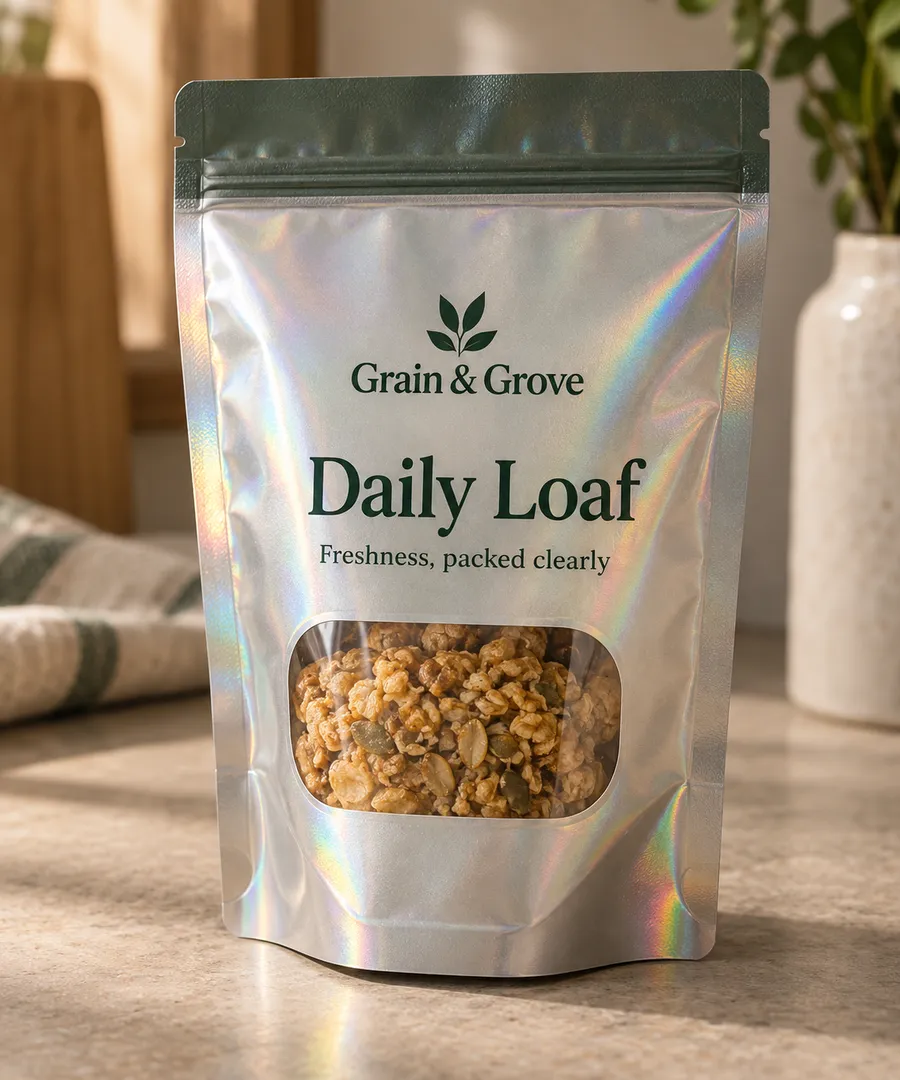
Silver holographic stand-up pouch with zipper, clear window, and golden granola inside
Mylar Bags
Custom holographic bags pair a printable flexible pouch with an iridescent visual effect planned around the filled product. Choose the pouch profile, barrier laminate, zipper or heat-seal route, and artwork coverage together so the reflective field supports the brand without obscuring required information. Easy Box Packaging reviews the filled dimensions and digital proof before production.
Last updated
Working quote
Product brief
Custom holographic bags give dry foods, treats, powders, and small-batch pantry products a flexible printed format with a shifting visual field. The effect is part of the surface and artwork conversation, not a substitute for a suitable barrier. Begin with the packed length, width, height, widest points, fill weight, headspace, and intended opening routine. A flat pouch may suit a measured sample or spice portion, while a gusseted stand-up profile can provide a stable base for coffee, snacks, tea, or pet treats. The filled shape determines where the zipper, heat seal, front panel, back-panel copy, and bottom fold can sit.
A metalized or foil barrier laminate can be considered when the product brief calls for a response to moisture, aroma, oxygen, or light. The final layer should be discussed against the product and its distribution route; a holographic appearance does not by itself prove a particular shelf-life or odor result. Food-grade flexible pouch film and a polyethylene sealant layer support the material and sealing discussion. If a bag will be opened repeatedly, a resealable zipper and tear notch can be reviewed. If it is filled and closed for a single retail cycle, a heat-sealed top may be the more useful opening route.
The visual effect needs its own artwork map. Reserve a clear front area for the brand and product cue, then decide whether the holographic field sits behind the print, in a selected panel, or as a restrained accent. Matte lamination, gloss lamination, spot gloss or spot UV, and metallic ink or foil accent are category finish directions that can be compared with the reflective surface. Fine text, barcodes, ingredients, handling notes, and lot areas should remain away from zipper tracks, gusset folds, and crimp zones. A digital proof should show the reading direction and how the reflective treatment meets the printed panels.
The images illustrate how print can sit on the package; your own brand artwork is placed on the dieline during proofing. In the proof, check the front and back orientation, closure position, seal-safe margins, artwork coverage, and the way the filled pouch stands or lies. A small clear window can be considered only after confirming how visibility changes the opacity and light brief.
The standard fulfillment path starts at 50 units, with production from 7 business days after digital proof approval. Free US shipping is available on the standard path, and dieline and proof review are included at no extra charge. Quote requests are typically answered the same business day and always within 24 hours. Pricing remains quote-only because the laminate, finished dimensions, closure, reflective treatment, print coverage, finish, and quantity all affect the specification.
For a useful quote, send a filled sample or measured dummy, product type, packed dimensions, target weight, storage conditions, intended opening frequency, and artwork status. Note whether the pack needs a window, tear notch, zipper, heat seal, or another opening feature. If the product is sold as 100 g, 500 g, or another measured portion, show the complete fill and any inner liner or wrap. A sample kit carries a $44.99 USD shipping charge credited toward the first order, allowing film feel, opacity, seal behavior, and finish direction to be compared before approving a custom run.
A clear specification prevents the reflective treatment from landing across a closure, fold, or required information. Mark the intended front panel, opening edge, reading direction, and no-print zones. Describe whether the effect should cover the full face, sit on a band, or appear behind a smaller printed mark. The treatment can look different on a flat sample than on a filled gusset, so the proof should represent the assembled pouch rather than only a rectangular artwork file.
Product behavior also changes the practical construction. Powder may need dust-control attention at the seal, oily contents may call for a different barrier review, and fragile pieces may need room so the top closure does not crush them. State whether filling occurs hot or at ambient temperature, whether the pouch is flushed, and whether customers will reseal it after opening. These details let the team review the film, barrier, closure, seal, artwork, and reflective appearance as one package.
Use the back panel for preparation, storage, handling, barcode, lot, and other product information that the buyer needs to find. Keep critical copy in a calm area with enough contrast against the shifting film. If a window is requested, include its location in the artwork map and explain whether the contents need protection from light. If the pouch will travel through parcel shipping, sit in a retail display, or be stored in a cabinet after opening, include that route in the brief.
The ordering path is straightforward: share the packed product details, describe the opening route, send the artwork or mark the artwork status, review the dieline and digital proof, approve the final representation, and then release the bag for production. Different sizes or fill weights normally need their own specification review even when the same visual style is retained. A quote-ready brief therefore names the product, quantity, dimensions, barrier concerns, reflective treatment, closure, finish, and destination rather than relying on the keyword alone.
Proof points
The proof should show the filled pouch and reflective treatment on the assembled pack, not just a flat artwork rectangle.
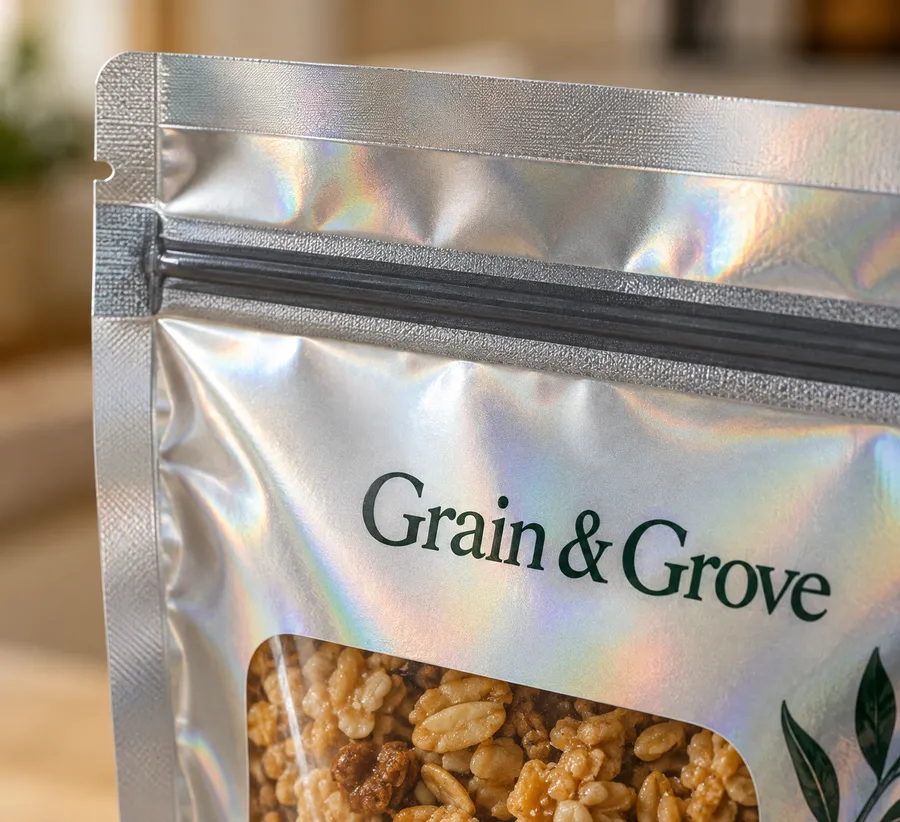
The visual field is only one part of the package. Product sensitivity, filled dimensions, opening route, barrier, seal area, and artwork contrast all influence the finished bag, so the holographic treatment is reviewed with the assembled pouch rather than as a standalone graphic.
A stand-up pouch can present a measured snack fill while a controlled iridescent field carries the product cue and front-panel artwork.
Barrier and closure choices can be discussed around aroma sensitivity, light exposure, fill weight, and repeat opening.
A gusseted profile can organize irregular pieces while the proof checks seal clearance, handling copy, and readable print.
The fill method, dust at the seal, food-contact film, and reflective contrast should be reviewed together before the pouch profile is finalized.
Map the artwork on the filled pouch so the brand, product cue, handling notes, barcode, and lot area remain readable against the shifting surface.
A custom holographic pouch works best when its film, closure, reflective field, and printed panels agree with the way it is filled, shipped, opened, and stored.
Packed length, width, height, widest points, fill weight, headspace, and any inner wrap guide the pouch profile and seal area.
A zipper, tear notch, or heat seal can be considered around repeat access, filling equipment, dust at the seal, and the intended storage routine.
Front, back, gusset, reflective field, zipper, and crimp zones are mapped so the brand cue, handling copy, barcode, and lot area remain findable.
A useful quote starts with the filled product and the way the customer will open, store, and see it. These steps turn that routine into a pouch specification that can be checked before production.
Provide product type, packed length, width, height, widest points, fill weight, orientation, headspace, and any inner liner or wrap.
Explain whether the bag needs a zipper, tear notch, heat seal, window, or another feature, and how often it will be reopened.
Share artwork status and mark where the holographic field, print panels, barcode, lot area, and no-print zones should sit.
Check film direction, pouch profile, closure position, seal margin, print orientation, reflective contrast, and finish placement on the filled-pack proof.
Need help with structure, materials, or production planning? See how we manufacture custom packaging.
A sample kit carries a $44.99 USD shipping charge credited toward your first order, useful when you need to compare film feel, opacity, closure behavior, and reflective finish before approving a custom run.
Shipping charge: $44.99. Credited toward your first order.
Request a Sample KitFind clear answers about fit, materials, and ordering below.
The pouch includes a reflective or iridescent visual treatment in the material or artwork direction. It still needs a suitable flexible film, barrier, closure, seal area, and readable print map for the filled product.
A full field, selected band, or restrained accent can be discussed. The artwork should reserve enough contrast for the brand, product cue, barcode, handling information, and other important copy.
A zipper can support repeated opening, while a heat seal may suit a pack closed after filling. A tear notch or window can be considered with either route when the filled-product clearance supports it.
Food-grade flexible pouch film, metalized or foil barrier laminate, polyethylene sealant film, and suitable mono-material film are category directions. The final choice depends on product sensitivity, fill process, and intended recycling route.
The standard fulfillment path starts at 50 units. Production starts from 7 business days after digital proof approval, and the final schedule is confirmed with the quote and proof.
Artwork can be mapped across front, back, gusset, and selected seal-safe zones. Keep important copy away from folds, zipper tracks, and the top crimp, especially where a shifting surface changes contrast.
Orders start at 50 units and scale up to 500,000 for bulk runs, with pricing from $0.27 per unit on larger quantities. Standard production is from 7 business days after digital proof approval.
Compare nearby products and request the format that best fits your next run.
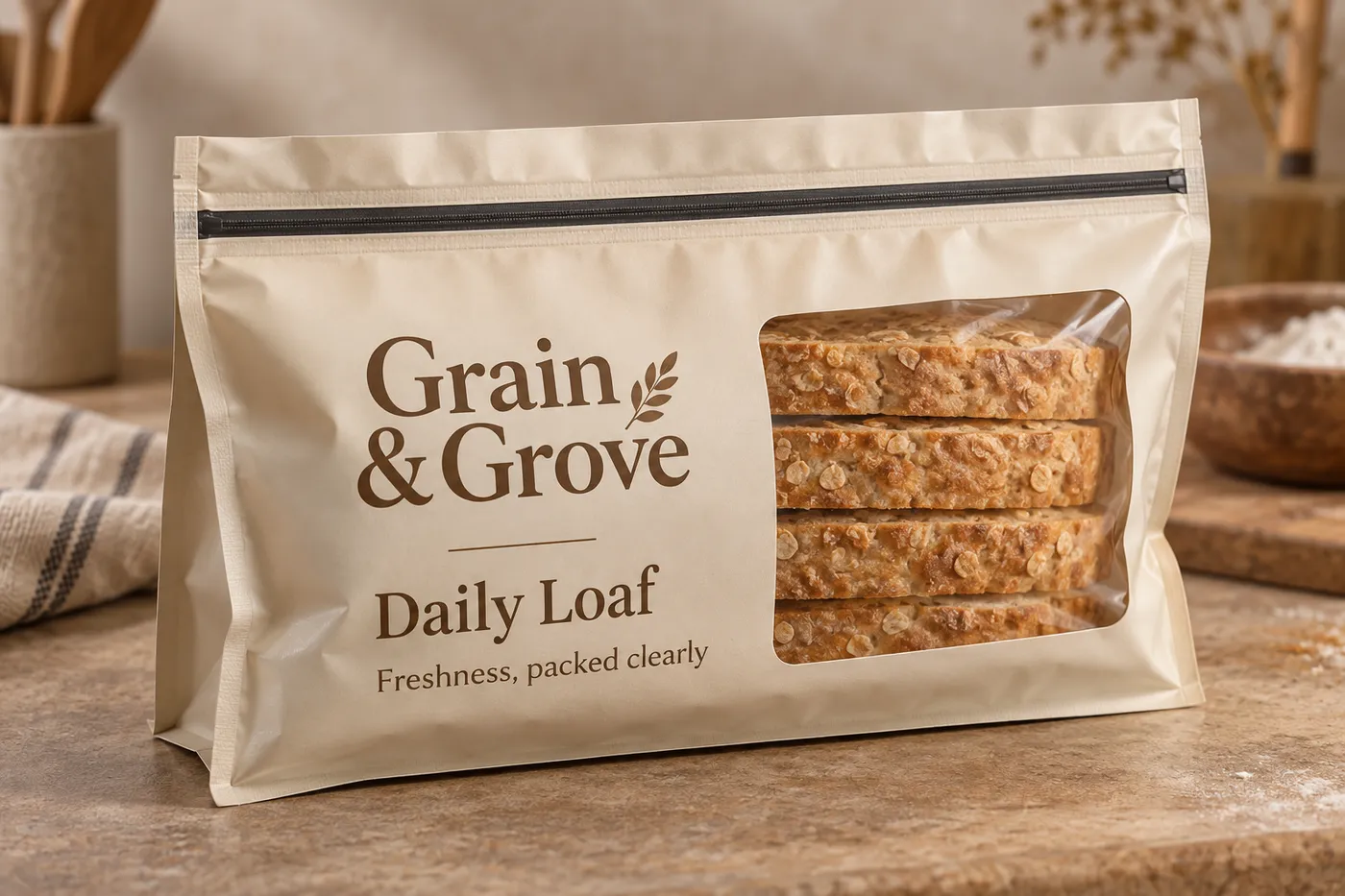
Available product
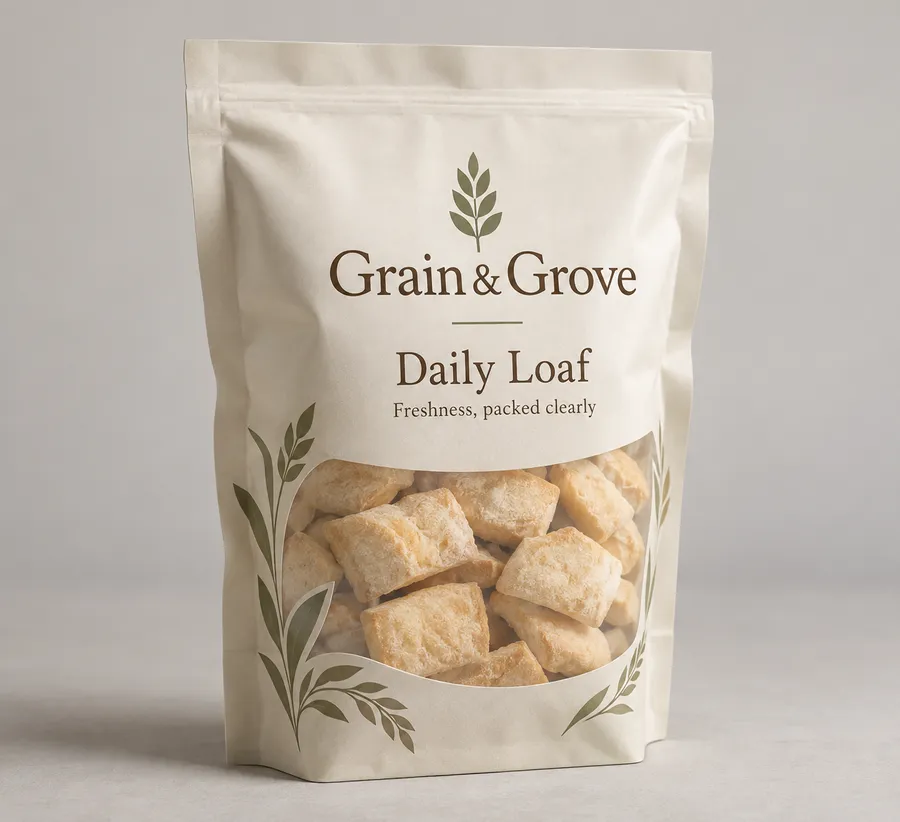
Available product
Available product
Available product
Plan the reflective pouch around your product
Send the packed product details, intended route, barrier needs, closure preference, reflective treatment, finish direction, and artwork status. Easy Box Packaging can then review the film, dimensions, printed panels, and proof as one quote-ready specification.
Add your product details to see a quote summary.