Bakery and pantry goods
A printed pouch can present granola, dry mixes, spices, tea, or baked goods with a reviewed seal and practical carry route.

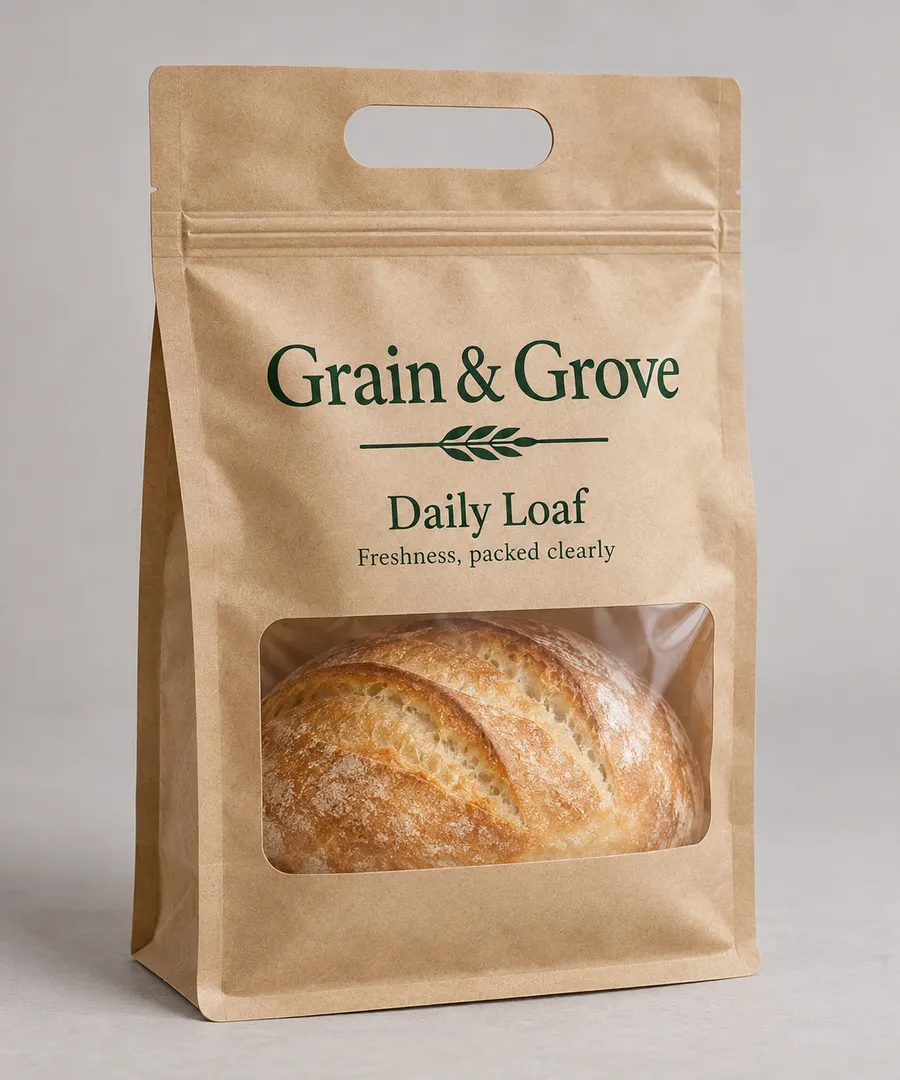
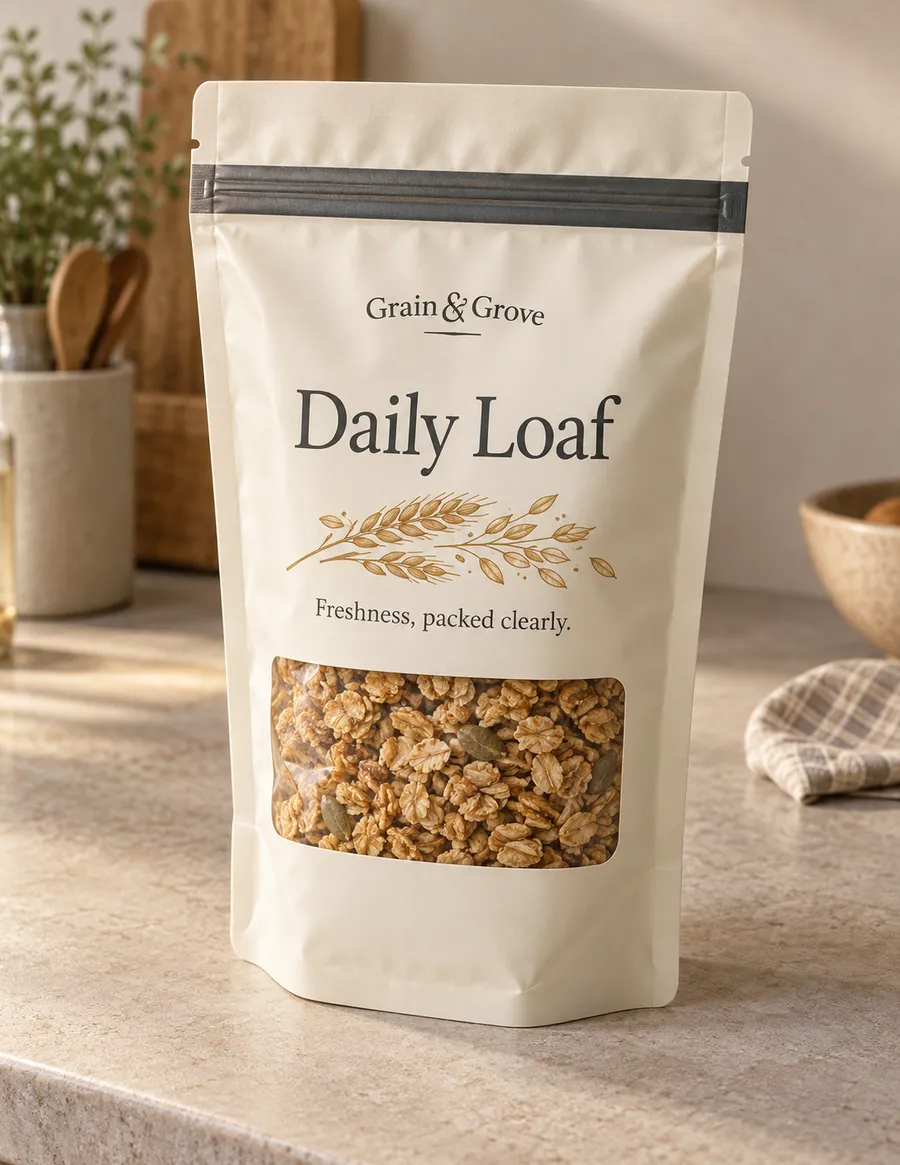
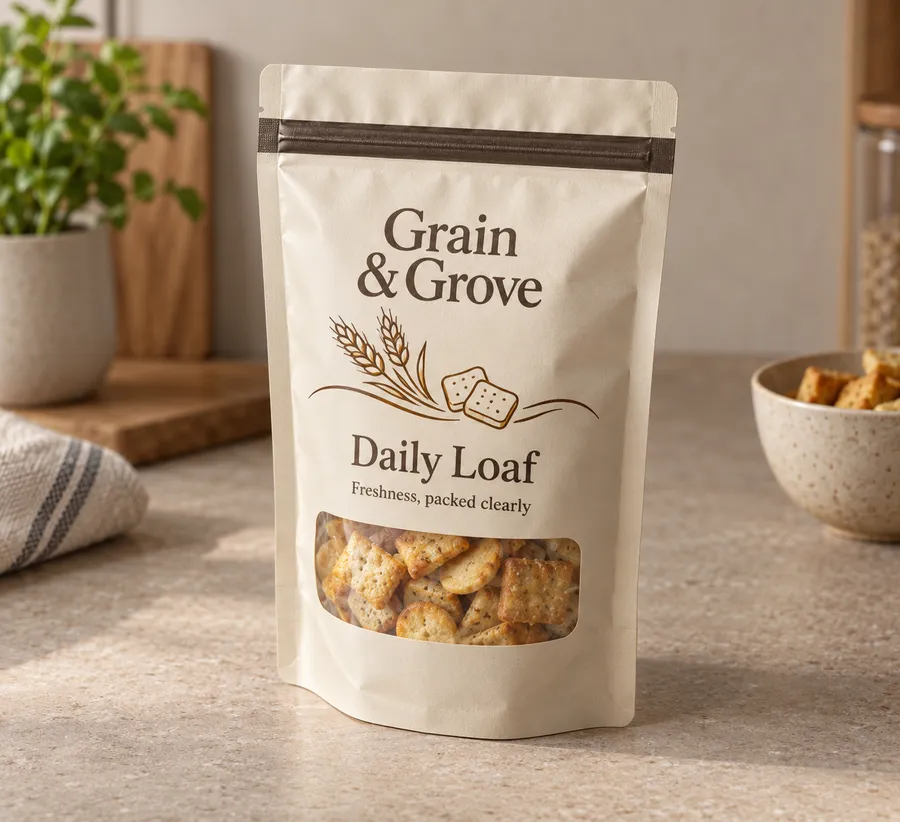
Branded kraft-look flexible take-out pouch with zipper, gusset, and bread loaf
Custom Mylar Bags
Custom take-out pouches use a printable flexible mylar-style format for branded take-home packaging, dry foods, snacks, and small retail products. Define the filled dimensions, film and barrier needs, closure, carry or handoff route, and artwork coverage so Easy Box Packaging can review a practical pouch structure instead of treating every take-out bag as interchangeable.
Last updated
Working quote
Product brief
Custom take-out pouches give a product a branded flexible package that can move from a counter, market stall, or fulfillment bench into a customer's hands. This page describes a printed mylar-style pouch or flexible bag planned around the packed product; it is not a generic unprinted grocery sack or a rigid handled box. The finished format can be flat, stand-up, resealable, heat-sealed, or arranged for a reviewed carry feature, depending on how the product is filled and handed over.
Start with the product inside. Share the fill weight, packed shape, width, height, depth or gusset, moisture sensitivity, aroma sensitivity, oxygen or light concerns, and whether the customer needs repeat access after opening. A bakery item, snack portion, coffee, spice, pet treat, powder, or small retail accessory may need a different laminate and opening route even when the outside dimensions look similar. The barrier is selected around the product requirement; no single film structure guarantees the same shelf-life outcome for every fill.
A quote should name the finished bag width, height, gusset or depth, seal area, opening, and handoff route. The production dieline must be built from the actual packed product and desired headspace. Explain whether the bag should stand on a bottom gusset, lie flat inside an outer carton, or be passed directly to a customer at a counter. A resealable zipper keeps an opened pouch practical for repeat use, while a tear notch can make first opening easier. A heat-sealed top is useful when a tamper-evident or single-use route matters. If the take-out experience needs a handle, hang hole, die-cut grip, or an outer sleeve, call that out early so the flexible construction is not confused with a conventional shopping bag.
Use the front panel for the brand and product cue, then reserve the back for preparation, storage, ingredients, barcode, and required pack information. Artwork should show safe areas around the top seal, zipper, gussets, tear notch, side seams, and any grip or hang feature. A stable bottom gusset can help a filled bag sit upright at a retail counter, but the finished footprint should be checked against the filled product rather than assumed from a stock size.
Common category directions include food-grade flexible pouch film, metalized or foil barrier laminate, polyethylene sealant film, and mono-material flexible film where the required barrier and local recycling stream allow it. These are options to review, not a promise that every product or region uses the same construction. The chosen laminate should balance moisture, aroma, oxygen, light, seal integrity, filling temperature, and the intended shipping or handoff route. Ask for a material recommendation when the product is sensitive or when a take-out pouch needs to remain light while still protecting the contents.
Full-color artwork can cover the front and back panels, with the side gussets used for short instructions or a repeated color cue. Matte lamination reduces glare for a restrained shelf presentation; gloss lamination increases reflection and color contrast; spot gloss, spot UV, metallic ink, or a foil accent can draw attention to a small brand detail. The product images show an illustrative print layout; your approved artwork replaces it at the proof stage.
The standard fulfillment path starts at 50 units. Production is estimated from 7 business days after digital proof approval, and free US shipping is available on that standard path. Dieline and proof review are included at no extra charge, so send the packed product information and artwork status before asking for final pricing. A sample kit has a $44.99 USD shipping charge credited toward the first order when you need to compare film feel, print density, closure behavior, carry handling, or finish before committing. Pricing remains quote-only here because a defensible product-specific price range was not available in the approved sources.
To request a quote, provide the finished bag size, fill weight, product photos or dimensions, opening and closure preference, carry or handoff route, destination, quantity, and artwork file status. Explain whether the bags will be filled by hand or on a line, because seal width, opening tolerance, and pack orientation can affect the practical specification. Easy Box Packaging can then review the film direction, gusset, closure, print coverage, carry feature, and proof as one quote-ready package.
Custom take-out pouches work well for bakery products, dry pantry goods, coffee and tea, snack portions, pet treats, powders, supplements, and small-batch retail products that benefit from a flexible printable format. They can support counter handoff, market-stall sales, subscription packs, direct-to-customer shipping inside an outer mailer, or a shelf-ready pouch that a customer carries home. They are not a substitute for a handled paper shopping bag or a rigid carrier when load-bearing strength is the main requirement.
A clear brief prevents the most common mismatch: ordering a take-out visual without describing the product's barrier need, opening route, and handoff conditions. Define the product, dimensions, closure, quantity, carry feature, and artwork first; then use the proof to verify the actual panel layout and finish before production.
Confirm whether the bag is meant to be opened once or used repeatedly, whether the filled pack must stand upright, and whether the customer will carry it for a short handoff or place it inside a shipping carton. These decisions affect gusset depth, seal clearance, zipper placement, and the need for a grip or secondary outer package. Also confirm the information panel: a take-out bag still needs readable product, storage, ingredient, barcode, and compliance content where applicable.
When the dimensions are uncertain, provide a filled sample or clear product measurements. The review can then connect the physical fit to the film and print decisions, instead of scaling a decorative layout around an empty template. That approach makes the 50-unit starting point more useful because the first order is tied to a defined construction and a proof that shows how the bag will look and function after filling.
Proof points
A useful proof shows how the pouch will sit, open, seal, and read once it is filled and handed over, rather than treating the artwork as a flat rectangle.
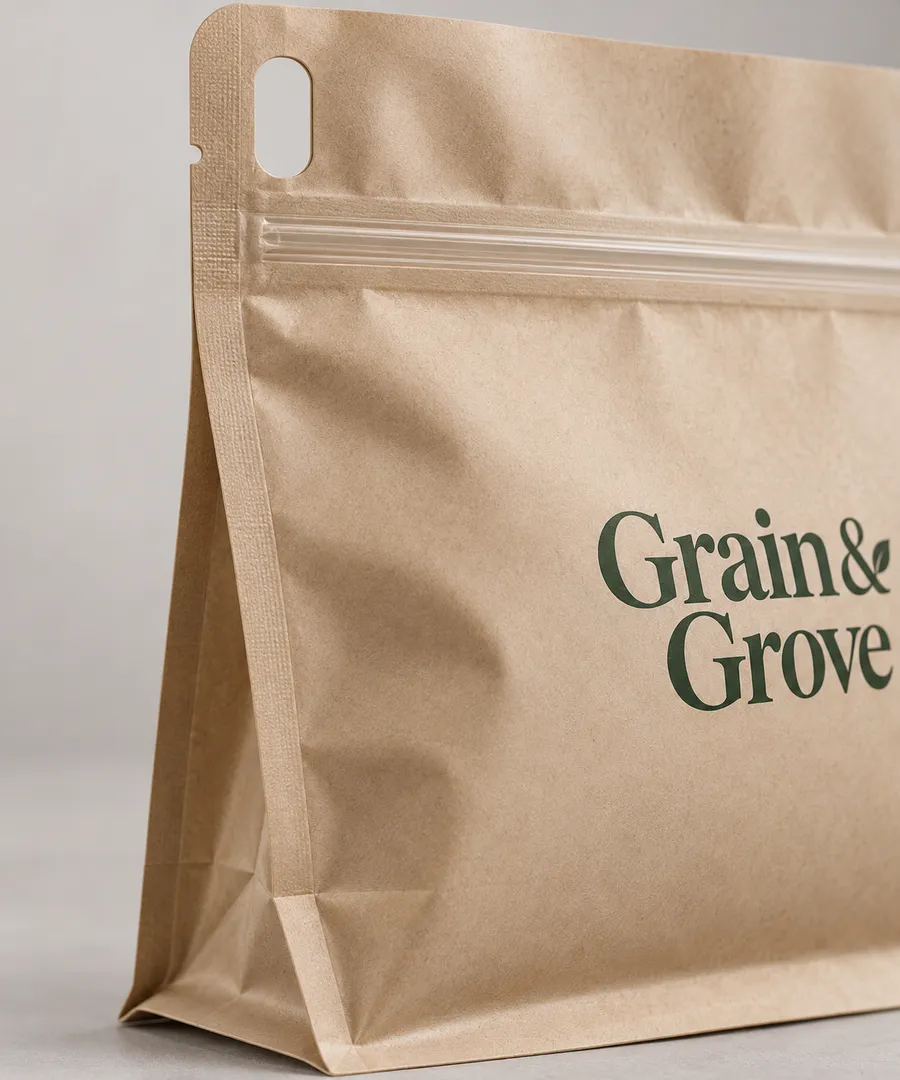
The printed exterior is only one part of the package. Product sensitivity, filled dimensions, opening route, barrier, seal area, and any carry feature influence the finished bag. Share the packed product so construction and artwork can be reviewed together.
A printed pouch can present granola, dry mixes, spices, tea, or baked goods with a reviewed seal and practical carry route.
Barrier and closure choices can be discussed around aroma retention, light exposure, fill weight, and repeat access.
A stand-up or flat format can organize portions while the front panel carries the brand and product cue.
The flexible bag can support counter handoff or sit inside an outer mailer or carton when shipping needs additional protection.
Use the front panel for the brand and product cue, then plan the back and gussets for information that must remain readable after forming and filling.
A flexible take-out bag performs best when its film, closure, artwork, and handoff route agree. The review links those decisions before production.
Fill weight, moisture, aroma, oxygen, light, and packed shape guide the barrier and finished footprint.
Zipper, tear notch, heat seal, grip, or hang feature is considered with repeat use and filling expectations.
Front, back, gusset, seam, seal, and carry areas are checked so the brand remains readable after forming and filling.
A quote is easier to evaluate when the product, route, structure, and artwork are described together rather than reduced to the keyword alone.
Provide fill weight, finished width and height, depth or gusset, product photos, orientation, and any sensitivity to moisture, aroma, oxygen, or light.
Explain whether the bag needs a zipper, tear notch, heat seal, hang hole, die-cut grip, outer sleeve, or a combination, and how it will be filled.
Share artwork status and any preference for matte or gloss surface, spot gloss, metallic ink, foil, or a clear window.
Confirm product position, seal and zipper clearance, carry area, printed panel orientation, required information, and finish representation before production begins.
Need help with structure, materials, or production planning? See how we manufacture custom packaging.
A sample kit ships for a $44.99 USD charge credited toward your first order, useful when you need to compare film feel, print treatment, closure behavior, carry handling, or finish before approving the bag.
Shipping charge: $44.99. Credited toward your first order.
Request a Sample KitFind clear answers about fit, materials, and ordering below.
No. This page describes a custom printed flexible pouch or mylar-style take-out bag. If you need a paper shopping bag with rope handles or a rigid carrier, share that requirement so a different structure can be reviewed.
Share the fill weight, finished width and height, depth or gusset, product photos or dimensions, orientation, closure and carry preference, and any moisture, aroma, oxygen, or light sensitivity.
Food-grade flexible pouch film, metalized or foil barrier laminate, polyethylene sealant film, and suitable mono-material film are category directions. The final choice depends on the product requirement and intended recycling route.
A resealable zipper can be reviewed with a tear notch, hang hole, die-cut grip, or heat-sealed top when the opening route and filled-product clearance support that combination.
The approved standard estimate is from 7 business days after digital proof approval. Orders start at 50 units, and free US shipping is available on the standard fulfillment path.
Dieline and proof review are included on every order at no extra charge. The proof should confirm the seal, zipper, gusset, carry area, safe zones, required information, and finish representation.
Orders start at 50 units and scale up to 500,000 for bulk runs, with pricing from $0.32 per unit on larger quantities. Standard production is from 7 business days after digital proof approval.
Compare nearby products and request the format that best fits your next run.
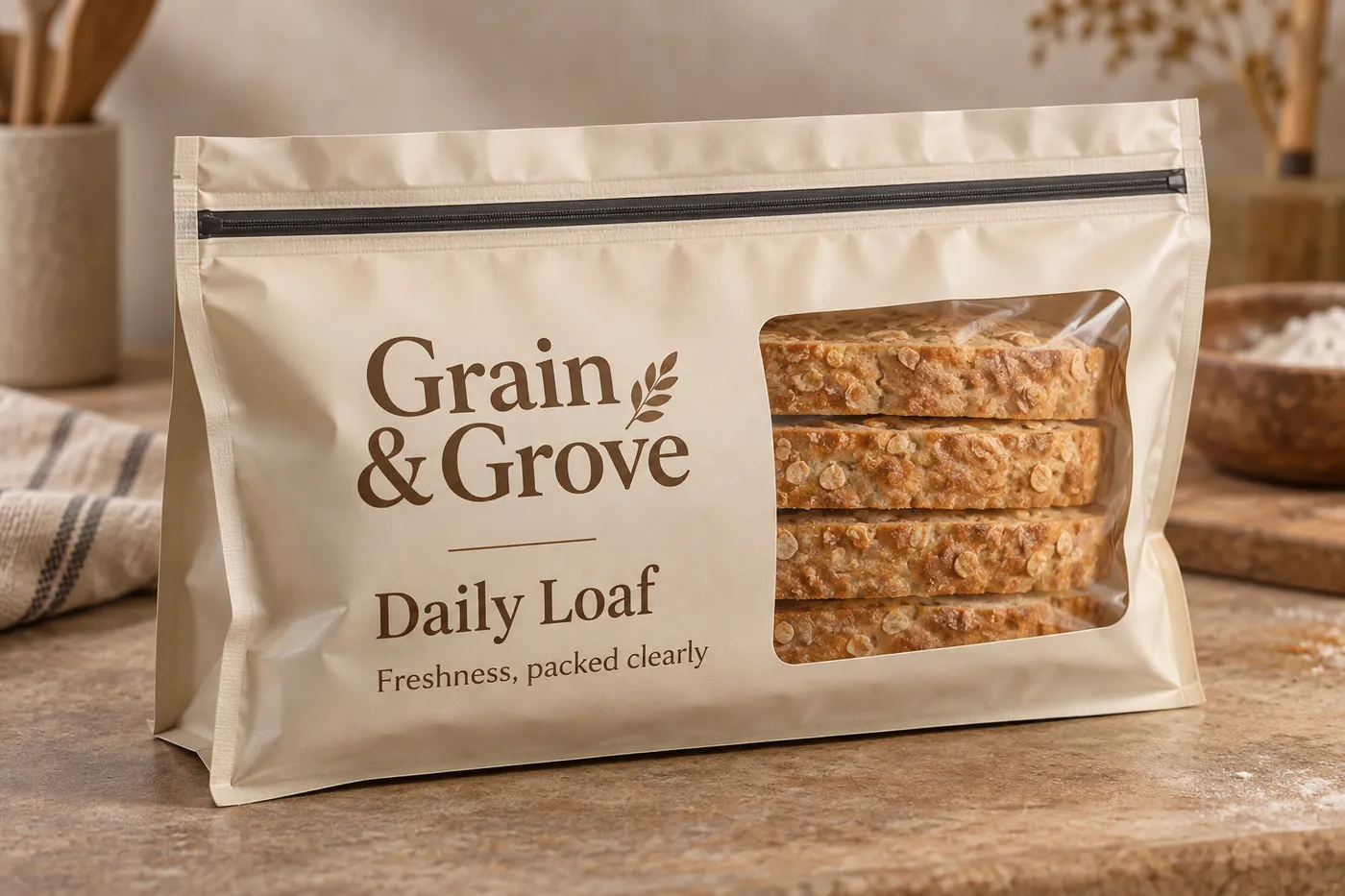
Available product
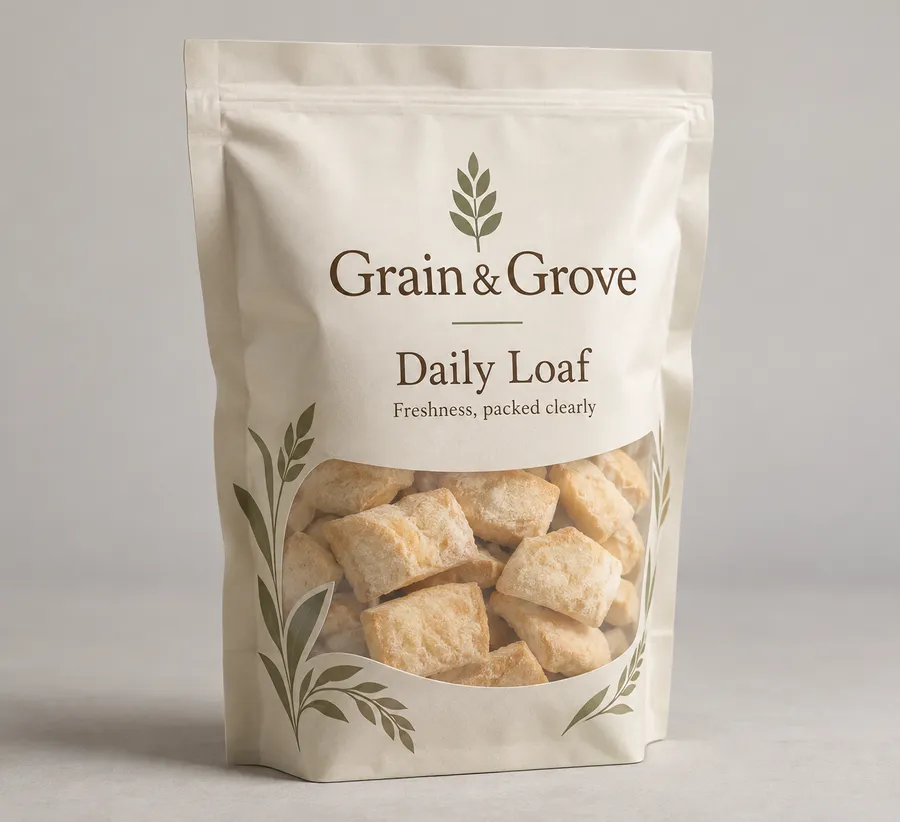
Available product
Available product
Available product
Plan the bag around your handoff
Send the packed product details, intended route, barrier needs, closure preference, carry feature, and artwork status. Easy Box Packaging can then review the film, dimensions, printed panels, and finish as one quote-ready specification.
Add your product details to see a quote summary.