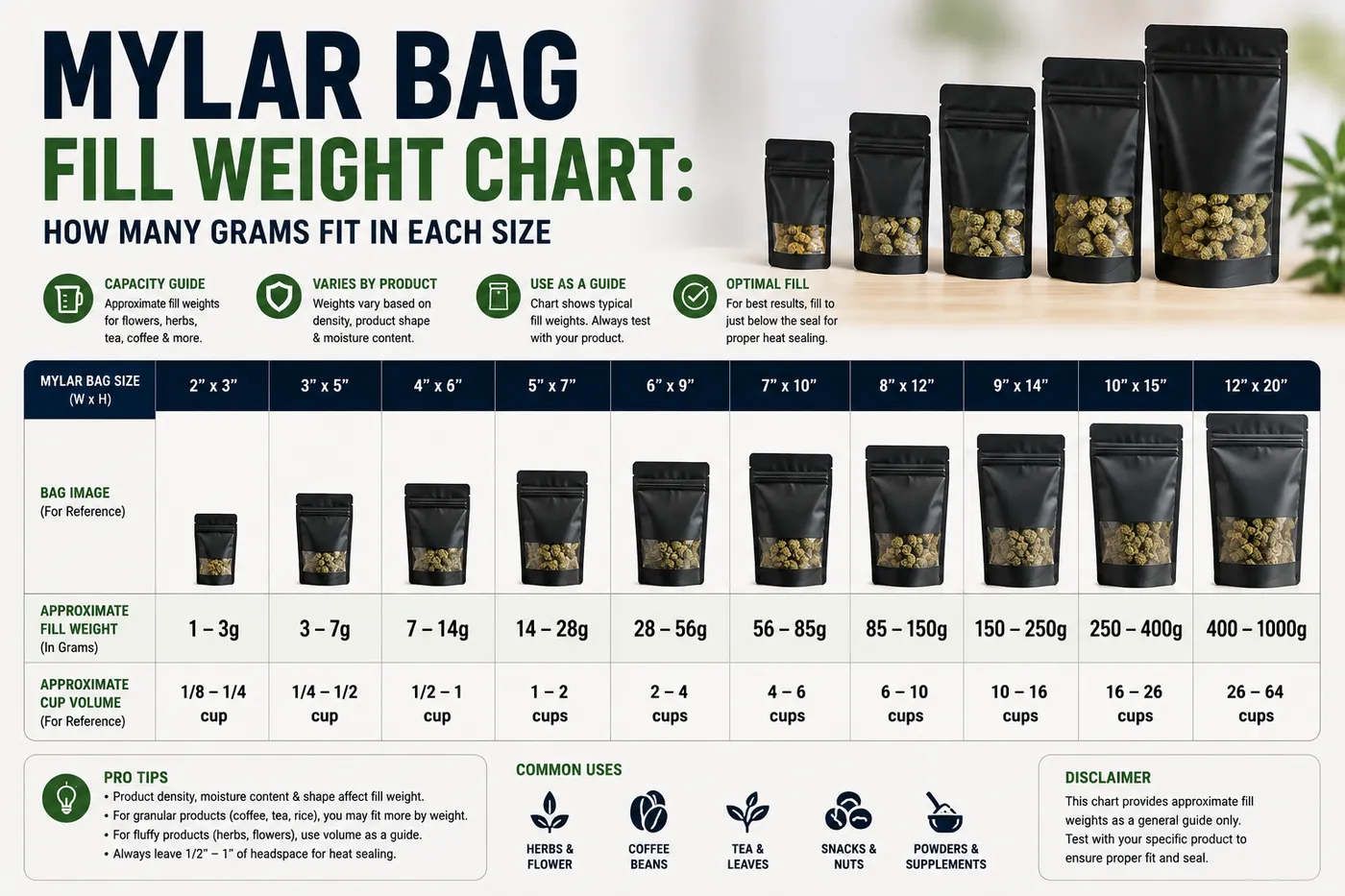
Mylar bag fill weight depends on what’s going inside the bag, not just the bag’s dimensions. A 5×8 stand-up mylar pouch holds approximately 100 to 180 grams of ground herb. The same bag holds 200 to 300 grams of dense powder, or 50 to 80 grams of light, leafy product. Same bag, three very different weights. Mylar bag fill weight varies by product density. This chart gives ranges for the most common product types across nine common bag sizes. It’s a companion to our mylar bag sizes dimensions guide and our full box size guide. Those guides cover physical measurements, not what actually fits inside them.
Why Mylar Bag Fill Weight Varies So Much
Density is the whole story here. Flour packs tight, with almost no air between particles, so a given volume holds more weight. Ground coffee sits in the middle, some air pockets, but still fairly compact. Whole coffee beans or popcorn hold far less weight in the same volume, since the pieces don’t nest together tightly.
Ground herb behaves like a coarse powder, denser than beans but looser than flour. Leafy, bulky products like dried herbs or loose tea take up the most volume per gram. The material itself is light and full of air gaps. That’s why the same 5×8 bag swings so widely. Fifty grams of a leafy product, or 300 grams of a dense powder, same bag, same volume.
Mylar Bag Fill Weight Chart
Bag Size (in)
Dense Powder (g / oz)
Granular / Ground (g / oz)
Light / Leafy (g / oz)
2 × 3
30–50 g / 1–1.8 oz
15–25 g / 0.5–0.9 oz
5–10 g / 0.2–0.4 oz
3 × 4
70–100 g / 2.5–3.5 oz
30–55 g / 1–1.9 oz
15–25 g / 0.5–0.9 oz
3.5 × 4.5
90–130 g / 3.2–4.6 oz
40–70 g / 1.4–2.5 oz
20–30 g / 0.7–1.1 oz
4 × 6
140–200 g / 5–7 oz
60–110 g / 2.1–3.9 oz
30–50 g / 1–1.8 oz
5 × 8
200–300 g / 7–10.6 oz
100–180 g / 3.5–6.3 oz
50–80 g / 1.8–2.8 oz
6 × 9
270–400 g / 9.5–14.1 oz
135–240 g / 4.8–8.5 oz
70–110 g / 2.5–3.9 oz
6 × 10
300–450 g / 10.6–15.9 oz
150–270 g / 5.3–9.5 oz
75–120 g / 2.6–4.2 oz
8 × 12
480–720 g / 16.9–25.4 oz
240–430 g / 8.5–15.2 oz
120–190 g / 4.2–6.7 oz
10 × 14
700–1,050 g / 24.7–37 oz
350–630 g / 12.3–22.2 oz
175–280 g / 6.2–9.9 oz
These ranges are illustrative, scaled from typical stand-up pouch fill data. They’re not a substitute for a real test-fill with your actual product. Density swings enough between brands and grinds. The only fully reliable number comes from weighing a sample batch in the actual bag.
The Headspace Rule
Never plan to fill a mylar bag to its full physical capacity. Leave 20 to 25 percent of the bag empty at the top, for two reasons. The heat-sealing bar needs clean, unobstructed film to bond. Product also needs room to settle without bursting a tight seal. A bag rated for 200 grams should realistically be loaded with 150 to 160 grams. That’s the difference a clean seal makes.
Skipping this rule is one of the more common mistakes I see in first custom orders. A brand orders bags sized to the exact target weight, then can’t get a consistent seal. The fill line sits right at the top edge with no room to spare. Sizing up slightly and using the headspace buffer solves this every time.
How to Calculate Fill Weight for Your Specific Product
Start by weighing a known volume of your actual product. A kitchen scale and a measuring cup work fine for this. Weigh one cup of your product. Convert that to grams per cubic inch using the cup’s known volume. One US cup equals roughly 14.4 cubic inches.
Products that fit this guide
A few Easy Box Packaging products that fit what this article covers.
Flat mylar bags are flat or lightly gusseted flexible pouches printed around a measured product, opening route, and barrier requirement. Choose food-grade film, a metalized or foil laminate when appropriate, a zipper or heat-seal closure, and a finish that suits the artwork. Share the packed width, height, thickness, weight, artwork, and storage context so the dieline is built around the actual fill.
Custom mylar envelopes are flat or lightly gusseted flexible pouches printed around a measured product, opening route, and barrier requirement. Choose food-grade film, a metalized or foil laminate when appropriate, a zipper or heat-seal closure, and a finish that suits the artwork. Share the packed width, height, thickness, weight, artwork, and storage context so the dieline is built around the actual fill.
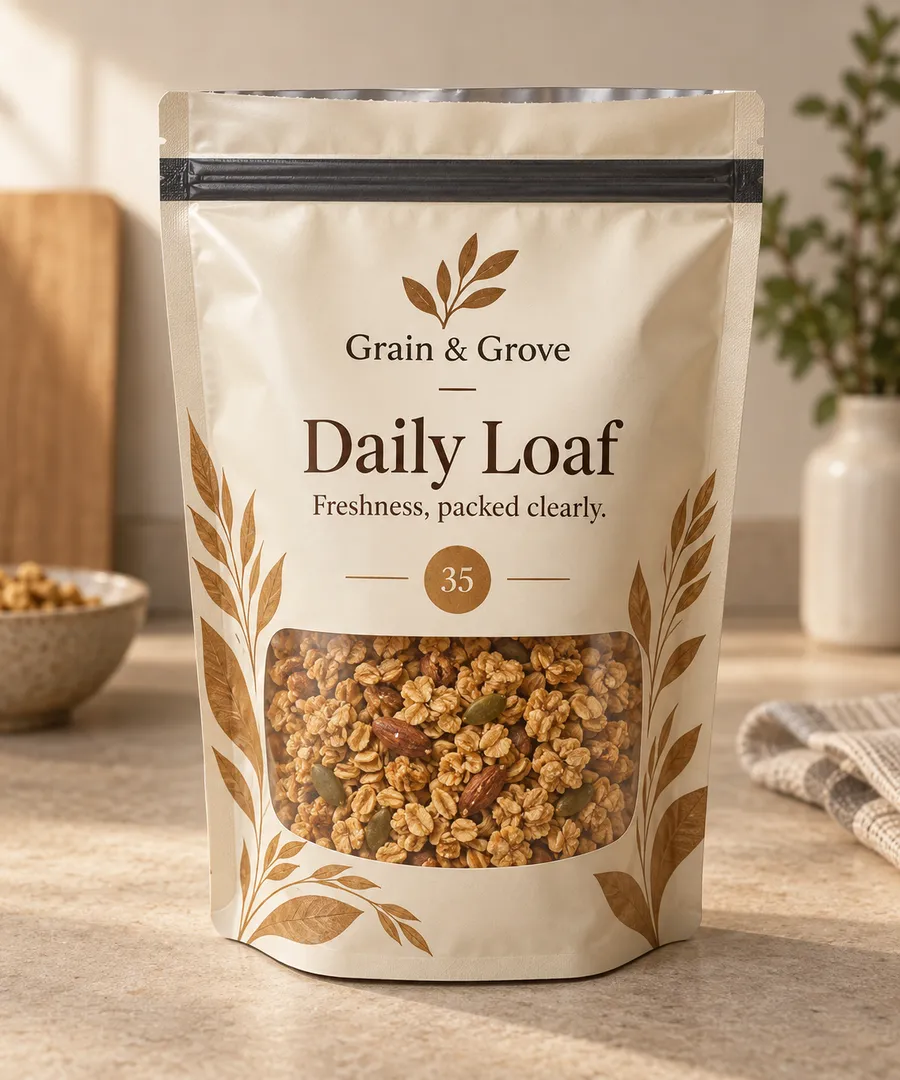
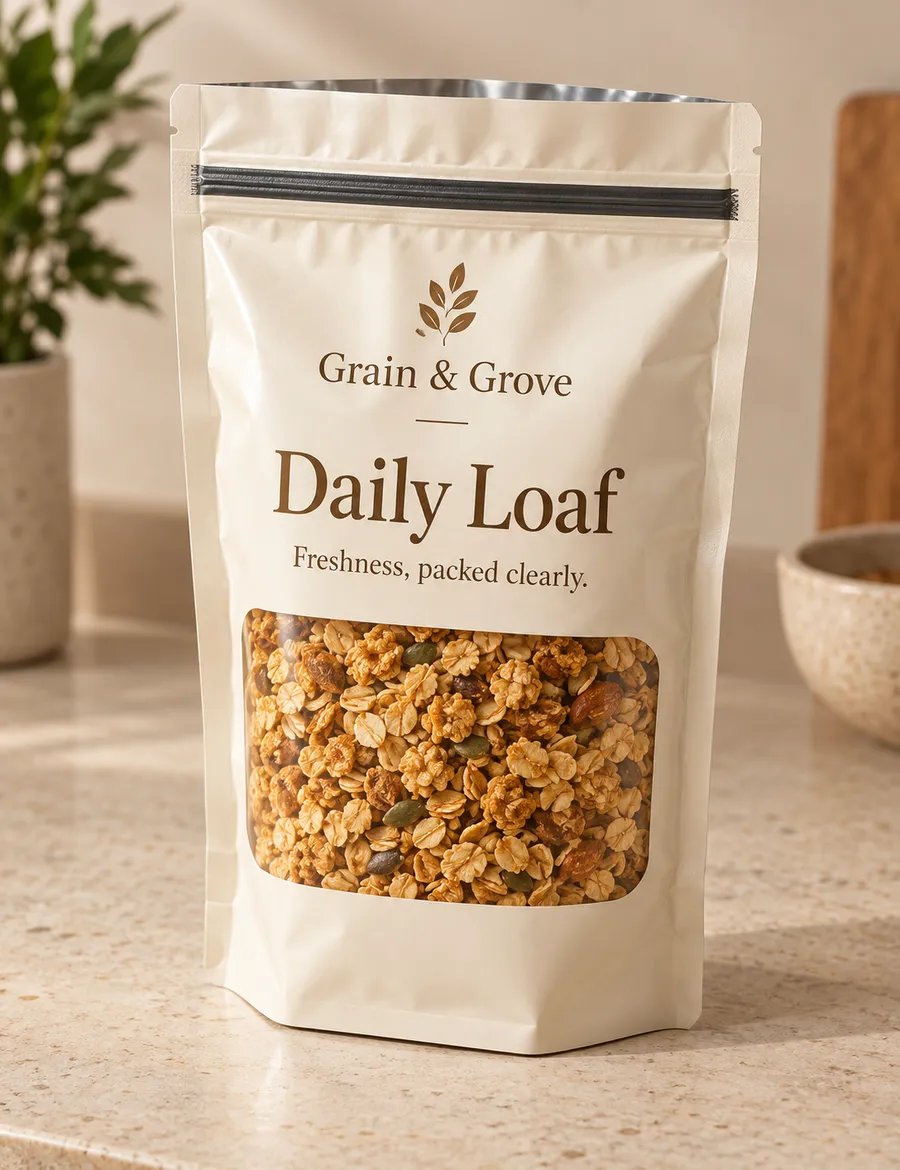
Custom mylar bags with window are food-grade flexible pouches printed around the pack format, closure, and storage routine. Choose a flat or gusseted profile, a zipper or heat-seal finish, and a barrier laminate that matches the product. Share the packed pack dimensions, weight, seal area, artwork, and finish direction so the dieline is built around the real dry-food pack.
Custom 35 mylar bags give dry foods, pantry products, and other small-batch goods a flexible branded format built around the real filled product. Treat “35” as the buyer's requested product designation until the quote confirms whether it refers to a size, fill, or internal variant; do not infer a dimension from the keyword. Choose a flat or stand-up profile, closure, print coverage, and finish, then share the fill weight, packed dimensions, storage needs, and artwork so Easy Box Packaging can review the complete pouch specification.
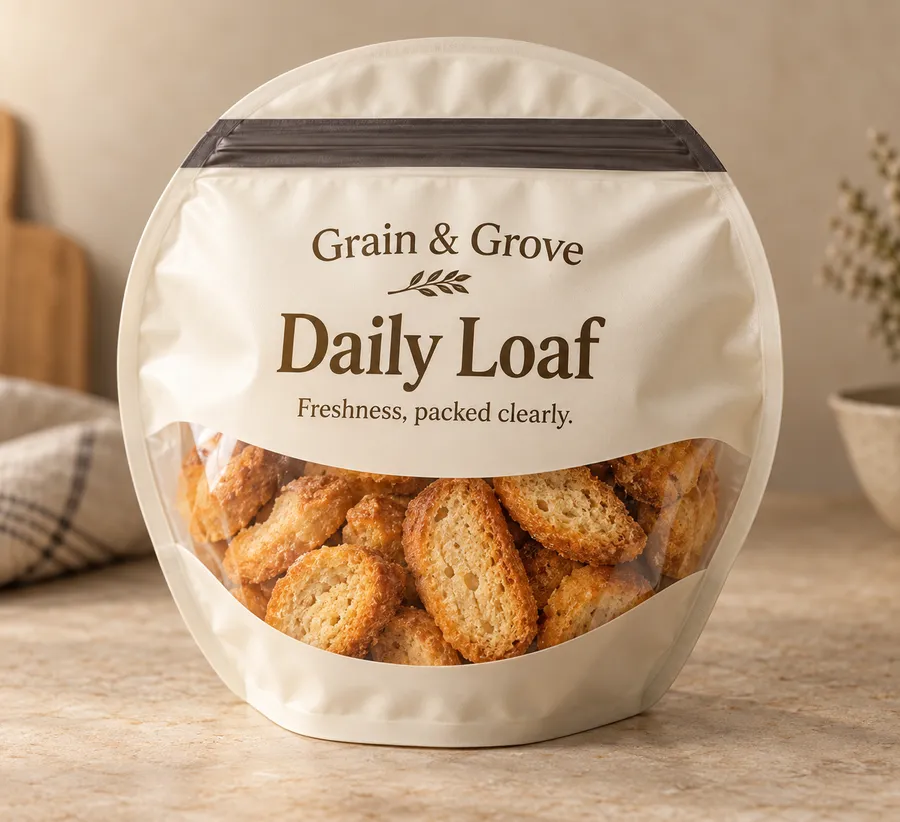
Custom circle mylar bags are printed flexible pouches with a rounded front silhouette for dry foods, portions, and small-batch products. Choose the film structure, barrier, closure, gusset, and print coverage around the filled product, then review the circular dieline and digital proof before production.
Custom printed mylar bags give dry foods, pantry products, and other small-batch goods a flexible branded format with a barrier and closure selected around the filled product. Choose a flat or stand-up profile, zipper or heat-seal route, front and back print coverage, and matte, gloss, or metallic accents. Share the fill weight, packed dimensions, storage needs, and artwork so Easy Box Packaging can review the complete pouch specification.
Next, estimate your bag’s usable volume. Multiply length by width by the pouch’s expanded depth once it’s standing. Then apply the headspace rule above and subtract 20 to 25 percent. This gives a working volume, not the bag’s rated maximum.
Multiply your product’s grams-per-cubic-inch figure by that working volume. The result is a realistic fill weight for that specific product in that specific bag, not a generic estimate. Round down slightly on your first production run and adjust after weighing a handful of test-filled bags.
Flat Bag vs. Stand-Up Pouch Capacity
A flat mylar bag and a stand-up pouch can share the same printed length and width. They still hold noticeably different weights. The stand-up format adds a gusseted bottom fold that opens up when the bag is loaded. That adds real usable volume a flat bag simply doesn’t have.
That gusset is also why stand-up capacity is harder to estimate from dimensions alone. The bag’s shape changes once product goes in, unlike a flat bag that stays a fixed rectangle. When comparing capacity between the two formats at the same L×W label, expect the stand-up version to hold noticeably more.
The Bottom Line
Mylar bag fill weight comes down to density more than the bag’s printed dimensions. The same 5×8 pouch swings from 50 grams to 300 grams depending on what’s inside it. Use the chart above as a starting range. Weigh a real test-fill before committing to a production run, and always leave headspace for a clean seal. Need custom dimensions or a specific barrier spec? Get a free quotewe run mylar and stand-up pouches in any size.
Questions, answered
Frequently Asked Questions
How many grams fit in a 5×8 mylar bag?+
It depends on the product. This is the core mylar bag fill weight question this whole chart is built around. A 5×8 stand-up pouch holds roughly 200 to 300 grams of a dense powder. The same bag holds 100 to 180 grams of a granular or ground product. A light, leafy product only fills it to 50 to 80 grams.
Why does the same size mylar bag hold different weights for different products?+
Fill weight tracks density, not size. A dense powder packs tightly with little air between particles. A bulky or leafy product traps far more air in the same volume. It weighs less at the same fill level as a result.
Should I fill a mylar bag to its full rated capacity?+
No. Leave 20 to 25 percent headspace at the top. The heat seal needs clean film to bond, and the product needs room to settle without stressing the seal.
Do gram-specific cannabis bag sizes follow this same chart?+
Cannabis mylar bags are typically sized by a fixed gram target instead, 1g, 3.5g, 7g, and so on. See our cannabis mylar bag sizes guide for that specific breakdown.
Does bag thickness affect how much fits inside?+
Not the fill weight itself. Thicker mylar holds its shape better under a heavier fill. It also resists punctures from dense or sharp-edged product, see our mylar bag thickness guide for mil-by-mil detail.
Get the right size
Need mylar bags matched to your fill weight?
Share your product dimensions, quantity, and how it will be sold or shipped. Easy Box Packaging will review the specification and send a quote, with the minimum confirmed for your exact format.