Wholesale Custom Boxes for Ecommerce: The Honest Buyer’s Guide
Ordering wholesale custom boxes for ecommerce? Here's the volume pricing math, what to lock down before scaling, and how to avoid a costly inventory mistake.
The question brands ask when they start thinking about wholesale custom boxes for ecommerce is usually a version of this: “How do I get the cost per unit down?”
It’s the right question. But most brands go looking for the wrong answer.
“Wholesale” in custom packaging doesn’t work the way it does in retail. There’s no distributor sitting between you and the factory. Pricing depends on the selected specification; production economics depend on the approved specification, route, setup requirements, quantity, and repeat plan.
This guide covers the volume math that actually determines your price, what to get right before you scale, and the inventory mistake that costs ecommerce brands more than anything else in packaging.
What “Wholesale” Actually Means in Custom Box Pricing
When brands search for wholesale custom boxes, they want one thing: a lower price per unit.
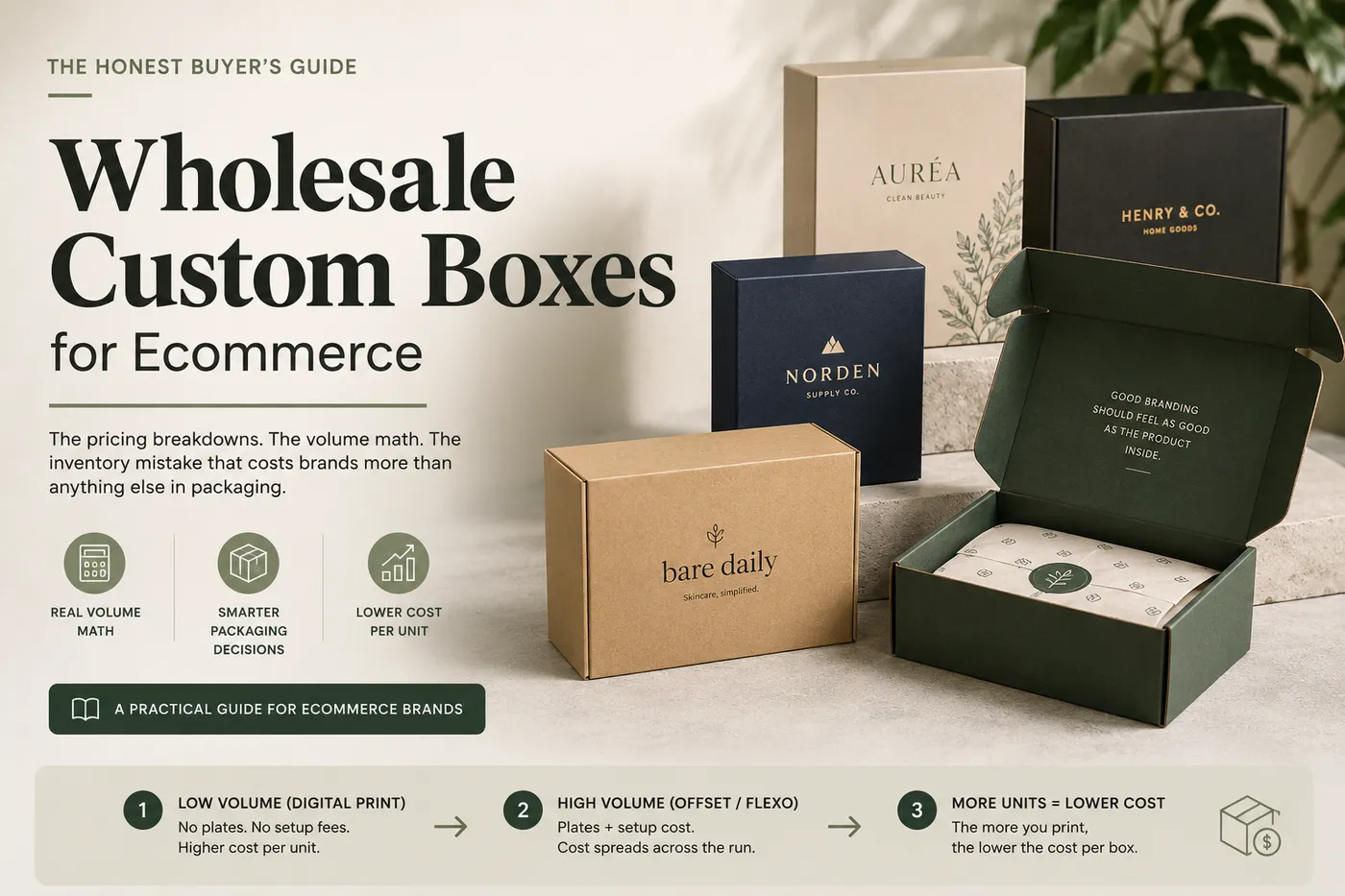
The mechanism behind that price drop isn’t a discount. It’s a change in production method.
At lower quantities, the suitable print route depends on the packaging format, artwork, board, finishing, and production requirements. Higher quantities can make more production methods practical because setup and production work are distributed across more units, but the route must be confirmed against the actual specification.
That’s the real math behind wholesale pricing in custom packaging:
Early production quantities: Select a print route against the format, quantity, artwork, and board.
Growing repeat quantities: Compare production methods and setup allocation with the quote team.
Established SKU quantities: Confirm the production route, packing, freight, and repeat plan.
Longer-term programs: Reconfirm pricing and timing for the complete packaging specification.
These ranges shift based on box type, wall thickness, number of colors, and finishing. But the shape of the curve stays consistent. The cost curve depends on the packaging format, specification, production route, quantity, and repeat plan; confirm the actual breakpoints with a quote.
There is no universal wholesale threshold; choose the quantity against demand, inventory capacity, the approved specification, and a realistic replenishment plan.
The Inventory Trap
A larger run can create unused inventory when the product, dimensions, brand system, or promotion changes; compare the apparent unit-cost saving with the current demand forecast and inventory risk.
The value of unused inventory can quickly outweigh an apparent unit-cost saving, especially when a product, dimension, or brand system is still changing.
Only move to a larger run when the design, dimensions, branding, demand, and approved specification are stable enough to support the planned inventory; smaller eligible runs may be more appropriate while those inputs are changing.
Before scaling, ask yourself three things:
Is your product spec stable? If dimensions might change, you’re reformulating a food product, releasing updated hardware, expanding to different sizes, don’t scale the box yet.
Is your brand locked? Logo changes, color updates, or copy changes on the box mean a full reprint. If a brand or product change is likely, confirm the timing and quantity before approving a repeat run.
Do you have storage? Storage capacity, handling, and freight should be confirmed against the packed dimensions and planned quantity before a larger order is approved.
What to Lock Down Before You Scale Your Order
Wholesale quantities amplify whatever you get right, and whatever you get wrong.
Dimensions. Inner dimensions need to account for your product plus any inserts, tissue, or fill. Outer dimensions affect your dimensional weight, which affects shipping cost. Test with real product and real fill before finalizing. A box that seems fine on paper can be wrong in practice.
Wall thickness and flute. For corrugated, flute and wall construction affect protection, weight, print surface, and packing. Review the applicable sample or proof on the intended material before scaling a repeat order.
Print file accuracy. At wholesale volumes, your file is the master. Any error, color mode mismatch, font not embedded, bleed edge missing, gets reproduced across every unit. Ask the supplier to run a prepress check before production starts and confirm which artwork, structure, and proof files are controlled for the run.
Color consistency. For brand-critical color, request the applicable proof on the intended production material; screen previews cannot represent every substrate and finish decision.
Supplier’s QC process. Before committing to a larger order, ask how quality checks and production samples are handled for the planned run and how results will be compared with the approved proof or sample.
The brands that understand how packaging drives repeat purchases know that a consistency failure across a repeat run can affect cost, customer experience, and the brand signal the packaging is meant to build.
How Quality Control Works Differently at Scale
Small digital runs and large offset or flexo runs have different QC dynamics, and knowing the difference helps you ask the right questions.
Print consistency depends on the selected process, material, equipment, artwork, and quality controls; compare production samples with the approved proof or sample.
With offset and flexo at wholesale volumes, real variables exist:
Press registration. Colors can shift slightly if the press misregisters between color passes. This shows up as a hairline offset where two colors meet. Artwork prepress and registration requirements should be confirmed against the selected print process.
Ink density drift. On a long run, ink viscosity can change. Ink and color consistency should be reviewed against the approved proof and the supplier’s stated quality controls for the planned run.
Cutting and scoring tolerance. Cutting, scoring, and fit tolerances depend on the structure, board, tooling, and production route. Confirm the acceptable tolerance for any insert or close-fit component before production.
Ask how quality checks and production samples are handled for the planned run. Review color, structure, cutting, and print quality against the approved proof or sample before accepting the shipment.
Domestic vs. International Suppliers at Wholesale Volumes
Domestic and international sourcing should be compared against the packaging specification, production capacity, communication needs, freight, customs, and replenishment plan.
Products that fit this guide
A few Easy Box Packaging products that fit what this article covers.
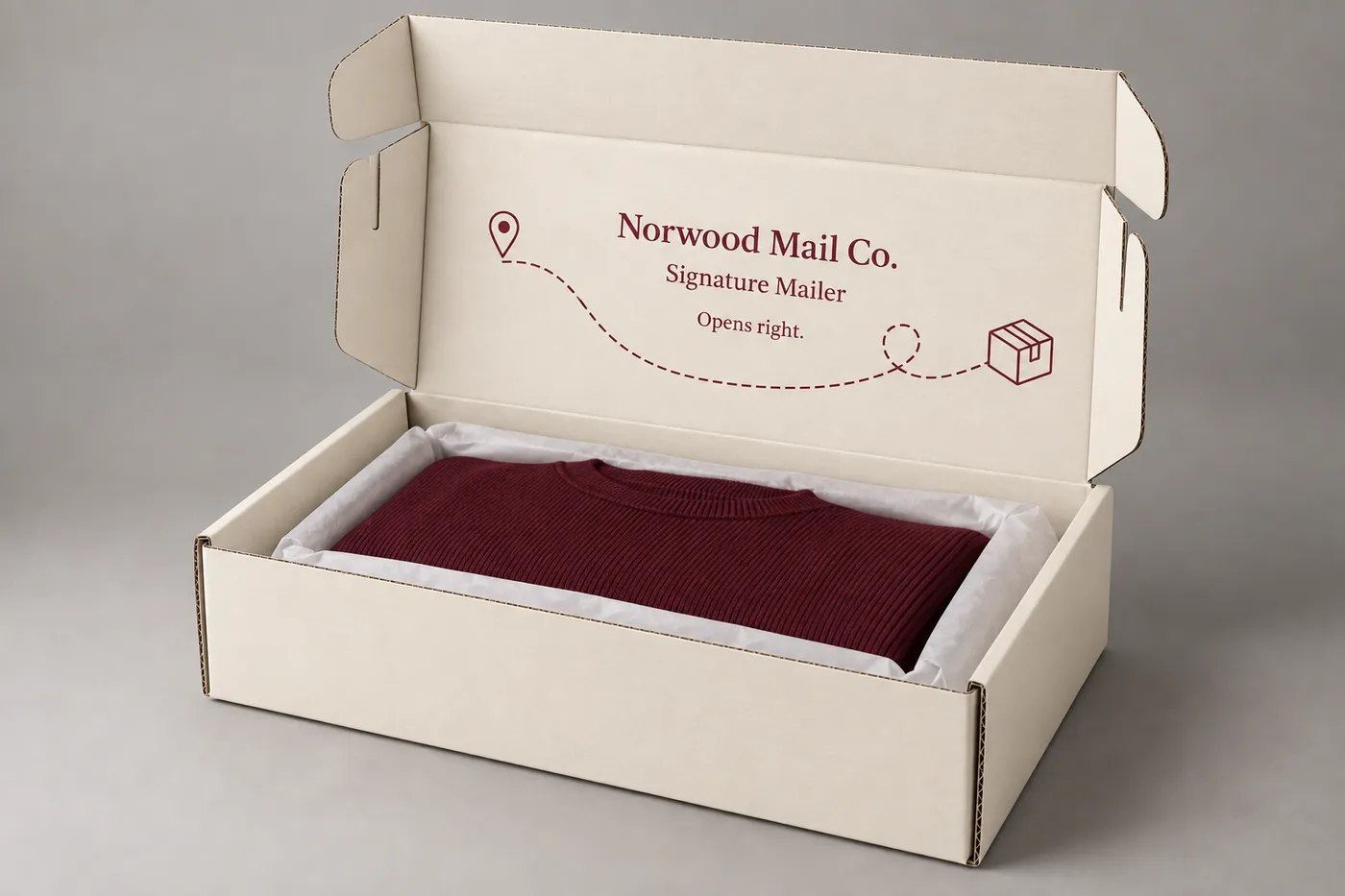
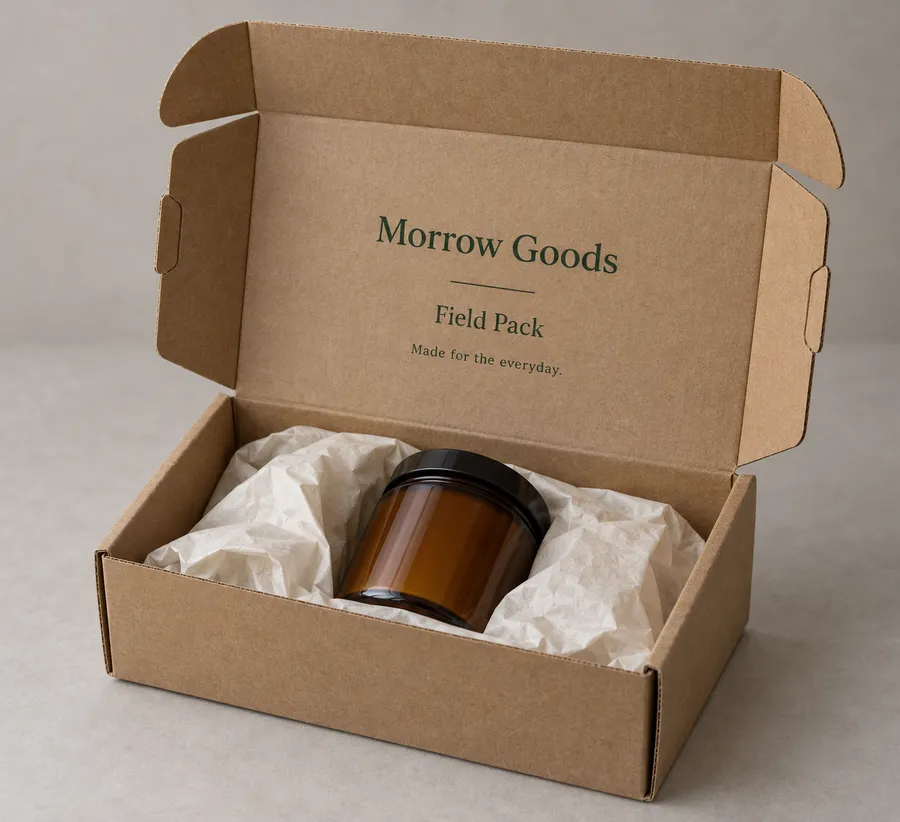
Custom mailer boxes coordinate the packed size, closure and printed presentation of an e-commerce order. Discuss corrugated construction, inside and outside artwork, and any insert or divider requirements. Easy Box Packaging reviews the proposed specification and proof before production, with the final board, finish and delivery terms confirmed in your quote.
A custom-printed corrugated mailer designed for repeat subscription shipments, consistent inside-lid reveals, insert planning, and efficient recurring fulfillment.
Custom ecommerce mailer boxes are made-to-order folding boxes sized around the packed length, width, and height of your order. Choose a corrugated or paperboard format, an integrated tuck-in closure, exterior or interior print, and a finish that suits the unboxing experience without adding avoidable bulk around the product.
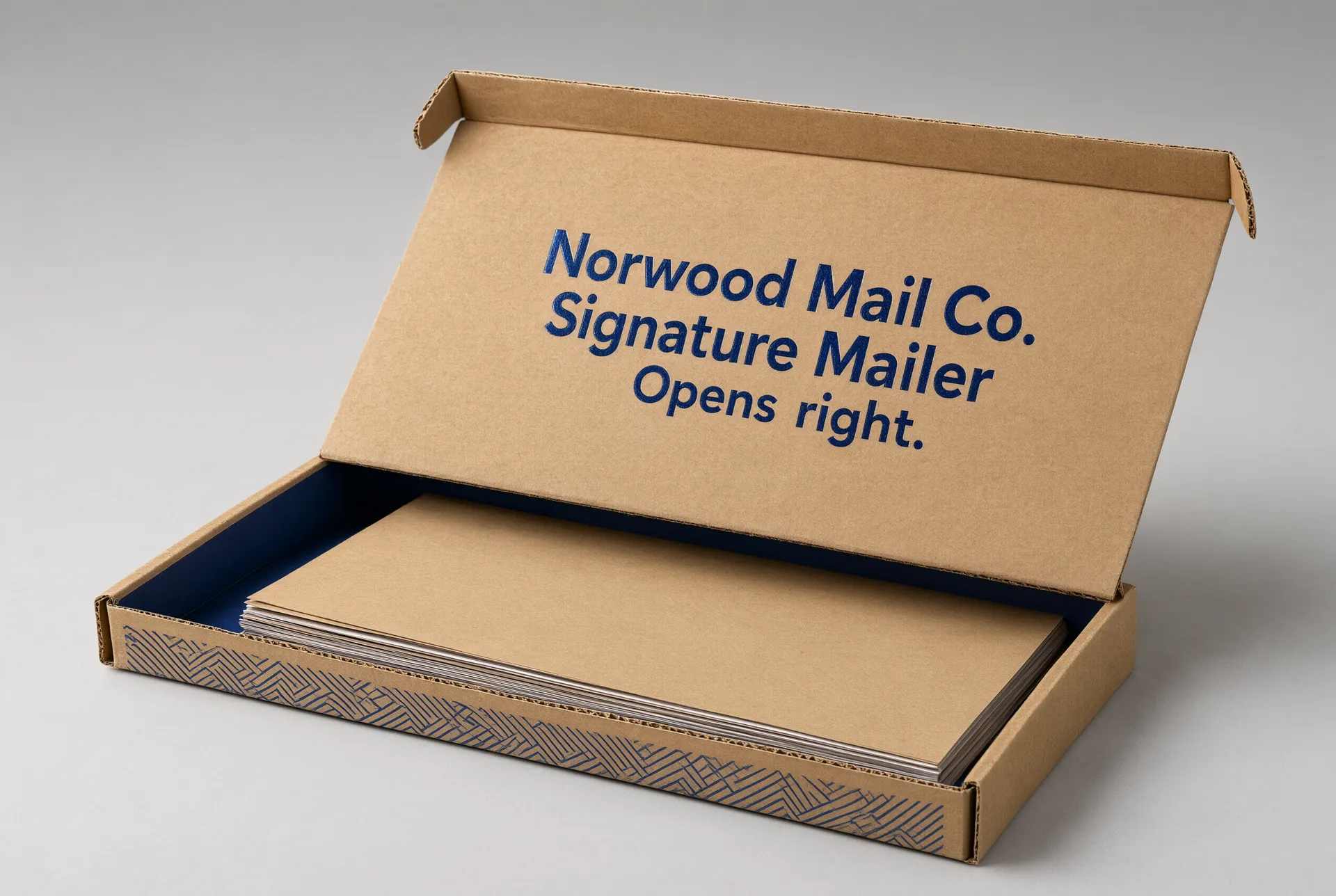
Custom literature mailer boxes built as a flat, auto-lock-bottom corrugated mailer sized around catalogs, brochures, or printed materials. Printed with your own branding inside and out, and sized close to the contents rather than built for a bulkier product.
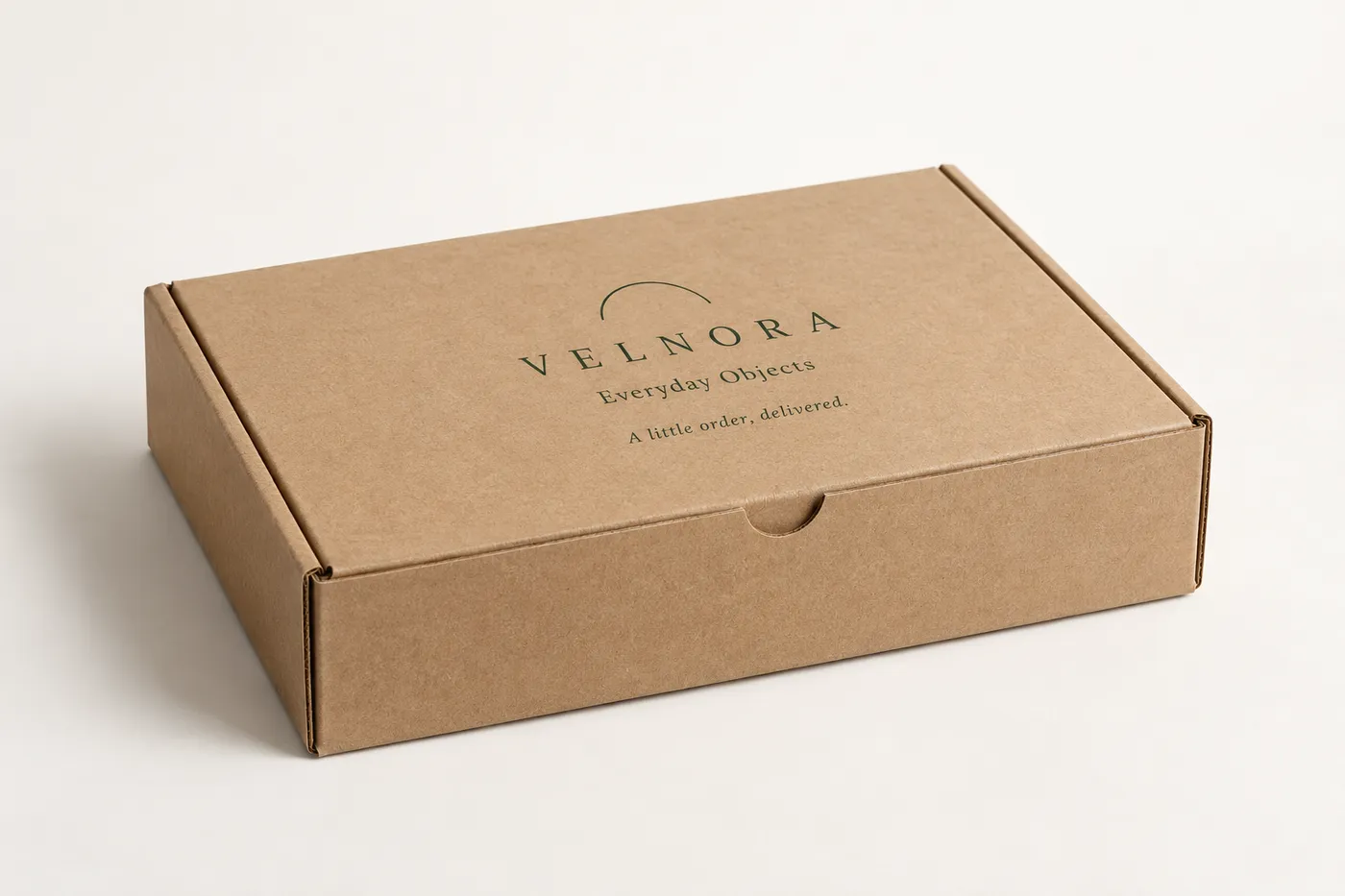
Kraft mailer boxes pair a natural brown paper surface with a folding shipping structure sized around the packed product. Plan the tuck-in lid, locking tabs, board direction, print coverage, and finish around product weight, parcel handling, and the opening experience rather than treating kraft as a one-size stock format.
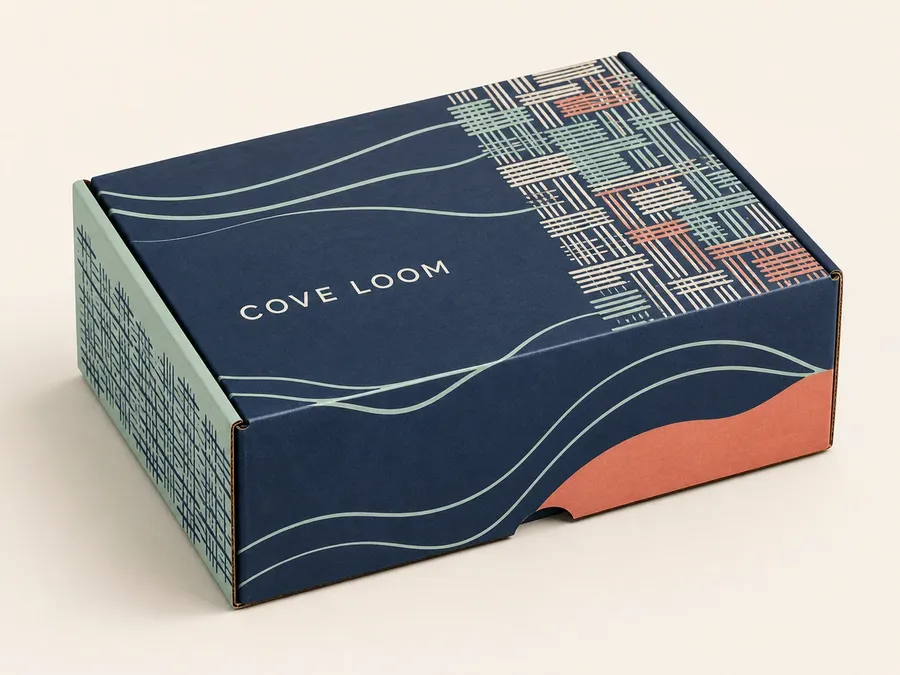
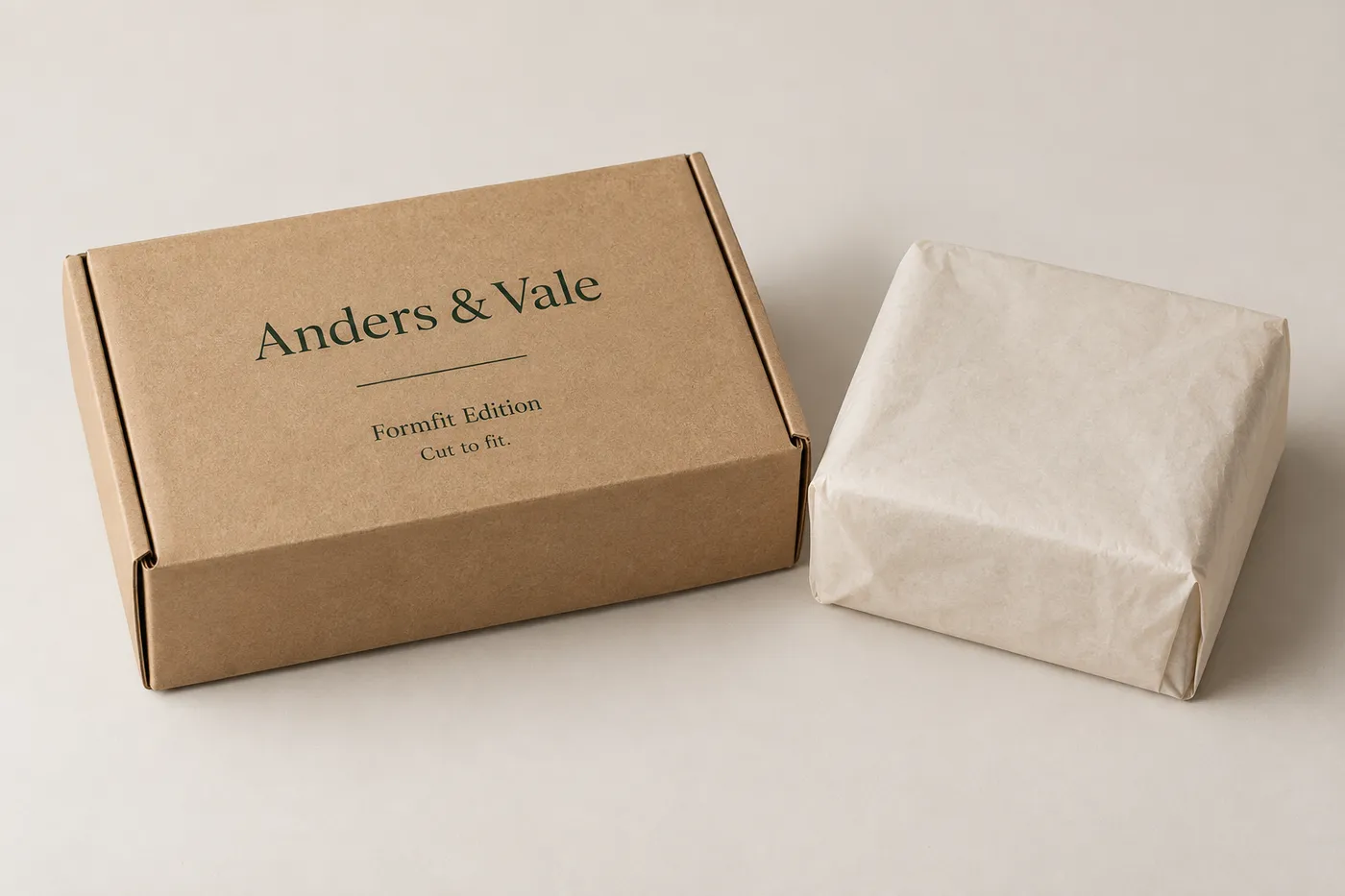
Die-cut mailer boxes built around a custom-cut folding mailer structure for ecommerce orders, subscription shipments, and retail dispatches. The dieline can define the tuck-in lid, locking tabs, panel proportions, and print area around the packed product, with corrugated board, SBS paperboard, or kraft paperboard reviewed against the shipment and presentation needs.
An international sourcing route may change the base manufacturing cost, but the landed cost and risk also include production, freight, customs, duties, brokerage, destination handling, and replenishment planning:
Ocean freight, duties, brokerage, and destination handling must be quoted for the shipment.
Import duties (packaging imports may be subject to tariffs, verify current rates before budgeting)
Confirm brokerage and import costs before comparing landed pricing.
International delivery timing depends on production, freight, customs, and the destination.
Longer-distance supply routes require more planning and can carry additional replenishment risk. Confirm the production and delivery schedule for the actual destination.
The appropriate sourcing route depends on the SKU, specification, quantity, destination, confirmed schedule, landed cost, and risk tolerance; compare those inputs before choosing a supplier.
If you’re deciding how to allocate your packaging budget across order volumes and growth stages, the custom packaging budget guide breaks down the tradeoffs in detail.
How to Get Better Pricing on a Wholesale Order
Negotiation on wholesale custom box orders isn’t about haggling. It’s about structuring the deal to reduce the supplier’s risk, which creates room for better pricing on yours.
What suppliers care about: A confirmed large order, clean artwork, and a clear timeline. Uncertainty is expensive for them. Holding paper stock, allocating press time, managing last-minute changes, all of that costs money. The easier you make the production process, the more flexibility they have on price.
Committing to a reorder timeline. A documented repeat plan may affect how a supplier structures production and pricing; ask the quote team to show the assumptions.
Submitting clean, print-ready artwork. Every prepress correction the supplier makes costs them time. Arriving with a properly set-up file and a documented color spec is a real negotiating advantage.
Choosing a simpler structural spec. Full-color litho-laminated corrugated is excellent but more expensive to produce than a straightforward kraft mailer with single-color flexo printing. If price is the constraint, compare the cost and performance of alternate structures, materials, print methods, and finishes against the required specification.
Avoiding late changes. Changes after production starts are expensive for everyone. Locking down the spec before anything goes to press is the most direct way to protect your pricing.
Common Wholesale Box Ordering Mistakes
Avoiding common packaging mistakes at scale means knowing which ones hit harder at wholesale volumes:
Ordering without a physical sample. A digital mock-up is not a sample. For large runs, always get a die-cut, printed, folded, and glued physical proof on your actual production material. The timing and cost of proofing should be included in the project schedule.
Assuming print is consistent across suppliers. Each press has different color profiles, paper stock, and ink formulations. Color output can differ by supplier, equipment, substrate, and ink system; request the applicable proof or sample when changing a production route or supplier.
Ordering beyond the realistic demand horizon. Beyond the realistic demand horizon, product dimensions, branding, or promotional requirements may change; set quantity against a current forecast and storage plan.
Skipping the sample round on custom mailer boxes. Mailer boxes can include closures, folds, and interior print or fit requirements; review the applicable structural sample before approving a repeat run.
FAQ: Wholesale Custom Boxes for Ecommerce
What’s the minimum order for wholesale custom box pricing?
There is no universal wholesale minimum. Smaller eligible runs and larger repeat programs should be quoted against the selected format, specification, quantity, and production route.
How long does a wholesale custom box order take?
Production and delivery timing are confirmed against the packaging format, quantity, artwork readiness, proof route, capacity, freight, customs, and destination. Plan inventory from the confirmed schedule rather than an assumed universal lead time.
What’s the difference between a wholesale box supplier and a custom box manufacturer?
For ecommerce brands, very little in practice. When you buy custom boxes, you’re already buying at or close to the manufacturer level. A “wholesale box supplier” selling generic stock boxes is a different product, those are plain brown boxes, not branded custom packaging.
Can I mix different box styles in one wholesale order?
Yes, but each style typically has its own MOQ and pricing. Combining orders of the same material and print process can sometimes reduce per-unit costs. Confirm with your supplier whether combined orders qualify for the same pricing tier.
How do I ensure color consistency across a large print run?
For brand-critical color, request the applicable proof on the intended production material and ask the supplier how color will be checked and documented.
What happens if units in my wholesale order are defective?
Agree in writing how defects, credits, replacements, inspection, and delivery evidence will be handled for the planned order, and document any issue promptly on receipt.
What is dimensional weight and why does it matter for wholesale boxes?
Dimensional weight is carrier- and service-specific. Confirm the current carrier formula, packed dimensions, actual weight, and shipment assumptions before comparing freight or landed cost.
The Wholesale Box Decision
The unit-cost math for wholesale custom boxes for ecommerce is the easy part. The harder math is everything around it: inventory risk, design stability, lead time, and quality at scale.
The brands that get this right don’t just ask “how do I get boxes cheaper?” They ask “what does my business need to look like before ordering at scale makes sense?” If your product, brand, and volume are stable, place the order. If not, a smaller digital run is the smarter call, even at a higher per-unit cost.
Easy Box Packaging supports eligible smaller runs and recurring wholesale programs, with structure, materials, artwork, proofing, production, and quantity reviewed for each project. Check out our wholesale packaging programs or start with a quote to see where your volume lands on the pricing curve.
If you’re still evaluating print methods for your wholesale run, our low-MOQ custom packaging covers digital vs. offset vs. flexo in plain language.
Questions, answered
FAQ: Wholesale Custom Boxes for Ecommerce
What’s the minimum order for wholesale custom box pricing?+
There is no universal wholesale minimum. Smaller eligible runs and larger repeat programs should be quoted against the selected format, specification, quantity, and production route.
How long does a wholesale custom box order take?+
Production and delivery timing are confirmed against the packaging format, quantity, artwork readiness, proof route, capacity, freight, and destination. International delivery timing depends on production, freight, customs, and destination. Plan your inventory timeline around production lead times, not around when you want to run out.
What’s the difference between a wholesale box supplier and a custom box manufacturer?+
For ecommerce brands, very little in practice. When you buy custom boxes, you’re already buying at or close to the manufacturer level. A “wholesale box supplier” selling generic stock boxes is a different product, those are plain brown boxes, not branded custom packaging.
Can I mix different box styles in one wholesale order?+
Yes, but each style typically has its own MOQ and pricing. Combining orders of the same material and print process can sometimes reduce per-unit costs. Confirm with your supplier whether combined orders qualify for the same pricing tier.
How do I ensure color consistency across a large print run?+
For brand-critical color, request the applicable proof on the intended production material and ask the supplier how color will be checked and documented.
What happens if units in my wholesale order are defective?+
Agree in writing how defects, credits, replacements, inspection, and delivery evidence will be handled for the planned order, and document any issue promptly on receipt.
What is dimensional weight and why does it matter for wholesale boxes?+
Dimensional weight is carrier- and service-specific. Confirm the current carrier formula, packed dimensions, actual weight, and shipment assumptions before comparing freight or landed cost.
Start a packaging brief
Ready to request wholesale custom boxes?
Share the product, quantity, dimensions, and route to market. Easy Box Packaging will review the specification and send a quote.