Single-item presentation
A bottle, jar, device, or keepsake revealed from a fitted cavity.

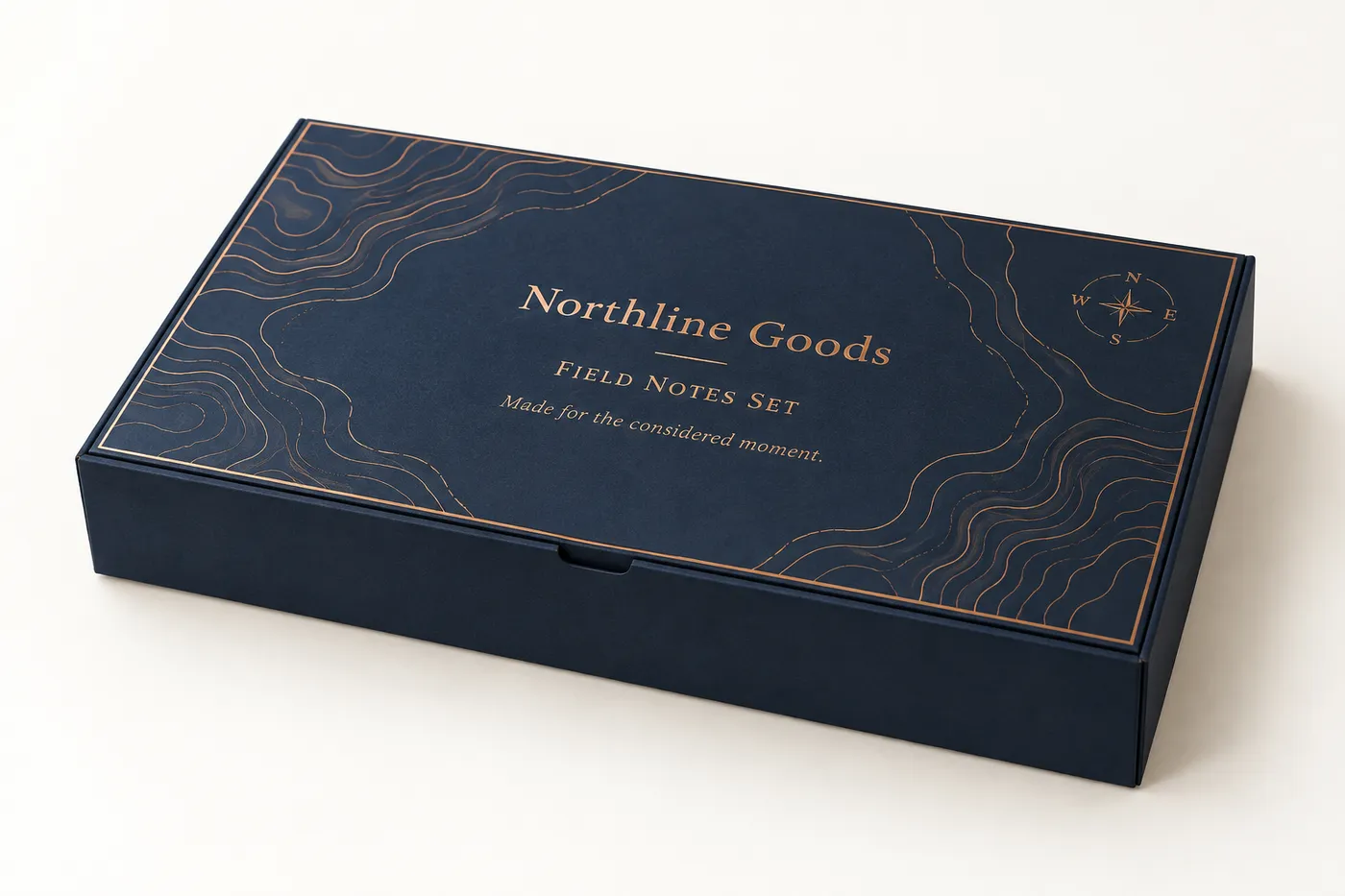
Closed ink-blue hinged lid rigid box with copper contour artwork and Northline Goods mockup
Rigid Boxes
A made-to-order rigid box with an attached hinged lid, sized around the packed product and its opening sequence. Specify the footprint, depth, insert, printed panel, and finish together so the lid closes cleanly and the contents arrive ready for a deliberate presentation.
Last updated
Working quote
Product brief
A hinged lid rigid box keeps the lid attached to the base, so the opening sequence is controlled by one fold line instead of a separate lift-off piece. That construction can suit a product that is opened repeatedly, displayed with the lid upright, or handed over in a retail or gifting setting where the box remains part of the presentation. The useful question is not whether an attached lid sounds more premium; it is whether the lid movement, front closure, and interior support match the way the packed item will be handled. A rigid format holds its shape rather than shipping flat like a folding carton, but it also takes more volume in storage and transit. Confirm the product's packed length, width, height, and weight before committing to the footprint.
Start with the finished item at its widest and tallest points, including a cap, shoulder, wrap, sleeve, or accessory that will sit inside the box. Record at least 3 dimensions, length, width, and height, and note the orientation in which the product should be revealed. The lid needs enough clearance to close without rubbing the contents, while the base needs enough depth for the item and any insert without leaving unnecessary movement. A hinged lid also has a fold line and front edge that must be coordinated with the interior cavity. Final clearances are decided during specification and dieline review, not borrowed from a generic stock size. If the pack contains two or more components, map each footprint separately before choosing a shared cavity or divider.
SBS paperboard can provide a smooth printed face for color-critical artwork, while kraft paperboard keeps a more tactile natural-fiber character. Corrugated board is listed in the category as a direction for applications that need additional structure, but the actual board construction, wrap, and caliper remain specification-dependent. Matte or gloss lamination changes how light and fingerprints read on the lid; foil stamping can reserve a small mark or border for emphasis; spot UV can add contrast to a selected panel; and embossing or debossing gives a logo a tactile change in the surface. Choose the board and finish as one decision because fold behavior, artwork coverage, and the lid's hinge area all need to be checked together. An FSC-certified paperboard option is available as a material choice, not a blanket certification of every finished box.
Insert need depends on the product's geometry, weight, fragility, and the reveal the opening should create. A bottle, jar, device, or small accessory set may need a fitted cavity, riser, divider, or shaped paperboard support to keep it from shifting as the lid is opened. A stable, lightweight item may need less interior structure. The insert can be designed to keep a product centered, expose a label through the open lid, or separate multiple pieces so they do not contact each other. Share the actual item and its packed weight before the insert is finalized; a generic foam-like assumption would not be a confirmed specification for this product. The base and lid should be reviewed together so the insert does not interfere with the hinge or front closure.
Reserve the broad lid panel for the product name, mark, or other information that should be seen first. The exterior front and side panels can carry supporting artwork, while the inside lid can be left blank, printed, or finished according to the approved artwork. A front tuck, ribbon pull, or another closure direction may be considered during the quote and dieline review, but the final closure is not fixed in this draft. The attached lid changes how the package is photographed and placed on a shelf: it can remain upright during a demonstration, or fold back while the product is removed. Keep the hinge line clear of small type and critical foil details until the dieline confirms the fold area.
A useful quote request includes the product's length, width, height, packed weight, orientation, insert requirement, print coverage, finish direction, and intended delivery route. Easy Box Packaging includes dieline and proof review on every order at no extra charge, and quote requests are typically answered the same business day and always within 24 hours. Standard orders start at a minimum of 50 units. Production begins after digital proof approval and runs from 7 business days, while free US shipping is available on the standard fulfillment path. A sample kit has a $44.99 shipping charge credited toward the first order, which can help you compare board feel and finish before committing to production. These are the confirmed commercial facts; final pricing remains quote-only because no product-specific live price range is available for this hinged-lid construction.
Choose the hinged format when the attached lid and controlled opening are part of the use case, not merely a decorative label. A lift-off two-piece box may be simpler when the lid needs to be removed completely, and a folding carton may be more practical when flat-pack storage or lower shipping volume matters most. The decision should follow the product's dimensions, weight, opening behavior, insert, and route to the customer. Once those variables are clear, the dieline and artwork review can confirm whether the hinged rigid construction gives the right fit and presentation without inventing a board thickness or closure tolerance that has not been approved.
Proof points
These are the practical variables that should be checked against the actual item before artwork is locked.
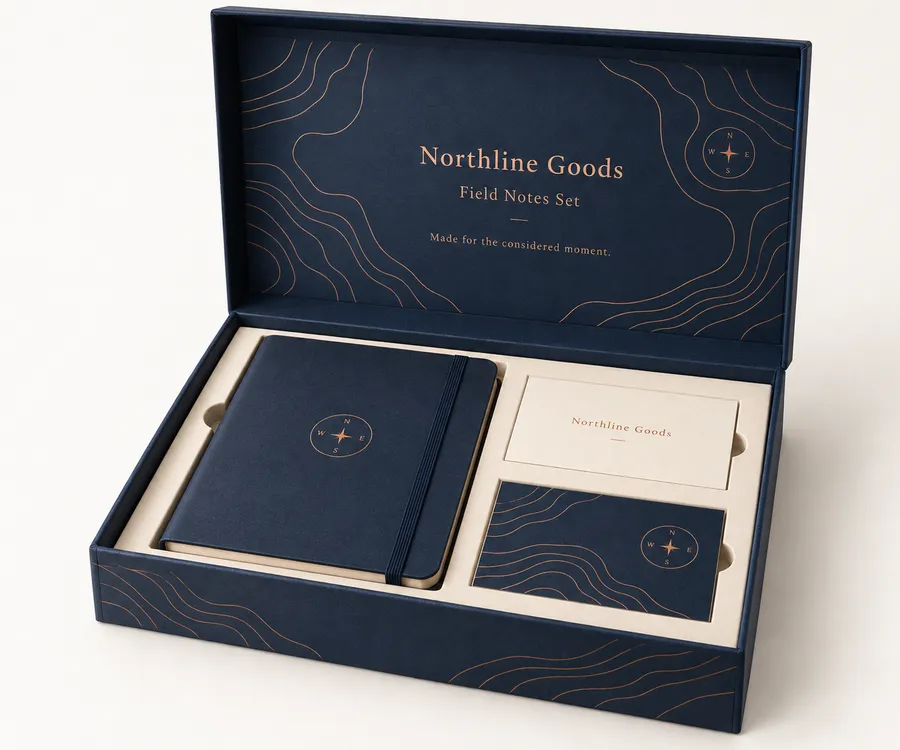
The lid stays attached to the base through a scored hinge area, creating a repeatable open-and-close sequence. The hinge, front edge, closure direction, and interior cavity are reviewed together so the box opens cleanly around the actual packed product.
A bottle, jar, device, or keepsake revealed from a fitted cavity.
A controlled opening where the lid can remain attached during the handoff.
A box that can be shown open without placing a loose lid beside the product.
A base and insert that keep multiple small components organized.
Use the broad lid and side panels for artwork, then confirm fold and hinge areas during proof review.
The insert should follow the product and the opening reveal rather than being selected as a generic accessory.
Shoulders, handles, caps, and irregular edges can require a shaped cavity or riser.
A heavier or fragile item may need more support to stay centered while the lid moves.
The insert can control how much of the label or accessory is visible when the lid opens.
A clear specification keeps the hinge, fit, insert, and artwork moving together.
Send length, width, height, weight, orientation, and any components that sit inside.
Confirm hinge direction, front closure, cavity, insert approach, and print coverage.
Check artwork, fold areas, finish notes, and the final dieline before production.
Production starts after proof approval and runs from 7 business days on the standard path.
Need help with structure, materials, or production planning? See how we manufacture custom packaging.
A sample kit carries a $44.99 shipping charge credited toward your first order, so you can compare surface feel and finish before production.
Shipping charge: $44.99. Credited toward your first order.
Request a Sample KitFind clear answers about fit, materials, and ordering below.
It is a rigid box with a lid attached to the base through a hinge area. The attached lid creates a repeatable opening sequence while the cavity and insert are sized around the packed product.
Measure the packed product at its widest and tallest points, including caps, shoulders, wraps, sleeves, and accessories. Share length, width, height, weight, and the orientation in which it should be revealed.
It depends on geometry, weight, fragility, movement, and the intended reveal. A fitted cavity, divider, or riser may help a heavier or irregular item stay centered while the lid opens.
Category finish directions include matte or gloss lamination, spot UV, foil stamping, and embossing or debossing. The final combination is checked against the artwork and hinge area during proof review.
Standard orders start at 50 units. Production begins after digital proof approval and runs from 7 business days, with free US shipping available on the standard fulfillment path.
Orders start at 50 units and scale up to 500,000 for bulk runs, with pricing from $0.22 per unit on larger quantities. Standard production is from 7 business days after digital proof approval.
Common uses include single-item presentation, gift and occasion packaging, retail demonstration, and accessory sets. The final specification is set by the packed product and how it will be handled.
Compare nearby products and request the format that best fits your next run.
Available product
Available product
Available product
Available product
Ready to specify the opening
Share the packed product dimensions, weight, insert direction, and finish preference so the hinge and cavity can be reviewed together.
Add your product details to see a quote summary.