Apparel and soft goods
A shallow rigid mailer can organize a folded garment or textile order while giving the lid and printed panels a deliberate opening sequence.

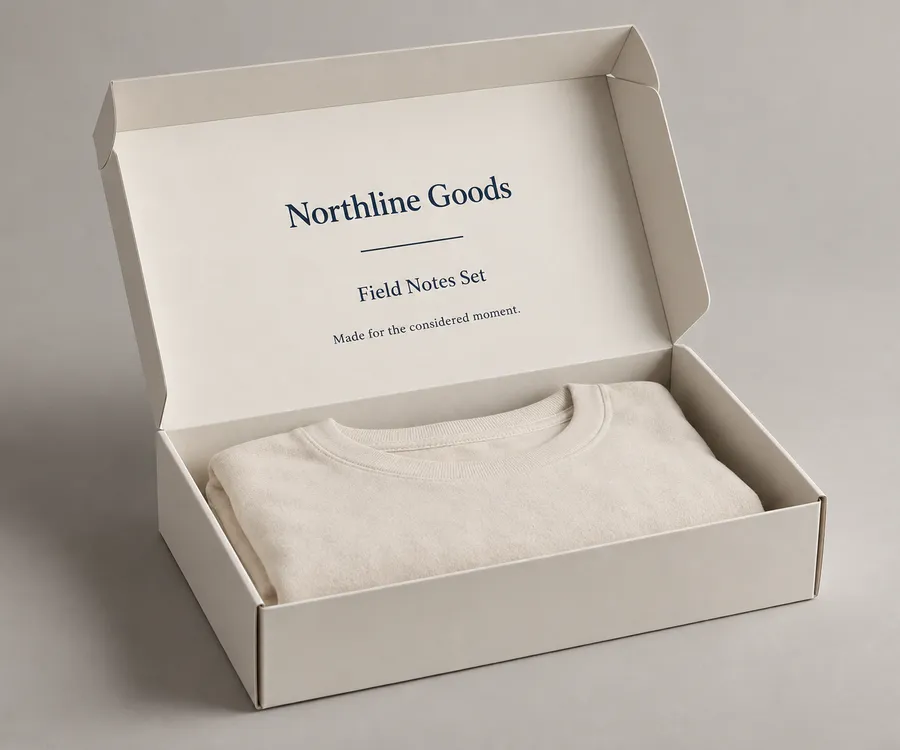
Open custom rigid paperboard mailer with folded apparel inside
Rigid Boxes
Custom rigid mailers give shipped products a defined paperboard structure and a deliberate opening sequence. The finished direction is built around the packed product, then refined through the closure, internal support, printed panels, finish, and shipping route so the mailer is neither loose around its contents nor overbuilt for the order.
Last updated
Working quote
Product brief
Custom rigid mailers are made-to-order packages for products that need a firm outer profile as well as a considered delivery experience. The useful starting point is the packed order, not a nominal box size. Share the product length, width, height, packed quantity, wrapping, and any card or insert that will remain inside. Those details guide the footprint, depth, lid clearance, and the way the opening should present the product. A rigid mailer that is too loose can let contents rotate during handling, while one that is too tight can make filling and closing awkward.
Measure the product in its actual shipping configuration, including a sleeve, tissue, protective wrap, accessory, or bundled set. Explain which face should remain visible and whether the customer should see the product immediately or lift a secondary layer first. A shallow profile can suit a folded garment, printed kit, or compact accessory. A deeper profile may be needed for a bundled order or a product with a protective insert. The final geometry should follow the packed product and the desired reveal rather than forcing unrelated products into one proportion.
The quantity per mailer matters as much as the outside dimensions. One product, a coordinated pair, and a mixed assortment create different clearances and support needs. If the product can rotate, has a delicate exposed surface, or needs a fixed orientation, include photographs or a packed sample with the brief. Internal support can be integrated into the rigid structure or considered as a separate insert after the arrangement is reviewed. The goal is a stable, repeatable pack-out that still opens cleanly.
A custom rigid mailer may use a firm base with a fold-over lid, side flaps, tuck-style closure, locking tabs, or another compatible direction selected on the dieline. These parts should be treated as one opening sequence. The base holds the product, the lid needs enough clearance to close without fighting the contents, and the closure should not cover an important printed panel. If the package travels through direct-to-customer fulfillment, note how it will be handled and whether it will sit inside an outer shipper.
Rigid Boxes category materials include Kraft Paperboard, SBS Paperboard, and Corrugated Board as directions to review. Kraft Paperboard keeps a natural paper character. SBS Paperboard offers a smooth surface for controlled artwork. Corrugated Board can provide a more substantial board character for a shipment that needs a heavier profile. The category pack does not confirm a universal thickness, board weight, or shipping-performance claim, so the selected direction should be confirmed against the product, construction, and delivery route.
Reserve the largest uninterrupted panel for the brand or product name, then decide whether the inside of the lid, base, or insert should carry a second message. Exterior and interior printing can work together when the opening sequence is part of the brief. The dieline identifies folds, hidden edges, closure areas, and safe zones before artwork is approved. Keep small text away from creases and make sure the main panel remains legible in the closed and open states.
Matte Lamination, Gloss Lamination, Spot UV, Foil Stamping, and Embossing/Debossing are listed finish directions for rigid boxes. A matte or gloss surface changes reflection and handling character. Spot UV, foil, embossing, or debossing can emphasize a selected wordmark or line detail, subject to artwork review. The practical choice is to match the finish to a specific panel and reading task instead of applying every effect everywhere.
Send the packed product or a representative sample, packed length, width, and height, quantity per mailer, preferred opening, support or insert requirement, print coverage, finish direction, and destination. Add the product weight and any handling concern that could affect the board or closure recommendation. If final artwork is not ready, a brand reference, color direction, and panel-by-panel message still give the structural review a useful starting point.
The standard fulfillment path starts at a minimum order of 50 units. Production starts from 7 business days after digital proof approval, and free US shipping applies on that standard path. Dieline and proof review is included at no extra charge. A sample kit carries a $44.99 USD shipping charge credited toward the first order, which lets you check board feel, fold behavior, closure, and finish before a larger run. The final quote remains dependent on the approved construction, artwork, quantity, and destination.
A strong custom rigid mailer brief answers three questions: what must stay protected or oriented, what should the customer see first, and which board and print choices fit the route. With those decisions documented, the dieline review can connect fit, closure, artwork, and fulfillment instead of treating them as unrelated tasks.
Proof points
The finished direction is defined by the mailer profile, closure, material direction, printed panels, and surface treatment selected for the packed order.
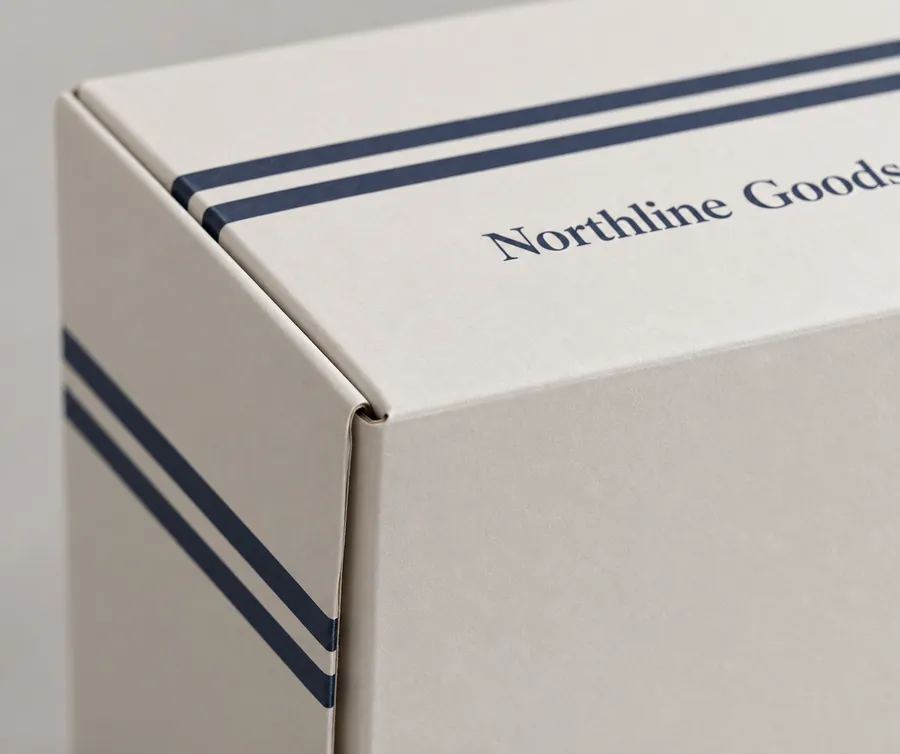
Custom rigid mailers should be scoped from the packed product, quantity per order, desired opening, and any internal support. Share the packed length, width, height, wrapping, weight, and visible product face so the base, lid, closure, and clearance can be reviewed as one structure.
A shallow rigid mailer can organize a folded garment or textile order while giving the lid and printed panels a deliberate opening sequence.
A repeatable mailer can hold a recurring assortment when the packed quantity, internal arrangement, and interior message are known in advance.
The firm profile can organize a curated shipment containing a product, printed insert, or small set of related pieces.
A made-to-order rigid mailer can organize compact accessories when a flexible envelope does not provide the desired opening structure.
Use the outer panels for the primary brand and product information, then decide whether the inside of the lid, base, or insert should carry a second message. The dieline keeps the print plan tied to folds and closure panels.
Internal support depends on product geometry, weight, fragility, orientation, clearance, fulfillment method, and the desired reveal. It can be integrated into the rigid construction or reviewed as a separate insert after the packed arrangement is understood.
Explain which face should remain visible and whether the product may rotate or shift while the order is handled.
A fitted insert, divider, or riser can be considered when the mailer needs to hold one product or a defined assortment in place.
Review lid movement, clearance, and the first product view together so support does not obstruct the handoff.
The quote process turns the packed product and artwork brief into a reviewed rigid mailer specification.
Send the product or a packed sample with length, width, height, weight, wrapping, and quantity per mailer.
Explain the preferred lid movement, visible product face, interior message, and clearance needed at the opening.
Identify a preferred Kraft Paperboard, SBS Paperboard, or Corrugated Board direction and note the shipping route.
Specify exterior or interior printing, lamination, Spot UV, foil, embossing, or debossing and the artwork status.
Review the structural dieline and digital proof at no extra charge before production.
Need help with structure, materials, or production planning? See how we manufacture custom packaging.
Check board feel, fold quality, closure behavior, and print finish before a larger run. The sample kit carries a $44.99 USD shipping charge credited toward your first order.
Shipping charge: $44.99. Credited toward your first order.
Request a Sample KitFind clear answers about fit, materials, and ordering below.
A custom rigid mailer uses a firm board structure with a planned base, lid, and closure, while a flexible mailer is an envelope format. The rigid construction suits a shipment where the outer profile, printed panels, and opening sequence matter.
Measure the product in the condition that will ship, including wrap, sleeve, accessories, or a packed bundle. Share length, width, height, weight, quantity per mailer, and any support that remains inside. Photos help when the product has an unusual profile.
Yes. Exterior printing can carry the primary brand and product information, while interior printing can add an opening message or pattern to printable panels. Check the dieline before artwork approval so important text stays clear of folds and closure areas.
Not automatically. Support depends on product geometry, weight, fragility, orientation, clearance, fulfillment method, and the desired reveal. Support may be integrated into the construction or provided as a separate insert after the packed arrangement is reviewed.
The standard fulfillment path starts at a minimum order of 50 units. Production starts from 7 business days after digital proof approval. Free US shipping applies on that standard path, and the final schedule depends on the approved construction, artwork, quantity, and destination.
Orders start at 50 units and scale up to 500,000 for bulk runs, with pricing from $0.28 per unit on larger quantities. Standard production is from 7 business days after digital proof approval.
Common uses include apparel and soft goods, subscription assortments, press and partner kits, and E-commerce accessories. The final specification is set by the packed product and how it will be handled.
Compare nearby products and request the format that best fits your next run.
Available product
Available product
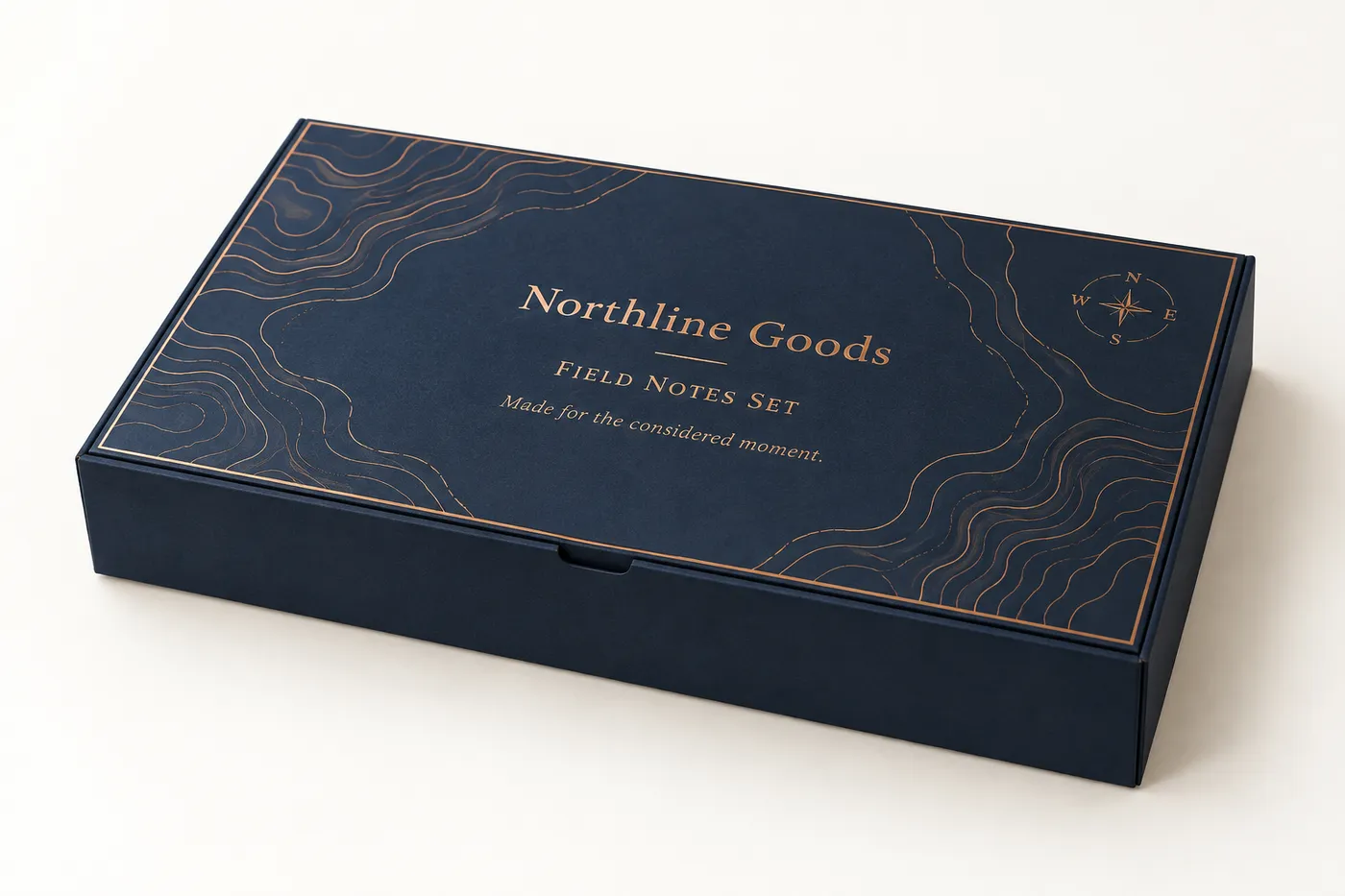
Available product
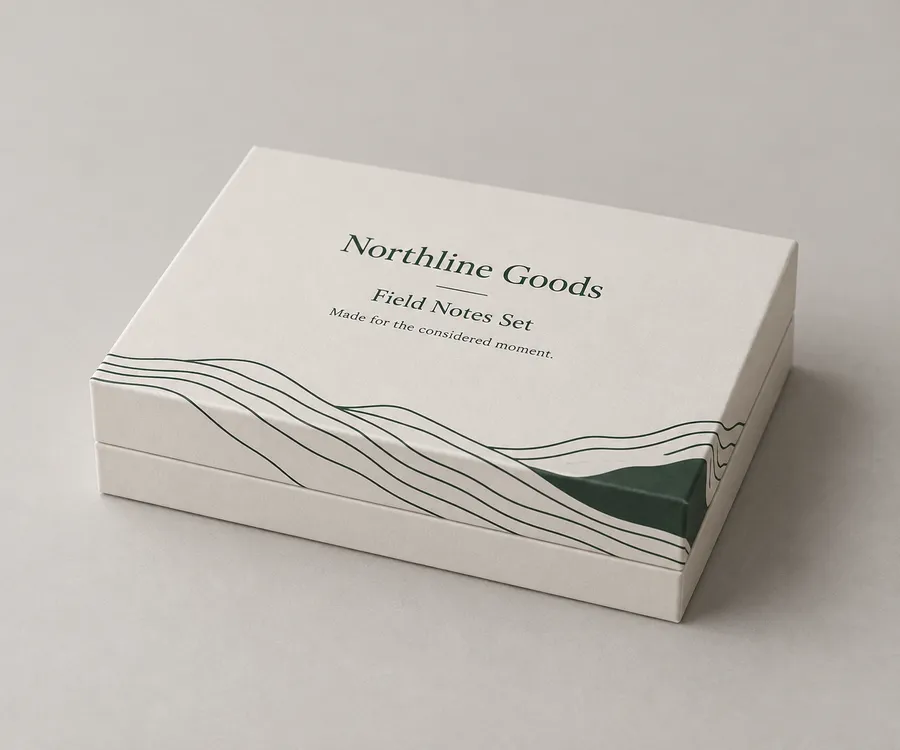
Available product
Get Started
Send the packed product dimensions, quantity per mailer, preferred closure, material direction, print coverage, finish preference, and artwork status to request a quote.
Add your product details to see a quote summary.