Product separators
A sheet can sit between items or sections of a pack when the arrangement, contact points, flute direction, and loading path are defined.

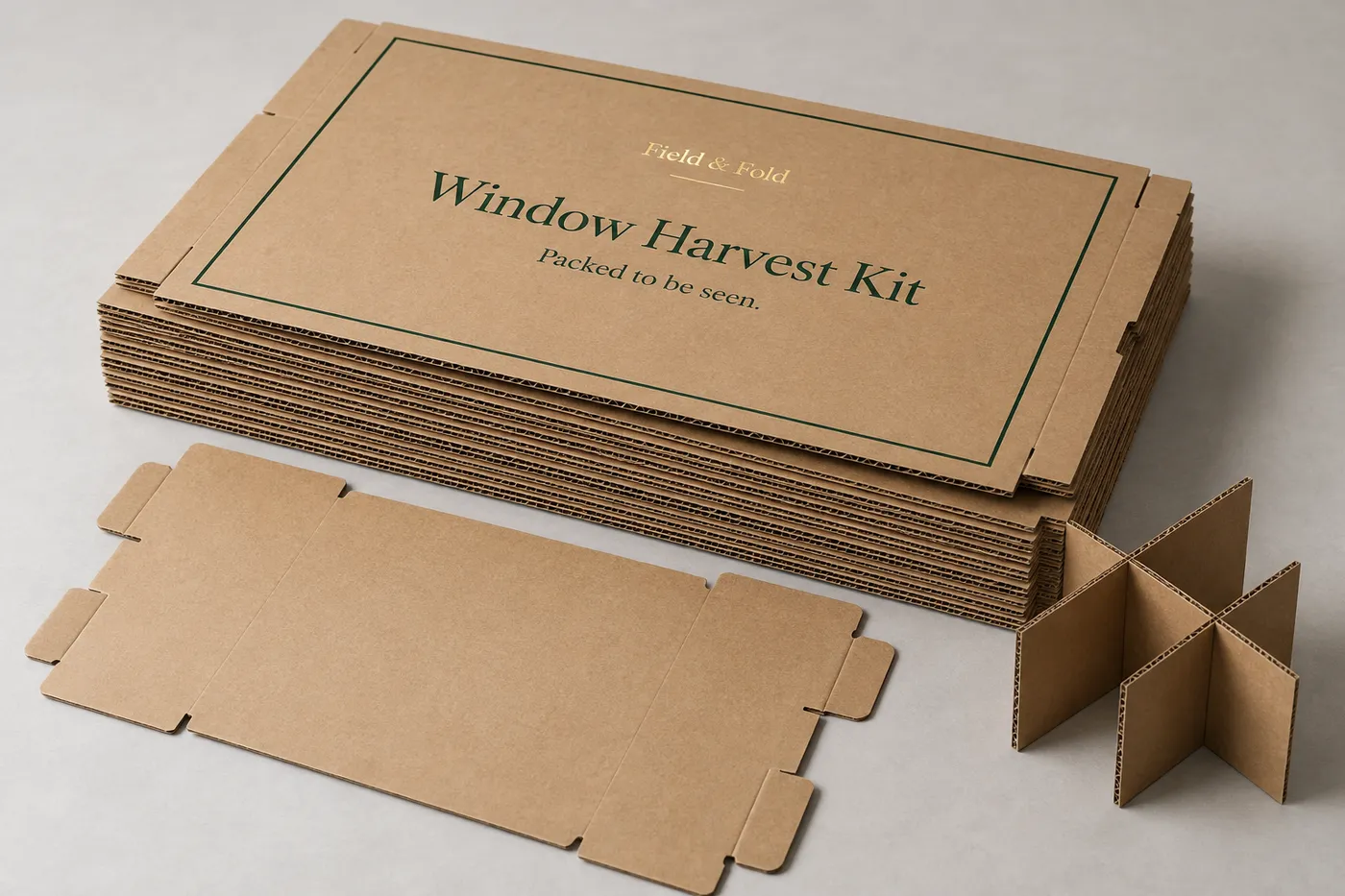
Stack of printed corrugated carton sheets with one sheet lifted beside a carton blank
Corrugated Boxes
Custom corrugated carton sheets give brands a flat, made-to-order component for dividers, protective layers, carton blanks, printed inserts, and packaging panels. Share the finished sheet format, packed-product arrangement, board direction, quantity, handling route, and artwork status so any scores, cuts, print coverage, and finish can be reviewed together.
Last updated
Working quote
Product brief
Custom corrugated carton sheets are useful when a package needs a defined fluted-paperboard component rather than a complete assembled box. The sheet may separate packed items, sit between products, protect a surface, become a flat carton blank, or carry a printed panel inside a larger pack. Those jobs are related but they do not create the same specification. A divider needs a clear relationship to the packed arrangement; a carton blank needs a fold and closure plan; a printed insert is judged from the customer-facing side as well as its fit. Begin with the sheet's job, where it sits, and what it must do during packing and delivery.
The most useful quote brief includes the finished length and width of the sheet, its orientation in the package, the number of pieces in each pack, and every product that touches it. If the sheet separates items, describe the arrangement and the contact points. If it becomes a folded carton panel, provide the open layout and intended scores, tabs, or cut features when those are known. Include the packed product's height, width, depth, weight, widest points, and available clearance. A flat corrugated sheet can look simple while still changing the way an item is loaded, revealed, or removed, so the actual packed setup matters more than a label such as small insert or large divider.
Corrugated Board is the primary material direction for this format because its fluted construction can add a defined layer or panel to a packed arrangement. The flute direction, edge orientation, and fold plan should be reviewed with the sheet's role, size, contact points, print coverage, and handling route. Kraft Paperboard or SBS Paperboard may be considered when the brief calls for a different printed surface or folding direction, but the final material choice follows the use and production review. The category context does not establish a flute grade, gsm, edge-crush value, or food-contact approval, so those details should be confirmed for the specific job rather than assumed.
Some sheets should remain flat from production through packing. Others need a crease, die-cut opening, locking tab, or folded edge so the panel can locate around a product or sit inside a larger carton. Describe whether the piece is a loose layer, a divider, a backing panel, a carton blank, or part of a formed insert. If the product has an irregular outline, closure, handle, cap, or other projection, call it out before the layout is prepared. Internal support depends on product geometry, weight, orientation, fragility, outer structure, fulfillment route, product-to-sheet clearance, and desired reveal. Depending on those variables, support may be integrated into the sheet or provided as a separate insert. The final structure should be reviewed as a specification rather than assumed from the product title.
Printed corrugated sheets can carry a brand panel, handling message, product information, divider labels, or a simple visual treatment. Share which side faces the customer, which side contacts the packed product, and whether the artwork continues across folds, cut edges, or adjoining panels. Matte Lamination can create a lower-glare surface direction, Gloss Lamination a higher-sheen treatment, Spot UV a selected gloss detail, and Embossing/Debossing or Foil Stamping a focused tactile or metallic accent. These options remain subject to artwork, board, and production review; none should be presented as a universal performance guarantee. The proof should show which areas are printed, which edges remain unprinted, and how the sheet looks when it is placed inside the package.
Orders start at 50 units, and production begins from 7 business days after digital proof approval. Free US shipping and dieline and proof review are included on the standard fulfillment path. A sample kit ships for a $44.99 charge credited toward the first order when you need to compare board feel, print treatment, or structural direction in hand. Quote requests are typically answered the same business day and always within 24 hours. Send the finished sheet dimensions, quantity, packed-product details, board preference, print coverage, finish direction, artwork status, and intended use. Once those inputs are reviewed, the proof should show sheet orientation, printed face, folds or cut features, and the relationship to the product before production begins.
A clear corrugated sheet brief prevents a flat component from being treated as a generic rectangle. It gives the packaging review a practical way to compare material, surface, structure, and packing route before the final artwork is approved.
Proof points
A useful proof makes the sheet's orientation and printed face easy to understand in the actual packed arrangement, including every feature that changes how it is loaded or removed.
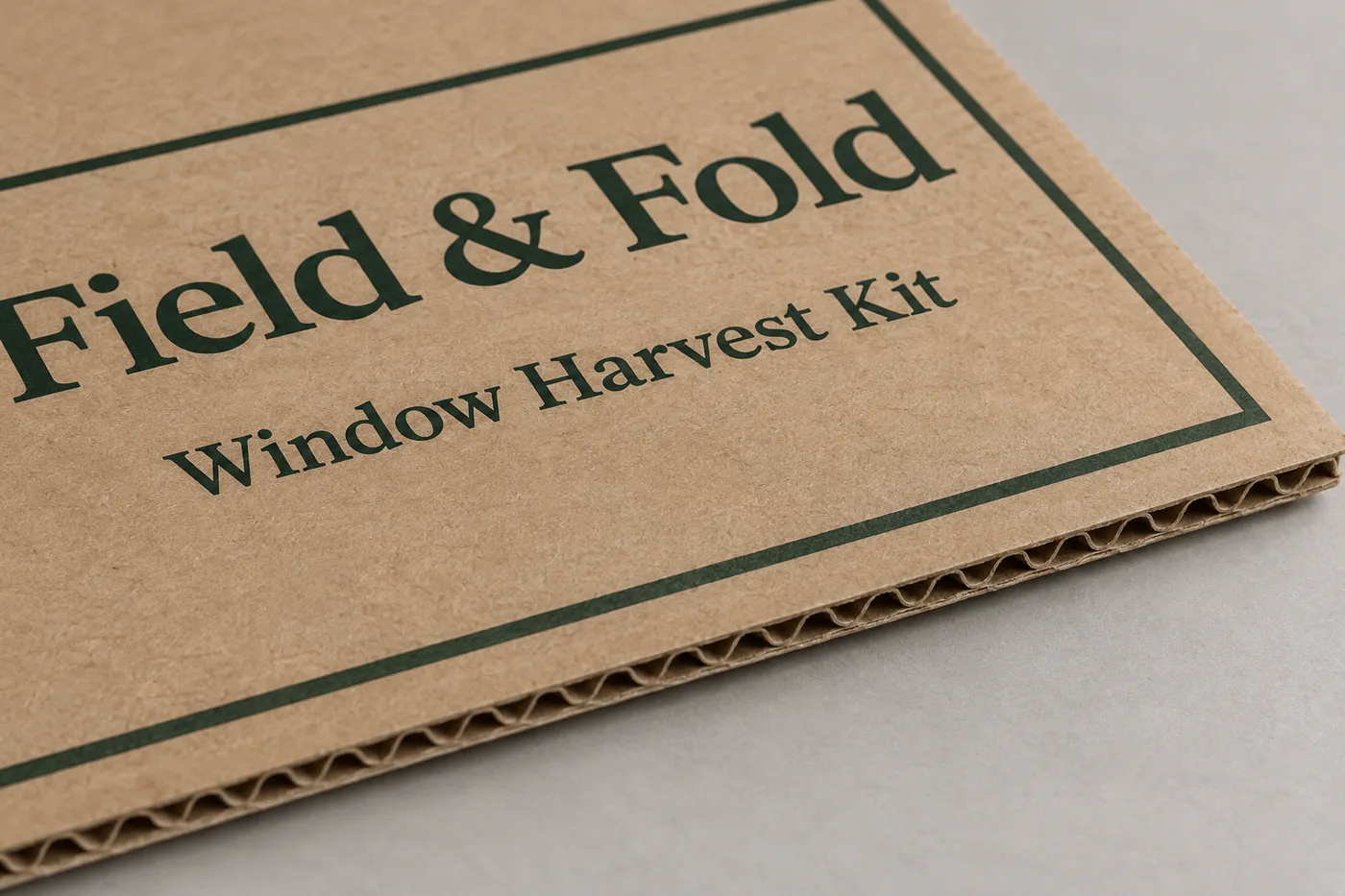
The sheet format is only one part of the specification. Its flute direction, position, contact points, printed face, edge treatment, and relationship to the packed product determine whether it works as a divider, layer, carton blank, backing panel, or formed insert. Share the finished use before artwork is treated as final.
A sheet can sit between items or sections of a pack when the arrangement, contact points, flute direction, and loading path are defined.
A flat corrugated layer can cover or separate a product when the handling route and board direction are considered together.
A scored and die-cut sheet can be reviewed as the open starting format for a small carton, panel, or closure when the assembled geometry is supplied.
A customer-facing panel can carry a brand message or product information while remaining a distinct component inside a larger corrugated pack.
The two faces of a corrugated sheet can serve different jobs: one may face the customer while the other contacts a product or adjoining carton panel. Choose the treatment with the reading angle, flute direction, edges, folds, cut features, and handling in mind.
A custom corrugated carton sheet needs the board, surface, and packed arrangement to agree. The review links the flat format to the way the product is loaded, presented, and handled.
Length, width, orientation, pack count, product contact points, widest points, and any projection inform the usable sheet layout.
Corrugated Board is reviewed with flute direction, handling route, printed surface, and the sheet's structural role; other category paperboards may be considered when appropriate.
A loose layer, separator, backing panel, carton blank, or formed insert creates a different review question for folds, cuts, tabs, and product access.
A quote is easier to evaluate when the sheet, packed product, board direction, structural detail, and artwork are described together rather than reduced to a size alone.
Provide sheet length and width, quantity, orientation, packed-product dimensions, weight, contact points, and any score, fold, tab, or cut feature.
Explain whether it is a separator, protective layer, printed insert, backing panel, carton blank, or part of a formed packaging structure.
Note how the piece is loaded, whether the product travels by parcel or local delivery, and which side should remain visible or protected.
Share artwork status and any preference for corrugated board, print coverage, Matte Lamination, Gloss Lamination, Spot UV, Embossing/Debossing, or Foil Stamping.
Confirm sheet orientation, printed face, flute direction, edges, folds or cut features, product relationship, and finish representation before production begins.
Need help with structure, materials, or production planning? See how we manufacture custom packaging.
A sample kit ships for a $44.99 USD charge credited toward your first order, useful when you need to compare corrugated board feel, print treatment, or structural direction before approving the custom sheet.
Shipping charge: $44.99. Credited toward your first order.
Request a Sample KitFind clear answers about fit, materials, and ordering below.
Share the finished sheet length and width, quantity, orientation, packed-product dimensions, weight, contact points, intended role, board preference, structural features, print coverage, finish direction, and artwork status. A photo or open layout is useful when the product has a projection or irregular outline.
A flat sheet can be reviewed as a separator, protective layer, printed insert, backing panel, or part of a formed structure. The arrangement, product contact points, flute direction, loading path, and desired reveal determine whether it stays flat or needs a fold or cut feature.
Corrugated Board is the primary material direction. Kraft Paperboard and SBS Paperboard may be considered when the brief calls for another printed surface or folding direction, subject to the final structure and production review.
Yes. A score, fold, tab, opening, or other cut feature can be reviewed when it has a defined role in loading, closure, product access, or assembly. Share the open layout or describe the intended geometry so it can be included in the dieline review.
Matte Lamination, Gloss Lamination, Spot UV, Embossing/Debossing, and Foil Stamping are category finish directions. The selected treatment remains subject to artwork review, especially where it meets folds, cut edges, contact areas, or small lettering.
The approved standard estimate is from 7 business days after digital proof approval. Orders start at 50 units, free US shipping is included on the standard fulfillment path, and quote requests are answered within 24 hours, typically the same business day.
Orders start at 50 units and scale up to 500,000 for bulk runs, with pricing from $0.39 per unit on larger quantities. Standard production is from 7 business days after digital proof approval.
Compare nearby products and request the format that best fits your next run.
Available product
Available product
Available product
Available product
Plan the flat corrugated component
Send the finished sheet dimensions, packed-product details, intended role, board preference, structural features, print coverage, and artwork status. Easy Box Packaging can then review the material, surface, dieline, and handling context as one quote-ready specification.
Add your product details to see a quote summary.