Retail-ready presentation
Use a white printed panel and optional window to explain or preview a product on a shelf or counter.

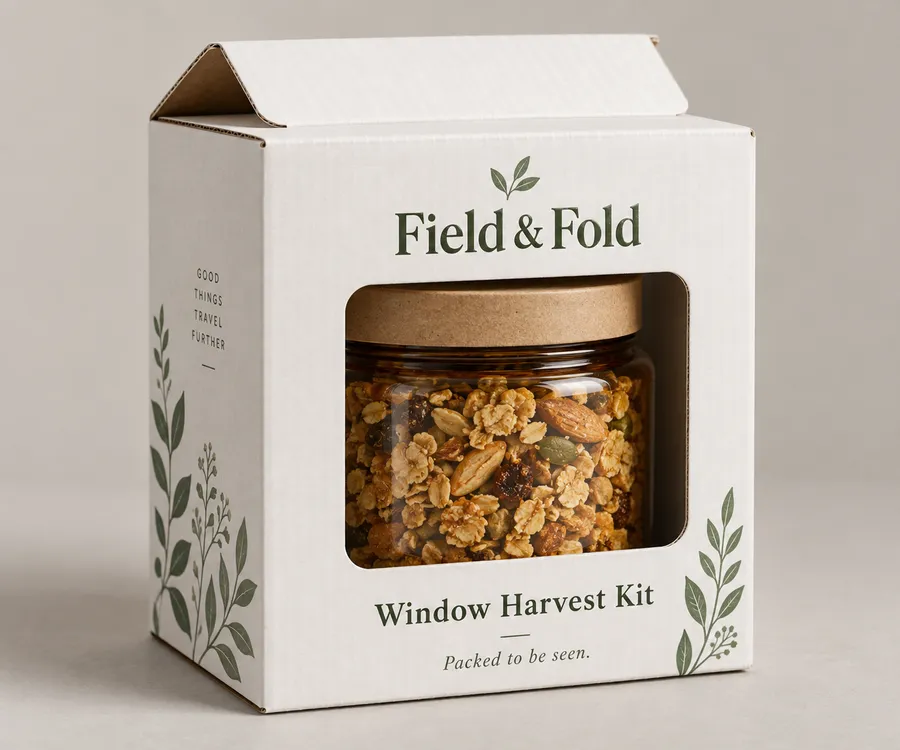
White corrugated box with die-cut window, green print, and granola jar
Corrugated Boxes
Custom white corrugated boxes give brands a clean printable surface with the practical structure of fluted paperboard. They can be shaped for retail presentation, local delivery, or ecommerce packing, with a die-cut window, tuck closure, or other panel details planned around the packed item. Board choice, dimensions, print coverage, and finish are reviewed together.
Last updated
Working quote
Product brief
A white corrugated box can make a packed item easier to identify while giving it a defined shell for handling. The white outer surface provides a clear base for a brand panel, instructions, or a focused product message; the fluted construction adds practical separation between the product and the outside environment. This format can suit a shelf-ready carton, a local-delivery pack, or an ecommerce order when the structure and closure match the route. A window is also possible when the buyer needs to see the product before opening, but the cutout has to be placed around the packed item and the remaining panels still need to carry the load of printing and handling.
Start with the item as it will actually be packed, not an idealized product drawing. Send the assembled length, width, and height; note the widest point, handles, shoulders, caps, tabs, or other protrusions; and state which face should remain upright. If the box carries one item or a grouped set, identify the quantity and the arrangement. Record whether the product needs an insert, divider, riser, or a simple paperboard retaining feature. The final allowance is set during specification review, because clearance depends on the product geometry, handling pattern, and opening style. A low rectangular box can present well on a counter, while a taller pack may need a different panel balance and closure path.
Corrugated board is the category's core material direction, while kraft paperboard and SBS paperboard can be considered when the required structure or surface is different. The correct choice depends on packed weight, stacking, transit distance, and whether the box is assembled before fulfillment or shipped flat. A tuck-style closure can work for a simple retail opening; a mailer-like construction can make sense when the pack must arrive as a complete parcel; and a die-cut window can be added when visibility is part of the brief. These are structural decisions, not interchangeable decoration. Share the intended route and how the finished box will be handled so the panel geometry, folds, and closure can be reviewed as one specification.
A white exterior can keep small type and color blocks legible, but the artwork still needs a hierarchy: brand name, product name, handling information, and any window-side message should have clear roles. A die-cut window can reveal a label, texture, or color, while the surrounding board preserves the box footprint. Keep the opening away from folds and closure features unless the layout specifically calls for that relationship. Matte lamination, gloss lamination, spot UV, foil stamping, and embossing/debossing are finish directions in this category. Lamination changes the surface appearance, spot UV can concentrate contrast on a selected detail, and foil or embossing can emphasize a short mark; each choice remains subject to the artwork and structure being reviewed together.
Once the product dimensions and construction direction are known, Easy Box Packaging can prepare the dieline for the selected box geometry. Provide the current artwork, the panel that carries the primary brand message, and a note about the desired print coverage or finish. The digital proof is the checkpoint before production: review the window position, folds, closure, orientation, copy, and any special finish placement there. This step is especially important for a white box because large unprinted areas, fine text, and the edge of a cutout can change the visual balance. A familiar box style does not remove the need for a size-specific dieline; a new size or product arrangement is reviewed as its own geometry.
For a useful quote, send the packed dimensions, product count per box, approximate packed weight, intended route, preferred opening, window requirement, artwork status, and any insert or divider need. Add the quantity you want produced and whether the box will be filled by hand or on a packing line. The standard minimum order is 50 units. At the 50 units minimum, the commercial path is still scoped from the actual packed product rather than a generic template. After the specification and digital proof are approved, production begins from 7 business days; timing can vary with the selected construction, print coverage, and finish. Quote requests are answered within 24 hours, typically the same business day. Dieline and proof review are included on every order at no extra charge, so the next step is to send the product details and let the construction be scoped against the actual use case.
Proof points
The quote and proof process makes the important variables visible before the box is made.
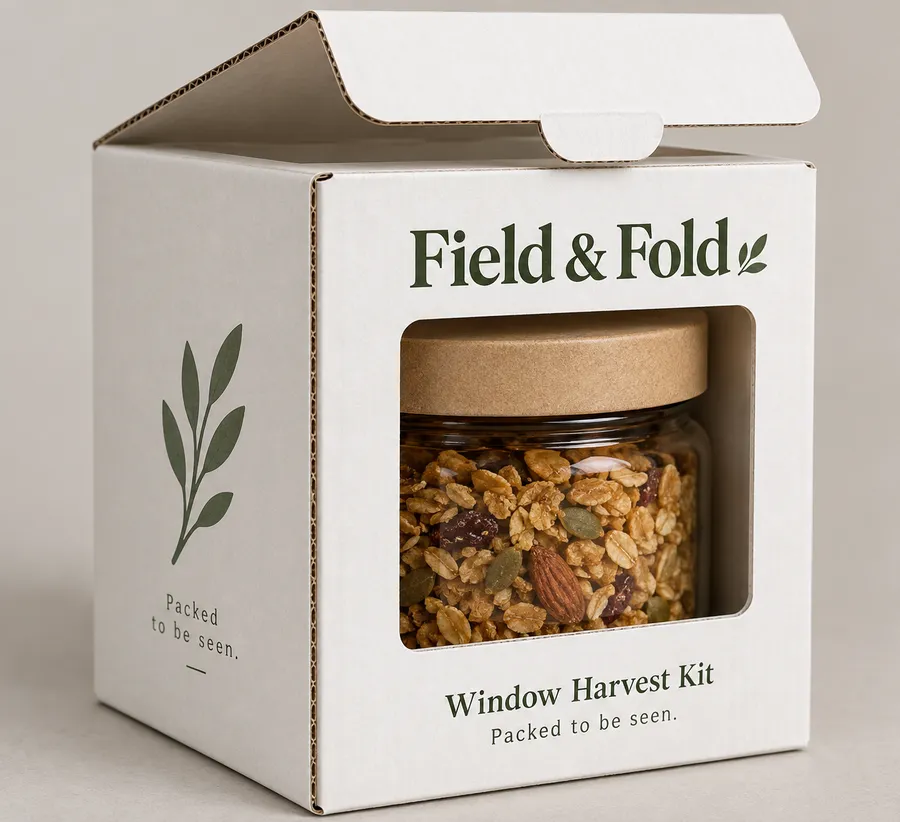
The white outer face gives a brand a controlled canvas for product information while the fluted interior separates the packed item from routine handling. A window, tuck closure, or mailer-style opening can be built into the same brief when the product needs visibility or a particular unboxing path.
Use a white printed panel and optional window to explain or preview a product on a shelf or counter.
Specify the packed dimensions, closure, and handling route when the carton travels as a parcel or delivery pack.
Plan the item count, divider logic, and outside message when a single box introduces a grouped set.
Shape the cavity and viewing area around handmade goods, produce, or other items that benefit from a visible presentation.
Use the white surface to establish hierarchy first, then decide whether a finish should change a selected wordmark, panel, or tactile detail.
Internal support depends on geometry, weight, orientation, fragility, closure, presentation, and fulfillment. A paperboard retaining feature, divider, riser, or separate insert may be appropriate after the product and outer structure are reviewed together.
Keep the viewing area aligned to the product face while leaving folds and closure zones usable.
State the item count and arrangement when one box carries a set, so the cavity and divider logic match the pack.
Share whether the box is shelf-presented, locally delivered, or parcel shipped so the structure is discussed in context.
A clear brief lets the box geometry and artwork be reviewed together before production.
Share packed dimensions, product count, weight, orientation, route, window preference, and any insert or divider need.
Choose the opening and panel approach, then provide current artwork or explain which faces need print coverage and finish.
Check folds, window position, copy, orientation, closure, and finish placement before approving production.
Once the proof is approved, the order enters production from 7 business days, with free US shipping on the standard path.
Need help with structure, materials, or production planning? See how we manufacture custom packaging.
A sample kit can help you compare white board surfaces, print coverage, and finish directions before committing the box brief. The $44.99 shipping charge is credited toward your first order.
Shipping charge: $44.99. Credited toward your first order.
Request a Sample KitFind clear answers about fit, materials, and ordering below.
Yes, a die-cut window can be part of the structure when its size and position are planned around the product, folds, closure, and remaining printed panels.
Send the packed length, width, and height, plus the widest points, orientation, product count, approximate weight, and any protrusions or support needs.
Corrugated board is the category's core direction. Kraft paperboard or SBS paperboard may be considered when the required structure or surface differs; the choice is reviewed against the actual use case.
Production begins from 7 business days after digital proof approval. The exact schedule depends on the selected construction, print coverage, and finish.
Dieline and proof review are included on every order at no extra charge. Review the window, folds, closure, orientation, copy, and finish placement before approval.
Orders start at 50 units and scale up to 500,000 for bulk runs, with pricing from $0.34 per unit on larger quantities. Standard production is from 7 business days after digital proof approval.
Custom white corrugated boxes give brands a clean printable surface with the practical structure of fluted paperboard. Each order is made to order around your packed product and artwork, and the specification is confirmed against a digital proof before production.
Compare nearby products and request the format that best fits your next run.
Available product
Available product
Available product
Available product
Start with the packed product
Send the product dimensions, quantity, route, artwork status, and any window or support requirement. Easy Box Packaging can then scope the structure and prepare the proof for review.
Add your product details to see a quote summary.