Product seals
A repeated die cut seal can close a carton, pouch, or wrap while keeping the brand artwork in a consistent position on each application.

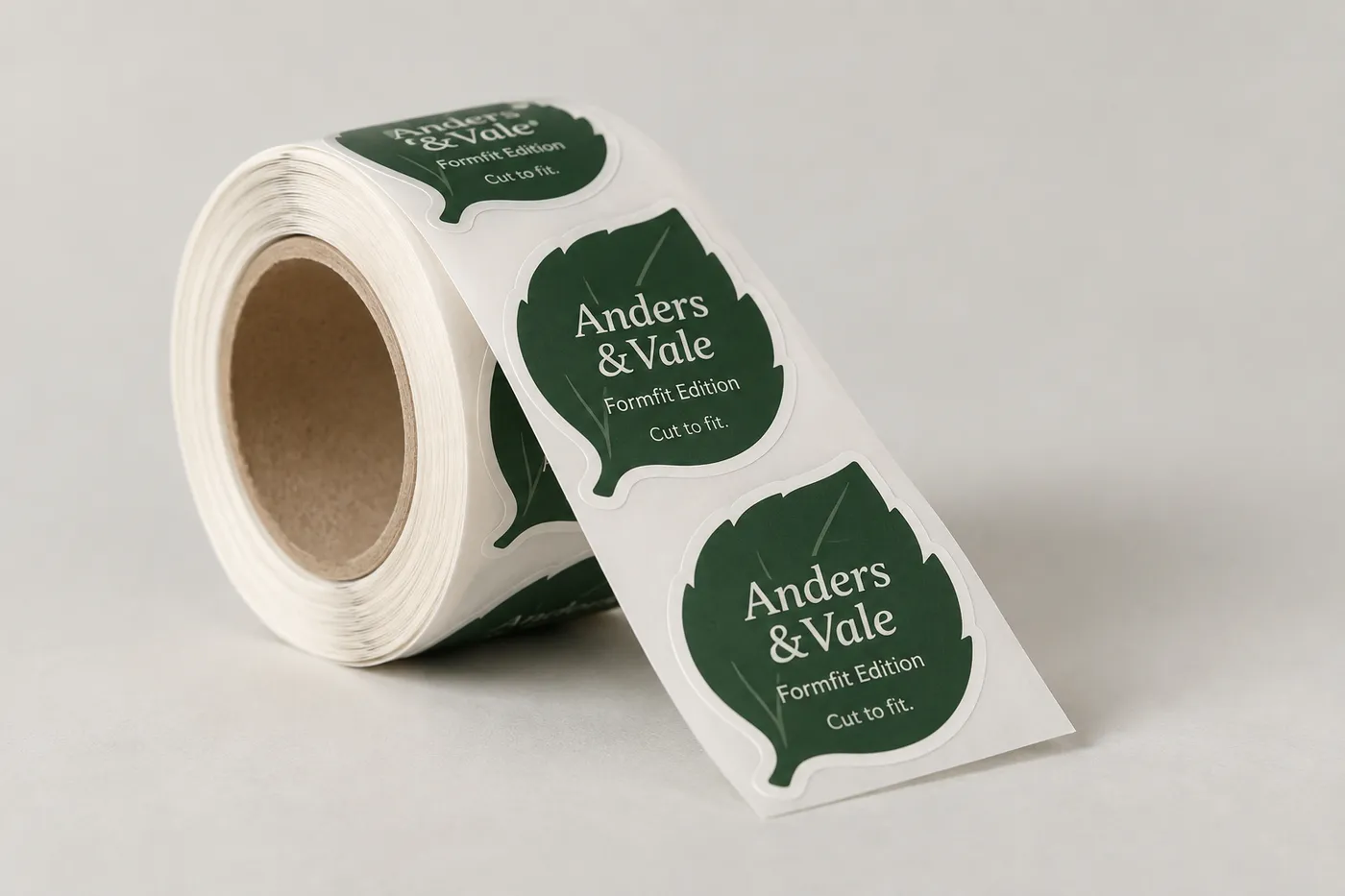
Horizontal roll of green printed leaf-shaped die-cut stickers on white release liner
Die-Cut Boxes
Custom die cut sticker rolls keep individually shaped stickers in a continuous, repeatable format for hand application, packing, labeling, or retail presentation. Share the finished sticker shape, artwork, repeat spacing, roll direction, core preference, and intended application so the roll can be reviewed as a usable dispensing format rather than a loose stack of singles.
Last updated
Working quote
Product brief
A custom die cut sticker roll is useful when individual stickers need to arrive in a continuous sequence rather than as loose singles or a sheet. Start with the application: a team may peel stickers by hand, use a counter dispenser, place one on an outgoing parcel, or apply a seal to a product. Those moments change the useful orientation of the roll, the way the release liner is presented, and the information needed for a proof. Tell us whether the roll will sit on a work surface, feed from a dispenser, or be handed to a packing operator.
The product itself can be a simple repeated shape or a defined silhouette that follows the artwork. A round seal, a small wordmark panel, a die cut around an illustrated shape, and a larger product label each create different questions for the repeat. The custom die cut should be judged at the size it will be handled, with the printed area, cut edge, liner around the sticker, and spacing between repeats visible in the proof.
Send the finished width and height of the sticker, the widest point if the outline is irregular, the intended corner or contour treatment, and whether every repeat uses the same artwork. If a sticker has a tail, notch, tab, or asymmetrical edge, call it out rather than describing it only as a circle or rectangle. A product photo, outline drawing, or existing sample can clarify the shape, while the artwork file shows which elements need to stay inside the cut path. The final cut relationship and practical clearance are reviewed during specification; do not assume that a stock label size will match your application.
Repeat information matters just as much as the face shape. Explain whether the roll contains one design throughout, a planned sequence, or a small set of designs repeated in order. Note which edge should lead from the roll, which side should face outward, and whether the first sticker needs a particular presentation for hand application. For a counter dispenser, the feed direction and peel behavior should be discussed together. For packing use, share the surface receiving the sticker and the point where the operator needs to grasp or peel it.
A label applied to a small carton may need a compact silhouette and a clear center mark, while a larger seal or product identifier may need a different relationship between the printed face and the cut edge. A roll used on parcels can be specified around the closing area and the operator's reach. A roll used for retail presentation can place more emphasis on the visible front design and consistent repeat order. These are use-case decisions, not reasons to promise that one shape or roll direction works everywhere.
If the sticker will be applied to a curved, textured, coated, or irregular surface, include that information with the quote request. The surface, application angle, storage conditions, and desired removal behavior may affect the specification that needs review. If the roll will be kept near heat, moisture, or dust, describe the working environment so the proposed face, liner, and winding direction can be discussed instead of assumed.
The printed sticker face should make the intended message legible at the actual size, especially when a small repeat is applied quickly. Share the brand name, product name, variable information if any, and the visual hierarchy you want the proof to show. Foil stamping can be considered for selected lettering or linework subject to artwork review. Matte lamination or gloss lamination can also be considered when the surface treatment needs to support the visual direction. The chosen treatment remains a specification decision rather than an automatic improvement.
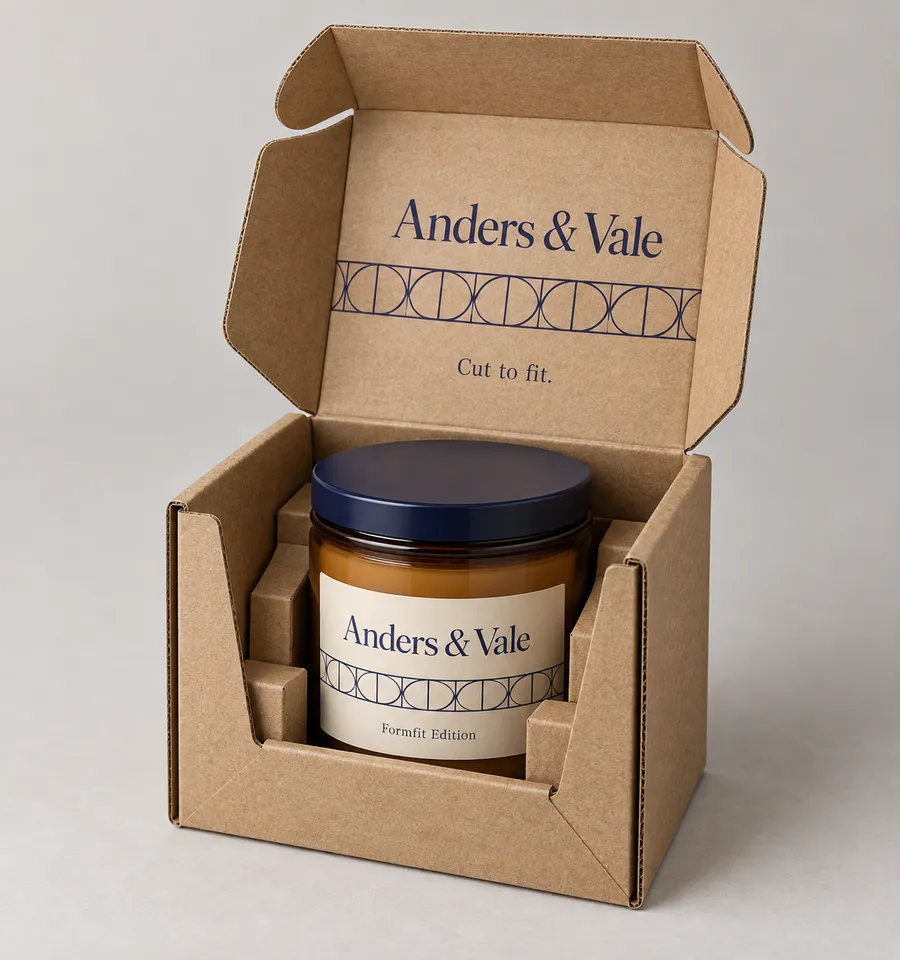
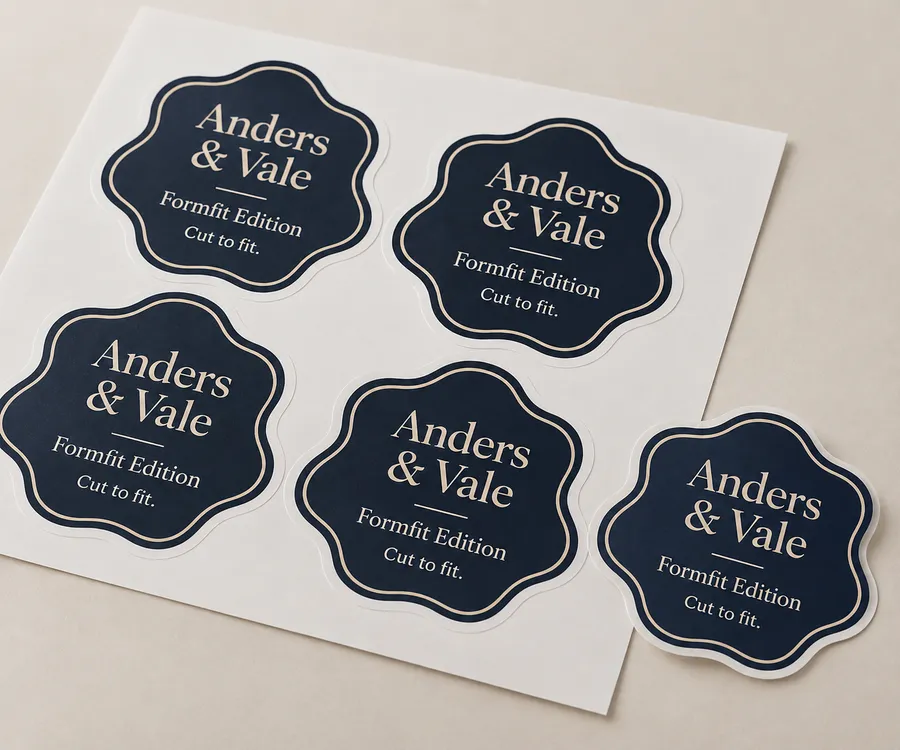
Keep the sample print layout separate from your production artwork: the sample visuals use Anders & Vale, Formfit Edition, and Cut to fit. Your quote should include the actual customer-supplied design and any required repeat sequence. The dieline and proof review can then show the printed face, cut contour, liner boundary, and roll orientation together before production begins.
The standard minimum order is 50 units. Production begins from 7 business days after digital proof approval, and Free US shipping is included on the standard fulfillment path. Dieline and proof review are included at no extra charge. A sample kit carries a $44.99 shipping charge credited toward your first order when you need to compare a physical print direction or handling format before committing to the sticker roll.
For a useful quote, send the sticker width and height, the outline or shape reference, artwork status, repeat order, roll direction, core preference, intended application, quantity, and any dispenser or packing constraints. Include a photo of the surface receiving the sticker when the application is unusual. Quote requests are typically answered the same business day and always within 24 hours. After the specification is agreed, review the proof for the printed face, cut line, repeat sequence, feed direction, and first-sticker presentation.
A custom die cut sticker roll is a small format with several connected decisions: the shape determines how the sticker reads, the repeat determines how it feeds, and the application determines what the operator needs to see and handle. Describing those decisions together gives the quote and proof a clear job to solve.
Proof points
The useful proof shows the actual sticker face and the physical sequence around it, so a buyer can check both the artwork and the handling format.
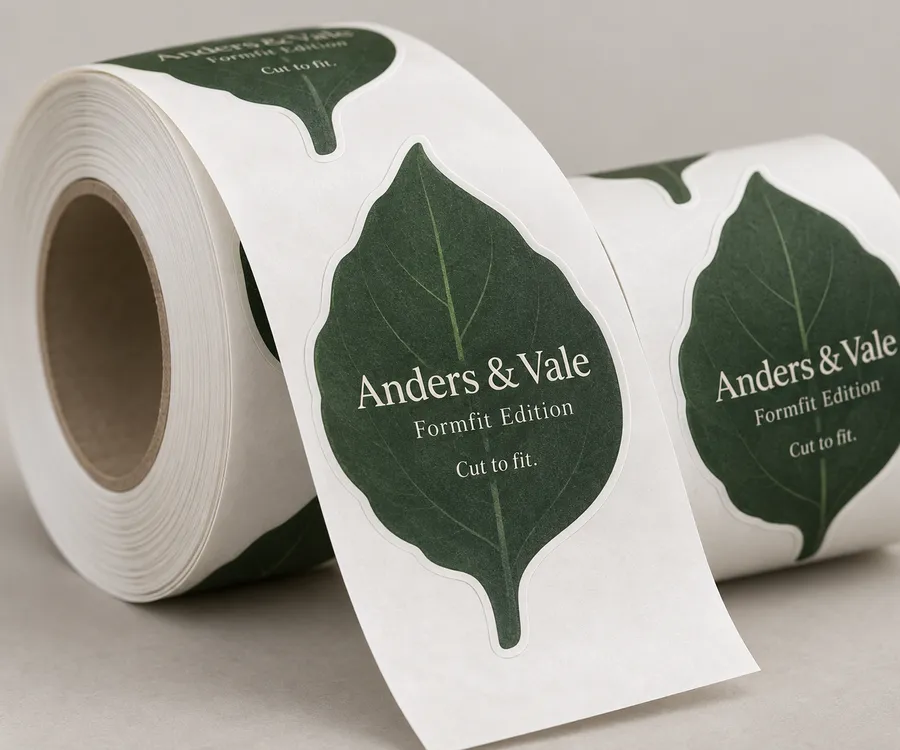
The roll is more than a group of stickers wound together. Its cut contour, repeat order, feed direction, liner presentation, and application surface all affect how the finished format is handled. Share the working context so those choices can be reviewed as one specification.
A repeated die cut seal can close a carton, pouch, or wrap while keeping the brand artwork in a consistent position on each application.
A continuous roll can keep a defined sticker shape available beside a packing station when loose singles would be harder to organize.
A custom silhouette can carry a product name or visual mark on a surface where the sticker itself is part of the presentation.
A planned repeat order can keep a supplied campaign design in sequence when several related sticker faces need to be applied by hand.
The printed face should remain legible at the finished sticker size and align with the custom cut. Choose any finish direction with the artwork scale, cut contour, and intended application in mind.
A practical proof should connect the visible design with the way the operator receives, peels, and applies each repeat. These are the details that keep the roll format understandable before production.
The outline follows the intended sticker silhouette, including any irregular edge, tab, notch, or corner treatment shown in the supplied artwork.
The proof identifies whether one design repeats throughout or whether several supplied designs appear in a defined order.
The leading edge, outward-facing side, core preference, and application surface are reviewed together when a dispenser or packing station is involved.
A quote is easier to evaluate when the sticker shape, repeat, handling direction, artwork, and application surface are described together.
Provide finished width and height, the outline or cut path, widest point, and any tab, notch, or asymmetrical feature.
Explain hand application, a counter dispenser, parcel packing, product sealing, or another use, including the receiving surface.
State the leading edge, outward-facing side, core preference, repeat order, quantity, and any station or dispenser constraint.
Confirm the artwork, cut line, repeat sequence, feed direction, liner presentation, and selected finish before production begins.
Need help with structure, materials, or production planning? See how we manufacture custom packaging.
A sample kit ships for a $44.99 USD charge credited toward your first order, useful when you need to compare a physical print direction or handling format before approving the sticker roll.
Shipping charge: $44.99. Credited toward your first order.
Request a Sample KitFind clear answers about fit, materials, and ordering below.
Share the finished sticker width and height, outline or cut path, artwork status, repeat order, roll direction, core preference, quantity, application surface, and any dispenser or packing-station constraint.
A planned sequence of several supplied designs can be reviewed. State the order in which the faces should repeat and identify whether the first sticker needs a particular presentation.
Describe which edge should lead from the roll, which side should face outward, and how the operator or dispenser receives the sticker. A photo of the application point can help clarify the orientation.
Foil stamping, matte lamination, and gloss lamination are the category finish directions. The selected treatment remains subject to artwork review, especially where it meets a custom cut contour or small lettering.
The approved standard estimate is from 7 business days after digital proof approval. Orders start at 50 units, and free US shipping is included on the standard fulfillment path.
Orders start at 50 units and scale up to 500,000 for bulk runs, with pricing from $0.23 per unit on larger quantities. Standard production is from 7 business days after digital proof approval.
Custom die cut sticker rolls keep individually shaped stickers in a continuous, repeatable format for hand application, packing, labeling, or retail presentation. Each order is made to order around your packed product and artwork, and the specification is confirmed against a digital proof before production.
Compare nearby products and request the format that best fits your next run.
Available product
Available product
Available product
Available product
Specify the application
Send the sticker shape, artwork, repeat order, roll direction, quantity, application surface, and finish preference. Easy Box Packaging can then review the printed face and handling format as one quote-ready specification.
Add your product details to see a quote summary.