Fitted retail presentation
A shaped cavity can position a small product while the kraft exterior carries the printed brand treatment and the opening remains easy to understand.

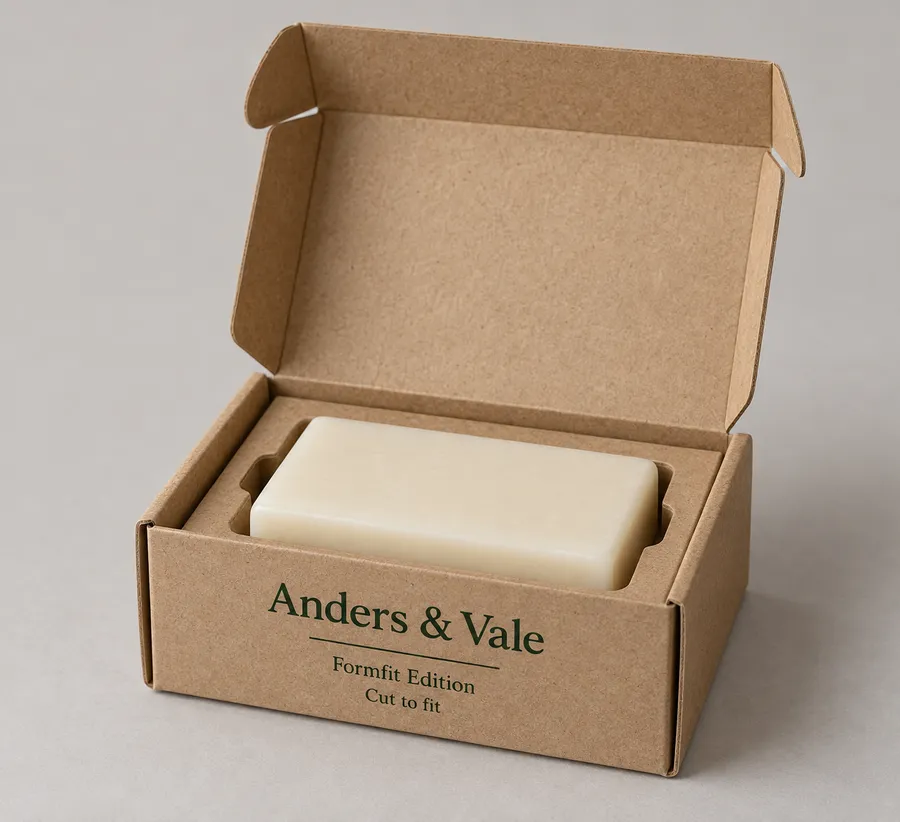
Open kraft paperboard box with a fitted die-cut cavity and cream soap bar
Die-Cut Boxes
Custom die-cut kraft boxes are built around the product's actual footprint and the job the cut needs to perform. Choose a fitted cavity, window, locking tab, or shaped opening, then review the Kraft Paperboard, Corrugated Board, printed panels, and finish together with the way the package will be filled and handled.
Last updated
Working quote
Product brief
Die-cut kraft boxes make sense when the outline or opening has a job beyond holding a rectangular volume. A fitted cavity can position one product in a defined place. A window can reveal a selected surface before the box opens. A locking tab, tuck feature, or shaped panel can change how the package closes or how a customer reaches the contents. The right format starts with that decision, not with a generic box name.
Kraft Paperboard gives the package a natural fiber appearance, while the die line determines how the blank folds, closes, and presents the product. If the package will carry a small soap bar, candle, sample, accessory, or gift item, the product's finished shape should be part of the brief. A round corner, protruding cap, handle, or irregular edge can change the cavity and the surrounding clearance. Describe what the cut must hold, show, protect, or open so the structural direction stays tied to a real use.
Accurate product information helps the quote answer the fit question early. Share finished length, width, height, widest point, packed weight, orientation, and any surface that must remain visible. For a fitted construction, an outline or physical sample can add useful context when the product is curved, tapered, or uneven. The internal dimensions should follow the product geometry and practical clearance. Those internal dimensions then inform the panel layout, folds, closure allowances, and final external size.
That sequence matters because a die-cut outline is part of the structure, not a decorative graphic placed on top of a standard carton. A box that is too loose can change how the product sits during handling; a box that is too tight can make filling and removal awkward. The specification should also note whether the box will be filled by hand, packed into a shipping case, displayed on a shelf, or handed over as a gift. Those details help the dieline review consider orientation and opening behavior without promising a universal fit before the product is reviewed.
Kraft Paperboard is a natural starting point for a printed carton where tactile surface character and a defined die-cut silhouette matter. Corrugated Board can be considered when the package needs a more structured shipping or retail route. SBS Paperboard is another category material direction when a smoother printed surface is preferred. The final choice should be reviewed with the product weight, dimensions, cut complexity, artwork, and intended handling together.
The construction decision is separate from the cut decision, but the two need to work together. A fitted cavity may be integrated into the carton blank or coordinated with an internal paperboard support, depending on the product geometry, weight, fragility, orientation, presentation, and desired reveal. A window changes the printable and structural area around the opening. A locking tab or tuck panel needs enough surrounding panel space to close as intended. Sharing these requirements before a dieline is prepared leaves fewer structural questions for proof review.
A small personal-care item can use a kraft carton with a shaped cavity when the presentation depends on the product sitting in a known position. A candle or gift item may use a window when seeing the surface or color is part of the handoff. A sample or accessory pack can use a tuck feature or locking tab when the opening sequence needs to be clear without adding a separate closure component. A compact retail product can use a custom silhouette to make the package's outline part of its presentation.
These are different jobs, even when the outside material is similar. A cavity is about position. A window is about visibility. A tab or tuck is about closure and access. If the same box needs to carry several items, include the item count, arrangement, separators, and the moment when the customer removes the contents. That information gives the structural review a usable picture of the finished pack rather than an abstract request for a custom shape.
The front, side, top, cut edge, and closure can each become part of the printed reading order. Share the artwork status and the panels that need branding, instructions, or product information. Foil Stamping can be considered for selected lettering or linework after artwork review. Matte Lamination can set a lower-sheen surface direction. Spot UV can create localized gloss contrast on chosen artwork areas. Each finish should be checked against folds, cut edges, small type, and the material appearance.
For a kraft box, the natural brown surface can remain visible in selected areas or be used as part of the visual direction. The proof should make it clear where ink coverage, open kraft, folds, and cutouts meet. A simple mockup cannot replace a dieline review because the physical panel sequence determines what a customer sees first and how the artwork wraps around the structure.
Start with the product geometry and the intended job of the cut. Include finished dimensions, packed weight, orientation, quantity, artwork status, and whether the box is for retail presentation, gifting, sampling, direct shipment, or another defined route. If a window, cavity, handle-like opening, tab, or tuck feature is required, describe what it should reveal or how it should operate.
Orders on the standard fulfillment path start at 50 units. The approved production estimate is from 7 business days after digital proof approval, so the schedule should be considered after the structural and printed layout has been reviewed. Free US shipping is included on the standard fulfillment path. If you need to compare board feel, print treatment, and die-cut detail before committing to a run, the sample kit ships for a $44.99 charge credited toward your first order.
Easy Box Packaging reviews the supplied product information, prepares the structural direction, and brings the cut and printed panels into a dieline and digital proof. Review the product position, clearance, folds, closure, cut edges, artwork orientation, and selected finish as one package. Then approve the proof for production. A focused review is especially useful for this format because the cut is part of the customer experience, whether its job is to hold, reveal, close, or change how the box opens.
Send the product dimensions, the cut's purpose, quantity, preferred material, finish direction, and artwork status to request a quote for custom die-cut kraft boxes. If the price depends on the final size, board direction, quantity, or finish, the quote will be prepared from those product-specific details rather than a generic catalogue figure.
Proof points
A useful proof makes the relationship between the kraft surface, the custom cut, the product position, and the printed reading order easy to inspect before artwork is approved.
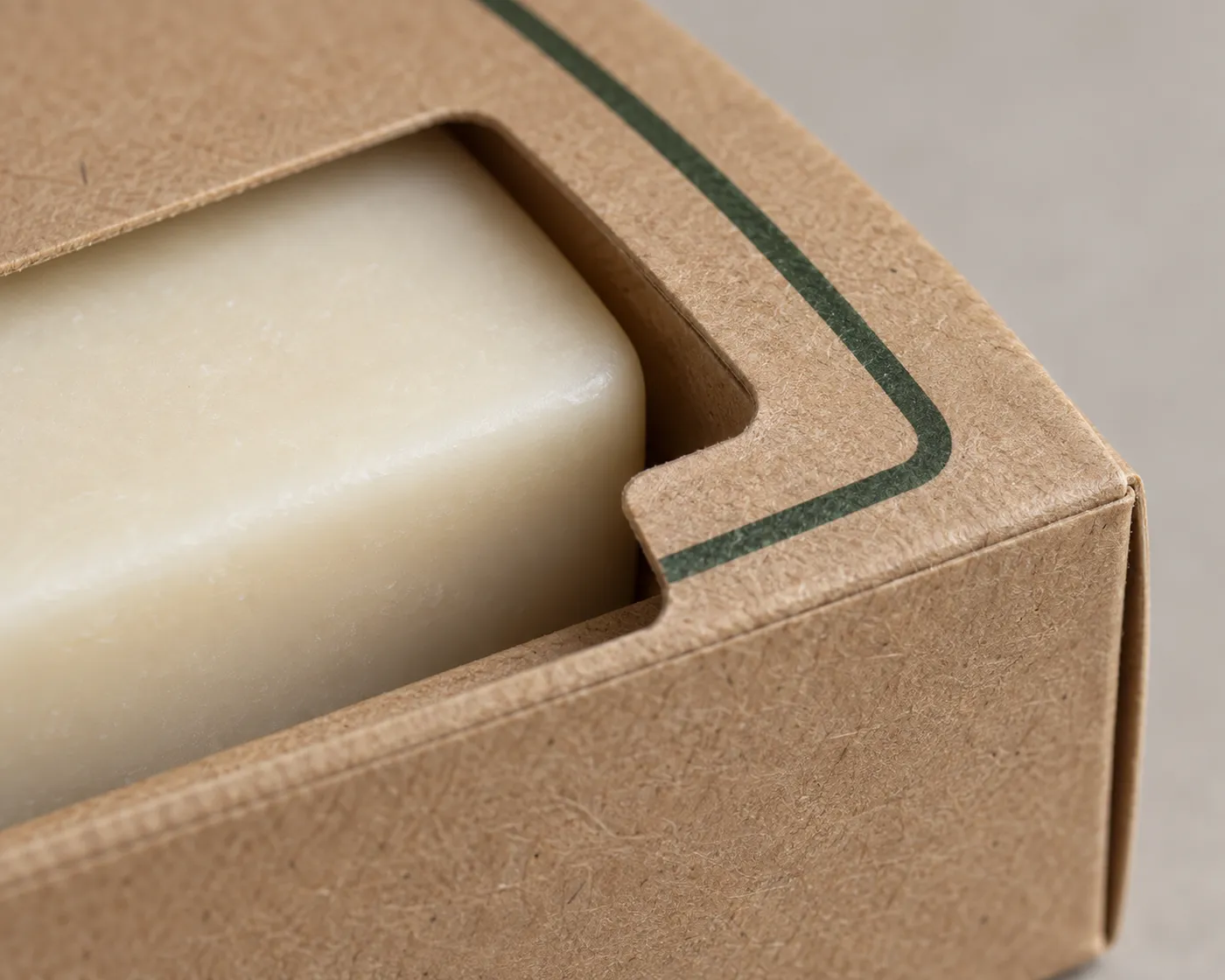
Begin with the function of the cut: hold a product in a defined position, reveal a surface through a window, create a locking tab, or shape the opening sequence. Finished product dimensions, widest point, packed weight, orientation, and any feature that must remain visible give the kraft-box dieline review a useful starting point.
A shaped cavity can position a small product while the kraft exterior carries the printed brand treatment and the opening remains easy to understand.
A die-cut window can reveal a selected surface, color, or texture before the kraft package is opened.
A tuck feature or shaped opening can make the reveal and removal sequence part of the presentation for a compact item.
A locking tab, tuck panel, or product-shaped silhouette can give a printed kraft carton a clear structural role.
The kraft surface, front panel, side walls, top, cut edge, and closure create different reading angles. Select a treatment with the folds, opening, product visibility, and artwork scale in mind.
Support is most useful where the product geometry, die line, printed panels, and order details meet. The review keeps the cut's purpose visible while the material and finish direction are being considered.
Length, width, height, widest point, shape, packed weight, and orientation inform the cavity, clearance, and panel proportions.
A fitted cavity, window, locking tab, tuck feature, or shaped opening is selected for the job it needs to perform.
The dieline, folds, cut edges, closure, printed panel direction, and finish treatment are reviewed together before production.
A quote is easier to evaluate when the product, cut purpose, material direction, and artwork status are described together rather than reduced to the product name alone.
Provide length, width, height, widest point, shape, packed weight, orientation, and any part that must remain visible or accessible.
Explain whether the box needs a fitted cavity, window, locking tab, tuck feature, shaped opening, or another functional cut.
Explain whether the box is intended for retail presentation, gifting, sampling, direct shipment, or another defined handoff.
Share any preference for Kraft Paperboard, Corrugated Board, SBS Paperboard, Foil Stamping, Matte Lamination, or Spot UV.
Confirm the product position, cut feature, folds, printed panel orientation, closure, and finish representation in the digital proof.
Need help with structure, materials, or production planning? See how we manufacture custom packaging.
A sample kit lets you examine board feel, printed treatment, and die-cut detail before approving the custom box. It ships for a $44.99 USD charge credited toward your first order.
Shipping charge: $44.99. Credited toward your first order.
Request a Sample KitFind clear answers about fit, materials, and ordering below.
It is a kraft paperboard or corrugated package built around a custom-cut dieline. The cut can create a fitted cavity, window, locking tab, tuck feature, or shaped opening, depending on whether the package needs to hold, reveal, close, or change how the product is accessed.
Share the product's length, width, height, widest point, shape, packed weight, orientation, intended route, quantity, artwork status, and the feature the cut needs to perform. An accurate outline or sample is helpful when the product has curves, tapers, protrusions, or an irregular edge.
Kraft Paperboard, Corrugated Board, and SBS Paperboard are the category material directions. The choice is reviewed with the product geometry, die-cut complexity, printed surface, presentation, and fulfillment route.
Foil Stamping, Matte Lamination, and Spot UV are available finish directions. The selected treatment remains subject to artwork review, especially where it meets folds, cut edges, closures, or small lettering.
The standard fulfillment path starts at 50 units. Production is from 7 business days after digital proof approval, and free US shipping is included on that path. A sample kit is available with a $44.99 USD shipping charge credited toward the first order.
Orders start at 50 units and scale up to 500,000 for bulk runs, with pricing from $0.22 per unit on larger quantities. Standard production is from 7 business days after digital proof approval.
Common uses include fitted retail presentation, windowed product display, gift and sample packaging, and functional branded carton. The final specification is set by the packed product and how it will be handled.
Compare nearby products and request the format that best fits your next run.
Available product
Available product
Available product
Available product
Plan the structure
Send the product geometry, the job the cut needs to do, intended route, material direction, finish preference, quantity, and artwork status. Easy Box Packaging can then review the structural and printed specification together.
Add your product details to see a quote summary.