Retail take-home packaging
A printed carry bag for a boxed purchase leaving a shop, counter, or collection point.

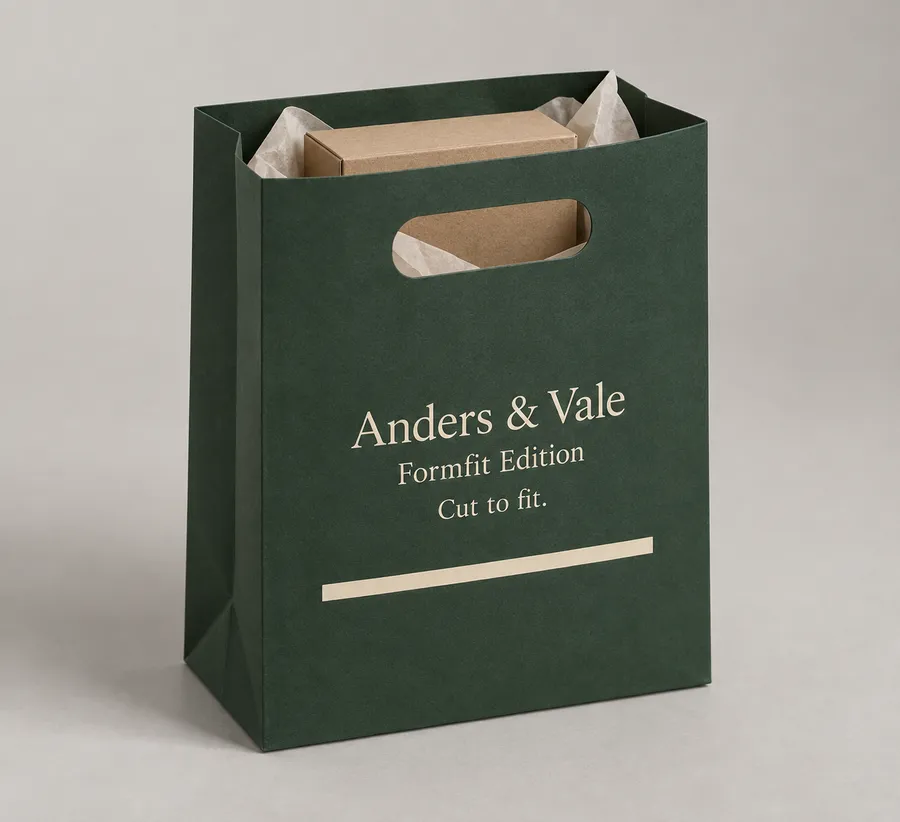
Printed paper carry bag with a die-cut handle holding a compact kraft retail carton
Die-Cut Boxes
Custom recycled die cut handle bags are made as gusseted paper carry bags with a handle opening cut into the bag panel rather than a separate rope or ribbon attachment. The bag is sized around the products and load it needs to carry, then reviewed for print, finish, and dieline details before production.
Last updated
Working quote
Product brief
A die-cut handle changes the bag's carrying point without adding a separate rope or ribbon attachment. The opening is cut into the upper panel, so the bag's paper structure, the shape of the cut, and any reinforcement around that area all belong in the same construction discussion. That gives a custom recycled die cut handle bag a clean, integrated carry feature for retail take-home packaging, boutique presentation, or a small product bundle. The handle is functional rather than decorative: its height, width, edge shape, and relationship to the top edge need to be reviewed with the filled bag in mind. A different load or bag size can change that relationship, even when the overall style remains the same.
Sizing starts with the items that will be placed inside the bag, not with a generic shopping-bag label. Share the packed length, width, and height of the product or bundle, along with its orientation, the amount of tissue or secondary packaging, and whether one or several items will share the bag. A flat carton may need a shallow gusset, while a rounded or layered bundle may need more side depth. The expected fill level also affects where the handle sits and how much paper remains above the packed contents. The final allowance is confirmed during specification and dieline review, so the quote should describe the actual packed arrangement rather than a guessed clearance. If several product sizes are planned, each materially different size should be scoped as its own dieline decision even when the same bag style is retained.
The handle opening should be considered with the paper stock, bag width, gusset, product weight, and carrying route together. A lighter retail item may suit a straightforward cut, while a fuller or heavier bundle may call for a different paper direction or a reinforced area around the opening. There is no single load rating that can be applied to every custom paper handle bag without knowing those variables. The side gusset, base fold, top edge, and handle cut also work as one structure: changing one can alter how the filled bag hangs in the hand. The specification should therefore describe what the bag will carry and how it will be handed over or transported. That information lets the construction review address the cut edge and the surrounding panel instead of treating the handle as an isolated graphic shape.
Kraft Paperboard is the main material direction to review for this carry-bag format, especially when the brand wants the bag surface and folded construction to remain visible in the presentation. An FSC-certified paper option is available when that stock direction fits the order; it does not mean every finished bag uses certified material. The printed front and back panels can then be considered with Foil Stamping, Matte Lamination, or Spot UV from the category finish range. Foil Stamping can highlight selected lettering or linework subject to artwork review. Matte Lamination can change the surface appearance and handling feel, while Spot UV can create a localized contrast on chosen artwork areas. The selected treatment needs to be checked against the handle opening, folds, gussets, small type, and the panel areas that will be touched most often.
Artwork planning for a die-cut bag has to leave the handle opening and fold lines in the right places, so the printed front panel is planned around the physical cut rather than as a flat rectangle. Share the artwork status, the panels that need branding, and any preference for full-panel print, a restrained wordmark, or a focused finish detail. A dieline and digital proof review are included on every order at no extra charge. That review is where the handle position, gusset folds, panel orientation, and visible print area are checked together. The proof should be approved before production begins. If the product arrangement, quantity per bag, or intended carry route changes after the first specification, flag the change so the bag's size and handle relationship can be reviewed again.
A useful quote request includes the packed product dimensions, expected load, number of items per bag, target quantity, artwork status, preferred paper direction, finish preferences, and delivery destination. The standard minimum order is 50 units. After digital proof approval, production runs from 7 business days, and quote requests are typically answered the same business day, always within 24 hours. The same 7 business days estimate applies only after the proof is approved. US shipping is included on the standard fulfillment path. Pricing remains quote-only because bag dimensions, gusset depth, handle construction, print coverage, and finishing choices all affect the scoped build. Sending the packed arrangement and intended use with the request gives the team enough context to discuss the bag style, handle cut, paper, print, and finish as one coordinated specification.
Proof points
This format is built around a functional cut in the bag panel rather than a separate attached handle. The visible construction questions are the gusset and base fold, the paper direction, the opening shape, and the amount of material left around the cut. Those details are considered with the product arrangement and intended handling route, so the finished bag reads as one coordinated carry package.
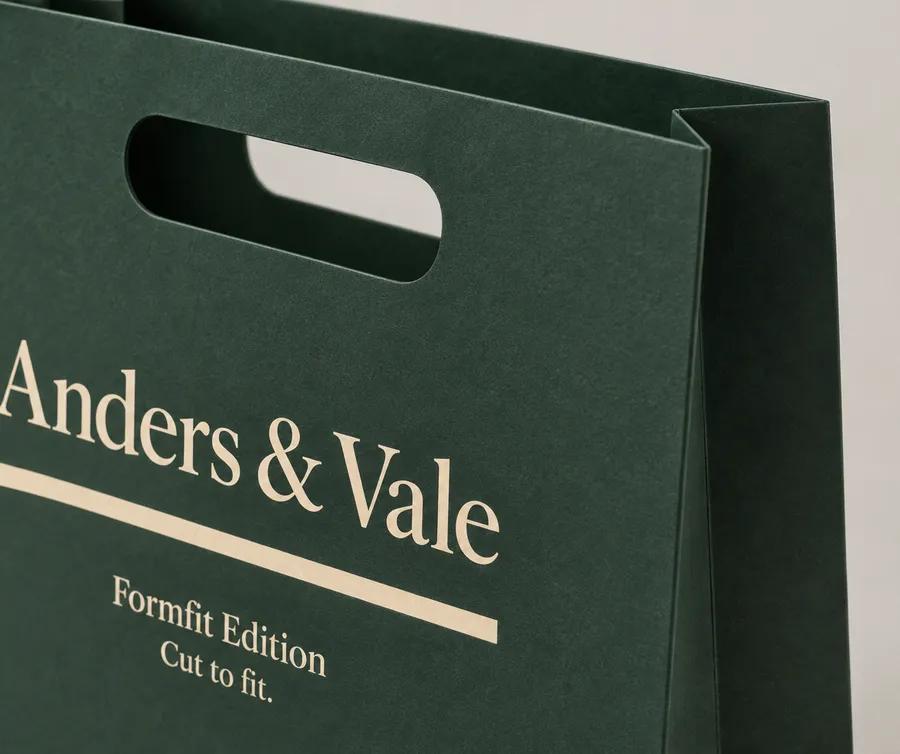
A custom recycled die-cut handle bag should be sized from the packed product, the intended fill level, and the way the bag will be carried. Share the packed length, width, and height, the product orientation, the amount of tissue or secondary packaging, and whether one or several items will sit inside. A shallow gusset can suit a flat carton, while a bulkier bundle may need more side depth. The handle opening also needs room above the contents and a considered relationship to the top edge. Final allowance is confirmed during specification and dieline review, so the quote should start with the actual packed arrangement instead of a guessed standard size. Different sizes are scoped as separate dieline decisions even when the same overall bag style is retained.
A printed carry bag for a boxed purchase leaving a shop, counter, or collection point.
A gusseted bag sized around a small product set, with the die-cut handle kept clear above the contents.
A branded hand-carry format for light materials or grouped items when the bag footprint is known in advance.
Foil Stamping, Matte Lamination, and Spot UV are the finish directions to review for the printed panels. Foil Stamping can draw attention to selected lettering or linework, while Matte Lamination can change the surface appearance and handling feel. Spot UV can create a localized contrast on chosen artwork areas. Each option should be checked against the gusset folds, die-cut handle opening, small type, and the panel areas that will be handled most often. The selected combination remains subject to artwork review, particularly where a finish approaches a fold or cut edge.
The handle bag is reviewed as a physical carry structure, a printed surface, and a dieline before production begins. Every order includes dieline and digital proof review at no extra charge, giving the team a defined point to check the handle opening, panel orientation, gusset folds, and visible artwork together. Quote requests are typically answered the same business day, always within 24 hours, once the packed arrangement and intended use are clear. A sample kit can also help you inspect the paper surface, handle opening, and print direction before committing to a full run.
The handle cut, gusset folds, panel orientation, and artwork placement are reviewed together before approval.
Quote requests are typically answered the same business day, always within 24 hours.
Request a sample kit to examine the paper surface and carry-handle construction before a full order.
A quote can be scoped accurately when the packed arrangement and the carry use are described together. Send the product dimensions, expected load, quantity, artwork status, preferred paper direction, finish preference, and delivery destination so the bag size, handle opening, printed panels, and production route can be discussed as one specification.
Provide the length, width, and height of the product or bundle as it will sit inside the bag.
State the approximate weight, number of items per bag, orientation, and any tissue or secondary packaging.
Share the panels that need branding and any preference for Foil Stamping, Matte Lamination, or Spot UV.
Send the available artwork or note that the artwork is still being prepared.
Check the handle opening, gusset folds, panel orientation, and visible artwork in the supplied review materials.
Need help with structure, materials, or production planning? See how we manufacture custom packaging.
Request a sample kit to inspect the paper surface, die-cut handle opening, folded gusset, and printed finish direction before committing to a full run.
Shipping charge: $44.99. Credited toward your first order.
Request a Sample KitFind clear answers about fit, materials, and ordering below.
The handle opening is cut directly into the bag panel rather than attached afterward as rope or ribbon. That makes the cut edge, surrounding paper, gusset, and top-panel relationship part of one construction review. The appropriate opening and any reinforcement depend on the packed product and expected handling route.
Share the packed length, width, and height, the product orientation, the number of items per bag, the amount of tissue or secondary packaging, and the approximate load. A flat carton and a rounded bundle can need different gusset depths, so the actual arrangement is more useful than a generic bag size.
That decision depends on the paper direction, bag width, gusset, product weight, handle position, and whether the cut area needs reinforcement. A fixed capacity cannot be stated without those inputs. The expected load and carry route should be included with the quote request so the opening and surrounding panel can be reviewed together.
The category finish directions are Foil Stamping, Matte Lamination, and Spot UV. Foil can highlight selected lettering or linework, Matte Lamination can change the surface appearance, and Spot UV can add localized gloss contrast. The selected treatment is reviewed against folds, the handle cut, small type, and the artwork itself.
The standard minimum order is 50 units. Production runs from 7 business days after digital proof approval, and quote requests are typically answered the same business day, always within 24 hours. Your final unit price is confirmed in a quote because the bag size, handle construction, print coverage, and finishing choices are scoped for the specific order.
Orders start at 50 units and scale up to 500,000 for bulk runs, with pricing from $0.30 per unit on larger quantities. Standard production is from 7 business days after digital proof approval.
Common uses include retail take-home packaging, boutique and pop-up presentation, and event and conference handouts. The final specification is set by the packed product and how it will be handled.
Compare nearby products and request the format that best fits your next run.
Available product
Available product
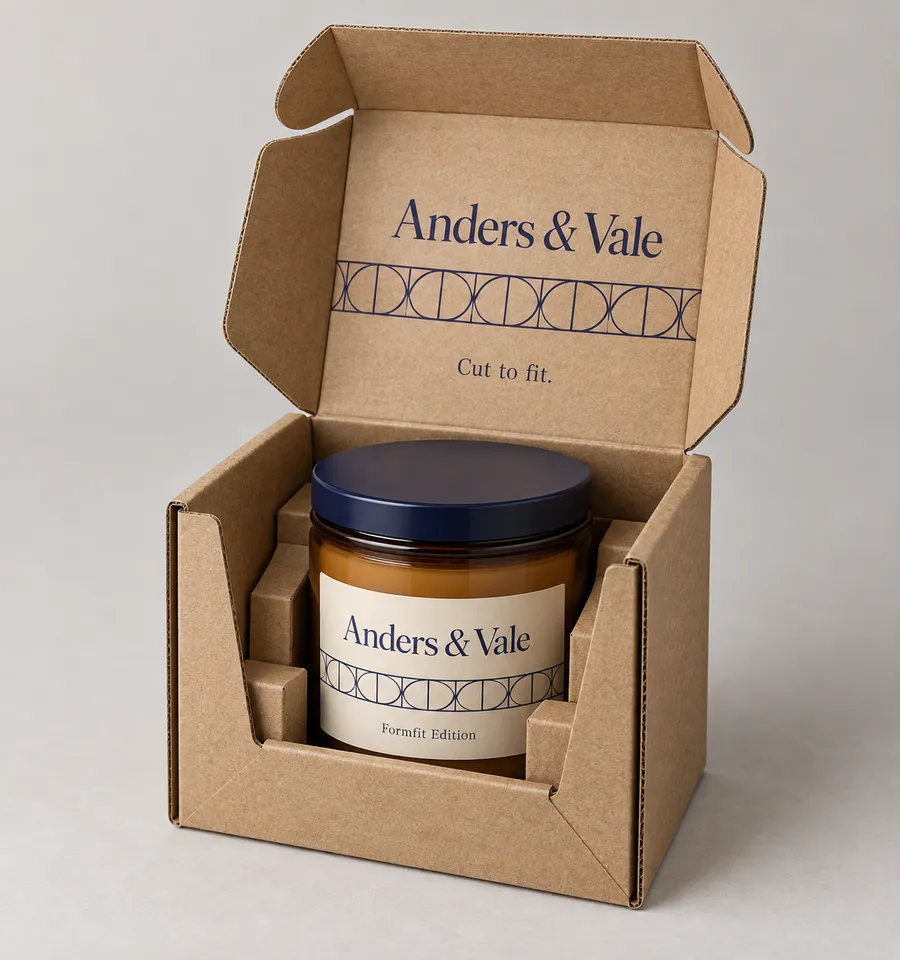
Available product
Available product
Get a Bag Specification
Send the packed dimensions, expected load, quantity, artwork status, and finish preference to start a quote for custom recycled die cut handle bags.
Add your product details to see a quote summary.