Single-product retail presentation
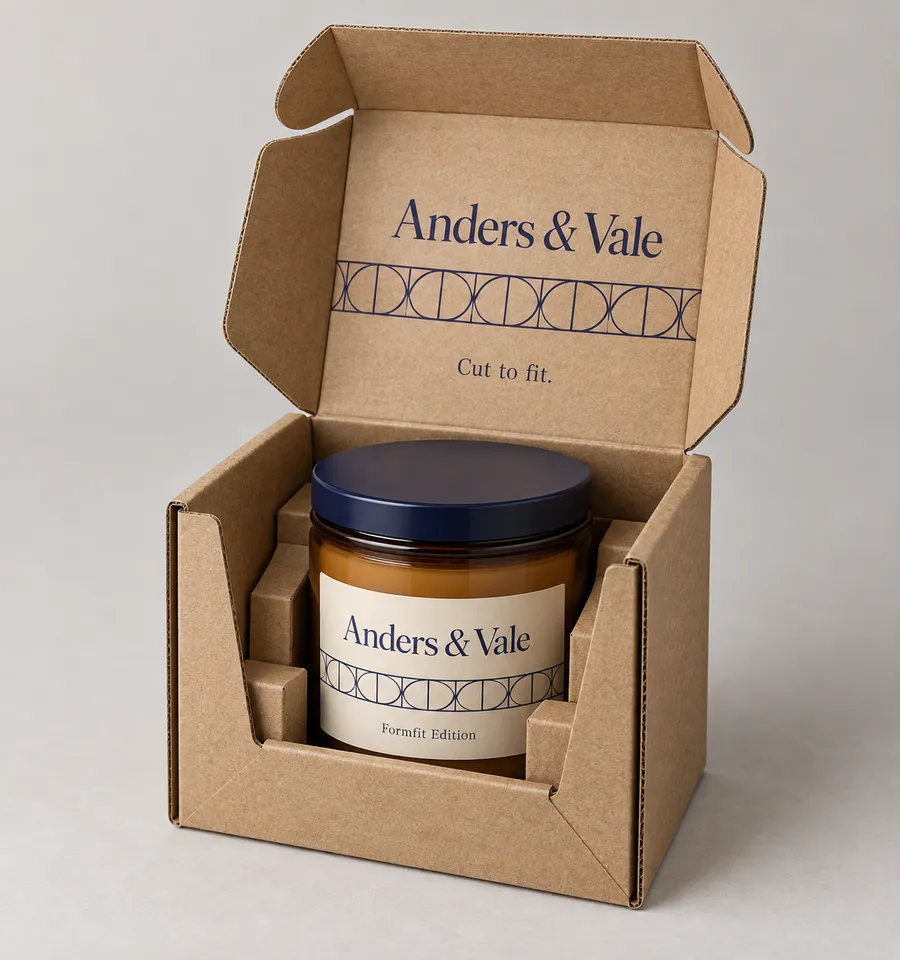
A fitted tray or shaped interior can keep one bar, bottle, jar or similarly defined item presented in a chosen position.

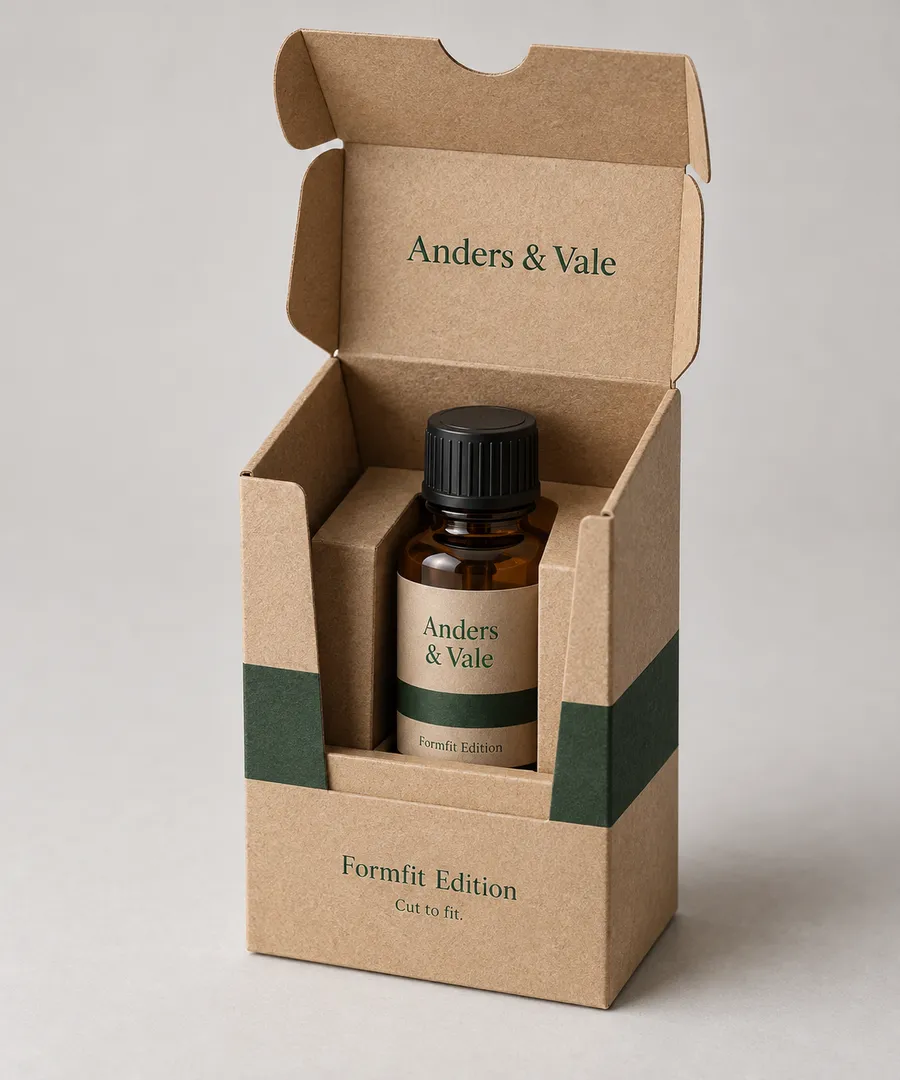
Custom die-cut cardboard carton with an amber bottle in its internal tray
Die-Cut Boxes
Custom die-cut cardboard boxes built around the job the cut needs to do: hold a product in a defined position, create a functional closure or handle, or change what a customer sees before opening. Choose kraft paperboard, SBS paperboard or corrugated board, then review the dieline, print and finish around the packed product
Last updated
Working quote
Product brief
The useful question is not simply whether a box is custom. It is what the cut needs to change. A fitted tray can hold a shaped product in a defined position. A window can make the product visible before opening. A handle can create a carry point, while a locking tab can guide how the carton closes. Those are different jobs, so the product shape, opening route and handoff moment should be described before a box style is chosen.
A die-cut cardboard box is made from a dieline that maps panels, folds, cuts and closures into one structure. That structure can be a compact folding carton for retail presentation, a more rigid board format for a product that needs a defined interior, or a corrugated build when the handling route calls for more board structure. The right direction depends on the packed product and how the box will be handled, not on the phrase die-cut alone.
The fastest way to reduce uncertainty is to send the finished packed product information rather than an approximate category size. Share the packed length, width and height, product weight, item count, orientation and any cap, shoulder, corner, handle or other projection that changes the fit. For an unusual silhouette, include a product image or outline so the cut can be considered around the actual shape.
A fitted tray needs the product shape as well as its outer measurements. A window needs the visible area and the panel it will sit in. A handle or locking tab needs room on the top panel and a clear relationship with the folds. Artwork should be considered alongside these elements because a cut edge, crease or opening can change where a wordmark or information panel reads. A materially different size is reviewed as its own version, with the dieline prepared around that version's packed dimensions. Final allowances are confirmed during specification and proof review rather than guessed from a generic box size.
Material choice should follow the product, handling route and printed surface. Kraft paperboard gives the package a natural brown base and a tactile paperboard character. SBS paperboard provides a smooth surface for a clean printed presentation. Corrugated board can be considered when the box needs a more structured paperboard build for shipping or retail display. The final selection should be reviewed with the cut, folds, product weight and intended use together.
An FSC-certified paper option is available when that material direction suits the project. That describes a paperboard or kraft stock option, not a blanket certification of every finished box. If the package combines a fitted interior with a printed outer sleeve, explain which surfaces need the smoothest print and which parts need to support the product. The board conversation is most useful when it is tied to the actual construction rather than treated as a standalone finish choice.
A secure presentation depends on more than one variable. Product geometry, weight, fragility, orientation, outer structure, desired reveal, fulfillment route and product-to-box clearance all influence whether the support should be integrated into the cardboard structure or provided as a separate paperboard component. Depending on that specification, a fitted tray, shaped panel or locking feature can guide the product while the final fit is checked against the packed item during review.
The closure deserves the same attention. A tuck, lock or other die-cut feature changes the top-panel layout, the folding sequence and the way a customer opens the package. If the product is handed over upright, the handle or closure may need a different relationship with the center of the package than it would for a box that rests flat. Describe the intended orientation and handoff so the cut is reviewed as part of the whole carton.
The cut is part of the printed design. Foil stamping can emphasize selected lettering or linework, subject to artwork review. Matte lamination creates a low-glare surface, while spot UV can highlight chosen artwork or lettering with a selective gloss treatment. Keep the final decision tied to the printed panels, folds, cut edges and any visible interior rather than choosing a finish in isolation.
Every order includes dieline and digital proof review at no extra charge. That review is where the product orientation, cut function, panel order, artwork placement and finish direction are considered together. It is also the point to review every size as its own version, with the dieline prepared around the packed dimensions for that version, even when the carton style remains the same.
Send the packed product dimensions, product weight, quantity, product count, orientation and a short description of what the cut should accomplish. Add the preferred material if you have one, the artwork status, the print coverage, any finish direction and the way the finished box will be carried, displayed or shipped. A product photo or shape reference is useful when the silhouette is not rectangular.
Orders start at 50 units. Production begins after digital proof approval from 7 business days, and free US shipping is included on the standard fulfillment path. Quote requests are typically answered the same business day and always within 24 hours. If you want to compare board feel or print direction before approving the job, a sample kit carries a $44.99 USD shipping charge credited toward the first order.
Proof points
The useful proof points are the parts that connect the cut to the finished box, rather than a generic list of packaging features.
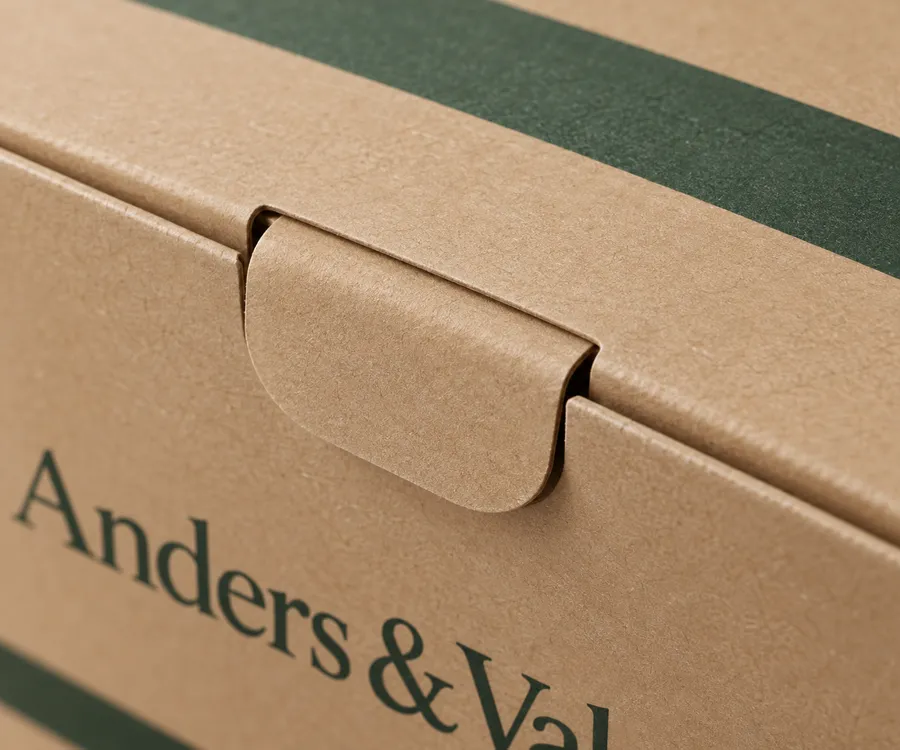
A die-cut cardboard box is defined by the job its cut performs. A fitted tray can hold a shaped product in a set position, while a window, handle or locking tab changes visibility, carrying or closure. Start with that function, then let the product shape and the way it will be handed over guide the dieline.
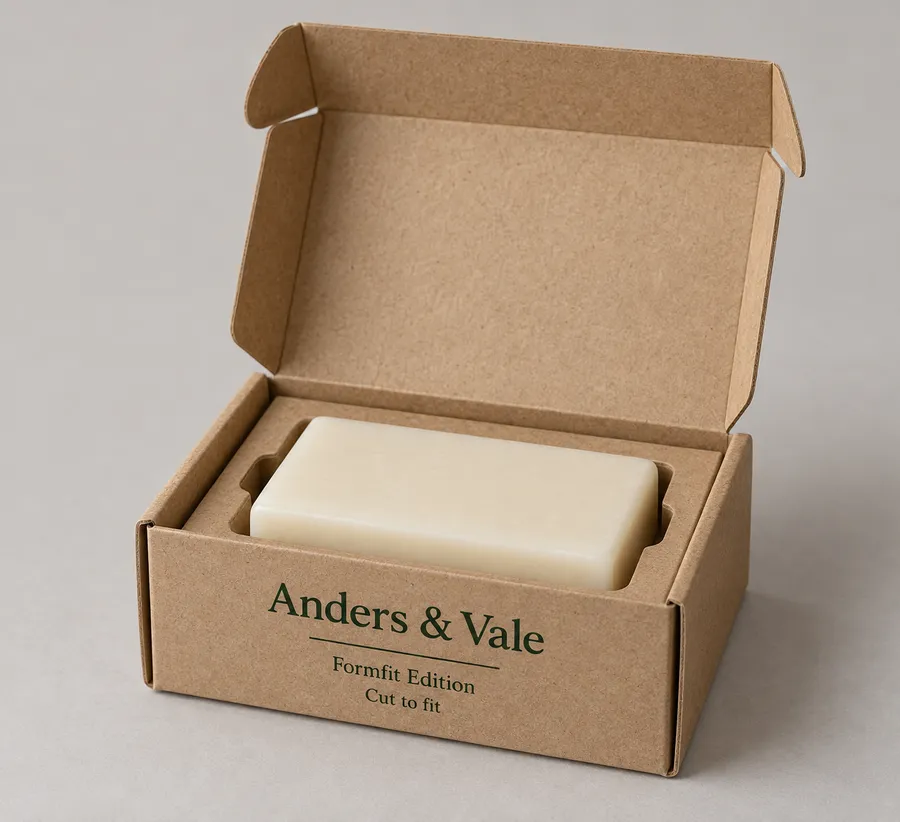
A fitted tray or shaped interior can keep one bar, bottle, jar or similarly defined item presented in a chosen position.
A panel cut can let a customer see the product or its surface before opening, with the opening planned around the printed layout.
A custom interior or locking structure can organize a small set when the item count, orientation and reveal order are known in advance.
An integrated handle or locking tab can change how a boxed product is lifted and opened without adding a separate rope or hardware part.
The cut creates edges, folds and openings that become part of the visible design. Plan the artwork around those features so the brand mark, information panels and finish accents remain readable on the assembled box.
Internal support should be chosen with the product geometry, weight, orientation, outer structure and presentation in view. The cut can do useful work inside the box, but the right arrangement is confirmed against the packed product.
A shaped paperboard tray can position a defined item when its outline and desired reveal are part of the specification.
A folding panel or locking feature can guide the product while keeping the support part of the main carton structure.
A separate paperboard support can be considered when product shape, fulfillment route or presentation calls for another internal layer.
A useful quote starts with the packed product and the function of the cut, not just a product name. The next steps turn that description into a reviewable box structure.
Provide packed length, width, height, weight, item count, orientation and any cap, shoulder, corner or other projection that changes the fit.
State whether the box needs to hold a shaped item, show the product, create a carry point, guide the closure or combine more than one function.
Share any preference for kraft paperboard, SBS paperboard, corrugated board, foil stamping, matte lamination or spot UV.
Check the cut, folds, product orientation, printed panels and finish placement together; dieline and proof review are included at no extra charge.
Confirm the reviewed structure and artwork before production begins.
Need help with structure, materials, or production planning? See how we manufacture custom packaging.
A sample kit carries a $44.99 USD shipping charge credited toward your first order, useful when you need to compare board feel, cut quality or finish direction before approving the custom box.
Shipping charge: $44.99. Credited toward your first order.
Request a Sample KitFind clear answers about fit, materials, and ordering below.
It is a cardboard or paperboard box built from a custom-cut dieline. The cut may create a fitted tray, window, handle, locking tab or another feature that solves a specific holding, viewing, carrying or closing requirement.
Measure the packed length, width and height, then provide the packed weight, item count, orientation and any projection that changes the interior or top-panel geometry. If the product has an unusual outline, share its shape or a product image as well.
Choose the feature according to the job: a fitted tray positions a shaped product, a window makes the contents visible, a handle changes carrying and a locking cut changes how the carton closes. The right choice depends on the product and handoff route.
Kraft paperboard, SBS paperboard and corrugated board are material directions in this category. Finish directions include foil stamping, matte lamination and spot UV, with the final combination reviewed against the cut and artwork.
The approved standard estimate is from 7 business days after digital proof approval. Orders start at 50 units, and free US shipping is included on the standard fulfillment path.
The overall carton style can remain familiar across versions, but the dieline is prepared around each version's packed dimensions. Share the sizes so the cut, folds and artwork can be checked for each version.
Orders start at 50 units and scale up to 500,000 for bulk runs, with pricing from $0.39 per unit on larger quantities. Standard production is from 7 business days after digital proof approval.
Compare nearby products and request the format that best fits your next run.
Available product
Available product
Available product
Available product
Plan the cut
Send the packed product details, the job the cut needs to do and the current artwork status. Easy Box Packaging can then review the structure, board direction, print and finish as one quote-ready specification.
Add your product details to see a quote summary.