Single-item gift presentation
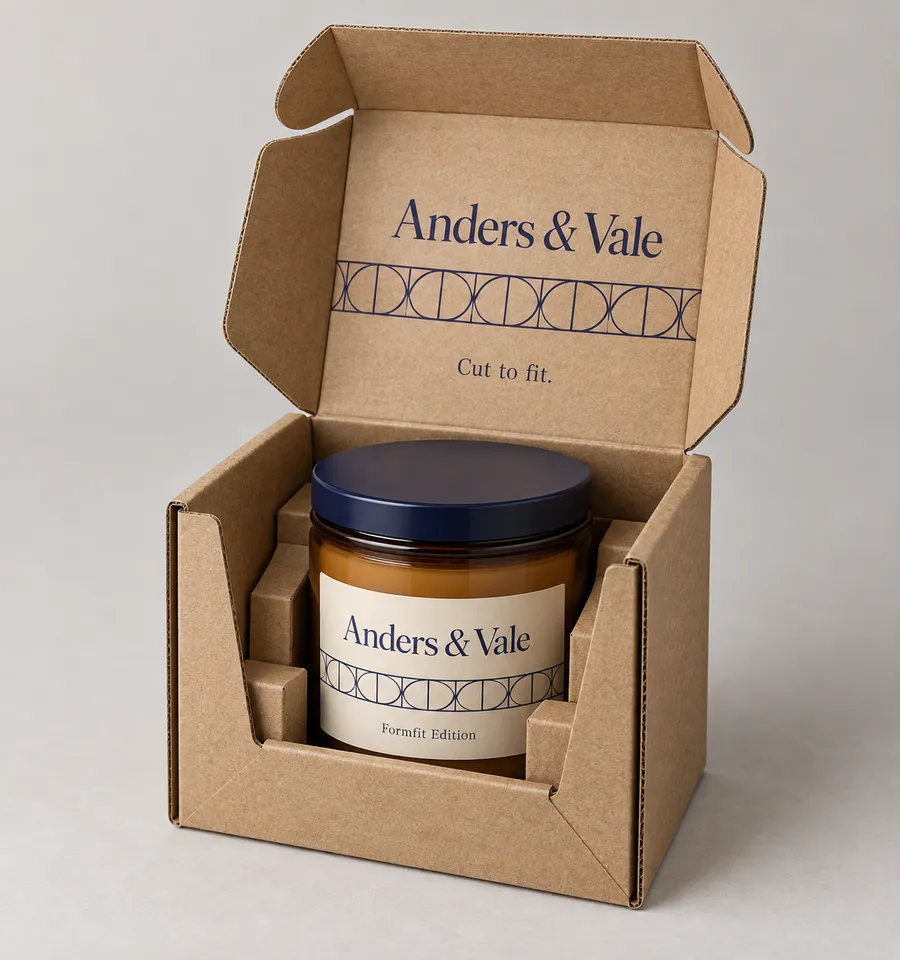
A shaped panel or fitted paperboard feature can keep one bottle, jar, candle, or similarly defined gift presented in a chosen position.

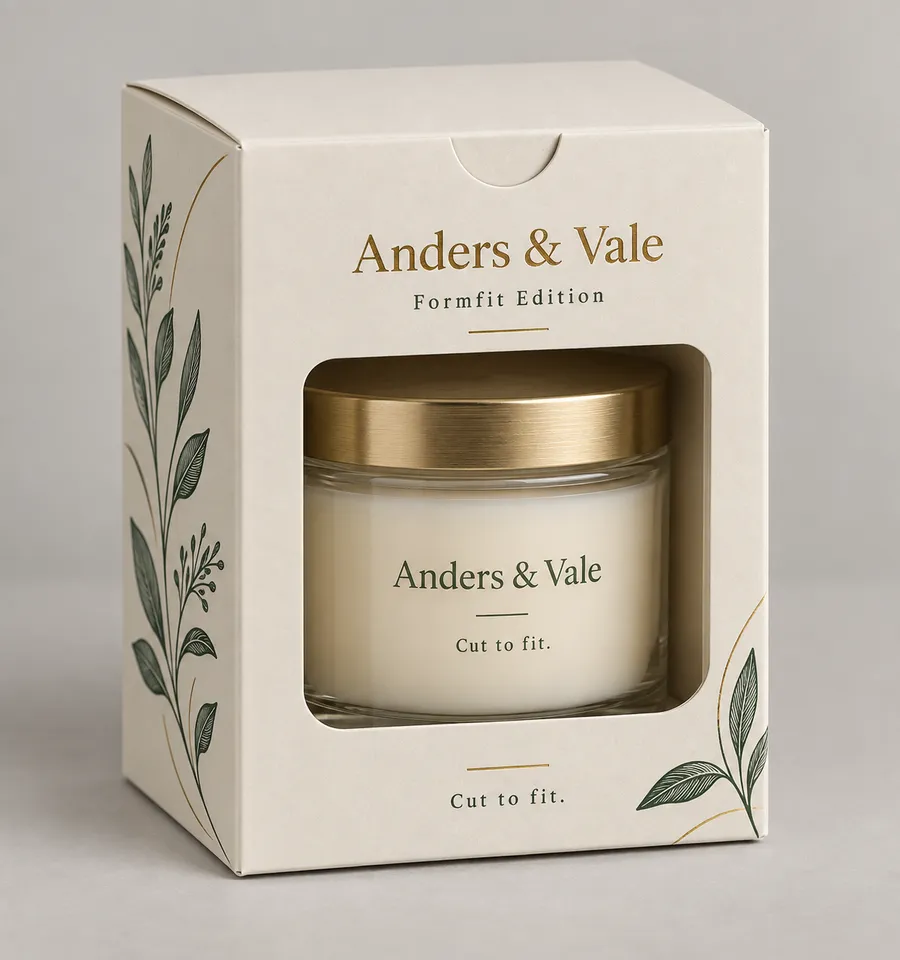
Ivory die-cut gift box with botanical print, front window, and candle jar visible inside
Die-Cut Boxes
Custom die cut gift boxes are built around the gift, set, or reveal the package needs to present. A custom-cut window, tuck closure, fitted paperboard feature, or shaped panel can give the box a defined opening and a more deliberate product position than a standard carton. Share the packed dimensions, item arrangement, material direction, artwork, and finish preference so the dieline can be reviewed around the real gift.
Last updated
Working quote
Product brief
Die cut gift boxes work best when the cut has a clear job. A front window can let a customer see part of the gift before opening. A tuck or locking feature can guide the opening sequence. A shaped interior panel can keep one item or a small set in a chosen position. These are different construction decisions, even when the outside of the package is described simply as a gift box. Start by describing what should be seen, held, carried, or opened, then let the product shape and set arrangement guide the dieline.
A made-to-order gift box can be planned around a single product, a pair of coordinated items, or a small gift set. The packed arrangement matters because a box that suits one low item may not suit a taller product, a jar with a lid, or several pieces arranged side by side. If the gift includes tissue, a card, a sleeve, or another secondary component, include that in the brief. The box should be reviewed as the finished presentation rather than as an empty outline.
Send the finished packed length, width, and height for the gift or set, along with the product count, orientation, widest points, and any cap, shoulder, handle, taper, or unusual corner. If a small set shares one box, show the arrangement of the pieces and identify which surfaces need to remain visible. A product photo or simple outline helps when the silhouette is not rectangular. The information should describe what will actually go into the box, including any wrap, insert, or presentation layer that changes the occupied space.
The cut may be placed on a front panel, lid panel, side panel, or interior feature depending on the desired reveal. A window needs a defined viewing area and a relationship with the artwork. A fitted tray or shaped support needs the product outline and opening route. A closure cut needs enough panel space to fold and close as intended. Those relationships are checked in the dieline and digital proof; they should not be assumed from the product name alone. A different gift size or set arrangement is reviewed as its own specification even when the overall box style stays similar.
SBS Paperboard gives the printed gift box a smooth surface for artwork, product information, and a clean front panel. Kraft Paperboard can suit a natural paper appearance when the design works with its base color and tactile character. Corrugated Board can be considered when the packed gift and handling route call for a more structured paperboard build. The selected material should follow the product geometry, box span, closure, handling, and printed surface rather than a blanket preference.
An FSC-certified paper option is available when that material direction suits the project. That describes an available paperboard or kraft stock option, not a claim that every finished gift box uses certified stock. The product brief should also identify whether the customer sees the outside only, whether the interior is printed, and whether the box will be carried, displayed, or shipped after packing. Those details help the board and cut be considered as one construction.
A gift presentation feels deliberate when the box opens in a predictable direction and the product arrives where the customer expects it. The opening can be a tuck-top carton, a panel with a die-cut window, or a shaped structure that guides the first reveal. Internal support depends on the product geometry, weight, fragility, orientation, desired reveal, fulfillment route, and available clearance. Depending on the specification, support may be integrated into the paperboard structure or supplied as a separate paperboard component. It is not selected from the gift category alone.
For a set, the box may need defined positions so pieces do not overlap or turn during packing and opening. For one item, the most useful feature may be a front cut that frames the product or a folded panel that keeps its presentation face oriented toward the customer. The exact arrangement is confirmed against the actual packed gift during review. Describe whether the box is filled by hand, whether the customer will remove one item at a time, and which parts should remain visible after opening.
Artwork should be mapped onto the assembled box, not only the flat sheet. Foil Stamping can be considered for selected lettering or linework, Matte Lamination can provide a low-glare surface direction, and Spot UV can highlight chosen artwork with localized gloss. Each finish is subject to artwork review near folds, cut edges, small type, and closure areas. The printed brand mark and product information should remain readable when a flap folds over or a window removes part of the panel.
The printed example in the images shows print placement only. The production proof should use the buyer's own approved design, with panel orientation, window position, fold lines, cut edges, and finish placement checked together.
The standard fulfillment path starts at 50 units, and production is from 7 business days after digital proof approval. Free US shipping and dieline and proof review are included at no extra charge. A sample kit carries a $44.99 USD shipping charge credited toward the first order when you need to inspect board feel, cut quality, or finish direction in hand. Pricing remains quote-only because the gift dimensions, set arrangement, material, print coverage, cut features, finish, and quantity change the specification.
Send the packed dimensions, product count, orientation, approximate weight, desired reveal, preferred material, artwork status, print coverage, finish direction, and delivery destination. If the gift is a set, include the actual side-by-side or layered arrangement. Quote requests are typically answered the same business day and always within 24 hours. After the structure is reviewed, check the opening, product position, printed panels, and finish representation in the digital proof before approval.
A useful die cut gift box is not defined by a decorative outline alone. It is a custom-cut package whose panels, support, closure, and printed surfaces work together around a specific gift. Sharing the real packed product gives the dieline review enough information to make the final construction clear.
Proof points
A useful proof shows the relationship between the packed gift and the finished package. It should make the cut purpose, product position, opening direction, printed panel map, and finish placement clear enough to compare with the supplied brief.
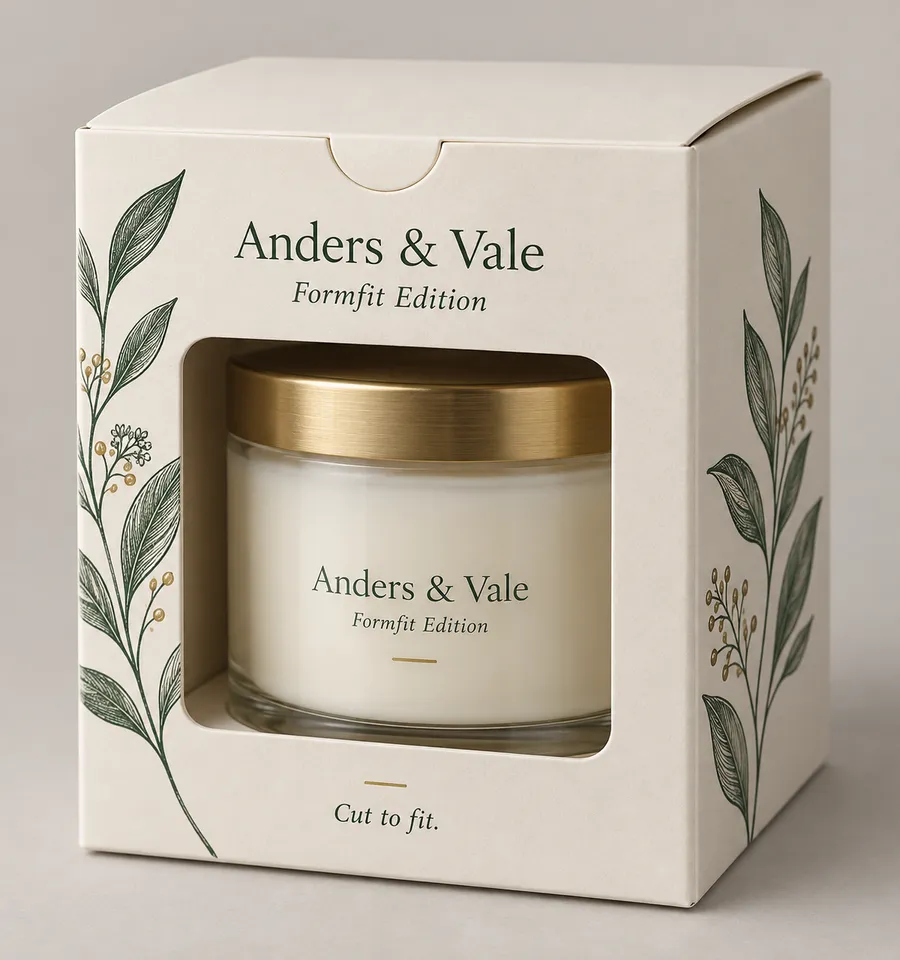
The custom cut should solve a visible packaging task: frame one item through a window, guide a tuck closure, hold a shaped product in position, or create a controlled reveal for a small set. Start with the gift and opening sequence so the box structure is reviewed around the real presentation rather than a generic carton size.
A shaped panel or fitted paperboard feature can keep one bottle, jar, candle, or similarly defined gift presented in a chosen position.
A die-cut window can expose a selected part of the gift before opening, with the viewing area planned around the product and printed artwork.
A custom interior can organize coordinated items when the count, orientation, tissue, card, and desired reveal are known before the dieline is prepared.
A functional cut, tuck, or locking panel can guide how the finished gift package is lifted and opened without treating the cut as decoration alone.
The die-cut edge, fold, window, and closure become part of the visible presentation. Map the artwork on the assembled box so the brand mark, product information, and finish accents remain readable after the panels are folded.
The product position and opening route are reviewed together. Depending on the gift geometry and set arrangement, the package may use a shaped paperboard panel, an integrated folded feature, or a separate paperboard support so the contents arrive in the intended orientation.
A custom-cut panel or fitted paperboard feature can guide one defined item when its outline, orientation, and desired reveal are supplied.
A small gift set can be reviewed with separated positions or a defined layout when the item count and side-by-side or layered arrangement are known.
A window, tuck, or locking cut can change what the customer sees and how the box opens, with the panel and artwork reviewed as one system.
A useful quote starts with the packed gift and the job the cut needs to do. The following information turns that description into a box structure that can be reviewed before production.
Provide packed length, width, height, product count, orientation, approximate weight, widest points, and any cap, taper, handle, or unusual corner.
State whether the package needs a window, a visible front, a guided tuck, a locking feature, a fitted position, or an organized set arrangement.
Share any preference for SBS Paperboard, Kraft Paperboard, Corrugated Board, Foil Stamping, Matte Lamination, or Spot UV.
Check panel order, folds, cut edges, window placement, closure areas, product orientation, and artwork alignment in the digital proof.
Confirm the reviewed structure, packed arrangement, printed panels, and finish representation before production begins.
Need help with structure, materials, or production planning? See how we manufacture custom packaging.
A sample kit carries a $44.99 USD shipping charge credited toward your first order, useful when you need to compare board feel, cut quality, window treatment, or finish direction before approving a custom gift box.
Shipping charge: $44.99. Credited toward your first order.
Request a Sample KitFind clear answers about fit, materials, and ordering below.
Send the packed length, width, height, product count, orientation, approximate weight, unusual projections, desired reveal, material direction, artwork status, finish preference, and delivery destination. For a set, show the actual arrangement rather than adding individual item dimensions without their spacing.
A die-cut window can be considered when the buyer wants part of the gift visible before opening. The viewing area, panel position, product clearance, artwork, and any finish near the cut are reviewed together in the dieline and digital proof.
Support depends on the number of items, their outlines, orientation, fragility, desired reveal, and packing route. The package may use an integrated paperboard feature or a separate paperboard component after the actual set arrangement is reviewed.
SBS Paperboard, Kraft Paperboard, and Corrugated Board are the category material directions. The suitable choice depends on the gift geometry, box span, handling route, desired surface, and printed artwork, so the board is confirmed with the dieline rather than selected in isolation.
Foil Stamping, Matte Lamination, and Spot UV can be considered for selected artwork and panels. Finish placement remains subject to artwork review near folds, windows, cut edges, small type, and closure areas.
The standard fulfillment path starts at 50 units. Production begins from 7 business days after digital proof approval, and dieline and proof review are included at no extra charge. Your final unit price is confirmed in a quote because the packed gift, cut, board, print, finish, and quantity determine the specification.
Orders start at 50 units and scale up to 500,000 for bulk runs, with pricing from $0.20 per unit on larger quantities. Standard production is from 7 business days after digital proof approval.
Compare nearby products and request the format that best fits your next run.
Available product
Available product
Available product
Available product
Plan the gift presentation
Send the gift or set dimensions, the job the cut needs to do, the desired reveal, and the current artwork status. Easy Box Packaging can then review the box structure, board direction, printed panels, and finish as one quote-ready specification.
Add your product details to see a quote summary.