Product labels
A shaped printed piece can identify a product on a carton, jar, pouch, insert, or other reviewed surface.

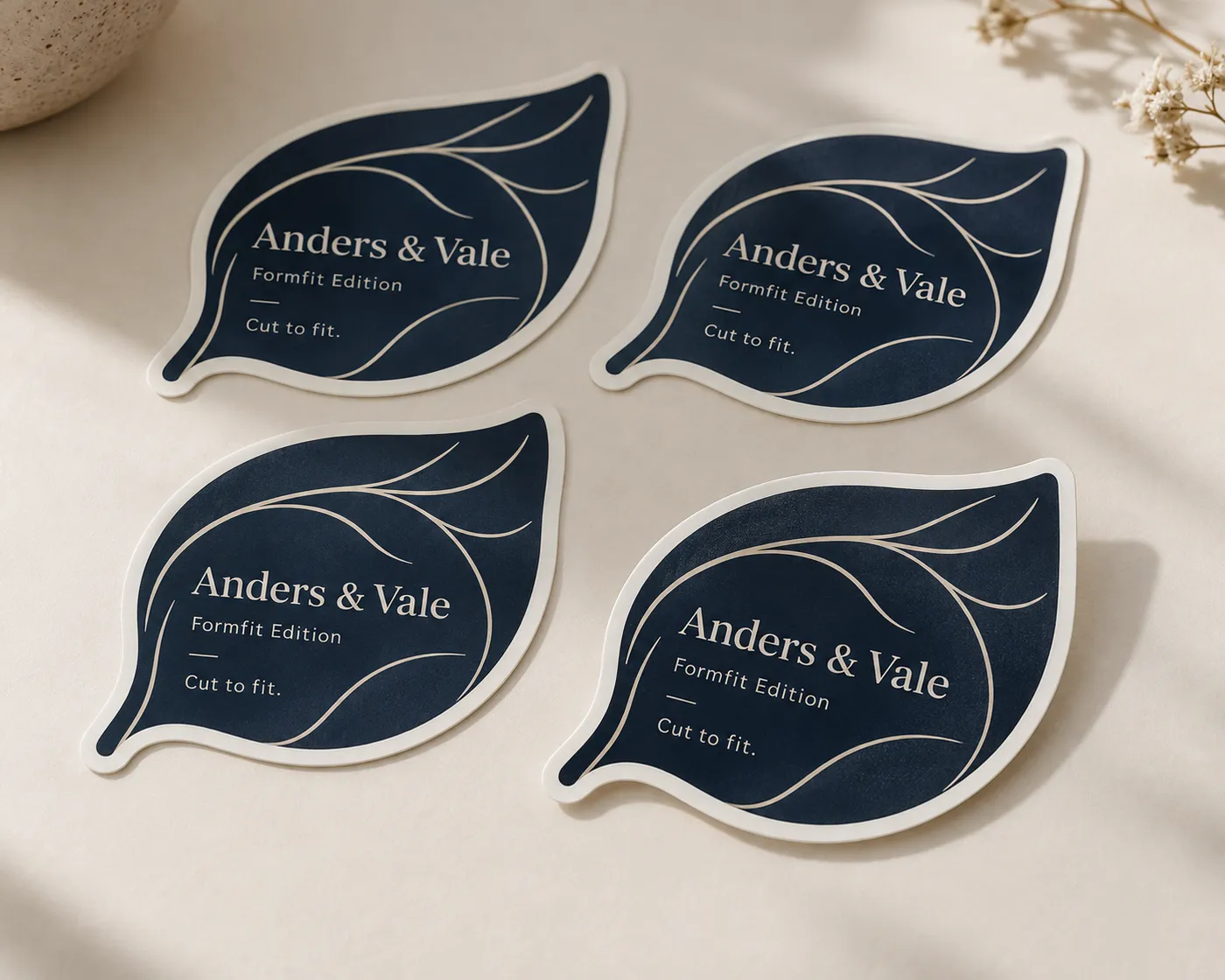
Individual die cut stickers with deep navy leaf artwork on a white release liner
Die-Cut Boxes
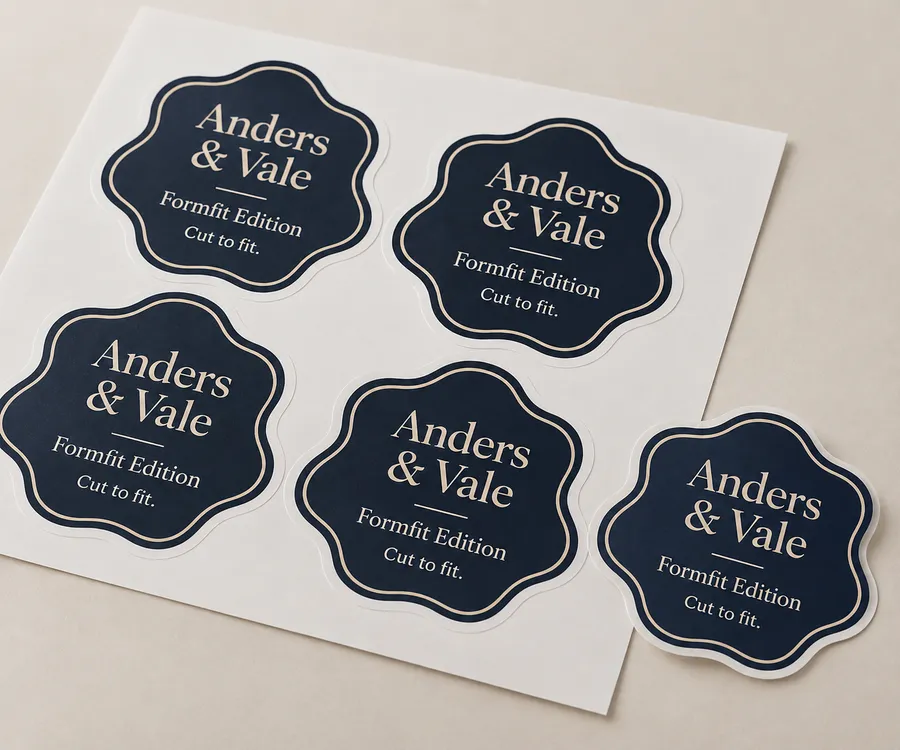
Die cut stickers are individual adhesive pieces cut around a supplied artwork contour rather than a standard rectangle. They can serve as product labels, package seals, branded inserts, event handouts, or retail details when the sticker shape is part of the presentation. Share the finished size, artwork, application surface, and finish preference so the cut and print can be reviewed together.
Last updated
Working quote
Product brief
Die cut stickers give the printed piece a defined silhouette instead of leaving the artwork inside a standard rectangular boundary. That can matter when the contour follows a wordmark, illustrated object, product shape, seal, or other recognizable mark. The finished sticker is supplied as a separate piece on a release liner, so the practical question is not only what the artwork looks like but also how the operator will pick it up, position it, and apply it. A clean cut can keep the visible border and printed face aligned with the shape that the buyer expects to see.
The cut path should be described from the artwork and the use case together. A simple rounded label, a narrow wordmark, and an irregular illustrated outline each create different review points around small details, tight corners, and the distance between the print and the edge. If the sticker will close a carton, identify the panel or flap it will touch. If it will sit on a jar, pouch, insert, or mailer, share the receiving surface and the point where the sticker needs to land. The proof is where the contour, visible border, and artwork placement are checked before the order moves forward.
Start with the finished width and height, the widest and tallest points of an irregular shape, and the amount of artwork that must remain legible at that size. A sticker used as a small product seal has a different reading distance from one placed on a shipping carton or handed out at an event. The application surface also matters. A smooth carton panel, a coated pouch, a glass jar, and a textured paper insert can create different questions for the face stock and adhesive direction. Those details should be included with the quote request rather than left to a generic sticker description.
The number of separate pieces and how they will be handled should also be stated. The standard fulfillment path starts at 50 units, which gives a clear starting point for a small branded run while leaving the final scope open to the finished shape, artwork, and quantity requested. This separate-piece format is suited to hand application, packing inserts, product labeling, and retail details. If the workflow needs a continuous sequence for a dispenser, that is a different roll-format specification and should be described as such.
The sticker face, adhesive direction, and finish should be considered as one application decision. A paper-based face can suit a printed insert or carton detail, while another surface direction may be reviewed when the receiving material or handling method calls for it. The final choice remains subject to the actual application, artwork, and production review. Avoid specifying a performance claim such as waterproof or weatherproof unless the required construction has been confirmed for the intended environment.
Matte or gloss surface treatment can change how color, small type, and highlights read across the printed face. Foil stamping can be considered for selected lettering or linework when it is compatible with the chosen stock and artwork scale. The most useful brief identifies the brand name, product name, variable information if any, preferred visual hierarchy, and the parts of the contour that must remain clear. A digital proof should show the artwork and cut line together so the printed surface is not approved separately from the physical edge.
A shaped sticker can act as a product label when the contour supports the brand mark or product name. It can close a carton, pouch, tissue wrap, or mailer when the application surface and placement are known in advance. It can also work as a branded order insert or event handout when each individual piece needs to be ready for distribution. In each case, the cut has a job: it may make the label recognizable, keep the seal positioned, or give the handout a shape that carries into the printed message.
The use case should guide the specification rather than a broad promise about what every sticker can do. Share whether the stickers will be applied by one operator or several people, whether they will be stored loose or beside a packing station, and whether the receiving surface has a coating, texture, curve, or fold. This context helps the quote and proof focus on the actual contact point, finished size, and handling sequence.
Send the artwork or a clear contour reference, finished width and height, quantity, application surface, artwork status, and preferred face-stock or finish direction. Include the widest point of an irregular design, any fine cut details, and the area where the sticker will be placed. If there is a carton, jar, pouch, insert, or mailer involved, a photo or simple placement sketch can make the review more precise.
Production begins from 7 business days after digital proof approval. The proof should be checked for cut path, artwork placement, visible border, small details, face treatment, and the way the separate piece will be lifted from its liner. Dieline and proof review are included at no extra charge, and Free US shipping is included on the standard fulfillment path. A sample kit carries a $44.99 USD shipping charge credited toward the first order when a physical print direction or finished contour needs to be compared before committing to the run.
A useful die cut sticker brief connects the artwork contour to the real application. With the shape, surface, quantity, and print direction described together, the quote can address the finished piece instead of treating the sticker as a generic rectangle with a logo placed on top.
Proof points
The digital proof should show the actual sticker face with the custom cut line, visible border, and intended application context clear enough to review.
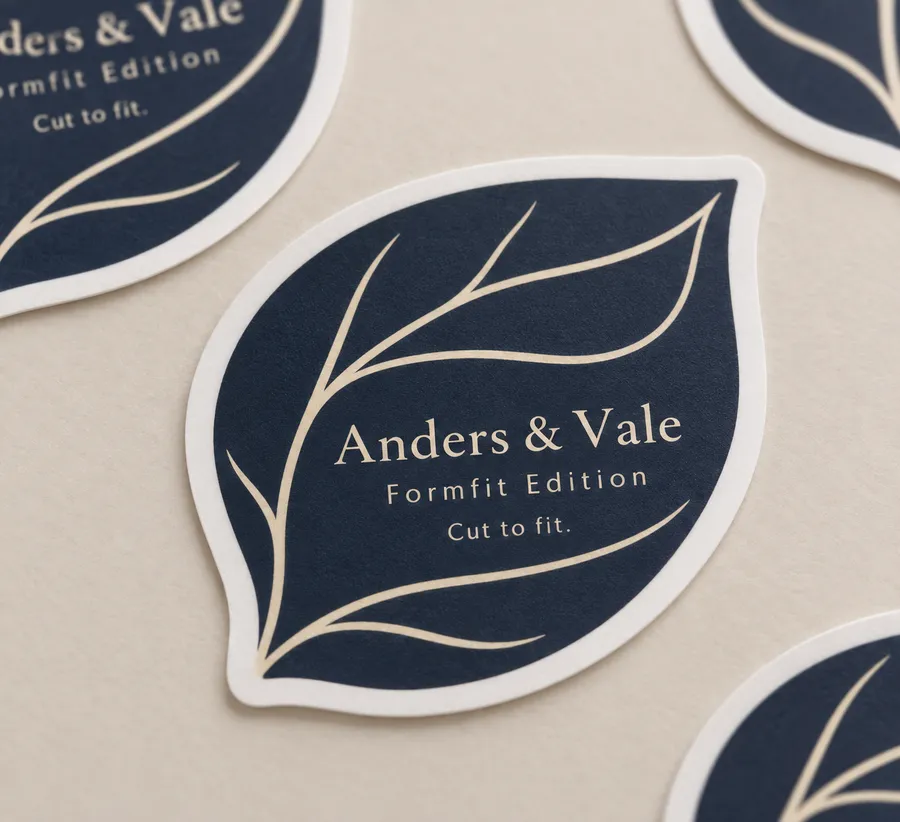
Die cut stickers are individual printed pieces with a custom contour and release liner. The finished shape, printed face, application surface, and handling method are reviewed together so the sticker works as a label, seal, insert, or retail detail rather than a standard rectangle.
A shaped printed piece can identify a product on a carton, jar, pouch, insert, or other reviewed surface.
A separate contour can close a carton, tissue wrap, pouch, or mailer while keeping the printed mark in a defined position.
Individual stickers can be packed with an order as a ready-to-apply brand detail or small printed insert.
A custom silhouette can carry a product name, campaign message, or visual mark when the sticker itself is part of the presentation.
The printed face should remain legible at the finished sticker size and align with the custom cut. Choose the finish direction with the artwork scale, receiving surface, and intended handling in mind.
A useful proof ties the artwork to the physical piece. These are the decisions that help a buyer check the cut, print, and intended application before production.
The cut follows the supplied outline, including any rounded edge, notch, narrow point, or illustrated detail that makes the sticker recognizable.
The receiving carton, jar, pouch, insert, or mailer is identified so the face-stock and adhesive direction can be discussed against the real use.
Matte, gloss, or compatible foil details are reviewed with the artwork scale, cut edge, and visual hierarchy rather than selected in isolation.
A quote is easier to evaluate when the artwork contour, finished size, application, quantity, and print direction are described together.
Provide the artwork, cut path, outline reference, or a clear sketch of the desired sticker shape.
Provide finished width and height, widest point if the shape is irregular, and the number of separate pieces needed.
Identify the receiving surface, placement area, application method, storage context, and any fold, curve, or texture involved.
Discuss the face-stock direction, adhesive requirement, printed surface, and any compatible foil detail for the intended use.
Check the artwork, cut line, visible border, finished scale, and selected finish before production begins.
Need help with structure, materials, or production planning? See how we manufacture custom packaging.
A sample kit ships for a $44.99 USD charge credited toward your first order, useful when you need to compare a physical print direction, surface finish, or finished contour before approving the sticker run.
Shipping charge: $44.99. Credited toward your first order.
Request a Sample KitFind clear answers about fit, materials, and ordering below.
Each separate sticker is cut around the supplied artwork contour rather than a standard rectangle. The digital proof is where the cut path, visible border, fine details, and final artwork placement are reviewed together.
Share the artwork or contour, finished width and height, number of separate pieces, receiving surface, application method, artwork status, and any preferred face stock or finish.
Matte surface, gloss surface, and compatible foil-stamping accents can be considered subject to the selected stock, artwork scale, contour, and application review.
The standard fulfillment path starts at 50 units, with production beginning from 7 business days after digital proof approval.
Yes. A sample kit can be requested to compare the printed surface, finish, or finished contour before a larger order. Sample-kit shipping is $44.99 and is credited toward the first order.
Orders start at 50 units and scale up to 500,000 for bulk runs, with pricing from $0.33 per unit on larger quantities. Standard production is from 7 business days after digital proof approval.
Common uses include product labels, package seals, branded order inserts, and event and retail details. The final specification is set by the packed product and how it will be handled.
Compare nearby products and request the format that best fits your next run.
Available product
Available product
Available product
Available product
Specify the application
Send the artwork contour, finished size, quantity, application surface, and finish preference. Easy Box Packaging can then review the printed face and separate-piece format as one quote-ready specification.
Add your product details to see a quote summary.