Retail product presentation
A window can show the face or silhouette of a soap, candle, cosmetic item, or similarly defined product while the surrounding carton carries the printed information.

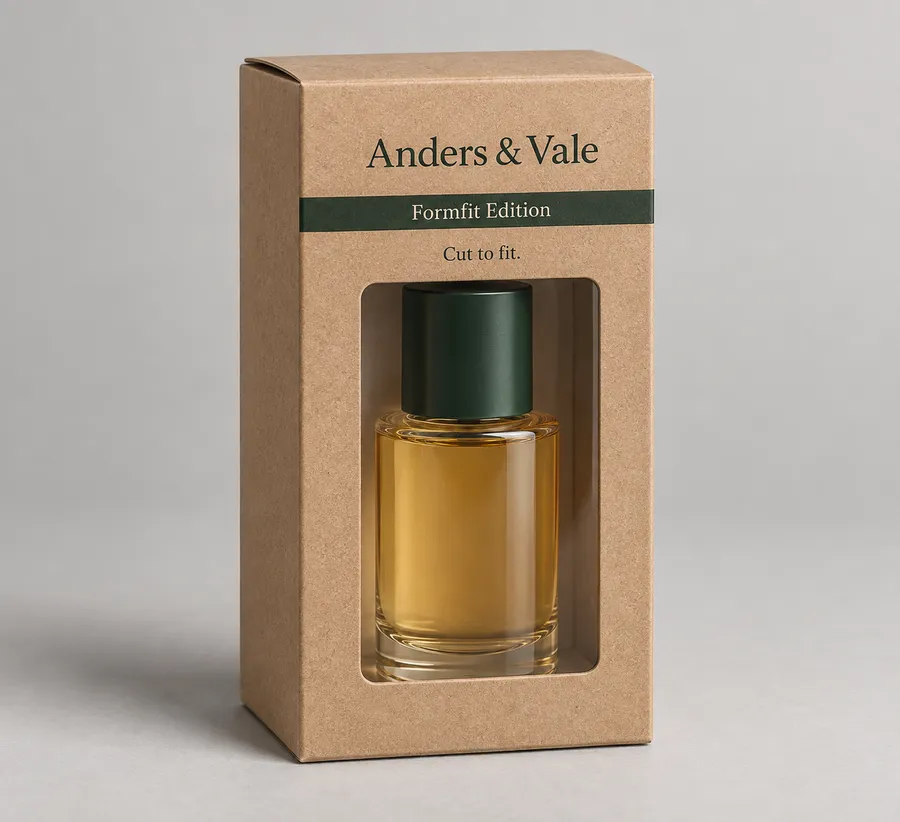
Custom window die-cut box showing an amber cosmetic bottle through its front opening
Die-Cut Boxes
Custom window die-cut boxes use a shaped opening to let a product remain visible while the folding carton carries your printed brand presentation. The window position, board direction, product clearance, internal support, print and finish are reviewed around the packed item rather than taken from a generic box size.
Last updated
Working quote
Product brief
A window die-cut box gives the customer a view of the product before the carton is opened. That can suit a soap, candle, cosmetic item, gift set, or other product whose shape and finish are part of the presentation. The opening is not the whole specification: its position has to leave enough board for the folds and closure, while the product needs to sit at the intended height and orientation behind it. Start by deciding what the window should reveal, how much of the product should be visible, and whether the carton will be carried from a counter or handled through a fulfillment route.
The window should frame a deliberate part of the packed product, not simply create a large hole in the front panel. A centered opening may show the main label or silhouette; a narrower cut can reveal a distinctive color, texture, or product edge while leaving more room for instructions and branding. If a clear covering is part of the specification, its placement is reviewed with the cut edge and the product-facing side. A windowed carton can be useful for retail presentation, gift packaging, and sample packs, while a fully enclosed carton may be preferable when the product should stay out of view during handling. The right choice follows the presentation goal and the product itself.
Send the packed product dimensions, not only the catalog name. Provide the assembled length, width, and height after the primary label, cap, wrap, or inner pack is in place. Note the widest point, any shoulder or taper, the product orientation, the number of items in the carton, and the face that should appear through the window. If the window needs to show a label, include the label position in the drawing or product photograph. The box depth, panel width, opening shape, fold positions, and closure geometry are then considered together. Final clearance is confirmed during specification and dieline review; do not assume that a product which fits inside a closed carton will also sit correctly behind the chosen opening.
SBS Paperboard can provide a smooth printed surface when the window border, product information, and front-panel artwork need clean registration. Kraft Paperboard can shift the carton toward a natural paper character, while Corrugated Board can be considered when the packed unit needs a more substantial board structure for its handling route. None of these directions is a universal answer: the product weight, carton span, opening size, folding pattern, desired presentation, and shipping route all affect the decision. Internal support also depends on product geometry, weight, fragility, orientation, structure, clearance, and the desired reveal. Support may be integrated into the folding carton with shaped panels or tabs, or supplied as a separate paperboard component when the specification calls for another layer.
The die-cut window becomes part of the front-panel artwork. Keep important text and brand elements away from the cut edge unless the design intentionally uses the opening as a frame. Foil Stamping can highlight selected lettering or linework, Matte Lamination can change the surface appearance and handling feel, and Spot UV can add localized gloss contrast to chosen artwork. The final combination remains subject to artwork review near folds, tabs, cut edges, small type, and any clear covering. Review the assembled carton rather than judging the flat artwork alone, because the window, folds, and closure change which printed panels are visible together.
A different product height, a shifted label, a larger opening, a new opening shape, a change in panel width, or a different closure can change the dieline even when the box style stays recognizable. The structural style may remain within the window-box family, but each size and packed configuration is reviewed against its own dieline. A new packed configuration should therefore be reviewed against its own dimensions and product face. Artwork placement can change too: a wordmark may need to move around the opening, a side panel may fold behind the front, and a foil or Spot UV accent may approach a cut edge. The digital proof is where the flat artwork and assembled carton are checked together before production.
For a useful quote, send the packed length, width, and height; product weight and count; the face to reveal; the preferred window shape and position; material direction; artwork status; finish preference; and delivery destination. Include a product image or drawing when the item has a shoulder, taper, raised cap, or unusual outline. Orders start at 50 units. Production runs from 7 business days after digital proof approval, and Free US shipping is available on the standard fulfillment path. Dieline and proof review are included at no extra charge, while quote requests are typically answered the same business day and always within 24 hours. A sample kit carries a $44.99 USD shipping charge credited toward the first order if you want to inspect board feel, cut quality, and finish direction before approving the windowed carton.
Proof points
The useful proof points are the relationships that make a windowed carton work: the cut leaves a purposeful border, the product face sits behind the opening, and the printed panels remain readable after folding. Review the window shape, folds, closure, support, artwork, and finish together before production.
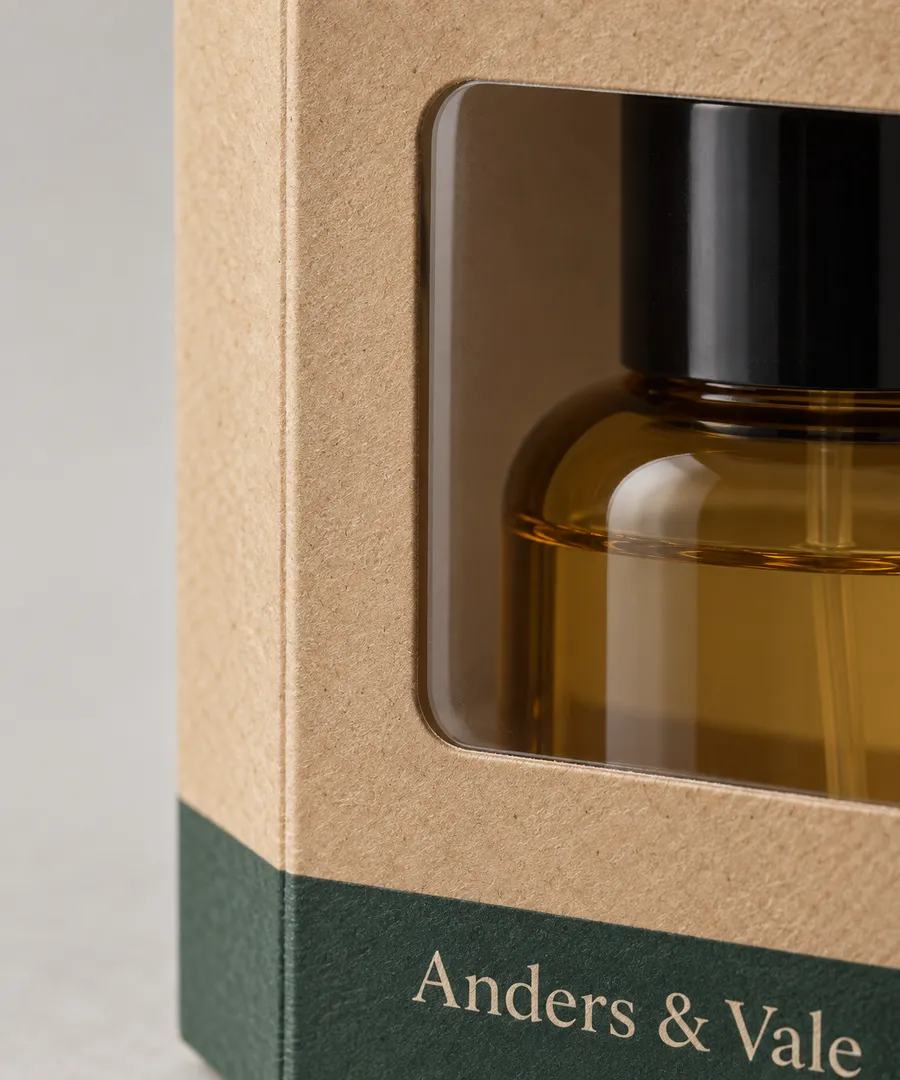
A window die-cut box is planned around the product face that should remain visible before opening. A broad front opening can frame a label or silhouette, while a smaller or offset cut can leave more printed board around the product. The window position, carton folds, closure, and product height are considered as one assembled structure. If the product needs support behind the opening, that support is selected around its geometry, orientation, and desired reveal rather than added as an afterthought. Share a product image or drawing when a shoulder, raised cap, taper, or unusual outline affects the view through the window.
A window can show the face or silhouette of a soap, candle, cosmetic item, or similarly defined product while the surrounding carton carries the printed information.
A shaped opening can reveal one selected item or a planned part of a small set, with the internal arrangement confirmed before the carton is sized.
A window can give a customer a view of a packaged food item when the opening, board direction, and product-facing surface are reviewed for the intended use.
A repeatable carton can combine a recognizable product view with a printed outer panel when the packed configuration and orientation stay consistent.
The opening creates a frame that has to work with the printed front panel. Keep the wordmark, product information, and finish accents aligned to the assembled carton rather than the flat sheet alone. Foil Stamping can highlight selected lettering or linework, Matte Lamination can provide a lower-sheen surface direction, and Spot UV can add localized gloss contrast to chosen artwork. Each option remains subject to artwork review near the window edge, folds, tabs, small type, and any clear covering.
The visible product still needs a stable position inside the carton so the chosen face stays aligned with the window. Internal support depends on product geometry, weight, fragility, orientation, carton structure, clearance, fulfillment handling, and presentation requirements. Support may be cut into the paperboard panels with tabs or shaped walls, or it may be supplied as a separate paperboard component when the specification needs another layer.
The product face, label position, and opening are reviewed together so the visible area is intentional rather than hidden by a fold or shifted during packing.
Tabs, panels, or a shaped interior can be considered when the product orientation and carton structure allow the support to remain part of the folding box.
A separate paperboard support may suit a product whose outline, weight, or presentation needs another layer behind the window.
A useful quote starts with the product face and packed arrangement, not just the phrase window box. Send the dimensions, count, orientation, window position, material direction, artwork status, finish preference, and delivery destination so the opening and carton can be reviewed as one specification.
Provide the packed length, width, height, weight, count, orientation, and any shoulder, taper, cap, or raised feature that changes the view.
State which product face should show, how much of it should be visible, and whether the opening should be centered, offset, narrow, or shaped.
Share any preference for SBS Paperboard, Kraft Paperboard, Corrugated Board, Foil Stamping, Matte Lamination, or Spot UV.
Send the available artwork or note that the printed panels are still being prepared for the window, folds, and closure.
Check the opening, border, folds, support, product view, printed panels, and finish placement together before approval.
Need help with structure, materials, or production planning? See how we manufacture custom packaging.
A sample kit carries a $44.99 USD shipping charge credited toward your first order, useful when you need to compare board feel, cut quality, window presentation, or finish direction before approving the custom carton.
Shipping charge: $44.99. Credited toward your first order.
Request a Sample KitFind clear answers about fit, materials, and ordering below.
It is a folding paperboard carton with a custom-cut opening that lets a chosen part of the product remain visible before the package is opened. The window shape and position are reviewed with the product face, carton folds, closure, artwork, and any clear covering included in the specification.
Measure the packed length, width, and height, then provide the packed weight, item count, orientation, widest point, and the product face you want shown through the opening. A product image or drawing helps when the item has a shoulder, taper, raised cap, or label that affects the visible area.
The opening can be planned around the product face and the printed panel, but its position also has to respect folds, the closure, the board border, and the internal support. Share the desired reveal and artwork status so the window geometry can be checked during dieline review rather than assumed from a generic front panel.
Material directions in this category include SBS Paperboard, Kraft Paperboard, and Corrugated Board. Finish directions include Foil Stamping, Matte Lamination, and Spot UV. The selected combination is reviewed with the window edge, folds, printed surface, handling route, and any clear covering.
Not every carton uses the same support arrangement. Product geometry, weight, fragility, orientation, carton structure, clearance, fulfillment handling, and the desired reveal all matter. Support may be integrated into the paperboard panels or supplied as a separate paperboard component when the specification calls for it.
Orders start at 50 units, and the approved standard estimate is from 7 business days after digital proof approval. Dieline and proof review are included at no extra charge, and free US shipping is available on the standard fulfillment path. Your final unit price is confirmed in a quote because the product size, opening, material, print, and finish vary by specification.
Orders start at 50 units and scale up to 500,000 for bulk runs, with pricing from $0.34 per unit on larger quantities. Standard production is from 7 business days after digital proof approval.
Compare nearby products and request the format that best fits your next run.
Available product
Available product
Available product
Available product
Plan the reveal
Send the packed product details, the face you want to show, the window direction, and the current artwork status. Easy Box Packaging can then review the carton structure, board, print, and finish as one quote-ready specification.
Add your product details to see a quote summary.