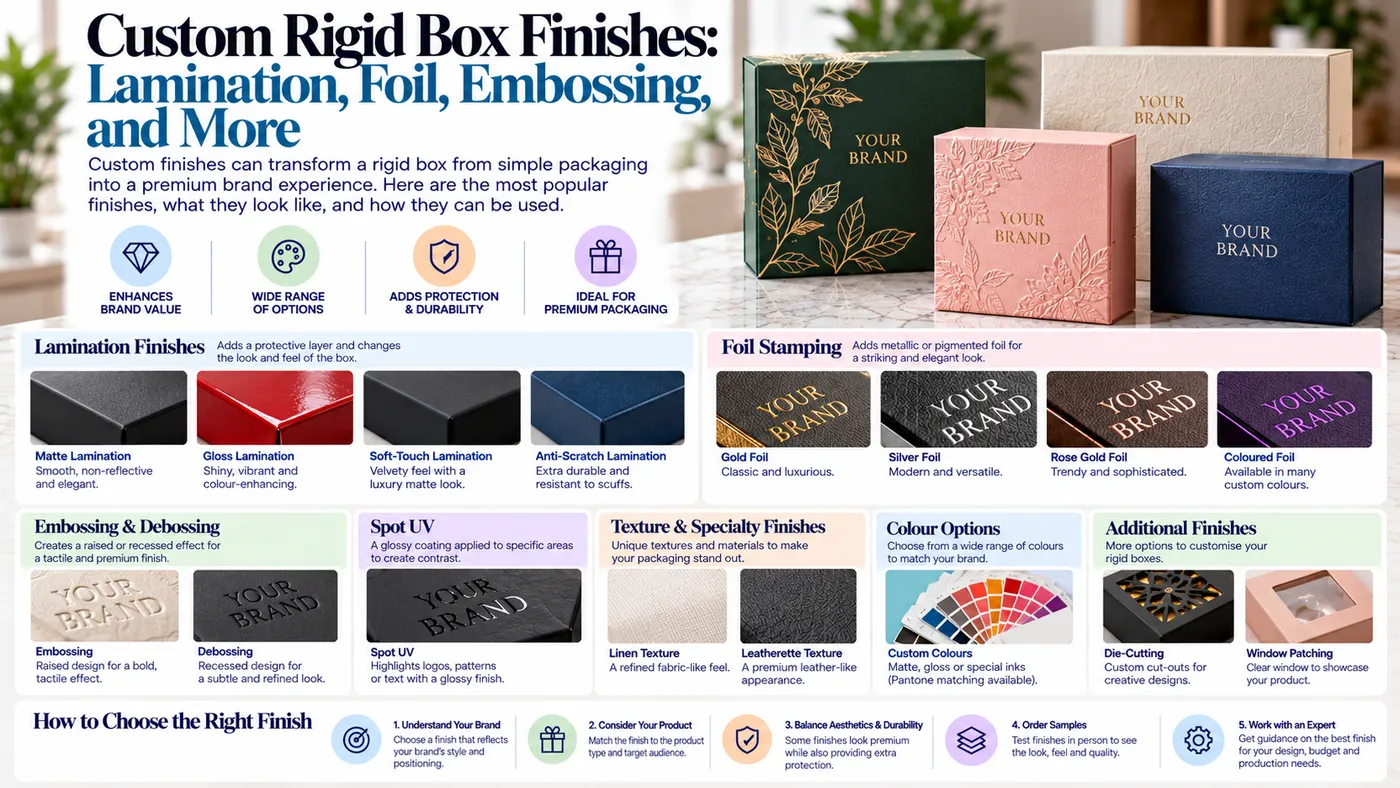
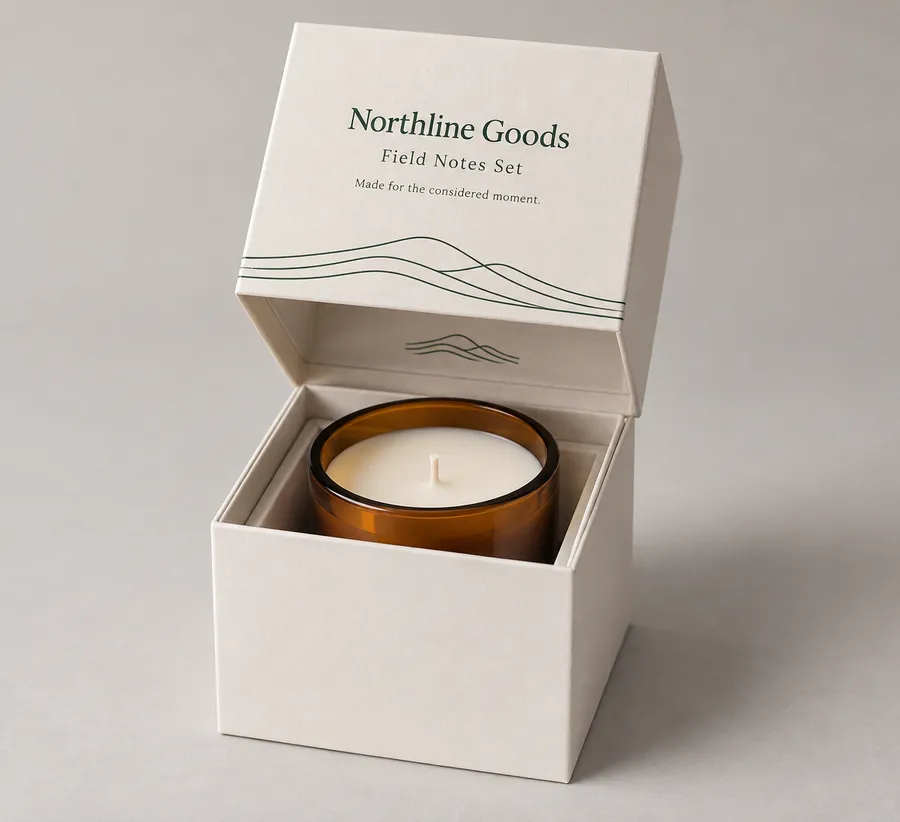
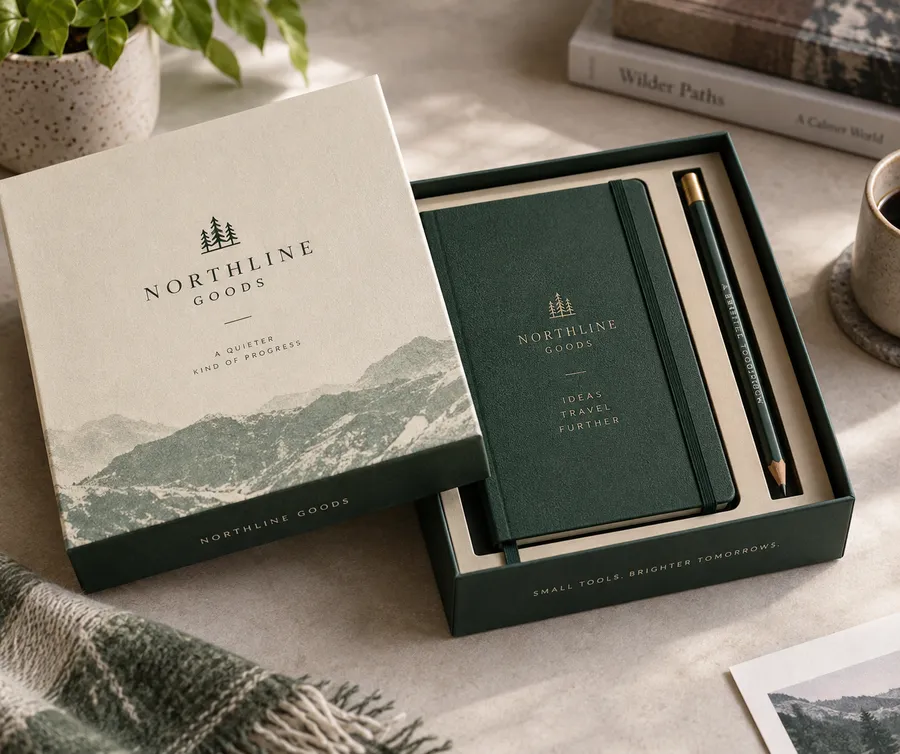
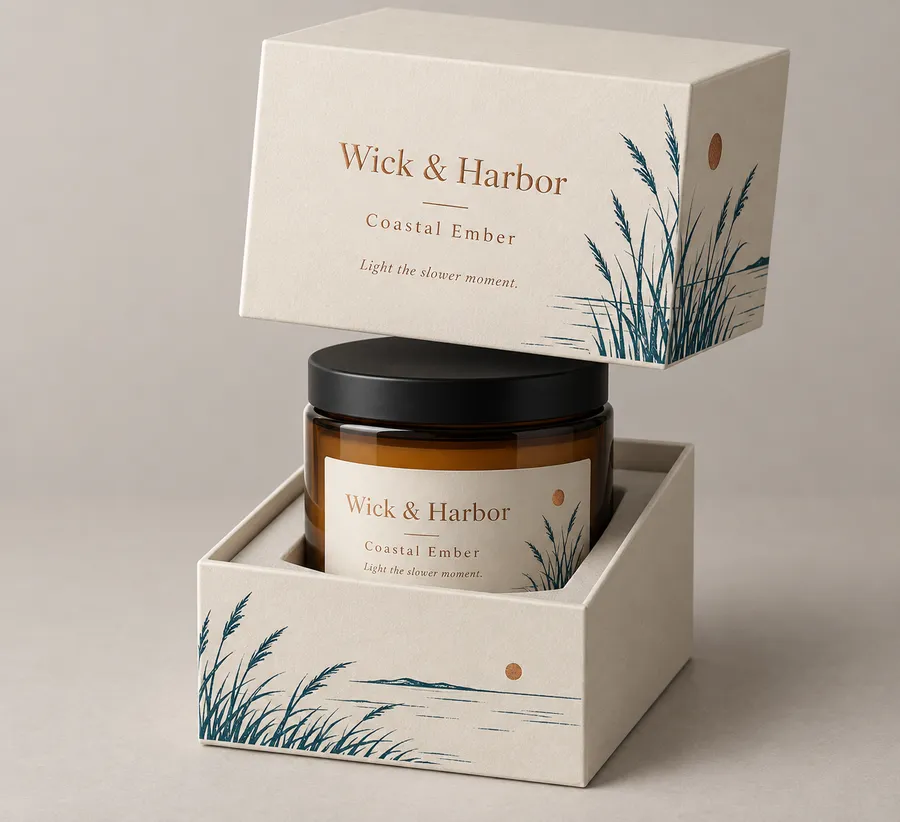
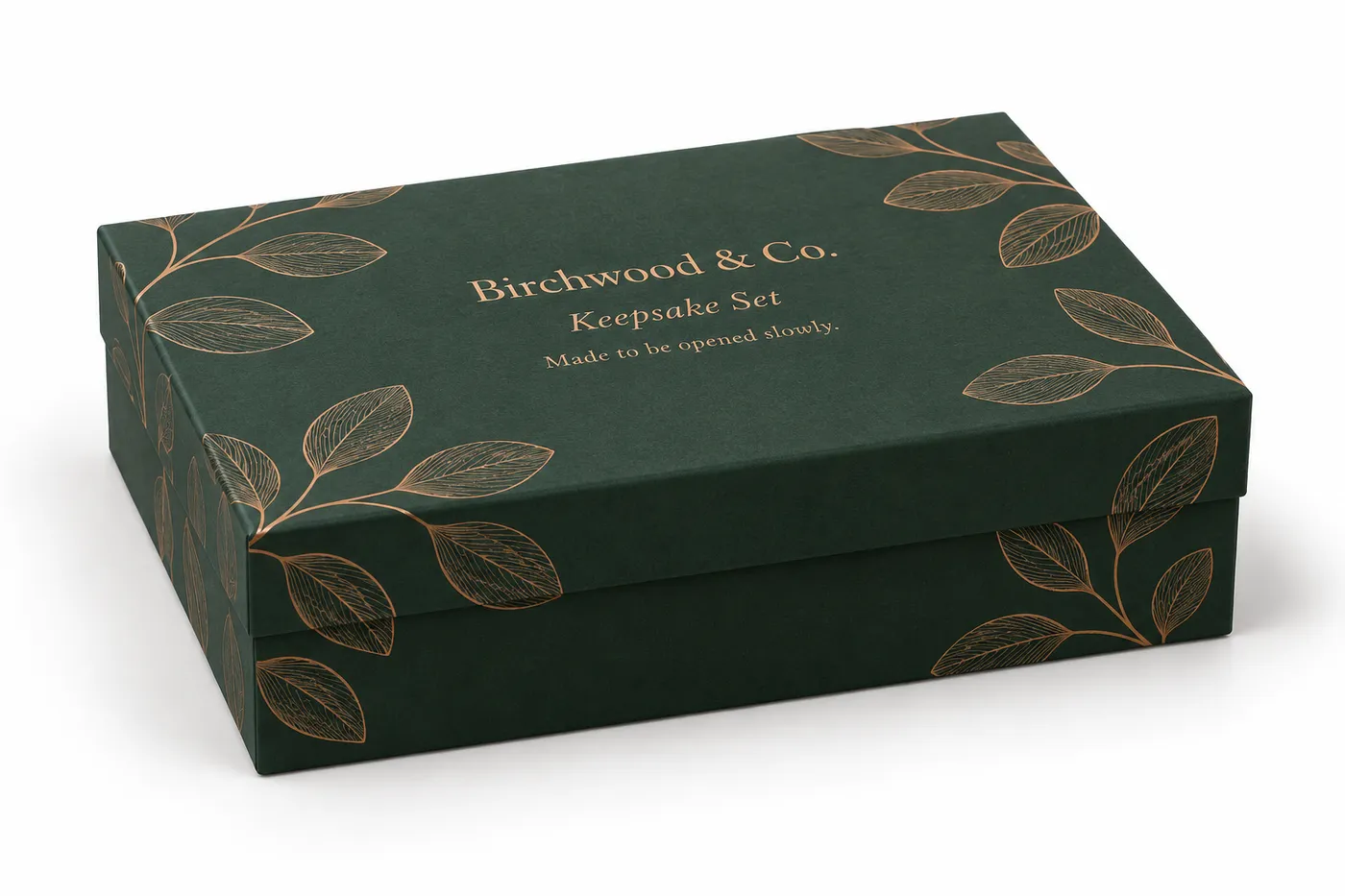
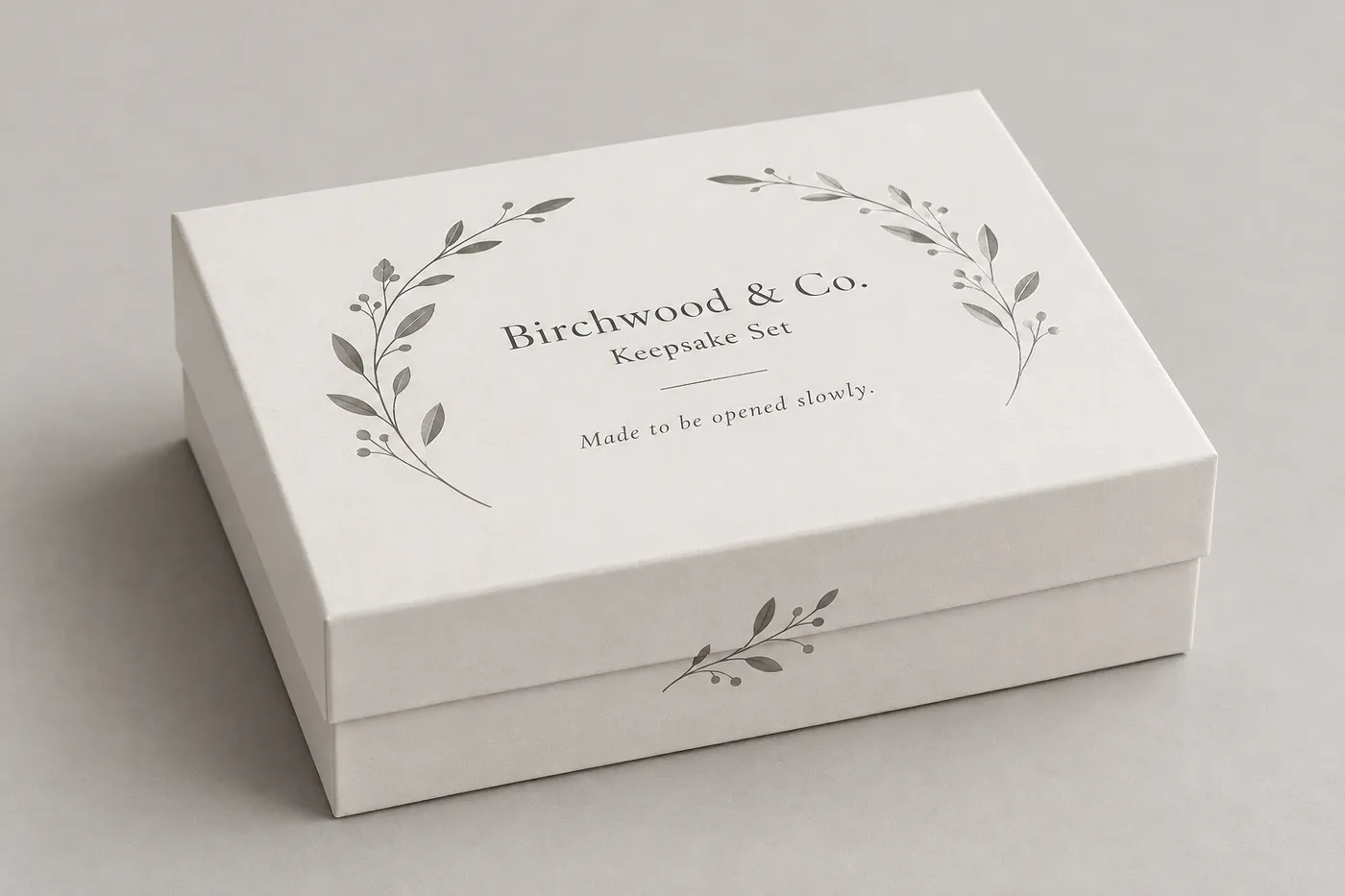
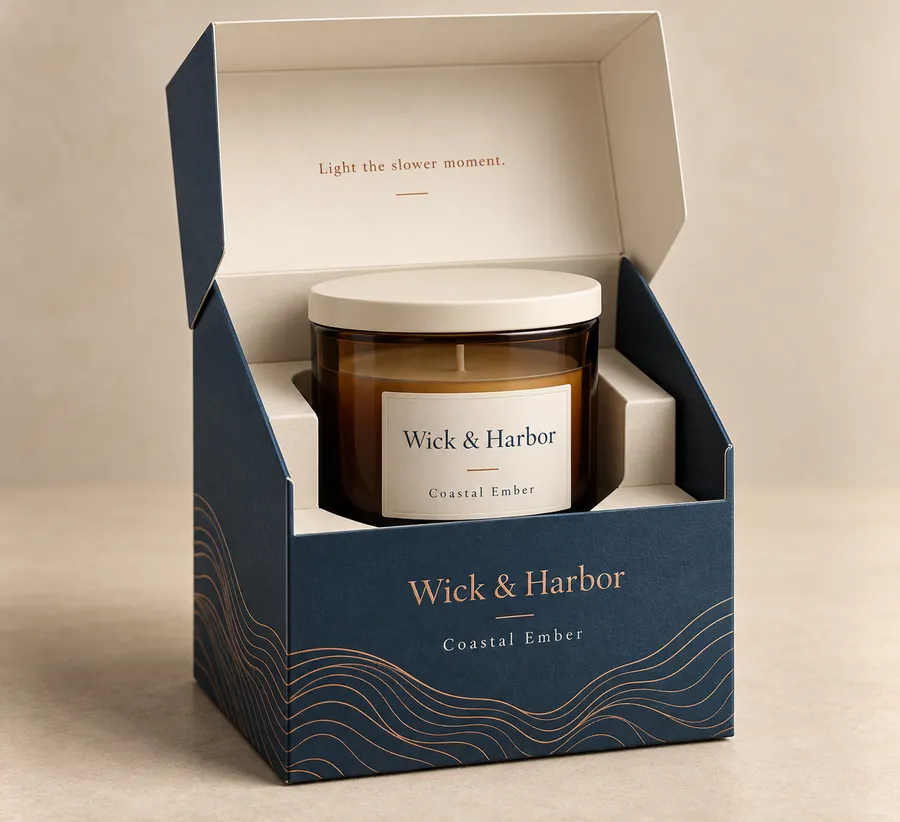
Custom rigid box finishes work in two layers. Lamination sets the base feel: gloss, matte, soft-touch, or anti-scuff matte. Foil stamping, embossing, debossing, and spot UV are then added to that wrapped surface. Each finish goes onto flat printed paper before the paper is glued to the board. A common premium pairing is soft-touch lamination with spot UV or foil stamping.
Quick answer
Pick one lamination as the base, then add one or two accents. Three finishes is usually the ceiling.
Foil and emboss need custom dies, usually one per artwork element.
Spot UV needs its own layer in the artwork file.
Changing a finish after artwork approval usually means new tooling and setup.
Laminated and foil-finished wraps are harder to recycle than plain paper.
Why rigid box finishes work differently
A rigid box is not printed on its own board. It's a thick greyboard core covered by a separate printed paper wrap. Progress Packaging explains that the wrap can be printed, embossed, or foil stamped. It's then glued to the cut board.
That order explains why rigid box finishes look crisp. The paper is finished flat, so the board never flexes under the die. QinPrinting notes that greyboard is too stiff to emboss directly. Embossing happens on the paper first.
It also explains why decisions come early. Settle these before production:
Wrap paper: coated, uncoated, or textured. It changes how foil and emboss read.
Extra passes: foil and spot UV each add a step.
Custom dies: emboss and deboss need a matched die pair.
Artwork approval: moving a logo afterward means a new die or setup.
Start with a dieline so every finish lands on a panel that exists. Our packaging glossary defines the terms used here. Easy Box Packaging's custom rigid boxes page lists dieline and proof review as part of the process.
Lamination Options
Custom rigid boxes support gloss, matte, soft-touch, and anti-scuff matte lamination as the base finish. Foil stamping (gold, silver, rose gold, holographic), embossing, debossing, and spot UV are added to the laminated wrap. A common premium combination is soft-touch lamination with spot UV or foil stamping.
Lamination
Appearance
Feel
Notes
Gloss
High shine, vivid colour
Smooth, slick
Shows fingerprints fast, especially on dark colours
Matte
Flat, no reflection
Smooth, quiet
Common base for spot UV contrast
Soft-touch
Matte, slightly muted
Velvety, like suede
Check bright colours on a sample first
Anti-scuff matte
Same as matte
Same as matte
Extra scratch-resistant coating on the film
Anti-scuff is a durability upgrade among rigid box finishes, not a new look. QinPrinting describes it as standard film with an added scratch-resistant coating. It helps most on dark boxes, where scuffs show.
Of all rigid box finishes, lamination is the one that covers every surface. Our guides cover soft-touch lamination in depth. Between matte and soft-touch, I'd choose soft-touch only when customers will hold the box. If it mostly sits on a shelf, matte does the job.
Foil stamping on rigid boxes
Among rigid box finishes, foil stamping is the most eye-catching. It's a hot-press process. A heated metal die presses foil onto the wrap. Progress Packaging describes a custom brass die made to each client's branding.
Foil comes in gold, silver, rose gold, holographic, and pigment (solid colour) versions. Ask which foils your manufacturer actually stocks. Our foil stamping guide covers the process itself.
Three rigid-box points matter most:
Each foil element usually needs its own die. A logo plus a pattern means more tooling.
Larger foil areas and more foil colours add cost. Request a quote for exact figures.
Foil usually sits on the lid, where the eye lands first.
Ask whether the die is kept for reorders, and whether your laminated film is foil-compatible. Foil is a surface effect. Heavy handling can mark it.
Products that fit this guide
A few Easy Box Packaging products that fit what this article covers.
Custom shoulder rigid boxes use a fitted inner neck beneath the lid to create a measured opening and a stable presentation for candles, cosmetics, accessories, keepsakes, and curated sets. The finished box is scoped around the packed product, collar clearance, internal support, printed panels, and the finish direction you want customers to see first.
A 2 piece rigid box uses a separate base and lift-off lid to give a single product or compact set a stable presentation. Share the packed footprint, height, weight, insert needs, opening direction, print coverage, and finish preference so the structure can be reviewed around the actual item.
Rigid candle boxes use a sturdy two-piece base and lift-off lid to present a jar or tin with a deliberate opening moment. The box, insert, board, print, and finish are sized around the vessel's widest point and full height, including the lid. Share the packed dimensions, quantity, artwork direction, and shipping route for a quote-ready specification.
A rigid two-piece gift box with a lift-off lid for a single keepsake, bottle, or jar. Choose SBS or kraft paperboard, then size the base and any insert around the item so the finished presentation has the structure and finish the gift calls for.
Custom white rigid gift boxes made to order around one keepsake, bottle, jar, or similarly presentation-led product. The separate base and lift-off lid hold a clean silhouette while your artwork, paperboard choice, finish, and optional insert are reviewed around the actual item inside.
Luxury candle packaging is planned around the vessel, the unboxing sequence, and the information a shopper should read first. A fitted insert can steady a glass jar or tin, while a carefully mapped print surface carries fragrance, care, and brand details. Share the packed profile, board direction, finish priorities, artwork, quantity, and shipping route so Easy Box Packaging can review the complete box as one product.
Embossing raises a design. Debossing presses it in. Both are popular rigid box finishes. Both use a matched male and female die pair, per QinPrinting. Our embossing vs debossing post compares the two.
Variants worth knowing:
Blind: no ink or foil. The shape alone carries the design.
Foil emboss: foil on a raised area. It's bolder but needs the most precise registration.
Inked emboss: colour printed first, then raised.
Fine detail is the main risk with these rigid box finishes. QinPrinting's file guide suggests line weights of at least 0.5 mm and text of at least 8 pt. Treat that as one printer's rule of thumb and confirm yours. Smooth laminated paper also gives sharper results than unlaminated stock.
Spot UV
Spot UV is the rigid box finish most affected by wrap colour. It's a localized gloss varnish. It's printed over chosen shapes, so those areas shine against a flat background. It works best on matte or soft-touch, where the contrast is strong. On a gloss wrap, it barely shows. Read the spot UV coating guide for how it cures.
Spot UV needs a separate spot layer in your artwork file. That layer marks exactly where the varnish goes. Fine patterns and thin lines need tight registration. Keep shapes simple, and approve a physical sample before production.
How rigid box finishes combine
Combine rigid box finishes with a plan. One base, one tactile accent, one shine accent. Beyond that, the surface turns busy and the cost climbs.
Combination
Look
Best for
Soft-touch + spot UV
Velvet with glossy logo
Supplements, skincare
Matte + foil
Clean, metallic accent
Candles, jewellery, stationery
Soft-touch + foil emboss
Raised metallic mark on velvet
Flagship gift sets (most setup steps)
Gloss + deboss
Bright surface, quiet pressed logo
Fragrance, confectionery
Match the finish to the job:
Candle jars and gift sets: matte with foil. It photographs well and feels deliberate.
Supplements and cosmetics: soft-touch with spot UV. Our supplement box kits page shows the format.
Subscription boxes: matte or anti-scuff matte. The box gets handled, shipped, and stacked.
Apparel gift boxes: blind deboss on matte. It reads as quiet and premium.
I've seen brands stack foil, emboss, spot UV, and soft-touch on one lid. The logo got lost in the effects. Fewer finishes, better placed, usually look more expensive.
Finishes and recyclability
Rigid box finishes change what happens at end of life. Paper-industry guidance prefers little plastic on paper packaging. The FEFCO guidelines say mills would rather not receive plastic- or metallised-laminated board. They suggest keeping single-sided plastic laminate under 5% of pack weight.
The same guidance says UV varnish can be recycled but may fleck new paper. Water-soluble coatings are preferred. FEFCO's document targets corrugated, and a rigid box also carries board and adhesives. Treat it as direction, not a verdict. Ask your manufacturer what a given wrap can claim.
What to send your packaging manufacturer
Send these rigid box finishes details with your quote request:
Lamination named explicitly: gloss, matte, soft-touch, or anti-scuff matte.
Foil elements and foil colour, supplied as a vector layer.
A separate spot UV layer, if you want one.
Emboss or deboss elements, with the intended depth direction.
Wrap base colour, with a Pantone reference where relevant.
Artwork file structure: named layers for each finish, plus the dieline.
Product dimensions, weight, quantity, and insert needs.
Destination, required date, and sample or proof requests.
Easy Box Packaging's manufacturing page lists foil, UV, lamination, and embossing as finishing options where applicable. Ask which suit your spec. A print proof shows layout, but only a physical sample shows the finishes.
Key takeaway
Choose rigid box finishes in order: base lamination, then one or two accents, then artwork layers. Lock them before approval. A later change usually means new dies and setup.
Finish availability, tooling charges, and lead times vary by structure and quantity, so confirm each in your quote.
Questions, answered
Frequently Asked Questions
What finish options are available for custom rigid boxes?+
Custom rigid boxes commonly use gloss, matte, soft-touch, or anti-scuff matte lamination as the base. Foil stamping, embossing, debossing, and spot UV are added on top. Confirm which your manufacturer offers.
Can I combine foil stamping and embossing on a rigid box?+
Yes. Foil embossing puts foil on a raised area, so it needs a matched die pair and tight registration. It's one of the most setup-heavy combinations. Ask for a physical sample before approval.
What's the difference between soft-touch and matte lamination?+
Matte is flat and smooth. Soft-touch feels velvety, like suede. Soft-touch can mute bright colours, so request a sample in your own colours. Both work well with foil and spot UV.
Do rigid box finishes affect recyclability?+
Yes. Paper-industry guidance prefers minimal plastic, and mills would rather avoid plastic- or metallised-laminated board. UV varnish can leave flecks in recycled paper. Ask your manufacturer for the exact wrap spec.
Do I need to choose finishes before the dieline?+
Choose the base direction first, then confirm details with the dieline. Foil, emboss, and spot UV artwork must sit on the right panels. Changing a finish after artwork approval usually means new setup.
Why is spot UV hard to see on a gloss rigid box?+
Spot UV is gloss over gloss, so there's little contrast. It stands out on matte or soft-touch, where the shine is the difference. Use gloss lamination only if you skip spot UV.
How many rigid box finishes should one box have?+
Two or three is the practical ceiling. One base lamination plus one tactile and one shine accent covers most premium designs. More finishes add setup steps and can crowd the artwork.
What file format do foil and emboss artwork need?+
Foil and emboss elements for rigid box finishes should be vector artwork on separate named layers. Raster images blur at die edges. Spot UV needs its own layer too.
Can I see the finishes before ordering a full run?+
Ask for a physical sample, because screens can't show texture or gloss. Easy Box Packaging lists samples as available before full production. Confirm sample terms in your quote.
Start a packaging brief
Turn the article into a packaging brief.
Share the product, quantity, dimensions, and route to market. Easy Box Packaging will help connect those requirements to a practical structure and production path.