
Jump to section9 sections
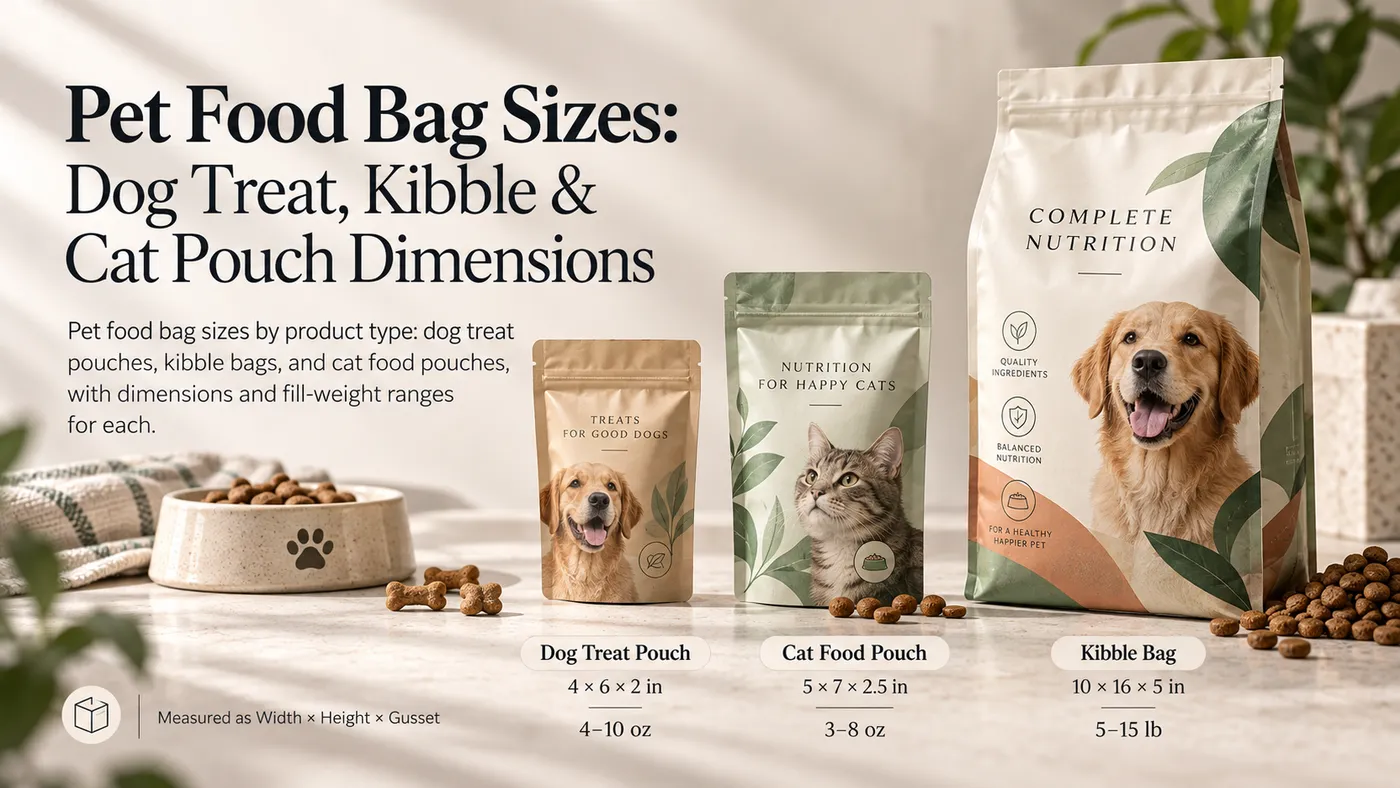
Pet food bag sizes depend on the product inside, not just the weight on the label. A standard 6 oz dog treat pouch runs about 5"×7.5"×2". A 1 lb kibble bag is typically 6"×10"×3". A 5 lb bag runs roughly 9"×13"×4". Dense biscuits pack more weight into less space than a light, freeze-dried treat does. Two bags of the same pet food bag sizes can hold different fill weights for that reason. This guide breaks pet food bag sizes down by product type: dog treats, kibble, and cat pouches. For the sizing logic behind any flexible pouch, see our stand-up pouch sizes guide. Our fill weight chart covers capacity by product. The original mylar bag sizes post covers the format itself.
Why Pet Food Packaging Splits by Product Type
Treats, kibble, and raw food don't share one chart. Density is the reason. A dense biscuit treat packs tight. A small bag holds real weight. A light, airy freeze-dried treat takes up more room per ounce. The same bag holds less weight than a buyer expects.
Kibble sits in the middle of that range. It's dense enough that a mid-size bag does real work. It's still loose enough to need a wider gusset than a biscuit tin. Raw and freeze-dried formats run lightest of the three. That's why premium raw brands often ship in bags that look oversized for the stated weight. This is exactly why pet food bag sizes vary so much by category, even at the same fill weight.
Dog Treat Bag Size Chart
Fill Weight | Dimensions (in) | Dimensions (cm) | Fill Range (dense biscuits) | Fill Range (light/freeze-dried) |
|---|---|---|---|---|
3 oz sample | 4.5 × 6 × 2 | 11.4 × 15.2 × 5.1 | 3–4 oz | 1.5–2.5 oz |
6 oz | 5 × 7.5 × 2 | 12.7 × 19.1 × 5.1 | 6–8 oz | 4–5 oz |
8 oz | 6 × 9.5 × 3 | 15.2 × 24.1 × 7.6 | 8–12 oz | 6–8 oz |
16 oz | 7 × 11.5 × 3.5 | 17.8 × 29.2 × 8.9 | 16–20 oz | 12–14 oz |
2 lb | 8 × 12 × 4 | 20.3 × 30.5 × 10.2 | 2–2.5 lb | 1.5–1.75 lb |
The 6 oz tier is where most small-batch treat brands start. It's the size shoppers expect next to the big national brands. It works for biscuits, jerky, or soft chews without a redesign.
Kibble Bag Size Chart
Fill Weight | Dimensions (in) | Dimensions (cm) | Gusset Note |
|---|---|---|---|
1 lb | 6.5 × 10 × 3 | 16.5 × 25.4 × 7.6 | Standard gusset, no side-fold needed |
3 lb | 9 × 13 × 4 | 22.9 × 33 × 10.2 | Side-gusset starts here on most tooling |
5 lb | 10 × 15 × 4.5 | 25.4 × 38.1 × 11.4 | Side-gusset standard |
10 lb | 15 × 19 × 5 | 38.1 × 48.3 × 12.7 | Side-gusset required to stand when full |
20 lb | 19 × 24 × 6 | 48.3 × 61 × 15.2 | Usually a bottom-gusset bag, not a pouch |
A side-gusset is a fold on the bag's sides, not just the bottom. Once a kibble bag passes roughly 3 lb, that fold matters more. It keeps the dense fill from pulling the bag flat on the shelf. Below that weight, most suppliers skip it to save on material.
Cat Food Pouch Sizes
Cat food pouches use a different format than dog treats and kibble. Wet cat food is the dominant pouch category. It comes almost entirely in single-serve sizes, not multi-pound formats. A standard single-serve wet pouch holds about 3 oz. It runs roughly 4"×5.5"×1" flat-sealed, smaller than the smallest dog treat bag above.
That small footprint isn't just about portion control. A 3 oz pouch gets used in one sitting. Wet food doesn't keep once opened the way a resealable kibble bag does. Multi-pack cat food pouches use the same single-serve dimensions per pouch. They just bundle into an outer case instead of scaling up.
Resealable vs. Non-Resealable for Pet Food
Kibble and treat bags almost always carry a resealable zipper now. It's close to a baseline expectation at this point. A shopper comparing two similar bags often picks the one with a visible zipper track. The actual freshness gain can be marginal for a fast-turnover product, but the shelf signal still matters.
Single-serve cat food pouches are the exception. The whole pouch gets used in one feeding. A resealable closure adds cost without adding real value there. Most brands use a simple heat seal with a tear notch instead. I've seen a brand add a zipper to a single-serve pouch purely for shelf differentiation. It rarely earned back the extra tooling cost in repeat purchases.
AAFCO Label Space Requirements
Pet food packaging in the US has to leave room for specific label elements. AAFCO model regulations call for a guaranteed analysis panel. They also require a net quantity statement with defined clear space around it. These spacing rules affect how much bag real estate is left for branding.
This isn't legal advice, and requirements shift over time. Confirm current label specs with a regulatory specialist or your co-packer before finalizing artwork.
When a Standard Pet Food Bag Size Doesn't Fit
The charts above cover most treat, kibble, and cat food lines. A new formula with an unusual density can fall outside a standard slot. So can a limited-run flavor or a subscription box insert. Standard pet food bag sizes are still the right starting point for almost any line. The ranges above reflect what already sells on shelves. When a product doesn't fit, EBP cuts pet food pouches and bags to any custom width, height, and gusset depth. Closures get built around the actual product, not the nearest standard tier.
Frequently Asked Questions
What size bag do I need for 1 lb of dog treats? A 1 lb dog treat bag runs about 7"×11.5"×3.5" for dense biscuits. A lighter freeze-dried treat at the same weight may need a bigger bag.
Why are cat food pouches smaller than dog food bags? Wet cat food pouches are sized for single-serve use, typically around 3 oz. Opened wet food doesn't keep the way a resealable kibble bag does.
Do kibble bags need a side-gusset? Most suppliers add one once a kibble bag passes roughly 3 lb. The extra fold keeps a heavier fill from distorting the bag's shape.
Does fill weight change bag size for the same product? Yes. A dense treat packs more weight into less volume than a light, freeze-dried one. Two bags of identical pet food bag sizes can hold different weights depending on what's inside.
The Bottom Line
Pet food bag sizes track closely with density. Dense treats and kibble pack more weight per bag. Light freeze-dried formats and single-serve cat pouches run smaller for what they hold. Match the fill weight to the right tier above. Flag the gusset and closure type when you request a quote. Need custom dimensions or a specific barrier spec? Get a free quote. We run mylar pet food pouches and food packaging in any size.