
Jump to section9 sections
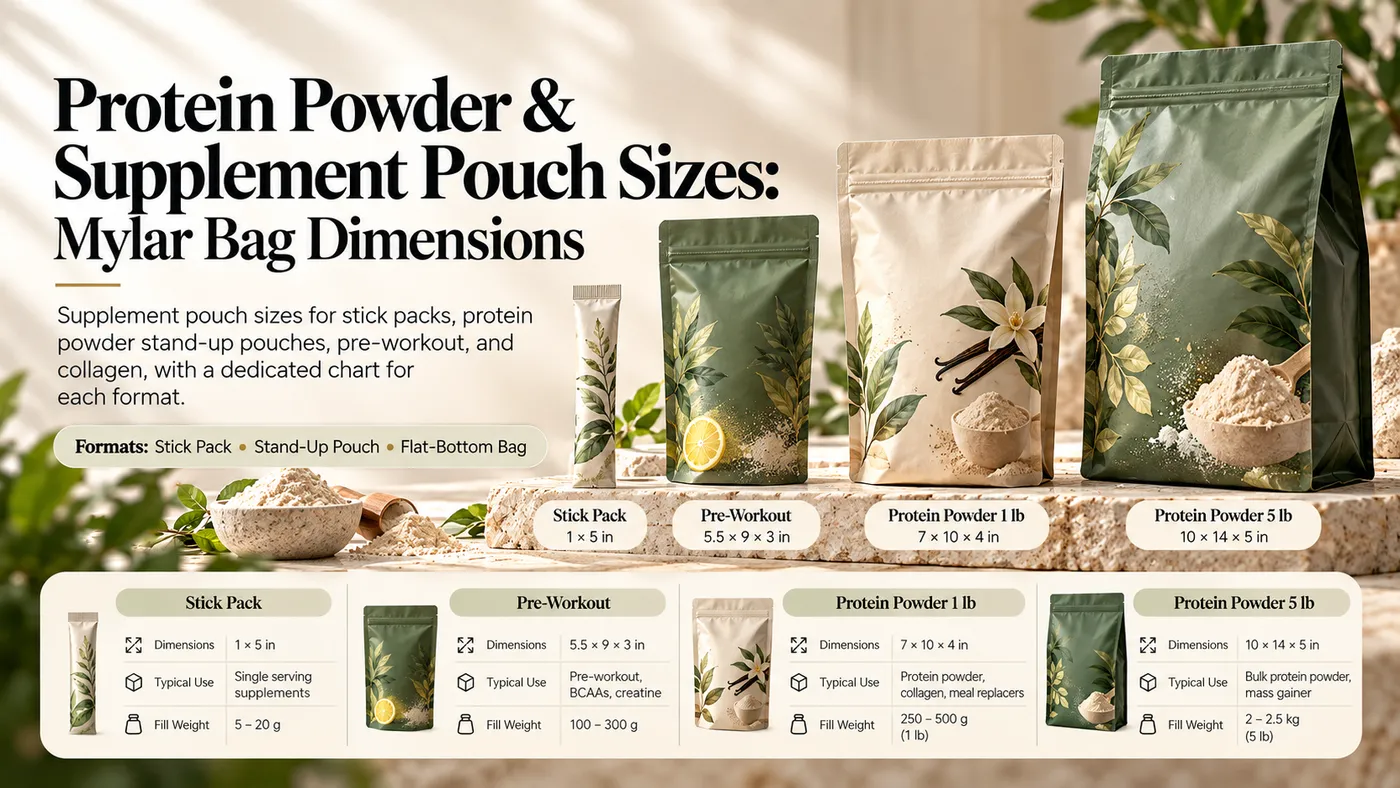
Quick answer: A single-serving protein powder stick pack runs about 1"×5". A standard 1 lb (30-serving) protein powder stand-up pouch is about 7"×10"×4". A 5 lb (70-serving) pouch runs about 10"×14"×5". A 30-serving pre-workout pouch is typically 5.5"×9"×3". Supplement pouch sizes split mainly by format: stick pack, stand-up pouch, or flat-bottom bag. This guide charts all three, plus pre-workout and wellness powder tiers.
Supplement Pouches Split by Format
A stick pack is a single-serving sachet, usually torn open and poured directly. It's the format most on-the-go supplement brands reach for first. It costs less per unit at scale but needs a different fill line than a bag.
A stand-up pouch holds a multi-serving supply with a gusseted base. It's the format most tub-replacement protein powder brands use. A flat-bottom bag is a heavier-duty stand-up variant. It takes over once fill weight gets large enough that a standard gusset can't hold the bag's shape.
Stick Pack Size Chart
Serving Size | Pouch Dimensions (W×L) | Fill Weight | Typical Supplement Type |
|---|---|---|---|
5g | 1" × 3.5" | 5g | Pre-workout, electrolyte mix |
10g | 1" × 4" | 10g | Collagen, BCAA |
15g | 1.25" × 4.5" | 15g | Greens powder, creatine blend |
20g | 1.5" × 5" | 20g | Whey isolate single-serve |
30g | 2" × 5.5" | 30g | Full protein serving, meal-replacement powder |
Stick packs scale up in both width and length as serving size grows. A 30g stick pack needs roughly double the width of a 5g pack. That extra width clears the scoop or pour spout cleanly.
Protein Powder Stand-Up Pouch Chart
Fill Weight | Dimensions (in) | Dimensions (cm) | Approx. Servings (30g scoop) |
|---|---|---|---|
1 lb | 7 × 10 × 4 | 17.8 × 25.4 × 10.2 | ~15 servings |
2 lb | 7.5 × 11 × 4.5 | 19.1 × 27.9 × 11.4 | ~30 servings |
5 lb | 10 × 14 × 5 | 25.4 × 35.6 × 12.7 | ~75 servings |
10 lb | 12 × 17 × 6 | 30.5 × 43.2 × 15.2 | ~150 servings |
Supplement pouch sizes at 5 lb and above usually shift to a flat-bottom format instead of a standard gusset. A flat-bottom bag holds its shape better under that much weight and stands more reliably on a shelf.
Pre-Workout and BCAA Pouch Sizes
Pre-workout pouches run smaller than protein powder pouches at the same serving count, since the dose per serving is lighter. A 30-serving pre-workout pouch typically runs 5.5"×9"×3". A 20-serving BCAA pouch runs closer to 4.5"×7"×2.5".
These supplement pouch sizes trend narrower and taller than protein pouches of a similar serving count. The finer powder texture settles tighter, so the bag doesn't need as much width to move product during a scoop.
Collagen and Wellness Powder Pouches
Collagen and wellness powders typically ship in the 200 to 500 gram range per pouch. A 300g collagen pouch runs about 5"×7"×2.5". A 500g greens or wellness blend pouch runs closer to 6"×8.5"×3".
These smaller supplement pouch sizes often use a narrower gusset than a full protein pouch. The lighter fill weight doesn't need as much base support to stand upright on a shelf.
FDA Supplement Labeling and Panel Space
FDA supplement labeling rules require a Supplement Facts panel with defined content and spacing. That panel needs a fixed printable area, regardless of how small the pouch is. A pouch sized too tight can force text below a readable size, just to fit the required panel.
This isn't legal advice, and labeling requirements can change. Confirm current panel-size and font requirements with a regulatory specialist before finalizing pouch dimensions and artwork.
Frequently Asked Questions
What size is a single-serving protein stick pack? A single-serving protein stick pack typically runs about 1 inch wide by 5 inches long. That size fits a 20 to 30 gram serving.
What are the supplement pouch sizes for a 1 lb protein powder bag? A 1 lb protein powder stand-up pouch typically runs about 7 by 10 by 4 inches. That holds roughly 15 servings at a 30g scoop.
How big is a 5 lb protein powder pouch? A 5 lb protein powder pouch typically runs about 10 by 14 by 5 inches. It's usually a flat-bottom format, not a standard gusset.
What size pouch is best for pre-workout powder? A 30-serving pre-workout pouch typically runs about 5.5 by 9 by 3 inches. That's smaller than a protein pouch of the same serving count.
Why are pre-workout pouches smaller than protein powder pouches? Pre-workout doses are lighter per serving than protein powder. The pouch needs less volume to hold the same number of servings.
What size pouch fits 300 grams of collagen powder? A 300g collagen pouch typically runs about 5 by 7 by 2.5 inches. That's smaller than a full protein pouch due to the lighter fill weight.
Does FDA supplement labeling affect pouch size? Yes. The required Supplement Facts panel needs a fixed printable area. A pouch sized too small can force label text below a readable size.
At what fill weight do protein pouches switch to a flat-bottom bag? Supplement pouch sizes typically shift to flat-bottom at 5 lb and above. A standard gusset doesn't hold that much weight as reliably.
When a Standard Supplement Pouch Size Doesn't Fit
The charts above cover most stick pack, stand-up, and flat-bottom supplement formats. An unusual serving size, a dense specialty blend, or a tight label requirement can all fall outside a standard slot. Standard supplement pouch sizes are the right starting point for almost any product. When a product doesn't fit, EBP cuts stick packs, stand-up pouches, and flat-bottom bags to any custom spec. Width, height, and gusset depth all get matched to the actual product.
The Bottom Line
Supplement pouch sizes split by format and serving count. Stick packs cover single servings. Stand-up pouches cover through 2 lb. Flat-bottom bags take over from 5 lb up. Match the format to your fill weight, and confirm label panel space early with a regulatory specialist. See our box size guide for rigid formats, too. Need custom dimensions or a specific barrier spec? Get a free quote. We run mylar supplement pouches in any size.