

What Is Chipboard? Rigid Box Material Explained
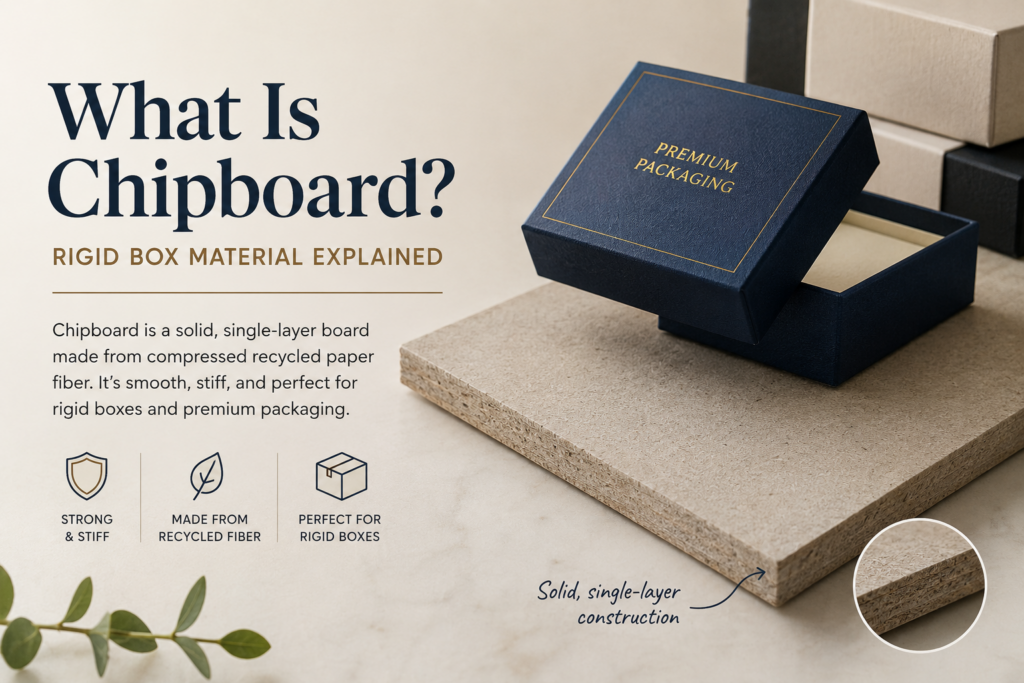
What is chipboard? It’s a solid, single-layer board made from compressed recycled paper fiber. There’s no wavy flute layer inside it. That’s different from corrugated cardboard. That single detail explains most of what chipboard can and can’t do. It’s smooth and stiff. It’s dense enough to hold a shape. It’s not built to absorb heavy […]
Signs You’ve Outgrown Your Generic Packaging (And What to Do About It)
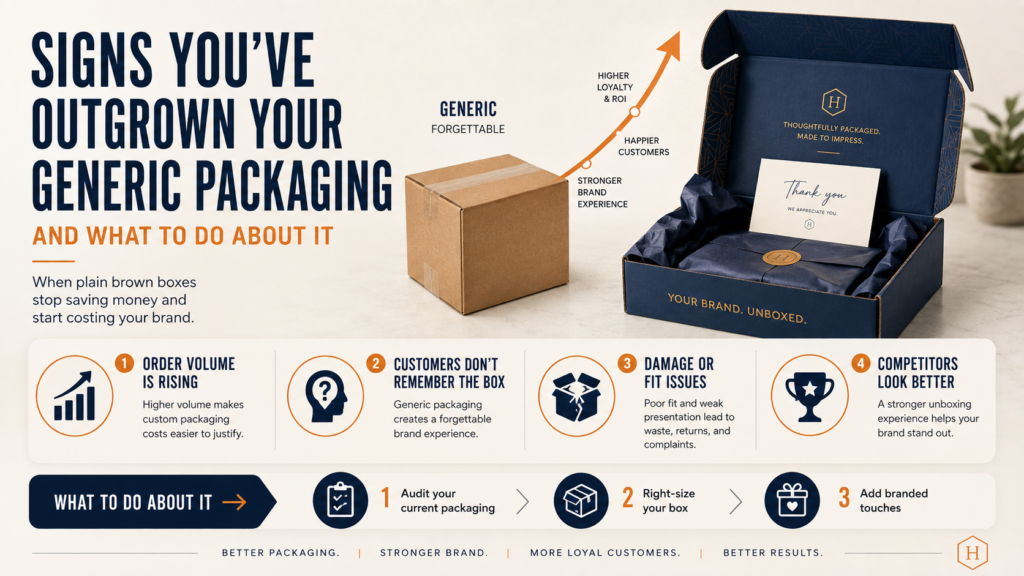
Most brands don’t decide to upgrade to custom boxes. They drift into it — one too many customer comments about the box, a competitor’s package that stops them mid-scroll, a damage claim that shouldn’t have happened. The signs that it’s time are usually there for months before anyone acts on them. Here are the ones […]
What Is Window Patching in Packaging?
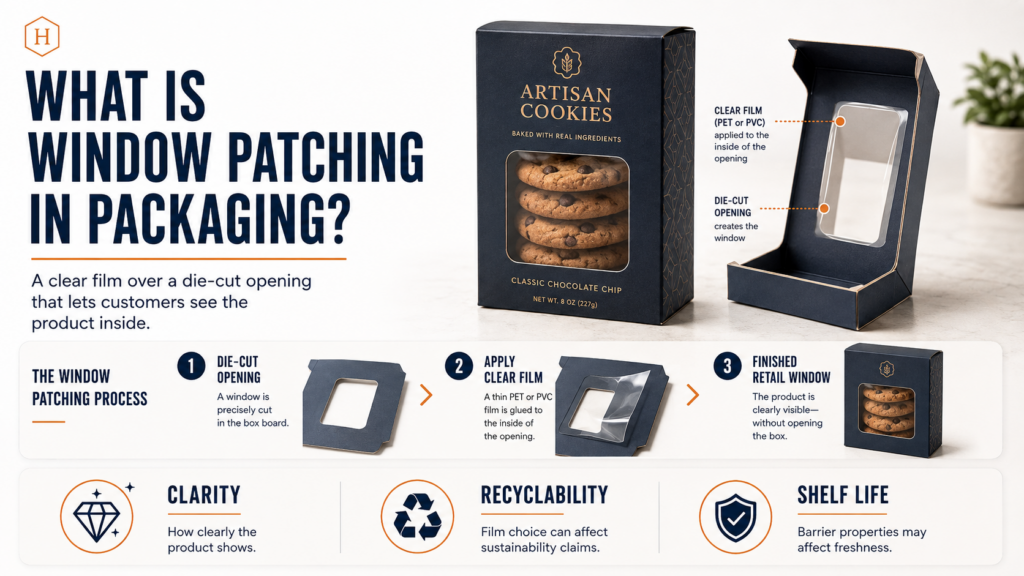
Window patching is the process of applying a thin, clear film over a die-cut opening in a box. That opening lets a customer see the product inside without opening the package. The window gets cut first. Window patching happens after, at the finishing stage, when a machine glues the film in place. It sounds simple. […]
Custom Packaging in Nashville: How Tennessee Brands Are Using Boxes to Grow

Nashville’s packaging challenge isn’t obvious until you’ve shipped through a Tennessee summer. July humidity regularly hits 70–80% relative humidity, which degrades corrugated ECT stacking strength in ways that show up in real shipments — not just lab tests. Then winter brings ice storms, not snow, and the freeze-thaw cycles start. That dual-season stress is what […]
Chocolate Box Sizes: Truffle Counts to Dimensions
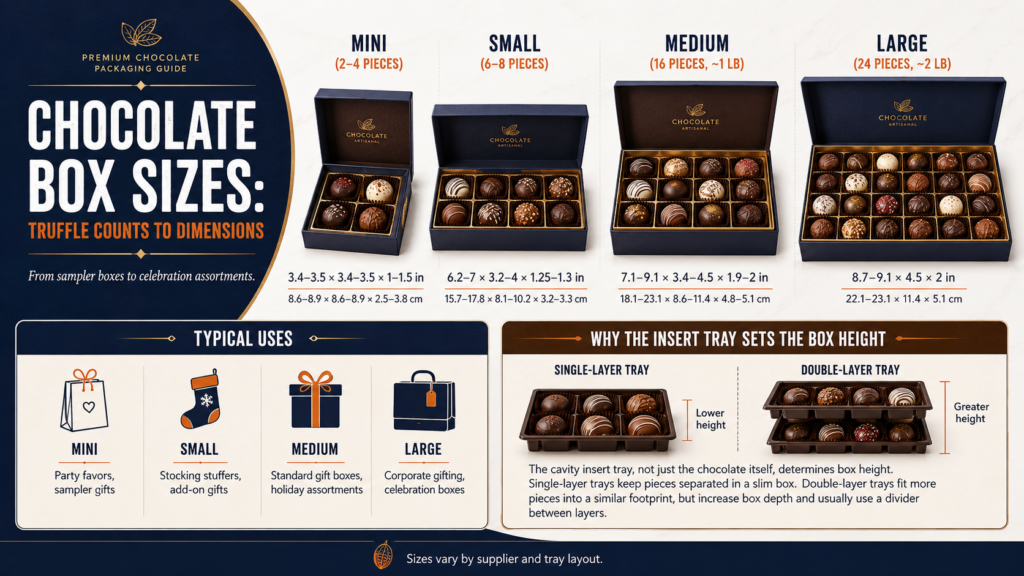
Chocolate box sizes run by piece count more than by weight. A 4-piece sampler measures around 3.5 × 3.5 × 1 inches. A 16-piece assortment closer to 1 pound runs 7 to 9 inches long. A 24-piece gift box tops out near 9 inches long and 2 inches deep. This guide charts all four common […]
Does Better Packaging Actually Make You More Money?
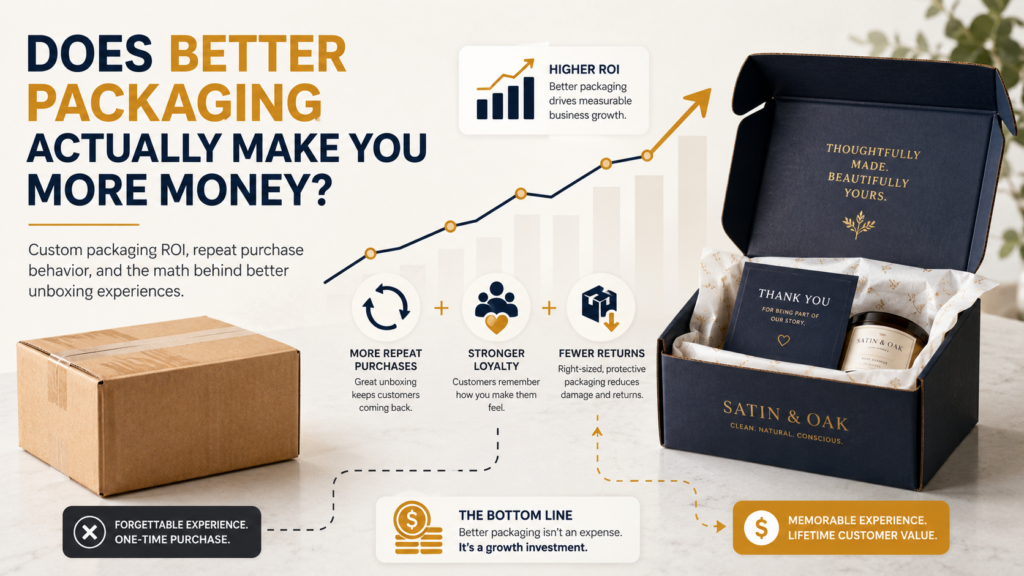
The cost of better packaging is easy to calculate. The return on it is not. A custom mailer box at $1.40 per unit shows up on a spreadsheet as a line item. The repeat purchase it might generate, the return it might prevent, the post a customer might share — those don’t show up anywhere […]
Box Insert Types: Foam, Cardboard, Molded Pulp & Plastic
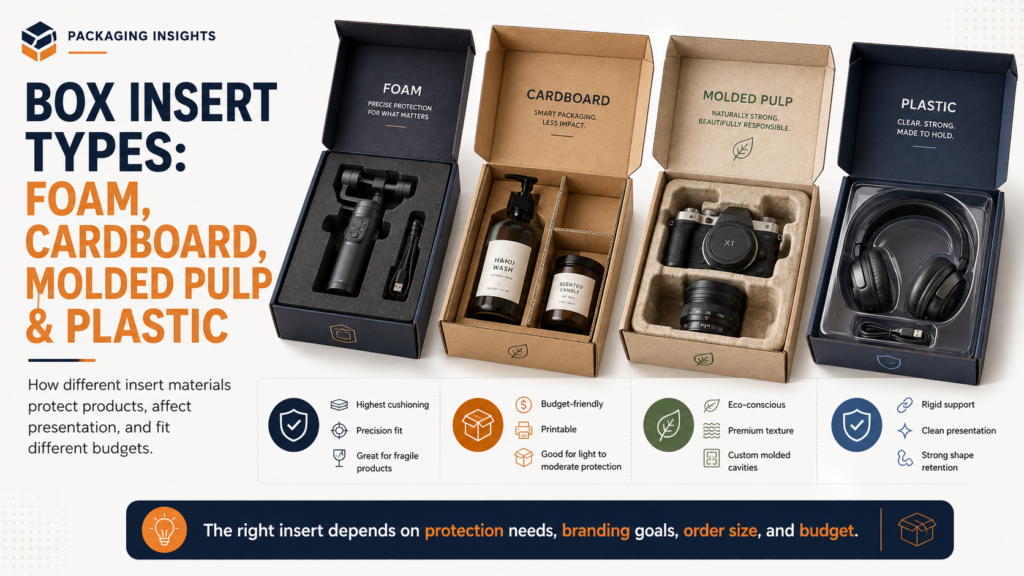
A box insert is the shaped piece that sits inside a box. It holds your product in place. It cushions it during shipping too. The material you pick changes things. Foam, cardboard, molded pulp, or plastic all protect differently. They look different too. Each one is accessible at different order sizes. Most guides compare protection […]
Gift Box Sizes: Standard Dimensions for Every Occasion
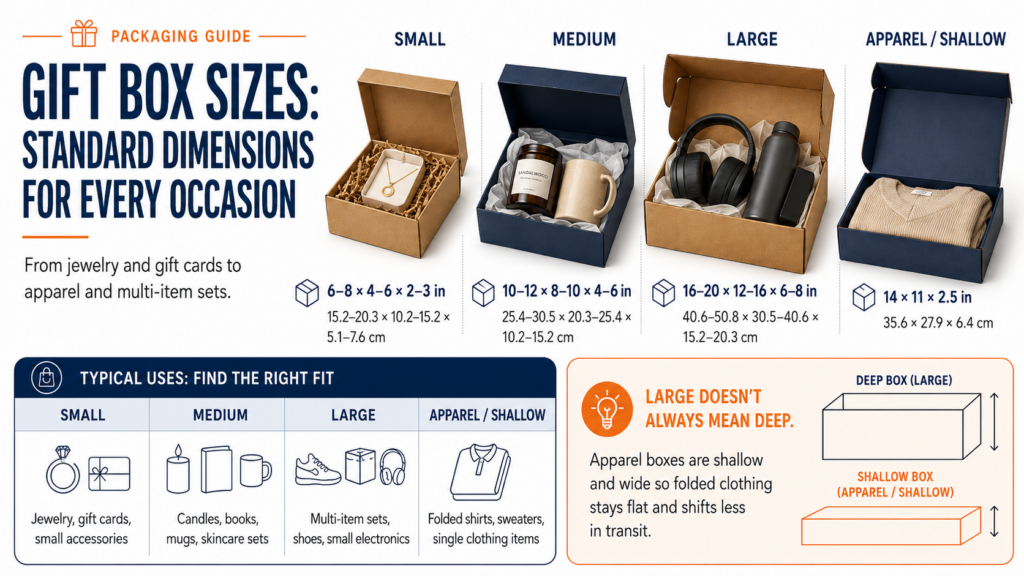
Gift box sizes break into four rough tiers. Small fits jewelry and gift cards. Medium fits candles and books. Large fits multi-item sets. A separate shallow tier handles folded clothing on its own. That last tier trips people up, since a bigger box isn’t always the right upgrade from medium. This guide charts all four […]
Corrugated Flute Types: E, B, C, F Flutes Compared
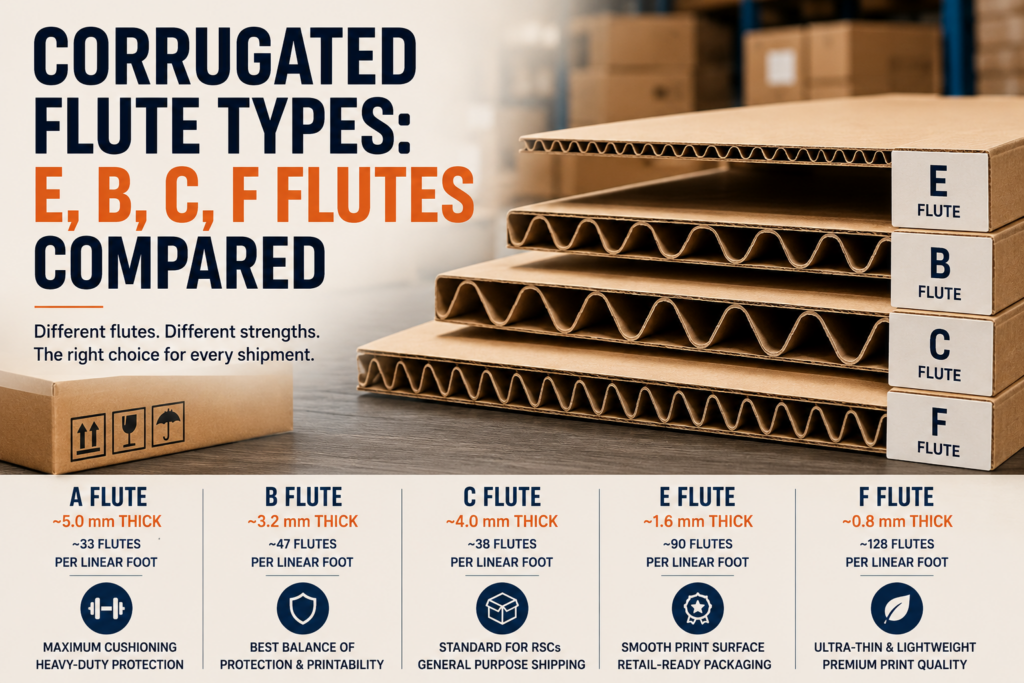
Corrugated flutes are the wavy paper layer sandwiched between the flat liners of a cardboard box. The letter grade, A, B, C, E, or F, tells you how thick that wave is. It also tells you how many waves pack into each foot of board. Thicker flutes cushion better. Thinner flutes print cleaner and fold […]
Jewelry Box Sizes: Ring, Necklace & Bracelet Dimensions
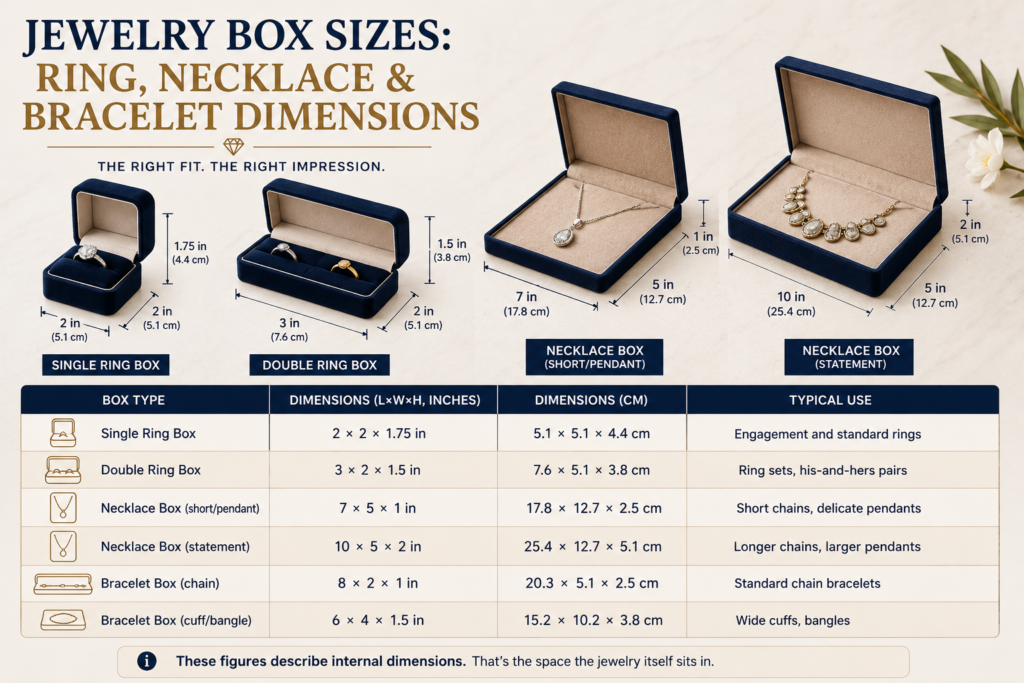
Jewelry box sizes vary more by piece type than any other category in this cluster. A ring box runs about 2 × 2 × 1.75 inches. A necklace box runs anywhere from 7 × 5 × 1 inches up to 10 × 5 × 2 inches. Bracelet boxes sit somewhere in between, depending on the […]