

Print Proofs Explained: Digital, Hard & Press Proofs
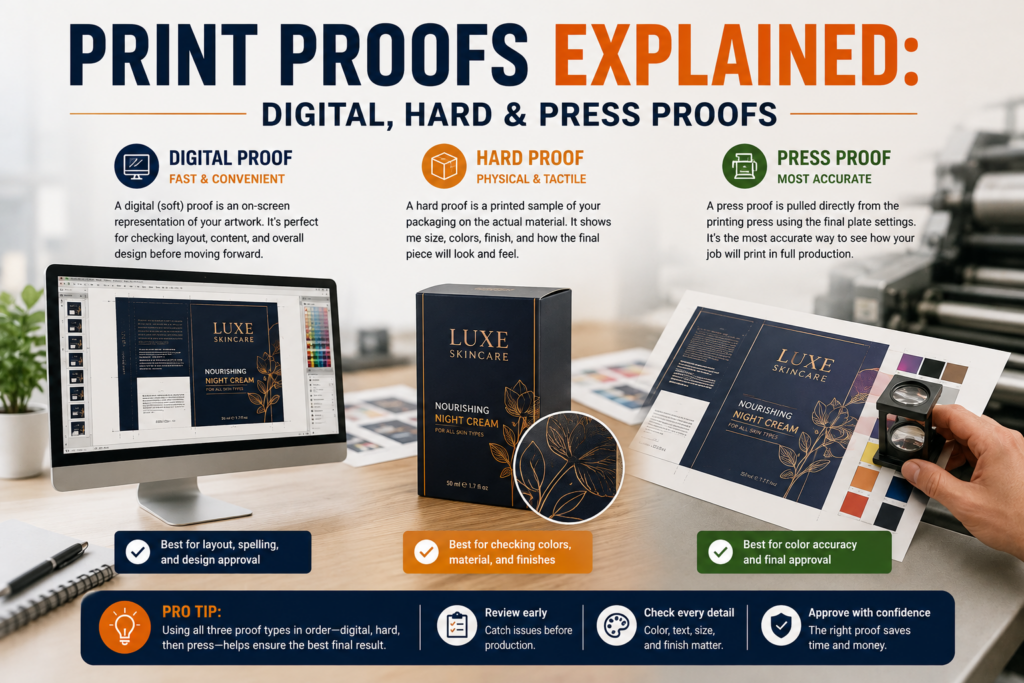
What is a print proof? It’s a sample of your printed box. You see it before the full production run. It lets you catch problems while they’re still cheap to fix. Proofs come in three main types. A digital proof is an on-screen or PDF file. A hard proof is a physical, color-calibrated printed sample. […]
Tuck End Box Styles: Straight Tuck vs Reverse Tuck Explained
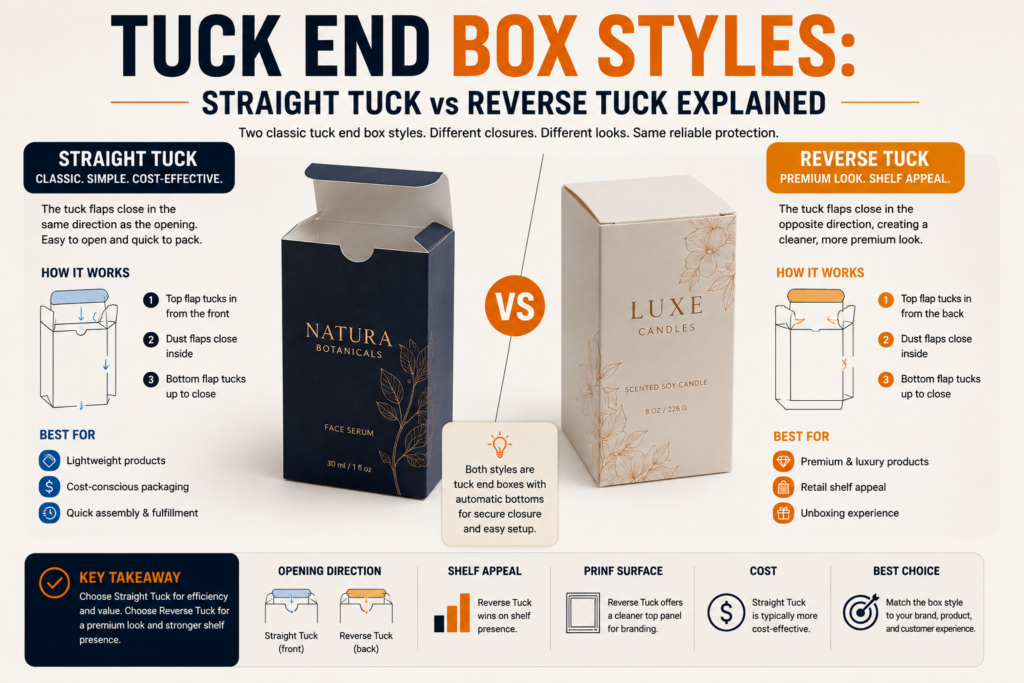
Straight tuck vs reverse tuck comes down to which way the flaps fold. A straight tuck box has both the top and bottom flaps tucking the same direction. Both tuck toward the back panel. A reverse tuck box works differently. Its top flap tucks toward the back, but the bottom flap tucks toward the front. […]
What Is Litho Lamination? Corrugated That Looks Premium

Litho lamination bonds a separately printed sheet onto the flat liner of corrugated board. That sheet, called a litho sheet, carries the high-resolution graphics. The corrugated board underneath carries the strength. This combines both in one panel. You get a folding carton’s crisp print quality. You also get a structure that ships and stacks like […]
Holographic & Specialty Foils: Beyond Gold and Silver
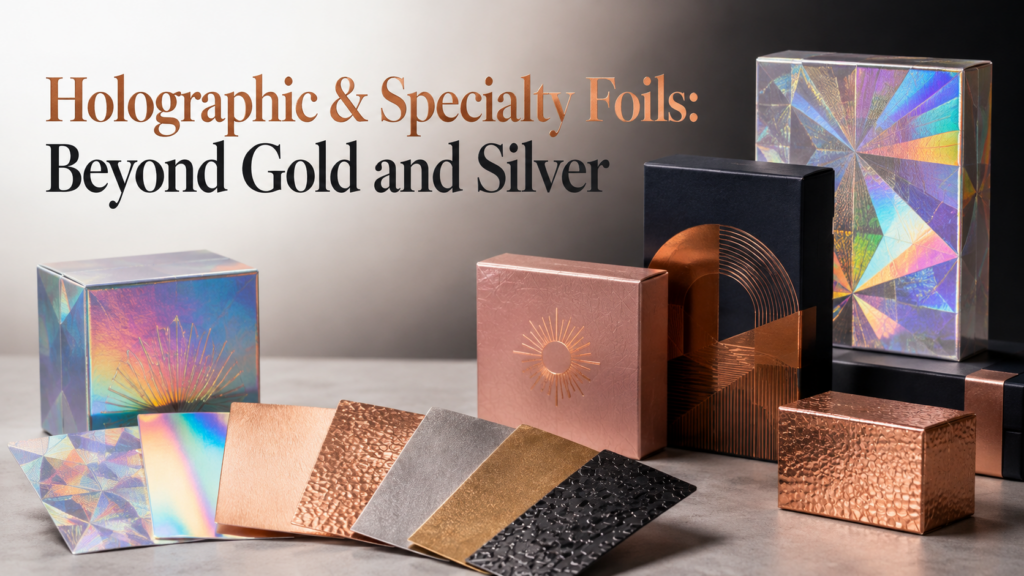
Holographic packaging uses a metallized film with a microscopic pattern embossed into it. That pattern splits light into a shifting rainbow effect. The effect changes as the viewing angle changes. Standard gold or silver foil reflects one consistent color no matter how you tilt it. Holographic foil looks different every time the box moves. That’s […]
Scoring, Creasing & Perforation: Folding Explained
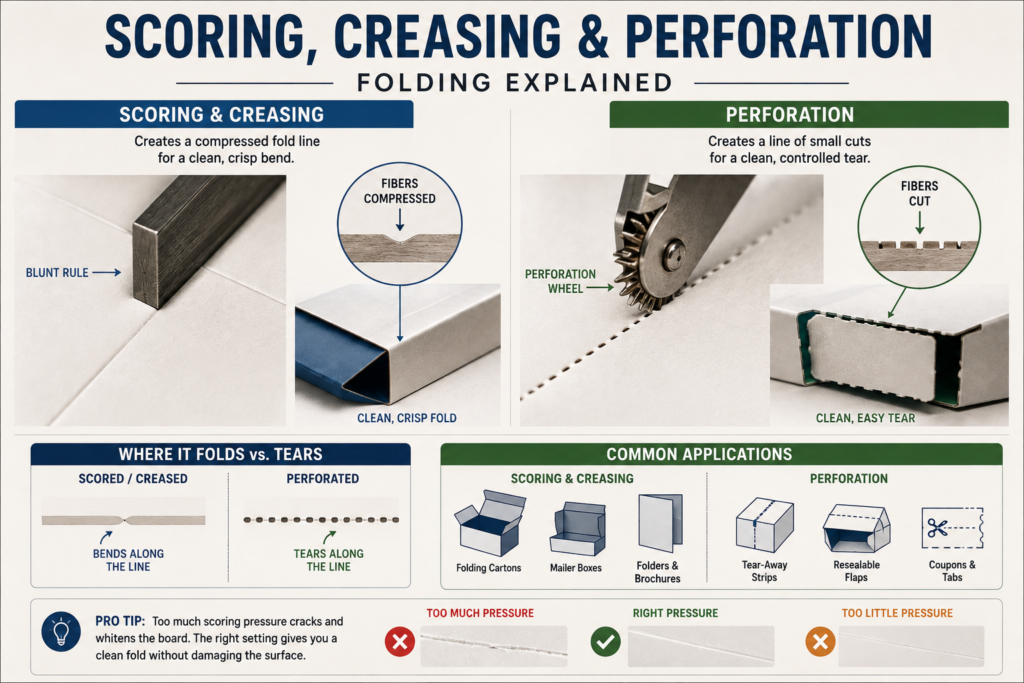
Scoring and creasing prepare a box to fold cleanly along an exact line. A blunt rule presses into the board. It compresses the fibers right along that line. The board bends there instead of cracking wherever it feels like. Perforation does something different. It cuts a row of small, closely spaced slits. It doesn’t compress […]
UV Coating vs Lamination: Cost, Durability, Look
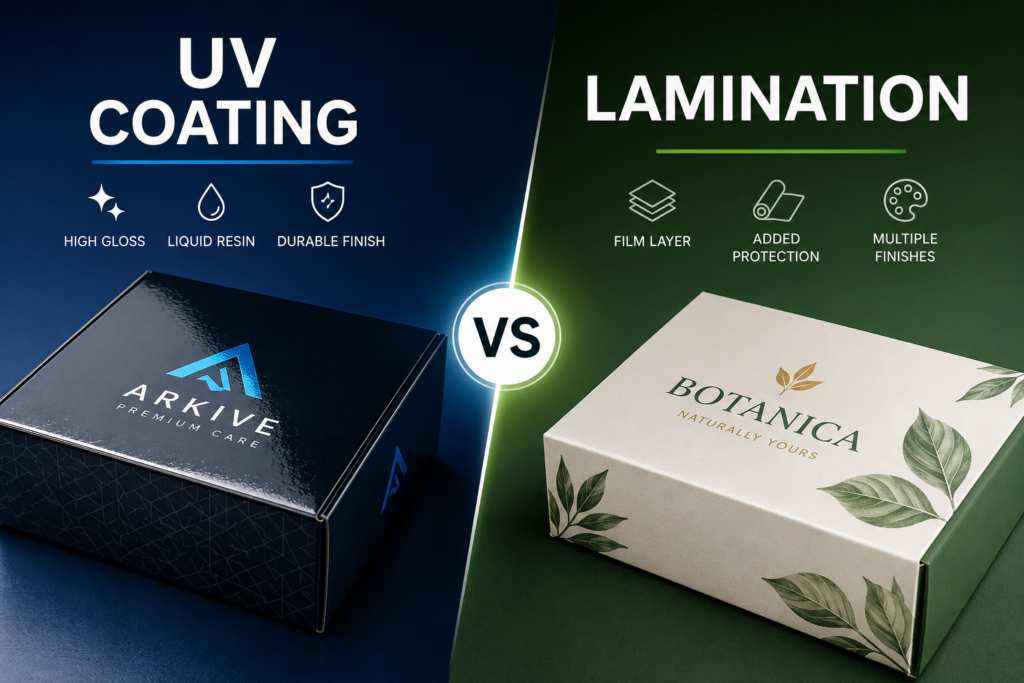
UV coating vs lamination comes down to one physical difference. UV coating is a liquid resin. It gets cured onto the printed sheet with UV light. Lamination bonds a separate plastic film to that sheet with adhesive. One becomes part of the surface. The other sits on top as its own layer. That single difference […]
What Is Chipboard? Rigid Box Material Explained
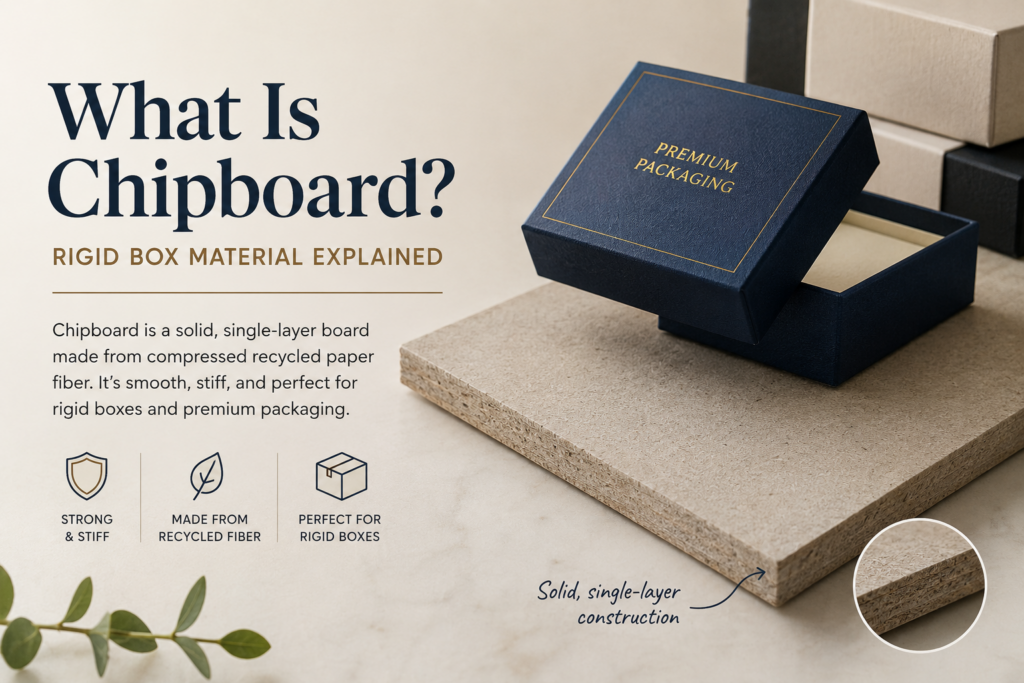
What is chipboard? It’s a solid, single-layer board made from compressed recycled paper fiber. There’s no wavy flute layer inside it. That’s different from corrugated cardboard. That single detail explains most of what chipboard can and can’t do. It’s smooth and stiff. It’s dense enough to hold a shape. It’s not built to absorb heavy […]
What Is Window Patching in Packaging?
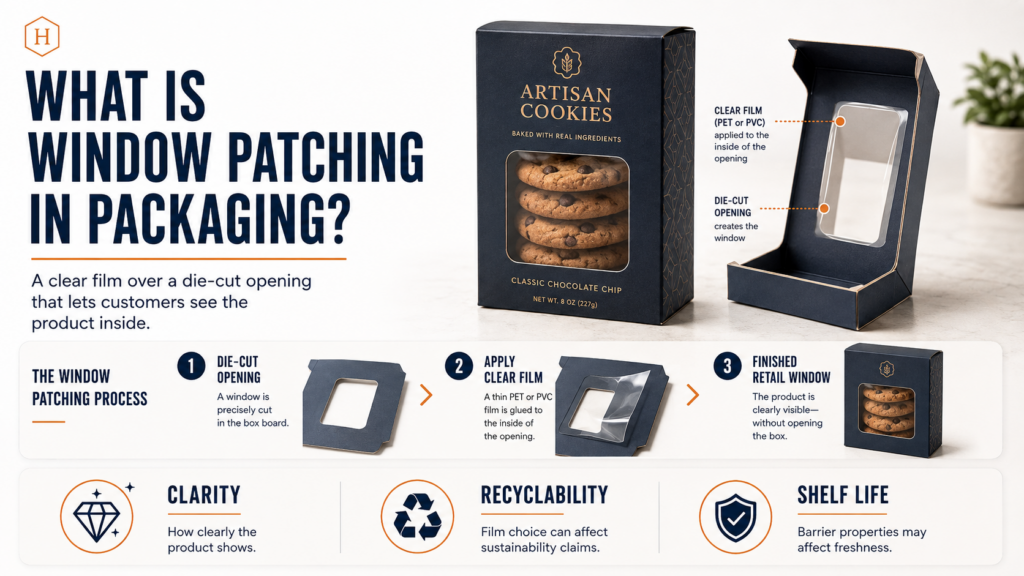
Window patching is the process of applying a thin, clear film over a die-cut opening in a box. That opening lets a customer see the product inside without opening the package. The window gets cut first. Window patching happens after, at the finishing stage, when a machine glues the film in place. It sounds simple. […]
Box Insert Types: Foam, Cardboard, Molded Pulp & Plastic
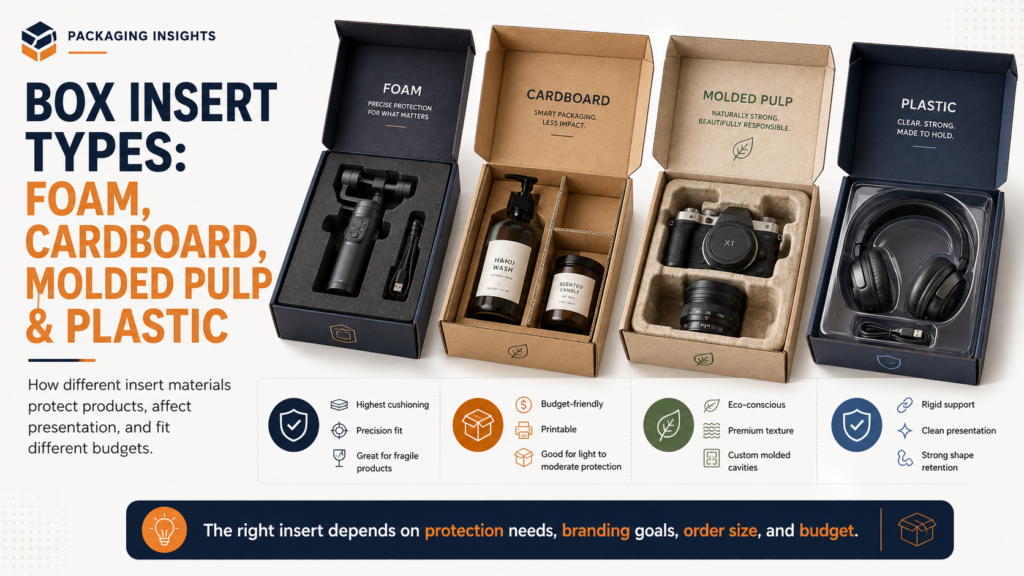
A box insert is the shaped piece that sits inside a box. It holds your product in place. It cushions it during shipping too. The material you pick changes things. Foam, cardboard, molded pulp, or plastic all protect differently. They look different too. Each one is accessible at different order sizes. Most guides compare protection […]
Corrugated Flute Types: E, B, C, F Flutes Compared
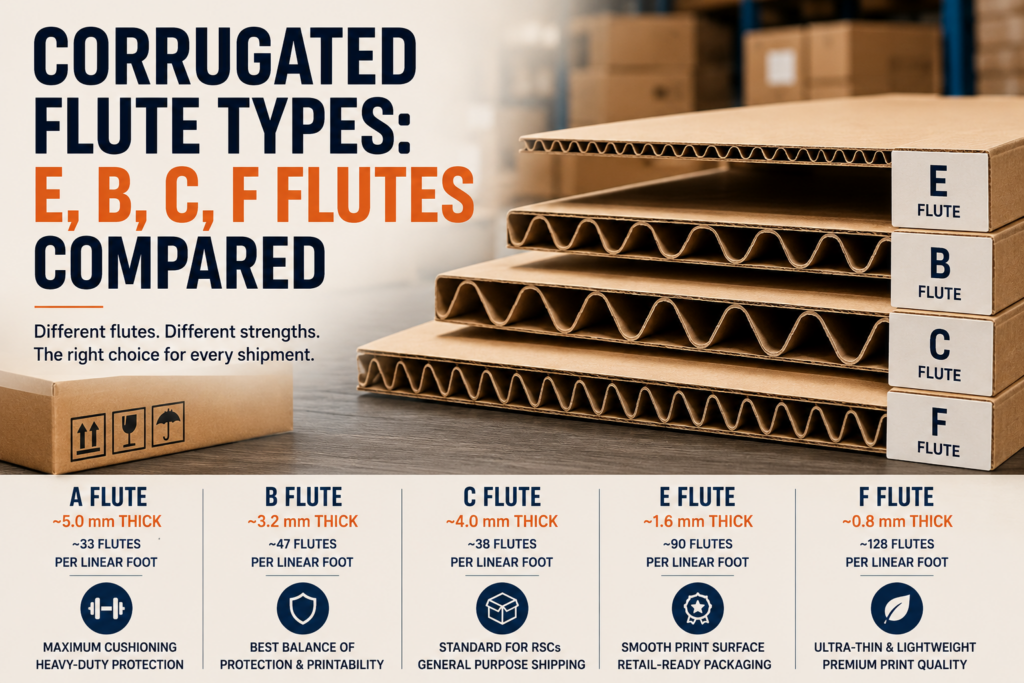
Corrugated flutes are the wavy paper layer sandwiched between the flat liners of a cardboard box. The letter grade, A, B, C, E, or F, tells you how thick that wave is. It also tells you how many waves pack into each foot of board. Thicker flutes cushion better. Thinner flutes print cleaner and fold […]