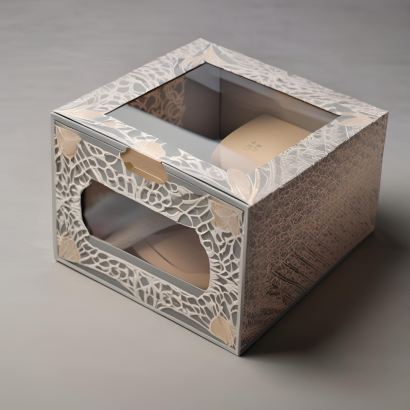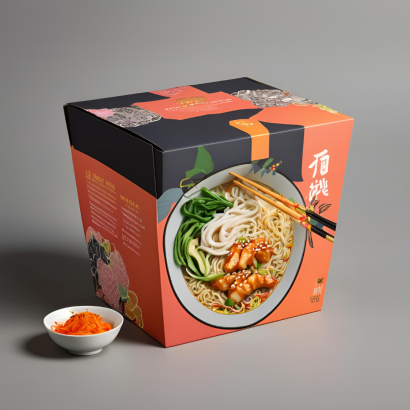


Litho lamination bonds a separately printed sheet onto the flat liner of corrugated board. That sheet, called a litho sheet, carries the high-resolution graphics. The corrugated board underneath carries the strength. This combines both in one panel. You get a folding carton’s crisp print quality. You also get a structure that ships and stacks like corrugated.
Direct printing on corrugated can’t match that resolution. The board’s rougher surface limits how fine the detail can print. Litho lamination sidesteps that limit entirely. It prints on a smooth, separate sheet first. This article covers what litho lamination actually is. It covers where litho lamination earns its place over direct corrugated printing. It covers the one alignment mistake that shows up on rushed runs.
What Is Litho Lamination, Exactly?
Litho lamination starts with a sheet printed separately, using offset lithography. That’s the same process behind most folding-carton printing. The sheet gets a coating for sheen and durability. It then gets bonded with adhesive onto the flat liner of a corrugated board panel.
The corrugated structure underneath doesn’t change. It still has its fluted layer. It still has full stacking strength. What changes is the surface. Instead of printing directly on corrugated’s rougher liner, this process gives that liner a smooth, high-resolution printed face. That’s the whole idea in one line: folding-carton print quality, corrugated strength, one panel.
Why Brands Use Litho Lamination
Brands reach for litho lamination when a box needs to look premium. It still needs corrugated’s toughness, though. A shipping box that also works as retail packaging is the classic case. It has to survive a carrier’s rough handling. It also has to look sharp once it lands on a shelf.
Direct corrugated printing can’t hit the same fine detail. Gradients and photo quality suffer too. Litho lamination closes that gap. It doesn’t give up corrugated’s strength to do it.
The Registration Problem Most Guides Skip
Here’s the part that decides whether litho lamination looks flawless or sloppy: registration. Registration means how precisely the printed graphics line up with the die-cut and score lines underneath. Get it right, and everything lines up perfectly. Get it wrong, and the print visibly drifts off the fold lines and cut edges.
Corrugated board can warp a bit during bonding. Larger panels see this most. That warp is often invisible on a flat sheet. It only shows up once the panel gets cut to full size and folded. Most guides describe this finish purely in terms of its look. They rarely flag that the bonding step itself can cause this kind of misalignment.
I’ve seen a brand run a large litho-laminated shipping box for an ecommerce launch. The flat sheet samples looked flawless before cutting. Once the boards were cut and folded to full size, something was off. The printed graphics were visibly out of alignment with the die-cut and score lines. The board had warped slightly during bonding. Nobody caught it until the panels were assembled. The reprint used a full-size, folded sample instead of just a flat swatch. That caught the same issue early enough to fix.
Litho Lamination vs. Direct Corrugated Printing
Direct printing puts ink straight onto the corrugated liner. It’s faster and cheaper. It caps out at a lower print resolution, though. Fine detail and gradients don’t come out as clean.
Litho lamination trades some speed and cost for print quality. The separate sheet carries detail direct corrugated printing simply can’t match. For a box that leans on strong visual branding, that tradeoff is usually worth it.
Where Litho Lamination Earns Its Place
Litho lamination earns its place on retail-ready ecommerce packaging. These boxes need to double as a shelf-ready presentation piece. Point-of-sale displays built from corrugated benefit too. They need stacking strength. They also need a print quality that can compete with a folding carton.
Premium corrugated packaging in general is where this finish shows up most. A brand might want corrugated’s shipping strength. It might also want to skip corrugated’s usual printed look. Litho lamination answers both at once.
What Is Litho Lamination: Quick Comparison
| Factor | Litho Lamination | Direct Corrugated Print | Standard Corrugated |
|---|---|---|---|
| Print quality | High, folding-carton level | Moderate | Basic |
| Structural strength | Full corrugated strength | Full corrugated strength | Full corrugated strength |
| Registration risk | Requires careful alignment | Low | Low |
| Relative cost | Higher | Moderate | Lowest |
Common Mistakes When Specifying Litho Lamination
The first mistake is approving a flat sheet sample without checking a full-size, folded version. Warp and registration issues often only appear once the panel is cut and assembled.
The second mistake is choosing litho lamination for a box that doesn’t need the print quality. Standard corrugated printing works fine for shipping-only boxes with simple graphics. It costs less too.
The third mistake is skipping a discussion of registration tolerance upfront. Ask how tightly a vendor can hold alignment between the litho sheet and the die-cut lines. Do this before committing to a full run.
A fourth mistake is assuming litho lamination fixes every print-quality problem automatically. It solves resolution and detail. It doesn’t solve color consistency across a large production run. Confirm color-matching procedures separately.
A fifth mistake is skipping a real talk about turnaround time. The extra print and bonding steps add time versus direct corrugated printing. Build that into a launch timeline early. Don’t find out about it right before a deadline.
Which Should You Choose?
Building a box that needs to survive shipping and look retail-ready once it arrives? Litho lamination is worth the added cost. It’s worth the registration attention it requires too.
Shipping something with simple graphics that never needs to look premium? Standard direct-print corrugated is faster and cheaper. It’s perfectly adequate for that job.
Not sure which approach fits your box? Our post on why corrugated wins for ecommerce, and when it doesn’t covers more corrugated tradeoffs. Our guide to rigid box vs folding carton covers structure and finish choices more broadly. Easy Box Packaging can also send a full-size, folded sample before a full production run. That’s the only reliable way to catch registration issues ahead of time.
Litho lamination and direct corrugated printing solve different problems. One prioritizes print quality on a structure built for shipping. The other keeps things simple and affordable. Match the choice to what the box actually needs to do. The finish will hold up exactly the way the sample looked.
Litho Lamination: FAQ
Is litho lamination the same as direct corrugated printing? No. Direct printing puts ink straight onto the corrugated liner. Litho lamination bonds a separately printed sheet onto that liner instead. That allows for much finer detail.
Why does my litho-laminated box look misaligned? That usually means the board warped during bonding. This throws off registration between the printed graphics and the die-cut or score lines. Request a full-size, folded sample to catch this before a full run.
Is litho lamination more expensive than standard corrugated printing? Generally yes. It requires a separate printed sheet and a bonding step. The tradeoff is a print quality direct corrugated printing can’t match.
Get a free quote — dieline and design support included.