
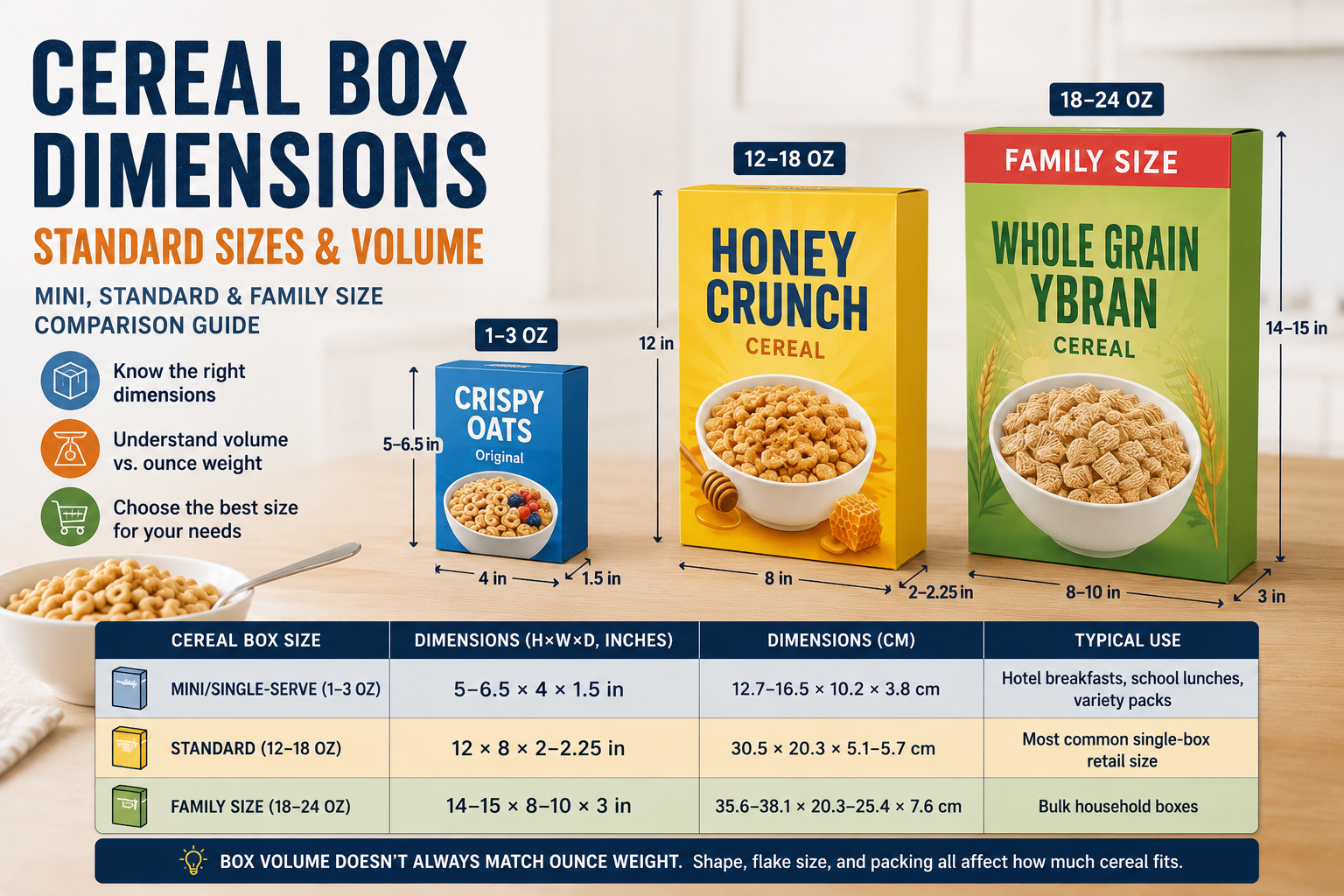
The most common cereal box dimensions are 12 inches tall, 8 inches wide, and 2 inches deep. That’s the standard size. It holds 12 to 18 ounces of cereal, the tier most brands stock at retail. Mini and family-size boxes both scale differently from there. Neither scales the way you’d expect from ounces alone. This guide charts all three tiers. It also explains why box volume and cereal weight don’t always match. It’s part of our size guide series alongside our cupcake box sizes and shipping box sizes guides. For everything else, our full box size guide covers the rest.
Cereal Box Size Chart
| Cereal Box Size | Dimensions (H×W×D, inches) | Dimensions (cm) | Typical Use |
|---|---|---|---|
| Mini/Single-Serve (1–3 oz) | 5–6.5 × 4 × 1.5 in | 12.7–16.5 × 10.2 × 3.8 cm | Hotel breakfasts, school lunches, variety packs |
| Standard (12–18 oz) | 12 × 8 × 2–2.25 in | 30.5 × 20.3 × 5.1–5.7 cm | Most common single-box retail size |
| Family Size (18–24 oz) | 14–15 × 8–10 × 3 in | 35.6–38.1 × 20.3–25.4 × 7.6 cm | Bulk household boxes |
Sources vary on a couple of these figures. Mini boxes get cited anywhere from 5 to 6.5 inches tall. Family boxes show up as both 14×8×3 and 15×10×3, depending on the source. Both ranges are shown above rather than picking one arbitrarily, since real packaging varies that much by brand.
Why Cereal Box Volume Doesn’t Match Ounce Weight
A box’s cubic volume and its ounce weight aren’t the same measurement. That mismatch trips people up constantly. Flakes and puffed cereals are light and airy. A given box volume holds fewer ounces of them. Granola and clusters pack denser. The same box holds more weight of that instead. Two 12-ounce boxes from different cereal lines can end up using noticeably different box volumes, purely because of this.
This is why a size chart alone won’t tell a brand what box to order. The formulation matters as much as the target weight does. A granola brand switching to a lighter, puffier recipe often has to size down the box. Otherwise it ends up shipping mostly empty air, even though the ounce count on the label stays the same. The reverse happens too. A brand moving to a denser, more compact cluster can shrink the box and still hit the same fill weight. That smaller footprint usually lowers the per-unit shipping cost as a side benefit.
How to Size a Cereal Box for Your Product
Start with the actual fill weight. Then test it in a real box rather than trusting a spec sheet alone. Pour a measured ounce weight of the finished product into a sample box. Check the headspace once it settles. Too much empty space looks cheap on shelf and wastes usable depth. Too little, and the box won’t seal without crushing the product underneath.
The inner liner bag matters here too. A crinkly poly liner takes up more usable volume than a tighter-sealed bag does. The same cereal needs a slightly larger box if the liner is looser. Measure with the actual liner you’re using, not a generic placeholder from a supplier catalog.
Shipping tolerance adds one more variable. Cereal settles in transit. A box filled to the exact fill line at the plant often looks different once it reaches a shelf. It can settle down and look half-empty after a truck ride. Build in a small settling allowance on top of the tested headspace. Lighter, airier formulations need more of that allowance, since they shift the most during handling.
Standard, Family, or Jumbo: A Real Trade-off
A family-size box looks like better value per ounce, and it usually is on the shelf sticker. What that sticker doesn’t show is staleness risk once the box is opened. A family box holds more days of cereal. That means more days of an open bag sitting exposed to air after the first pour.
Jumbo boxes push this further. They can run close to two feet tall. I’ve noticed the thin single-wall board most brands use starts to flex at that height. It bows noticeably once the box is even half empty. Standard-size boxes avoid that problem simply by not needing to stand that tall in the first place. Bigger isn’t automatically better, once structural stability enters the picture. A shorter, wider footprint often holds up better on a crowded pantry shelf too. It doesn’t lean or topple the way a tall, half-empty box can.
Custom Cereal Box Sizes
The chart above covers the three common consumer tiers. Cereal bars, single-cup portions, and co-branded cross-promotion boxes all need their own sizing outside this range. None of them follow the standard fill-and-liner logic above.
Easy Box Packaging builds cereal boxes to the exact fill weight and liner combination a product needs. That covers a single new SKU or a full reformulation of an existing line. Our broader food packaging line covers everything else in the pantry aisle. Breakfast cereal itself has a long packaging history. It was one of the first grocery products sold this way. Most competing goods back then still shipped scooped from a bulk barrel.
Frequently Asked Questions
What are the dimensions of a standard cereal box? Most standard cereal boxes measure 12 inches tall, 8 inches wide, and 2 to 2.25 inches deep. That fits the common 12 to 18 ounce fill range most brands use.
How much cereal fits in a mini box? Mini and single-serve boxes typically hold 1 to 3 ounces. The box itself runs roughly 5 to 6.5 inches tall, 4 inches wide, and 1.5 inches deep. Brands selling variety packs often round to one mini size across flavors. That happens even when the cereal density differs slightly between them, just to keep the case-pack layout consistent.
The Bottom Line
Cereal box dimensions depend on both the target fill weight and the cereal’s actual density, not ounces alone. Test your product in a real sample box before locking in a size. Build in a little settling room while you’re at it. Get a quote and get cereal packaging sized to your actual formulation.