
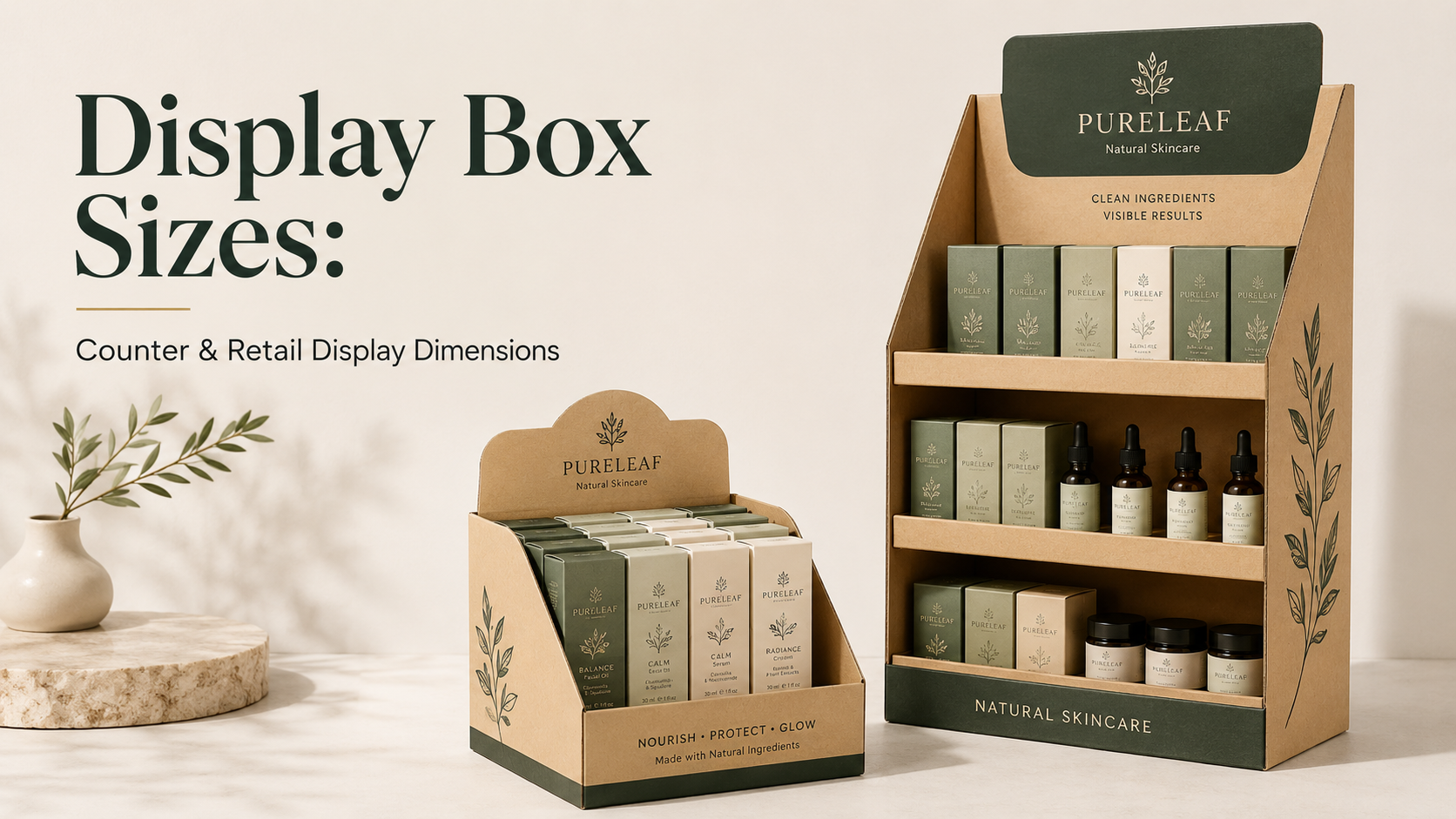
Display box dimensions swing from a shoebox-sized countertop unit to a 4-foot floor display in the same product category. A small counter display runs about 6 × 6 × 8 inches. It’s sized for a single product line next to a register. A floor display stands closer to 24 × 20 × 52 inches. It’s built to hold its own footprint on the sales floor. This guide charts five common formats, from countertop to floor-standing. It also explains why size stops scaling freely. Past a certain point, a display hits a retailer’s own height and depth limits instead. It’s part of our size guide series alongside our gift box sizes and cosmetic box sizes guides. For everything else, our full box size guide covers the rest.
Display Box Dimensions Chart
| Format | Dimensions (L×W×H, inches) | Dimensions (cm) | Typical Use |
|---|---|---|---|
| Small Counter Display | 6 × 6 × 8 in | 15.2 × 15.2 × 20.3 cm | Single product line at the register |
| Counter Display Box (standard) | 12 × 6 × 4 in | 30.5 × 15.2 × 10.2 cm | Multi-item countertop display |
| PDQ Tray (shelf/end-cap) | 17.75–35.5 × 14 × 6–10 in | 45.1–90.2 × 35.6 × 15.2–25.4 cm | Bulk shelf-edge or end-cap display |
| Dump Bin | 23.5 × 19.25 × 10.25 in | 59.7 × 48.9 × 26 cm | Loose or bagged product floor bin |
| Floor Display (standing) | 24 × 20 × 52 in | 61 × 50.8 × 132 cm | Freestanding retail floor unit |
PDQ tray dimensions carry the widest real spread of any tier here. Tray width is set by the specific shelf or end-cap it’s built for, not by one fixed spec.
Why Display Box Dimensions Stop Scaling Freely Past a Certain Size
A counter display only has to hold its footprint on a register or checkout counter. Depth and height stay modest, usually under 8 inches, since nothing forces the box to compete for floor space. Width is really the only dimension that grows with product count.
A PDQ tray hits its own ceiling well before width does. Most retailers cap PDQ tray depth around 14 inches. It has to slide onto a standard shelf or end-cap without blocking the aisle behind it. Weight caps out too, typically around 50 pounds per tray. A wider tray can hold more units side by side, but depth and weight don’t grow along with it.
A floor display runs into a different limit entirely: retailer height rules, not packaging capacity. CVS caps floor displays at roughly 59.75 inches. Kroger caps them around 56 inches. Both limits come from building code and sightline requirements, not anything about the box itself. That’s why a floor display’s height rarely climbs past the mid-50s. It doesn’t matter how tall the product line inside it could technically stack.
How to Choose the Right Display Box Dimensions
Start with where the display actually sits. A countertop unit needs to leave room for a register or a card reader next to it. Footprint matters more than height here. A floor unit needs enough base depth to stay stable once it’s loaded. A top-heavy display tips before it ever gets emptied.
Product weight changes the math more than most people expect going in. A dump bin holding loose candy or small toys needs a base built for repeated digging and shifting. Static weight alone doesn’t tell the whole story. I’ve seen a dump bin’s corner seams fail within a week on a high-traffic aisle. The board weight was specced for the product’s total weight sitting still, not for hands rummaging through it daily.
Retailer-specific rules matter just as much as the product itself. A display built for one chain’s shelf height or end-cap width won’t necessarily fit another chain’s layout. Confirm the actual retailer’s display program specs before finalizing height, depth, or shelf-tray width. Those numbers vary chain to chain far more than standard shipping box sizes do.
Graphics and branding add real thickness that’s easy to forget when specing a display. A printed header card or a wraparound sleeve adds real height and depth. That’s on top of the bare structural box. Account for that add-on thickness before locking a size. A couple of extra inches changes the whole footprint on smaller counter units especially.
Custom Display Box Dimensions
The chart above covers standard counter, shelf, and floor formats. A display built around an odd-shaped product or a specific retailer’s shelf program often needs a custom die. A standard tray or bin won’t fit those shapes cleanly.
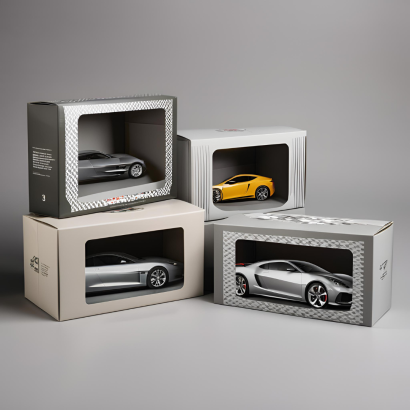
Easy Box Packaging builds counter and floor displays to the exact product footprint and retailer spec a brand needs. That includes custom graphics and structural add-ons. For brands specifically building a window-front display case, our window packaging boxes line covers that structure directly.
Frequently Asked Questions
Why does a PDQ tray max out around 14 inches deep no matter how wide it is? Most retailers cap tray depth at 14 inches. That lets it slide onto a standard shelf or end-cap without blocking the aisle. Width can grow with product count, but depth is fixed by the shelf itself.
What’s the tallest a floor display can be? It depends on the retailer. CVS caps floor displays around 59.75 inches, and Kroger caps them around 56 inches. Both limits come from building code, not the display’s own structural limit.
The Bottom Line
Display box dimensions come down to where the unit sits and who’s setting the rules. A counter display only answers to its own footprint. A PDQ tray answers to shelf depth and weight caps. A floor display answers to a retailer’s height rules more than anything the box itself could handle. Confirm the actual placement and retailer spec before ordering. Get a quote and get a display sized to your actual retail program.