
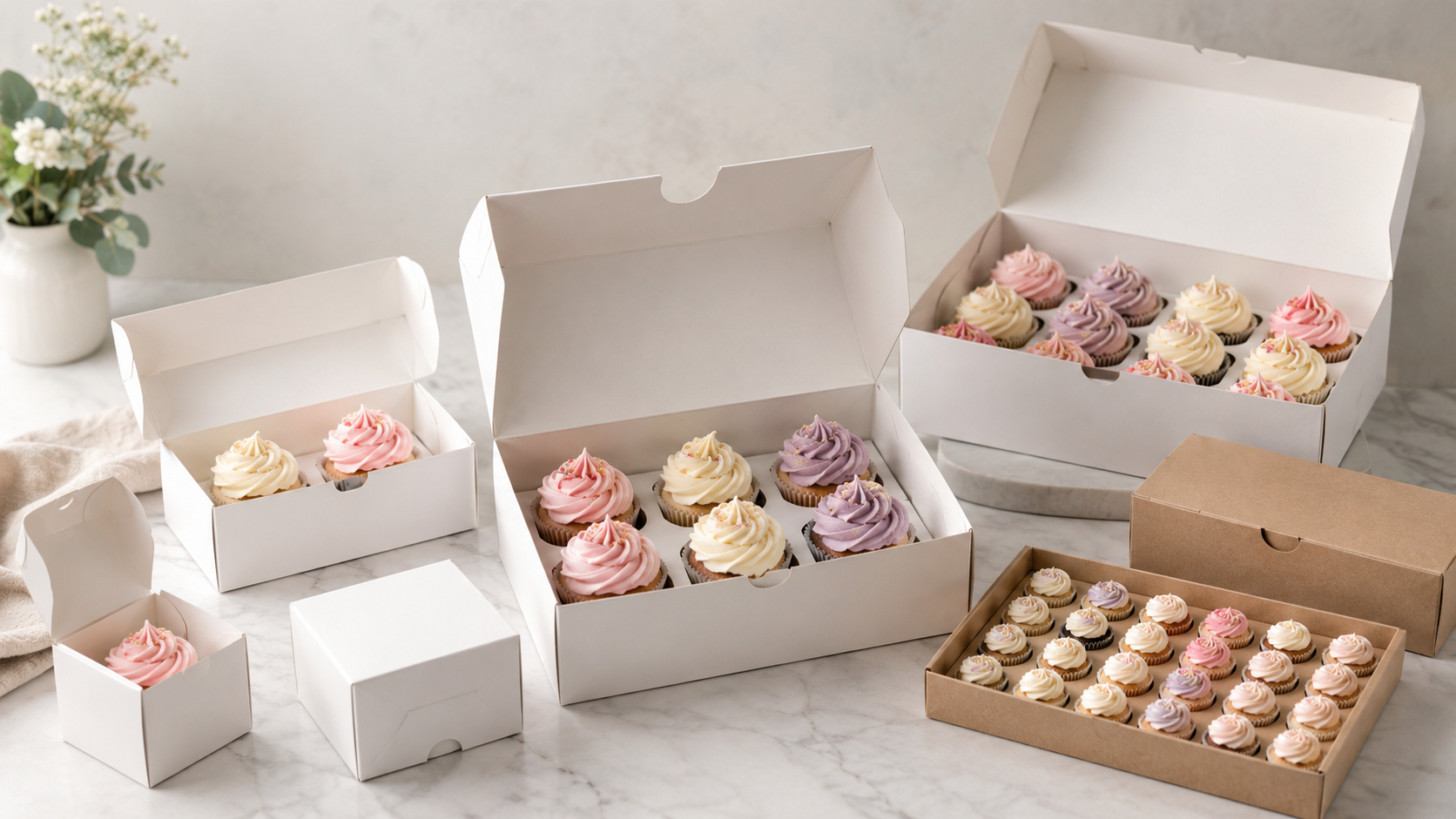
A standard 6-count cupcake box runs about 10 × 7 × 4 inches, the most common size bakeries stock. Counts scale up from a single-cupcake gift box to a 24-count tray for events. The chart below covers every count, plus why box height matters more than footprint once frosting gets involved. This post is part of our size guide series, alongside our cake box sizes and pizza box sizes guides. For everything else, our full box size guide covers the rest.
Cupcake Box Size Chart
| Count | Dimensions (L×W×H, inches) | Dimensions (cm) | Typical Use |
|---|---|---|---|
| 1 (Single) | 3.5 × 3.5 × 4 in | 8.9 × 8.9 × 10.2 cm | Single-cupcake gifts, favors |
| 2 | 7 × 3.5 × 4 in | 17.8 × 8.9 × 10.2 cm | Pairs, small gifts |
| 4 | 8 × 6 × 4 in | 20.3 × 15.2 × 10.2 cm | 2×2 grid, small orders |
| 6 | 10 × 7 × 4 in | 25.4 × 17.8 × 10.2 cm | Most popular bakery size |
| 12 | 14 × 10 × 4 in | 35.6 × 25.4 × 10.2 cm | Standard dozen, party orders |
| 24 (Mini) | 14 × 10 × 2.5 in | 35.6 × 25.4 × 6.4 cm | Mini cupcakes, catering trays |
That 24-count row is for mini cupcakes specifically. Standard-size cupcakes at 24 count usually need two stacked 12-count boxes instead of one oversized box. A single tray that wide gets hard to carry level. It also flexes in the middle under the weight of two dozen frosted cupcakes.
How to Measure for the Right Cupcake Box
Start with the cupcake’s actual footprint, liner included, not the muffin cup size. A standard liner runs about 2 inches across, but a jumbo or bakery-style liner can run closer to 2.5. Multiply that width by the grid you need. Then add a half inch of slack on each side so cupcakes aren’t wedged against the insert.
Height depends entirely on frosting, not cupcake size. A simple flat-iced cupcake fits in a 3.5-inch box. A tall buttercream swirl or a cupcake topped with a macaron needs 4.5 inches or more. I’ve had swirls get flattened against a lid that looked tall enough right up until the box actually closed. The measurement that matters is the cupcake at its tallest point, decoration included. That’s usually taller than the batter-and-frosting height a recipe implies.
Grease is the other variable most people forget. A cupcake liner soaks through faster than a slice of cake sitting on a board, especially with an oil-based batter. A thin, uncoated box can go translucent within an hour, which looks unappetizing even if the product inside is fine. Most bakery-grade cupcake boxes use a grease-resistant coating on the inside face for exactly this reason.
Why the Insert Grid Matters More Than the Box
Most people focus on the outer box dimensions and skip the insert entirely. That’s backwards. The insert is what actually keeps cupcakes from sliding into each other and smearing frosting during transport.
A grid insert with slots slightly larger than the liner holds each cupcake in its own cell. Too tight, and cupcakes are hard to remove without damaging the wrapper. Too loose, and they slide during transport anyway, which defeats the purpose.
There’s a real trade-off here. Precise-fit inserts cost more to produce, and they only work with one liner size. A looser universal insert fits more products across a wider product line, but it protects each individual cupcake less. Most bakeries running a single standard liner size find the precise-fit insert worth the extra cost. It cuts down on returns and remakes from crushed frosting.
Local Pickup vs. Shipping Cupcakes
A box for a customer walking to their car doesn’t need to work as hard as a courier box. Local pickup boxes can rely on a simple insert and a snug lid. Distance changes the math.
Shipping cupcakes means bracing against tilting, stacking, and the occasional dropped box on a delivery truck. That usually means locking tabs on the lid instead of a simple fold-over closure. It often means a secondary outer shipping box around the cupcake box too. Skip that extra layer, and the cupcake box alone stands between a beautiful dozen and a box of frosting-smeared crumbs.
Custom Cupcake Box Sizes
The chart above covers standard counts and standard liners. It doesn’t cover jumbo cupcakes or cupcakes with tall edible toppers. It also doesn’t cover mixed dessert boxes that pair cupcakes with cookies or macarons. Those need custom slot spacing and custom height, not a box pulled from a standard count chart.
Easy Box Packaging builds cupcake boxes with inserts sized to the actual liner and topper height a bakery uses. A box that’s an inch too short ruins a beautiful cupcake before the customer ever opens it. No amount of careful driving fixes that after the fact.
Frequently Asked Questions
What size box do I need for 12 cupcakes? A 14 × 10 × 4-inch box with a 3×4 insert fits a standard dozen. Add height if the cupcakes have tall frosting or toppers.
Do cupcake boxes need dividers? For anything beyond a single cupcake, yes. Without a divider, cupcakes shift during transport, and frosting ends up on the box lid instead of the cupcake itself.
Can I use one big box instead of an insert with slots? You can, but the cupcakes will move around inside it. A flat-bottom box with no divider works for a short, careful walk to a car. It’s a poor choice for anything shipped or handed off to a delivery driver.
The Bottom Line
Cupcake box sizing is really two decisions: footprint by count, and height by frosting. Get the insert right and the box mostly takes care of itself. Get a quote and get a box and insert sized to what you’re actually baking.