
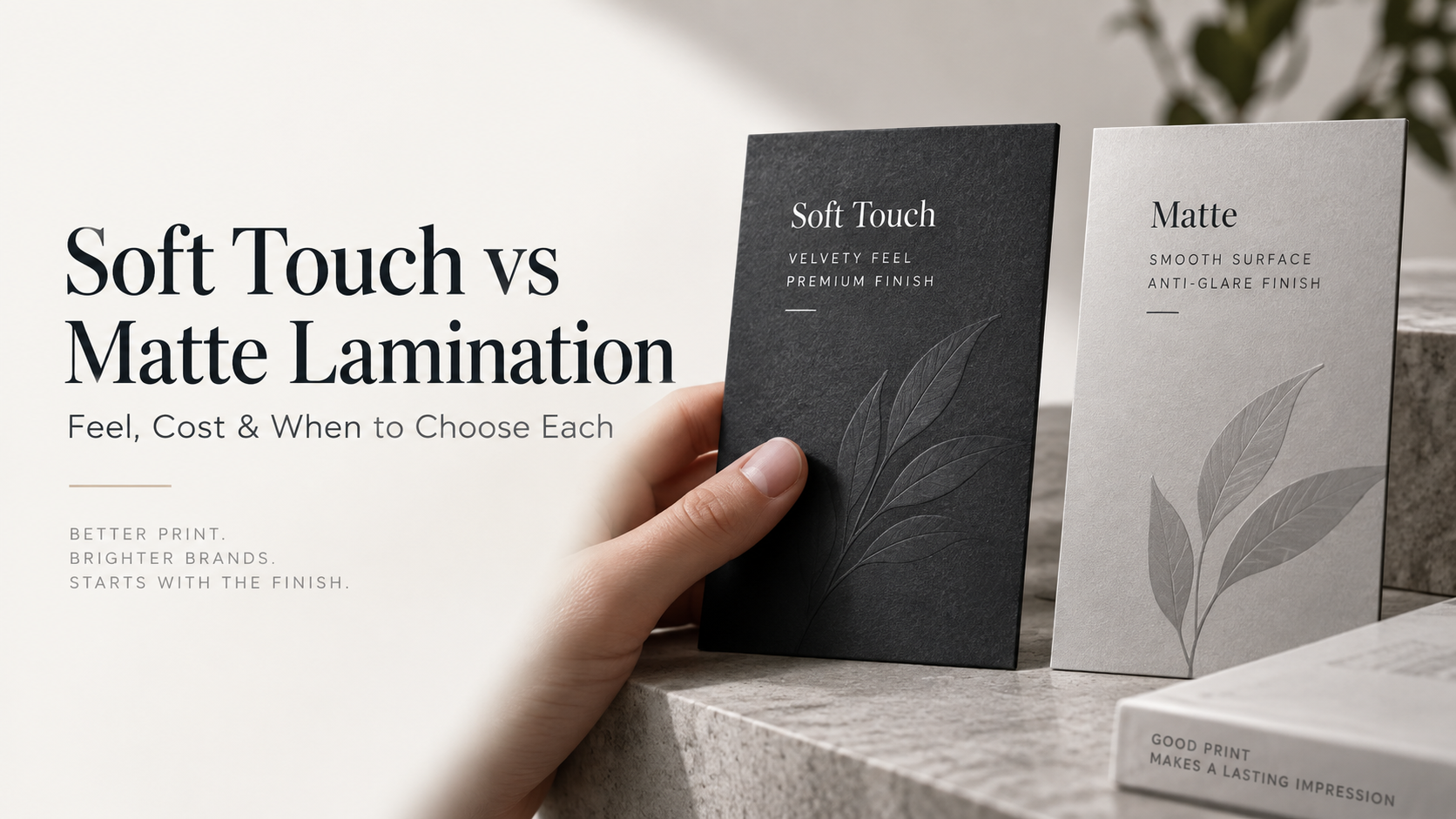
Soft touch vs matte lamination comes down to feel first, cost second. Both are anti-glare finishes applied over printed board. Matte lamination is a flat, low-sheen plastic film. Soft touch lamination uses a similar film, but with a texturizing layer added. That layer gives the surface a velvety, slightly rubberized feel. Matte looks smooth and quiet. Soft touch feels premium in your hand.
This article covers soft touch vs matte lamination in plain terms. It covers the cost gap, the tradeoff most guides skip, and which finish fits your product.
What Is Matte Lamination?
Matte lamination is a thin plastic film laminated onto the printed sheet. It kills glare. It gives colors a flat, even look. It’s the most common finish choice for mid-range packaging.
Matte holds up well under normal handling. It resists scuffs reasonably well. It’s also the more affordable option. The film and the application process are both standard and widely available, which keeps the cost down.
Matte works across almost any print job. Text stays crisp under any lighting, since there’s no glare bouncing back at the reader. That readability is one reason matte remains the default for packaging with a lot of on-pack copy. Think ingredient lists or usage instructions.
What Is Soft Touch Lamination?
Soft touch lamination starts with a similar base film. A texturizing additive gets built into that film during manufacturing. The result feels velvety. It’s almost like a rubberized coating, rather than a plain flat surface.
Our guide to soft touch lamination covers this finish in more depth. Soft touch is a popular choice for premium cosmetics, tech products, and gift packaging. The tactile feel adds a sense of quality the moment someone picks up the box. That’s exactly why brands reach for it on products meant to feel high-end.
The tradeoff is durability under repeated handling, which the next section covers in detail.
The Fingerprint Problem Most Guides Skip
Most comparisons frame soft touch vs matte lamination as a pure style choice. That misses a real, practical tradeoff. Soft touch shows fingerprints and oils more visibly than matte does. This is especially true on darker colors.
I’ve seen a cosmetics brand pick soft touch lamination for a dark navy box. It photographed beautifully. Once the boxes hit a retail counter, shoppers picked them up and examined them again and again. Within days, the boxes showed visible fingerprint smudging. A plain matte finish wouldn’t have shown that smudging as clearly. On the reorder, the brand switched to matte for the high-handling retail version. They kept soft touch for a separate version of the same product. That version ships direct online, where boxes get handled far less before reaching the customer.
Soft touch vs matte lamination often comes down to this exact question. How often will your box get picked up and put back down before it sells?
Key Differences: Soft Touch vs Matte Lamination
| Factor | Matte Lamination | Soft Touch Lamination |
|---|---|---|
| Feel | Smooth, flat | Velvety, slightly rubberized |
| Fingerprint visibility | Lower | Higher, especially on dark colors |
| Scuff resistance | Good | Moderate, can show wear faster |
| Cost premium | Lower | Higher |
| Compatible stock weights | Wide range | Works best on heavier stock |
When to Choose Matte
Choose matte when your box gets handled often before purchase. Retail counters, high-traffic shelves, and any product that customers pick up and inspect are good matches. Matte also fits tighter budgets. It costs less than soft touch across most run sizes.
Matte is also the safer default when you’re not sure how the box will be handled. It performs consistently from a warehouse shelf to a customer’s hands. It does this without the fingerprint risk that comes with soft touch.
When to Choose Soft Touch
Choose soft touch when the unboxing moment matters more than shelf handling. Direct-ship products, subscription boxes, and premium gifts benefit from the tactile “wow” factor. A rigid box with a soft touch finish is a common combination for premium cosmetics and tech packaging. Both the structure and the finish reinforce a high-end feel together.
Products in the cosmetic and beauty packaging category lean on soft touch often. The finish photographs well for unboxing content, and it reinforces a premium price point.
What About Velvet Lamination?
Velvet lamination is soft touch lamination under a different name. Suppliers use both terms for the same texturized finish. If a vendor quotes “velvet” separately from “soft touch,” ask a simple question. Confirm whether it’s actually the same coating, since naming varies by supplier and region.
Some suppliers reserve “velvet” for a heavier texture and “soft touch” for a lighter one. This distinction isn’t standardized industry-wide, though. PRINTING United Alliance covers general finishing and laminating standards, useful if you want to compare terminology across vendors.
Common Mistakes
The first mistake is picking soft touch purely because it feels premium in a sample. This ignores how the actual product gets handled at retail, which matters more than the sample feel alone.
A related mistake shows up in the quote process itself. Brands often request a soft touch quote without mentioning how the product will actually be sold. Mention your sales channel to your supplier. Say whether it’s a retail counter, an online-only store, or both. That single detail lets your supplier flag a fingerprint or scuff risk before the order goes into production. Getting this part of the soft touch vs matte lamination decision right early saves a costly reorder later.
The second mistake is choosing a dark color with soft touch for a high-handling product. Dark, matte-toned soft touch finishes show fingerprints fastest. A lighter color or a plain matte finish avoids this problem entirely.
The third mistake is assuming velvet and soft touch are different finishes. Some brands pay for a sample of each, assuming they’ll differ. Confirm with your supplier first, since they’re usually the same coating.
A fourth mistake is applying soft touch to lightweight stock. The texture reads best on heavier board. Thin stock with a soft touch layer can feel flimsy instead of premium. That undercuts the exact effect you paid extra for.
A fifth mistake is skipping a physical sample entirely. Soft touch feel varies by supplier and by underlying board weight. A digital mockup can’t show you how the texture feels in hand. Color on soft touch can also look slightly different than the same color on gloss or matte.
FAQ
Which costs more, soft touch or matte lamination? Soft touch generally costs more in this comparison. The texturizing film and slower application process both add expense compared to standard matte.
Does soft touch lamination scratch easily? It can show wear faster than matte in high-handling situations. It still holds up fine for products that mostly ship direct, where handling before purchase is limited.
Is velvet lamination the same as soft touch? Usually, yes. Different suppliers use different trade names for the same texturized finish. Confirm with your specific vendor to be sure.
Can I combine soft touch with other finishes? Yes. Soft touch pairs well with spot UV or foil accents on the same box. Our guide to matte vs gloss lamination covers similar combination options. So does our guide to UV coating vs lamination.
Get a free quote — dieline and design support included.