
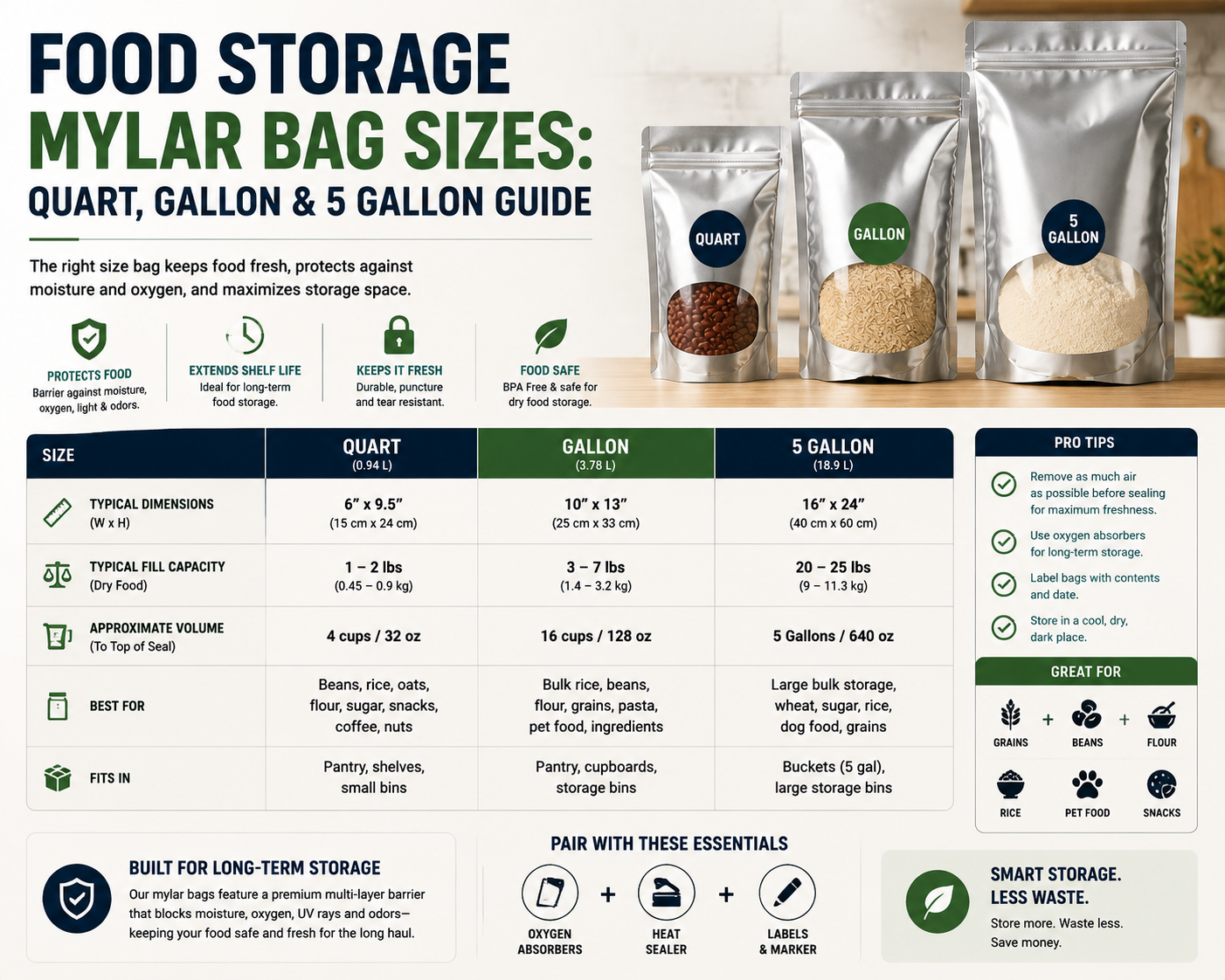
Food storage mylar bag sizes follow volume, not weight. A 1 quart bag is approximately 8×10 inches. A 1 gallon bag is approximately 10×14 inches. A 5 gallon bag is approximately 18×28.5 up to 20×30 inches. These sizes are built to fit standard buckets and containers, with an oxygen absorber sized to match. This guide charts every common volume tier and shows the oxygen absorber size each one needs. It’s part of our mylar sub-cluster alongside our mylar bag fill weight chart and the original mylar bag sizes guide. For everything else, our full box size guide covers the rest.
Why Food Storage Mylar Is Sized by Volume
Long-term food storage centers on bucket sizes, not product weight. A prepper or a bulk-food buyer thinks in quarts and gallons. That’s how dry goods like rice, beans, and flour get measured and stored. Sizing the bag to a volume convention means one bag size works across many different foods. There’s no need for a different bag per product’s density.
This convention exists for a practical reason too. A bag has to fit inside a specific bucket or container once it’s filled. Volume-based sizing keeps that fit predictable. Food storage mylar bag sizes stay consistent from one order to the next. A 5 gallon bag reliably drops into a 5 gallon bucket every time.
Food Storage Mylar Bag Sizes Chart
| Volume | Dimensions (in) | Dimensions (cm) | Fits Standard Container | O2 Absorber Size |
|---|---|---|---|---|
| 1 Quart | 8 × 10 | 20.3 × 25.4 | Small jar or bin | 100–300cc |
| 1/2 Gallon | 9 × 12 | 22.9 × 30.5 | Half-gallon container | 300cc |
| 1 Gallon | 10 × 14 | 25.4 × 35.6 | 1-gallon pail | 300–500cc |
| 2 Gallon | 12 × 18 | 30.5 × 45.7 | 2-gallon pail | 600–1,000cc |
| 5 Gallon | 18–20 × 28.5–30 | 45.7–50.8 × 72.4–76.2 | Standard 5-gallon bucket | 2,000cc |
| 6 Gallon | 19–20 × 29–30 | 48.3–50.8 × 73.7–76.2 | Standard 6-gallon bucket | 2,000cc |
The 5 and 6 gallon tiers show the most real variance in this chart. A bag cut slightly narrower fits a 5-gallon bucket’s internal diameter better than the older standard 20×30 size.
Freeze-Drying Mylar Sizes
Freeze-dried food uses the exact same bag sizes as any other food storage mylar bag sizes tier. The dimensions don’t change based on how the food was preserved. What does change is the oxygen absorber requirement. Freeze-dried food is far more porous than raw dry goods. It needs a larger oxygen absorber relative to its weight. That accounts for the extra trapped air between pieces.
Confirm the oxygen absorber size against the actual freeze-dried product, not just the bag’s volume. A lightweight freeze-dried fruit or vegetable can need more absorber capacity than a denser raw grain. That’s true even in the same size bag.
Tray Pack Sizes for Freeze Dryers
Some freeze-dryer owners use flat, rectangular “tray pack” mylar bags instead. These are sized to match their machine’s individual trays, rather than the bucket-style bags above. They run smaller and flatter, closer to a large flat pouch than a stand-up bag. They’re meant to store one tray’s worth of product at a time.
Tray pack dimensions vary by freeze dryer brand and tray size. Treat any specific measurement as approximate until confirmed against your own machine’s tray dimensions.
How to Measure for Bucket Fit
Start with the bucket’s internal diameter, not its outer diameter. A bag sized to the bucket’s outer measurement will bunch up and waste space once it’s inside. Bag width should sit at or slightly under the bucket’s internal diameter for a clean fit against the walls.
Bag height matters just as much as width. Leave enough extra height above the fill line to fold the top over before heat sealing. Add the headspace needed for the oxygen absorber to work properly on top of that. A bag that’s exactly bucket-height with no fold allowance won’t seal cleanly once it’s full.
Mil Thickness: 4 Mil vs. 7 Mil for Long-Term Storage
Thickness matters more for long-term food storage than for almost any other mylar application. A 4 mil bag suits shorter-term storage, generally in the 1 to 5 year range. A 7 mil bag is the standard choice for true long-term storage, often rated 15 to 25 years. The thicker film resists punctures and holds its oxygen barrier over decades rather than years. See our mylar bag thickness guide for the full mil-by-mil breakdown. Our food packaging boxes line covers rigid options too, for brands mixing flexible and rigid formats.
Frequently Asked Questions
What size mylar bag do I need for a 5 gallon bucket? A bag in the 18 to 20 inch by 28.5 to 30 inch range fits a standard 5 gallon bucket. Slightly narrower bags in that range tend to fit the bucket’s internal diameter more cleanly than the older 20×30 standard.
How big of an oxygen absorber do I need for a 1 gallon mylar bag? Most food storage guides recommend 300 to 500cc for a 1 gallon bag. 500cc is the safer choice when the stored food has more trapped air between pieces.
Do freeze-dried foods need a different size mylar bag? No. Freeze-dried food uses the same food storage mylar bag sizes as any other dry good. It typically needs a larger oxygen absorber relative to its weight, though. Freeze-dried product traps more air than raw dry goods do.
Can I reuse a food storage mylar bag once it’s been opened? It’s not recommended for long-term resealing. Once a bag is opened, the oxygen absorber has already done its job. Resealing it doesn’t restore the original oxygen-free environment. A fresh bag and a fresh absorber are the safer choice for a second long-term storage cycle.
The Bottom Line
Food storage mylar bag sizes track bucket volume. That spans a 1 quart bag up to a 5 or 6 gallon bag built for a standard bucket. Match the bag to your container first, then size the oxygen absorber to the actual product going inside. Need custom dimensions or a specific barrier spec? Get a free quote — we run mylar and stand-up pouches in any size.