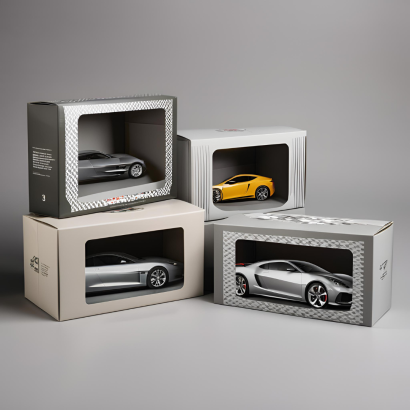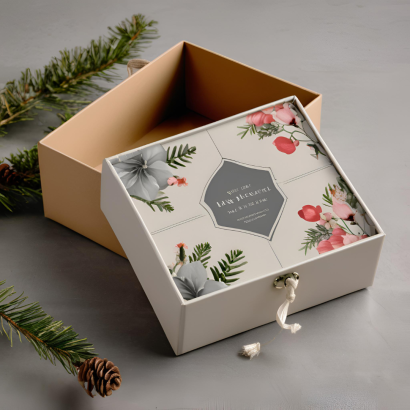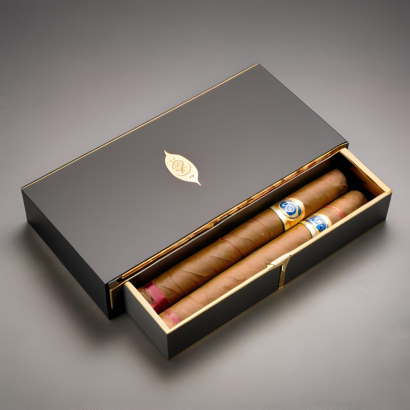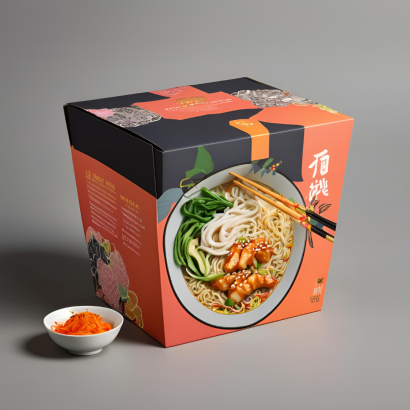

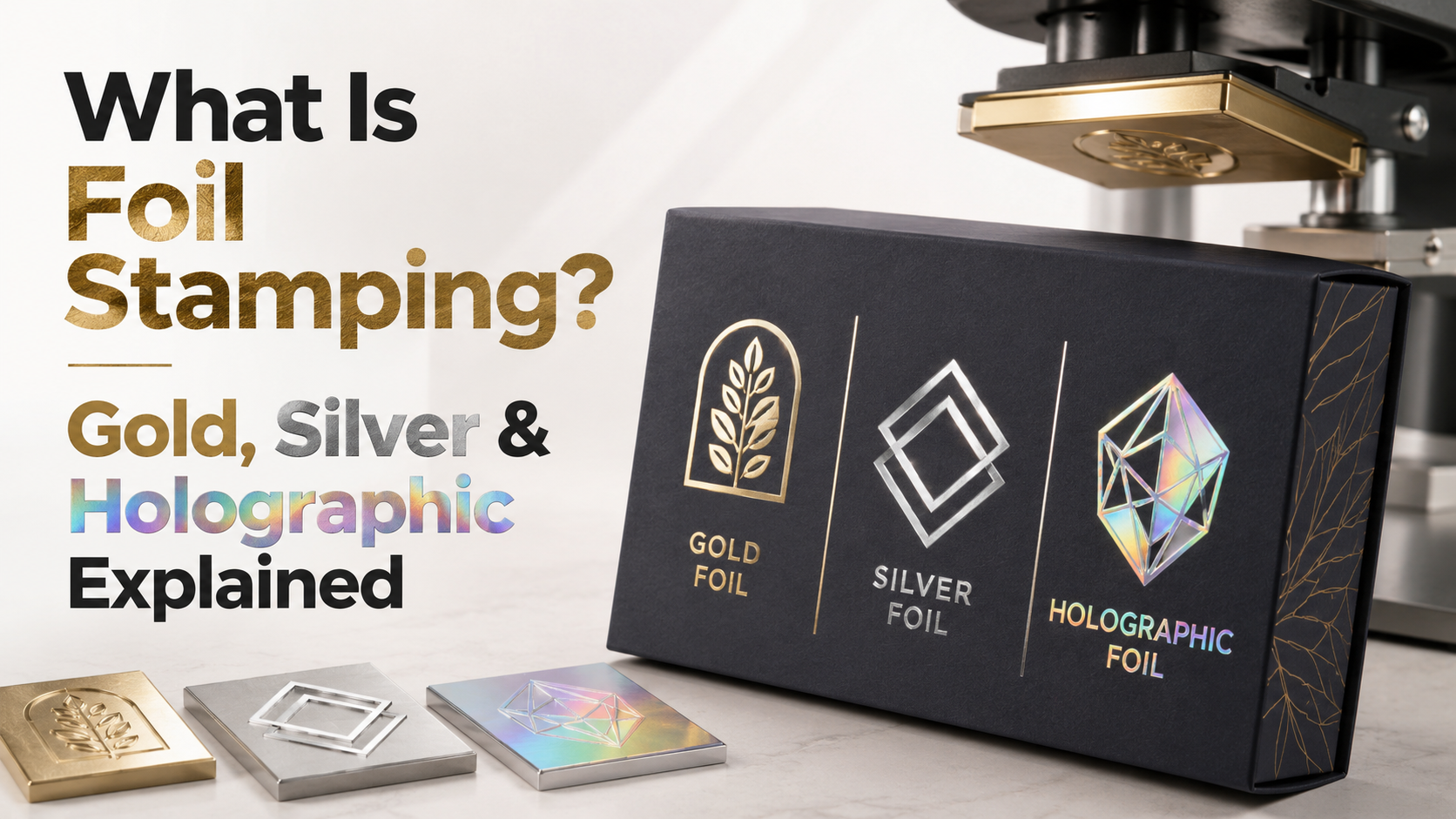
What is foil stamping? It’s a finishing technique. It presses metallic foil onto your box using heat, pressure, and a custom metal die. It leaves a bright, reflective design wherever the die touches. Gold and silver are the classic choices. Holographic foil adds a rainbow, light-shifting effect on top of the same basic process. Foil catches light in a way ink simply can’t. That’s why it shows up on logos, brand names, and small accent details. It rarely covers a whole panel.
How Foil Stamping Actually Works
A metal die gets custom-made for your design. Every foiled shape needs its own die, and that’s a one-time tooling cost on your first order. The die heats up. A thin roll of foil film feeds between the die and your box. Heat and pressure press the foil onto the board. The die lifts, and the foil transfers wherever it touched.
This is hot foil stamping, the traditional method. Cold foil works differently. A UV-curable adhesive prints onto the board first, using standard printing plates instead of a die. The foil then bonds to that adhesive, and UV light cures it in place. No heat involved.
Hot foil gives a sharper, more brilliant result. It also works on more substrates, including uncoated and textured stock. Cold foil runs faster at high volume. It happens inline with printing instead of as a separate pass. It also handles intricate, detailed designs better than hot foil does.
Foil also pairs with embossing on some boxes. The die presses the design into the board first, and foil bonds on top of that raised surface. This combination costs more than either finish alone, since it needs two passes through production. It reads as more expensive too, and it shows up most on rigid boxes for jewelry and cosmetics.
Hot Foil vs Cold Foil vs Holographic Foil
Here’s how the three options actually compare.
| Type | How It Works | Best For | Speed |
|---|---|---|---|
| Hot foil | Heated die presses foil onto the board | Sharpest look, works on more substrates | Slower — separate production pass |
| Cold foil | UV adhesive plus foil, no heat | High-volume runs, intricate detail | Faster — runs inline with printing |
| Holographic | Rainbow, light-shifting foil, applied hot or cold | Standing out, anti-counterfeit signaling | Depends on hot or cold base process |
Holographic isn’t a separate process. It’s a foil material, not a method. You can run it hot or cold, though hot stamping usually gives a sharper holographic effect.
Foil on Different Box Materials
Rigid boxes and folding cartons take foil the best. Both offer a smooth, stable surface for the die to press against. That’s why most foil-stamped boxes you see are one of these two structures.
Corrugated board struggles with foil. The fluted layer underneath flexes slightly under pressure, and that flex can cause uneven transfer. Most printers skip foil on corrugated and reach for a sticker or a simpler print effect instead.
Custom mailer boxes almost never carry foil either. They’re corrugated by construction. Foil’s cost doesn’t make sense on a box nobody sees until it’s already shipped and opened.
Board color changes how foil reads, too. Gold and copper foil stand out most against dark backgrounds like black, navy, or deep green. Silver and holographic foil show up better on lighter stock. There, the contrast comes from brightness rather than color. Ask for a physical proof on your actual board color before approving a full run. A foil swatch on white paper looks nothing like the same foil on a colored box.
Where Foil Stamping Goes Wrong
Most guides stop at “foil looks luxurious.” Here’s what they don’t tell you. Foil peeling after stamping is usually a temperature problem. The die wasn’t hot enough, or it didn’t stay in contact long enough to activate the adhesive layer. You won’t catch this from a photo of a proof. You need to handle the actual sample and try to scratch a corner with your thumbnail.
Foil cracking happens under too much pressure, especially on fine detail or thin text. Ask your printer whether your design needs a softer, more flexible foil if it has intricate lines.
Here’s the one nobody mentions: registration can drift mid-run. A hot stamping press can run perfectly for hundreds of sheets. Then one sheet shifts out of alignment. Then it snaps back to normal. I’ve had a client catch a batch of misaligned foil logos. They never showed up in the original proof. That proof was one sheet. The full run was five hundred. Ask to see samples pulled from partway through a production run, not just the first-off proof. That single question catches one of the packaging mistakes that kill the unboxing moment. It works before the batch ships in bulk.
What Foil Stamping Adds to Your Quote
Every new foil design needs its own die. That’s a one-time tooling charge on the first order, and reorders reuse the same die for free. Coverage area matters after that. A small logo costs less to stamp than a full pattern. Foil color matters too — standard gold and silver run cheaper than holographic or custom-matched metallic shades.
Hot foil generally costs more per unit than cold foil. It runs as a separate pass rather than inline with printing. Request a quote for real numbers on your specific design and box size. According to Duplo International’s comparison, cold foil has a real speed advantage. It shows up most clearly on longer runs, less on short ones. That’s where hot foil’s extra pass adds up fast.
You can rough out your own budget by separating tooling cost from per-unit cost. Easy Box Packaging includes the die cost breakdown on every foil quote. You’re not guessing which part of the price is one-time and which part repeats.
Turnaround shifts too. Die-making adds time upfront on a first order, since the die has to be cut before stamping starts. Reorders skip that step entirely and move faster. Build the die lead time into your schedule if you’re working toward a launch date.
Which Should You Choose?
Building a jewelry or accessories line? Foil is close to mandatory at this point. It’s the finish jewelry brands reach for most. Our own guide to jewelry packaging covers why in more depth. That flash of gold or silver as a customer opens the box is a small detail. It’s exactly the kind of thing that turns a first order into a repeat one.
Running a long print run where cost per unit matters most? Cold foil is the more economical route, especially past a few thousand units.
Need the sharpest possible result on an uncoated or textured stock, like a kraft box? Hot foil handles that substrate better than cold foil does.
Want standout shelf presence over sheer luxury? Holographic foil pulls the eye faster than plain metallic gold or silver. It reads as bold rather than understated.
Working with a dark box color already? Gold or copper foil will read clearest there. Save silver or holographic for lighter board, where the shine has more contrast to work with.
Selling something edible, like chocolate or confections? A food-safe foil accent on the lid works well without needing foil across the whole box. Save the budget for the one detail customers actually notice.
Foil Stamping: FAQ
What is foil stamping used for?
Adding a bright, reflective metallic or holographic detail to a logo, brand name, or small design element. It’s a highlight finish, not a whole-box treatment.
What’s the difference between hot and cold foil stamping?
Hot foil uses a heated die and works on more substrates. Cold foil uses a UV adhesive and no heat. It runs faster on high-volume jobs with detailed designs.
Does foil stamping work on kraft or dark board?
Yes. Foil actually shows up best on darker or more textured stock. The contrast between foil and background reads clearly there.
Why did my foil order come back peeling or uneven?
Usually a temperature or pressure issue during stamping, or registration drift partway through the run. Ask to see samples pulled from mid-run, not just the first proof, before you approve a large order.
Can foil stamping be combined with embossing?
Yes. The die embosses the board first, then foil bonds to that raised surface. It costs more than either finish alone, but it’s a common combination on rigid jewelry and cosmetics boxes.
Foil stamping earns its cost on one job: making a small design element catch light and feel expensive. It’s wrong for a whole panel. It’s also the wrong finish for a box nobody sees until after it ships. Pick your foil type based on your substrate and your run length. Don’t choose just from the look in a sample book.